

A retaining wall calculator is a handy tool that could save you time and effort when planning your next wall project. It helps to streamline the process by calculating the number of blocks, the amount of gravel needed for backfill, and even the costs involved. Instead of struggling with complex mathematical equations, this calculator crunches the numbers for you. This means more time focusing on aesthetics and function, and less time scribbling figures on paper.
- Purpose: It assists in effective planning and material estimation for retaining walls.
- Benefits: Quick and precise calculations for blocks, gravel, and costs, preventing unnecessary spending.
- How it Works: Enter the wall’s dimensions and block details; get instant results.
This tool is your partner in efficient landscaping: be it a small garden makeover or a large-scale commercial project. Whether you’re a DIY enthusiast or a seasoned property manager, understanding the material requirements and costs upfront minimizes surprises.
Here’s an inspiring example: In Houston, a beautifully crafted retaining wall not only addressed soil erosion but also improved a garden’s appeal. By accurately anticipating materials and costs, unexpected problems were avoided, leading to timely project completion.
A retaining wall is more than just support; it’s a landscape statement.

Understanding Retaining Wall Calculators
Retaining wall calculators are invaluable tools that simplify the process of planning and building retaining walls. They help you determine the exact materials needed, from blocks to gravel, and provide cost estimates, saving you both time and money.
Types of Retaining Wall Calculators
There are various types of retaining wall calculators available, each designed to cater to specific needs:
- Basic Calculators: Focus on calculating the number of blocks required based on wall dimensions.
- Advanced Calculators: Include features for estimating gravel for backfill, costs, and even drainage needs.
Materials Used in Retaining Walls
Retaining walls can be made from various materials, each offering unique benefits:
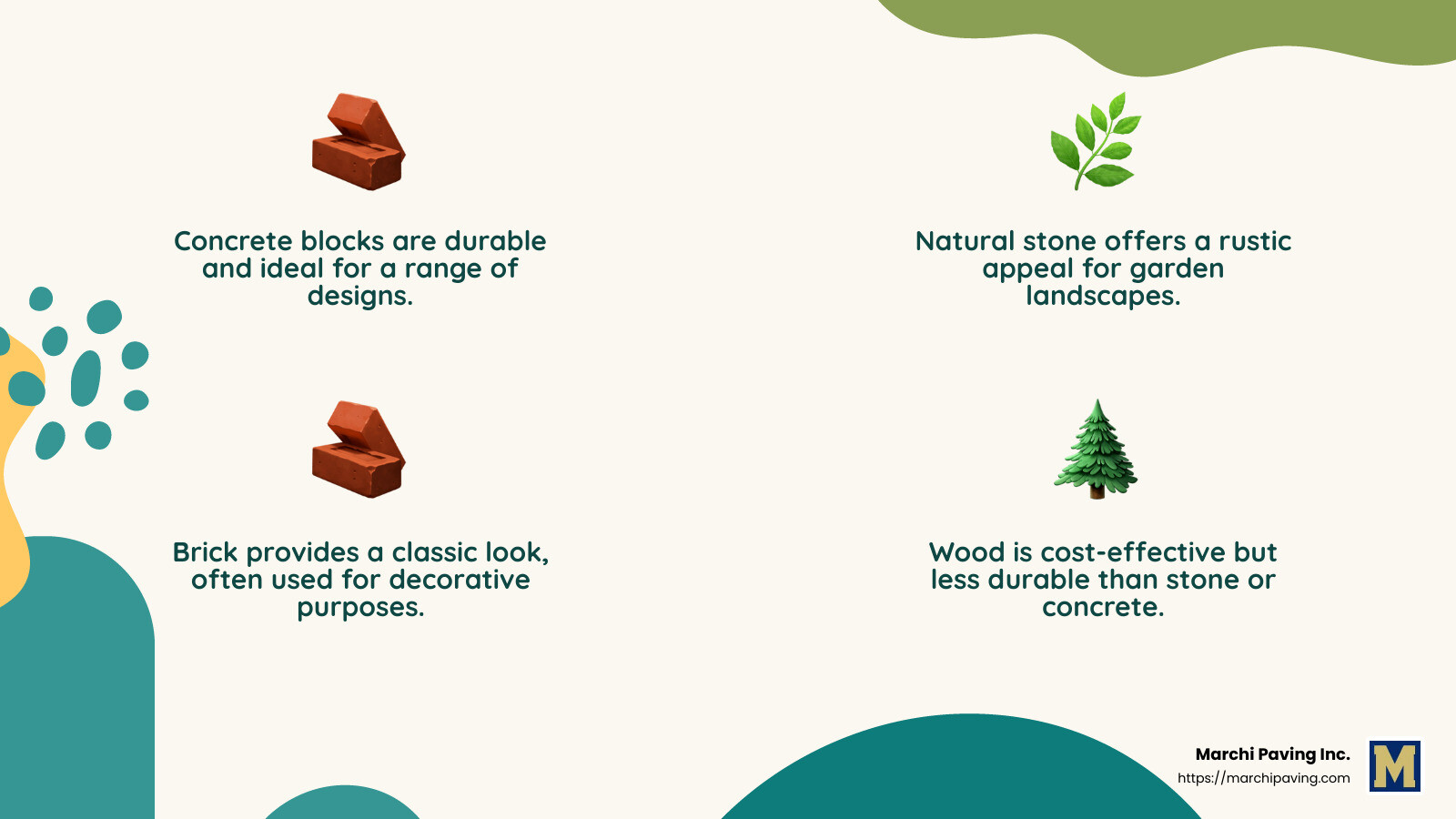
- Concrete Blocks: Durable and versatile, ideal for a range of designs.
- Natural Stone: Offers a rustic and aesthetic appeal, perfect for garden landscapes.
- Brick: Provides a classic look, often used for decorative purposes.
- Wood: A cost-effective option, though less durable than stone or concrete.
Purpose of Using a Retaining Wall Calculator
The primary purpose of a retaining wall calculator is to streamline the planning and estimation process. It helps you:
- Calculate Materials: Determine the number of blocks and amount of gravel needed.
- Estimate Costs: Get a clear idea of the financial investment required.
- Plan Efficiently: Avoid over-purchasing or underestimating materials, reducing waste and unexpected expenses.
Benefits of Retaining Wall Calculators
Using a retaining wall calculator comes with several advantages:
- Accuracy: Provides precise measurements and estimates, reducing errors.
- Time-Saving: Eliminates the need for manual calculations, speeding up the planning process.
- Cost-Effective: Helps prevent unnecessary spending by accurately predicting material needs.
By leveraging these calculators, you can ensure that your retaining wall project is both efficient and economical. Whether you’re managing a large commercial project or enhancing your home garden, a retaining wall calculator is an essential tool for success.
In the next section, we’ll dig into how to calculate retaining wall materials, including measurements, formulas, and more.
How to Calculate Retaining Wall Materials
Calculating the materials for your retaining wall is a crucial step in ensuring you have everything you need for a smooth and efficient build. Here’s a step-by-step guide to help you accurately estimate the materials required.
Step-by-Step Guide
1. Measure Your Wall
Start by measuring the wall width and wall height. These measurements will help you determine how many blocks you need. The first row of blocks should be embedded below ground level by about 10% of the wall height for stability.
2. Determine Block Dimensions
Next, know the block width and block height. These dimensions are important for calculating the number of rows and columns.
3. Calculate Rows and Columns
- Rows: Divide the wall height by the block height and round up to the nearest whole number.
- Columns: Divide the wall width by the block width and round up.
For example, if your wall is 3 feet high and 30 feet long using blocks that are 6 inches high and 10 inches wide, you will need 6 rows and 36 columns.
4. Calculate Total Blocks
Multiply the number of rows by the number of columns to get the total number of blocks needed. If you’re using a cap row, remember to subtract one row from your calculation.
5. Include Cap Blocks
If your wall design includes a cap row, calculate the number of cap blocks. This is usually equal to the number of columns, provided the cap blocks have the same width as the regular blocks.
Estimating Base and Backfill Gravel
1. Base Gravel
The base of your wall needs a solid foundation. Calculate the volume of base gravel needed by measuring the length, width, and desired depth of the gravel layer. Compacted gravel provides stability and prevents shifting.
2. Backfill Gravel
Backfill gravel is essential for drainage and stability. Calculate the volume by multiplying the wall height, length, and width of the backfill area. Use compacted gravel to ensure proper support.
3. Use Landscape Fabric
Consider using landscape fabric between the soil and backfill gravel. This helps prevent soil from mixing with the gravel, maintaining drainage efficiency.
By following these steps, you can accurately calculate the materials needed for your retaining wall. This ensures you have the right amount of blocks, base gravel, and backfill gravel, helping you avoid unnecessary expenses and delays.
In the next section, we’ll explore how to use a retaining wall calculator for inputting dimensions, selecting block styles, and more.
Using the Retaining Wall Calculator
Example Calculation
Using a retaining wall calculator can simplify your project planning. Let’s walk through an example to show how it works.
1. Input Dimensions
Start by entering the dimensions of your retaining wall. For example, if your wall is 3 feet high and 30 feet long, input these values into the calculator.
2. Select Block Style
Choose the style of block you plan to use. Whether you’re opting for a traditional concrete block or a more decorative stone, the calculator will adjust the calculations accordingly.
3. Decide on a Cap Row
Consider if you want a cap row, which is the topmost decorative layer. If yes, select this option. It adds a finished look and can affect the total block count.
4. Enter Price Per Block
Input the cost per block. This helps the calculator estimate the total cost of materials. For example, if each block costs $5, enter this value.
5. Choose Grouped Patterns
Decide if you want grouped patterns, such as a dry stack wall (blocks stacked without mortar) or a mortared wall (blocks secured with mortar). This choice can impact cost and stability.
Example Project
Imagine building a garden wall. You’ve input the wall dimensions, chosen a decorative block style, and opted for a cap row. You’ve also selected a dry stack pattern for a rustic look.
Calculation Process
- Rows and Columns: The calculator divides the wall height by the block height and the wall length by the block width to determine the number of rows and columns.
- Total Blocks: It multiplies rows by columns to find the total blocks needed.
- Cap Blocks: If a cap row is selected, the calculator adds these to the total.
Results
The calculator provides a detailed breakdown:
- Total Blocks Required: 180 blocks
- Cap Blocks: 30 blocks
- Estimated Cost: Based on the price per block, the calculator gives a total cost estimate.
Using the retaining wall calculator streamlines the planning process, ensuring you have a clear understanding of the materials and costs involved. In the next section, we’ll share some tips for accurate estimation to help you avoid common pitfalls.
Tips for Accurate Estimation
When planning a retaining wall project, accuracy is key. Here are some important tips to ensure your calculations are spot on.
Extra Materials
Always order extra materials. It’s common to have some waste or bad material, so having a surplus is smart. A good rule of thumb is to order about 10% more than your calculated needs. This ensures you have enough blocks even if some are damaged or miscalculated.
Waste and Bad Material
Consider potential waste and bad material during installation. Blocks can break or be defective. By accounting for this, you can avoid delays. It’s better to have a little extra than to run short mid-project.
Embedding Blocks
For stability, embed the first row of blocks below ground level. This provides a strong base and prevents shifting. Typically, embedding about 10% of the wall’s height is advisable. For a 3-foot wall, this means burying around 3 to 4 inches.
Height Adjustments
Adjust the wall height for local conditions. If your area experiences heavy rainfall, consider increasing the wall height slightly to manage water flow. This can prevent overflow and erosion.
Structural Limits
Understand your wall’s structural limits. Each block type has a maximum height it can support without reinforcement. For higher walls, consult with a professional to determine if additional support, like reinforcements or a cantilever design, is needed.
By following these tips, you’ll ensure a more accurate and efficient retaining wall project. These precautions can save you time, money, and headaches down the road. Up next, we’ll tackle some frequently asked questions about retaining wall calculators to further assist your planning.
Frequently Asked Questions about Retaining Wall Calculators
How do I calculate how much retaining wall I need?
Calculating the amount of retaining wall you need involves a few key measurements. Start with the wall length and height. These will determine the face area of your wall. Multiply the length by the height to get the total square footage. This is the area that your retaining wall will cover.
For example, if your wall is 20 feet long and 3 feet high, the face area will be:
[ \text{Face Area} = \text{Wall Length} \times \text{Wall Height} = 20 \, \text{ft} \times 3 \, \text{ft} = 60 \, \text{sq ft} ]
This face area helps you figure out how many blocks you’ll need.
What is the formula for calculating a retaining wall?
To calculate the number of blocks needed, you must know the height and length of both the wall and the blocks you plan to use. Here’s a simple formula to estimate:
[ \text{Total Bricks} = \frac{\text{Wall Surface Area}}{\text{Block Surface Area}} ]
First, find the surface area of the wall using its height and length. Then, calculate the brick area by multiplying the block’s height by its length. Divide the wall’s surface area by the brick area to find the total number of bricks needed.
For example, if your wall’s surface area is 60 sq ft, and each block covers 1 sq ft, you’ll need approximately 60 blocks.
How thick should a 3-foot retaining wall be?
The thickness of a retaining wall depends on its height and the materials used. For a 3-foot wall, the base thickness should be about one-eighth of the wall height. This means a base thickness of around 4.5 inches. The stem thickness (or the main part of the wall) should also be considered. Typically, it should be at least 6 to 12 inches for stability.
These are general guidelines. Local soil conditions and wall design may require adjustments. For walls over 3 feet, or if you’re unsure, it’s best to consult a professional for specific recommendations.
Next, we’ll dive into how to use the retaining wall calculator effectively to simplify your planning process.
Conclusion
In conclusion, using a retaining wall calculator can significantly streamline your project planning. This tool helps you determine the precise amount of materials needed, saving time and reducing waste. By inputting your wall dimensions and block specifications, you can quickly calculate the number of blocks and other materials required. This accuracy ensures your project stays on budget and schedule.
At Marchi Paving Inc., we understand the importance of accurate estimations. Our expertise in hardscaping and retaining wall installations ensures that your project is executed with precision and care. With over 20 years of experience, we pride ourselves on delivering high-quality results using advanced equipment and techniques.
For those in the Chelmsford, MA area and beyond, our team is ready to assist with your retaining wall needs. Whether you’re planning a DIY project or seeking professional installation, we’re here to help you achieve your vision with confidence.
Explore our hardscaping services to learn more about how we can support your next project. Let Marchi Paving Inc. be your trusted partner in creating durable and beautiful retaining walls.

