

Commercial Hardscaping Service: Top 5 Best in 2024
Commercial hardscaping service is essential for commercial property owners who want to improve the visual appeal and usability of their spaces. If you’re a property manager aiming to boost your property’s value while reducing maintenance and promoting sustainability, this service is for you. Here’s what you need to know about it:
- Improved Visual Appeal: Transform your property’s aesthetic with well-designed hardscape features like walkways and patios.
- Increased Usable Space: Optimize your space with thoughtful urban planning that caters to high-traffic areas.
- Reduced Maintenance: Durable materials mean less time and money spent on upkeep.
- Boosted Property Value: Attractive and functional outdoor spaces can significantly raise property values.
- Promoted Sustainability: Efficient drainage and sustainable designs protect the environment and your investment.
Incorporating hardscaping into commercial properties isn’t just about making spaces look pretty; it’s also about increasing their functionality and worth. By working with experts, you can ensure that your property’s landscape is not only beautiful but also sustainable and easy to maintain.

Simple guide to commercial hardscaping service terms:
– hardscape construction service
– hardscapes landscaping
– landscape and hardscape
What is Commercial Hardscaping?
Commercial hardscaping refers to the non-living elements of landscape design that are crucial for both functionality and aesthetics in commercial spaces. These elements include walkways, patios, and retaining walls and are essential for creating well-structured and visually appealing environments.
Hardscape Elements
Hardscaping is all about the “hard” elements in a landscape, which means any man-made structures. Think of walkways, patios, and retaining walls. These features are not just decorative; they provide structure and usability to outdoor spaces.
- Walkways: These are pathways that guide foot traffic and connect different areas of a property. They create a seamless flow and improve accessibility. Materials like gravel, flagstone, or concrete are commonly used for durability and aesthetic appeal.
- Patios: Patios are flat, paved areas that serve as outdoor living spaces. They are perfect for dining, relaxation, and entertainment. Materials such as stone, concrete, or tiles are often chosen for their durability and variety of design options.
- Retaining Walls: These are structures built to hold back soil and prevent erosion. They are especially useful in sloped areas, adding both stability and dimension to the landscape. Retaining walls can be made from materials like concrete blocks or natural stone, providing both functionality and a polished look.
Urban Planning and Aesthetics
In urban planning, hardscaping plays a vital role. Large commercial complexes need extensive hardscapes like sidewalks and verandas to manage heavy foot traffic efficiently. These elements also contribute to the overall aesthetics of the space, making it inviting and functional.
Hardscaping isn’t just about practicality; it’s also about creating beautiful, welcoming environments. A well-designed hardscape can turn an ordinary commercial property into an attractive destination. Features like patios and walkways improve the visual appeal and usability of outdoor spaces, making them perfect for entertaining or providing a calming retreat.

Incorporating these hardscape elements into commercial properties is key to changing them into functional and attractive spaces. It’s not just about the look—it’s about creating environments that people want to visit and enjoy.
Benefits of Professional Hardscaping Services
Improves Visual Appeal
When it comes to enhancing your commercial property, visual appeal is king. Professional hardscaping services can transform bland spaces into stunning environments that captivate visitors. Imagine your property with neat patios and walkways that lead guests through a beautifully designed landscape. These features not only provide structure but also create inviting spaces for relaxation and entertainment. A well-planned hardscape can turn an ordinary area into a calming backyard oasis or a busy entertaining space, perfect for making a lasting impression.
Increases Usable Space
Usable space is a premium in urban settings, and hardscaping is a smart way to maximize it. Think of sidewalks, verandas, and expansive patios that efficiently manage heavy traffic areas. By integrating these elements, you can create functional outdoor spaces that serve multiple purposes. Whether it’s providing a spot for outdoor meetings or a place for customers to unwind, well-designed hardscapes improve the usability of your property, making it more versatile and accommodating.
Lowers Maintenance
One of the standout benefits of hardscaping is its ability to lower maintenance needs over time. Unlike traditional landscaping, which requires regular upkeep, hardscaping elements are durable and require minimal care. This means less time spent on maintenance tasks like mowing, trimming, and watering. Additionally, hardscaping can incorporate features like efficient drainage solutions and storm response pathways, further reducing maintenance burdens and ensuring your property remains in top condition.
Boosts Property Value
Investing in professional hardscaping services can significantly boost your property value. A well-maintained landscape with thoughtfully designed hardscape elements is highly attractive to potential buyers and tenants. It signals a commitment to quality and attention to detail, which can improve the overall perception of your property. With increased curb appeal and functional outdoor spaces, your property becomes more desirable, potentially leading to higher returns on investment.
Promotes Sustainability
Sustainability is more than a trend; it’s a necessity. Hardscaping can play a crucial role in promoting sustainability on your property. By incorporating water features and smart drainage solutions, you can manage water runoff effectively, reducing environmental impact. These features not only add to the aesthetic appeal but also help in conserving water and protecting the surrounding ecosystem. Sustainable hardscaping practices ensure that your property is not just beautiful but also environmentally responsible.

Incorporating these benefits into your commercial property can lead to a more attractive, functional, and sustainable environment. Up next, we’ll explore the key elements of commercial hardscaping that make these changes possible.
Key Elements of Commercial Hardscaping
When changing your commercial space, understanding the key elements of hardscaping is essential. These elements not only improve aesthetics but also improve functionality and sustainability.
Walkways and Patios
Walkways and patios are foundational to any commercial hardscape. They guide visitors through your property and create inviting areas for relaxation or social gatherings. Patios can be customized with tile pathways that add a touch of elegance and complement your garden design. These elements are more than just pathways; they define spaces and improve the flow of foot traffic, making your property more accessible and user-friendly.
Retaining Walls and Water Features
Retaining walls serve a dual purpose: they prevent soil erosion and add dimension to your landscape. Made from materials like concrete blocks or natural stone, they provide support and create visually striking elevations. Adding water features, such as fountains or artificial ponds, introduces a soothing ambiance. These features also offer practical benefits, like drainage solutions that manage water runoff, enhancing sustainability and reducing maintenance needs.
Decks and Arbors
Decks and arbors are perfect for creating outdoor spaces that extend your building’s functionality. A well-designed deck can be a hub for outdoor meetings or lunch breaks, while an arbor adds a vertical element of beauty and shade. These wooden structures not only provide comfort but also improve the visual appeal of your property. They invite people to spend more time outside, enjoying the fresh air and the environment you’ve carefully crafted.
By incorporating these hardscaping elements, you can create a commercial space that is beautiful, functional, and sustainable. Next, we’ll discuss how to choose the right hardscaping contractor to bring your vision to life.
Choosing the Right Hardscaping Contractor
When it comes to commercial hardscaping services, selecting the right contractor is crucial. The right choice ensures your project is delivered on time, within budget, and meets your expectations.
Experience and Expertise
A contractor’s experience and expertise are vital. Look for a company with a proven track record in landscape maintenance, including services like snow removal and storm response. These skills are essential, especially in areas with harsh climates. Experienced contractors understand the challenges and can offer proactive solutions to avoid potential issues.
A seasoned contractor will also have experience in project delivery. They know how to manage timelines and coordinate with other service providers, ensuring smooth progress from start to finish.
Comprehensive Services
A top-notch contractor offers more than just basic hardscaping. They should provide comprehensive services that cover all aspects of your landscape needs. This includes irrigation installation, tree services, and turf care. Having all these services under one roof simplifies management and ensures consistency in quality.
For instance, a contractor who can handle both hardscaping and landscape maintenance can help maintain the aesthetic and functional aspects of your property year-round.
Technology and Tracking
Technology plays a significant role in service delivery. A contractor using a web-based system for project management can offer better transparency. This system allows you to track progress, monitor KPIs, and conduct audits to ensure quality.
Customer service is also improved when technology is integrated. Contractors can provide service specifications and updates in real-time, keeping you informed every step of the way.
Choosing a contractor with the right blend of experience, comprehensive services, and technological support ensures your commercial hardscaping project is in capable hands.
Next, we’ll address common questions about commercial hardscaping services to help you make informed decisions.
Frequently Asked Questions about Commercial Hardscaping Services
How many locations does Marchi Paving Inc. have?
Marchi Paving Inc. is a well-established name in the hardscaping industry, known for its commitment to quality and customer satisfaction. They operate in several locations, ensuring that they can provide top-notch services to a wide range of clients. Their extensive network allows them to deliver consistent and reliable hardscaping services, helping them maintain their reputation for excellence in commercial hardscaping.
What services does Marchi Paving Inc. offer?
Marchi Paving Inc. specializes in a variety of hardscaping services tailored to meet the needs of commercial spaces. They focus on creating functional and aesthetically pleasing outdoor environments. Their services include paving, retaining walls, and other hardscape installations, catering to a diverse clientele. With an emphasis on quality and customer satisfaction, Marchi Paving Inc. is a trusted choice for hardscaping solutions.
How can Marchi Paving Inc. enhance your commercial space?
By choosing Marchi Paving Inc., you can transform your commercial space into a visually appealing and functional area. Their expertise in hardscaping ensures that your outdoor spaces are not only beautiful but also durable and sustainable. With their professional services, you can enhance the curb appeal and value of your property, making it more inviting for clients and customers.
These FAQs address some of the common queries related to commercial hardscaping services and highlight the expertise of Marchi Paving Inc. Understanding these aspects can help you make informed decisions when considering hardscaping solutions for your commercial space.
Conclusion
Choosing the right commercial hardscaping service provider is essential for changing your outdoor space into a functional and appealing area. At Marchi Paving Inc., we offer high-quality hardscaping services that can lift your commercial property to new heights.
Our commitment to in-house project execution ensures that every detail of your project is handled with the utmost care and precision. By managing all aspects internally, we maintain strict quality control, ensuring your hardscape not only looks great but also stands the test of time.
We use advanced equipment to improve the efficiency and accuracy of our work. This means your project is completed on schedule and within budget, without compromising on quality. Our state-of-the-art machinery helps us deliver seamless results, whether we’re installing walkways, patios, or retaining walls.
With over 20 years of experience, Marchi Paving Inc. is dedicated to providing exceptional service and craftsmanship. Our expertise in commercial hardscaping services ensures that your property becomes a beautiful, sustainable, and valuable asset.
Ready to transform your commercial space? Contact us today to learn more about how we can help you achieve your hardscaping goals.
Does Homeowners Insurance Cover Sewer Line Replacement? 5 Vital Facts
Does homeowners insurance cover sewer line replacement? The answer isn’t straightforward—it depends on the cause of damage. Generally, standard homeowners insurance policies do not cover sewer line replacement unless the damage results from specific incidents, like certain natural disasters or vandalism. However, there are options to add extra coverage, such as service line endorsements or sewer backup endorsements, to protect against a broader range of potential issues.
Sewer lines are crucial for your home’s functionality. They connect your property to municipal systems, ensuring waste is properly disposed of. When these pipes fail, the consequences can be costly, with repairs often reaching several thousand dollars. Given the potential expenses, understanding insurance coverage for sewer lines is vital. Insurance might help, but it depends on the nature of the damage.
Learning about your coverage options can save you a lot of stress if a sewer line issue occurs. In the following sections, we’ll explore the nuances of homeowners insurance and available endorsements. This will help you determine the best protection for your property.

Does homeowners insurance cover sewer line replacement terms simplified:
– sewer line repair near me
– trenchless sewer line replacement
– do i need a permit to replace my sewer line
What is Sewer Line Insurance?
Sewer line insurance is a type of coverage that helps protect homeowners from the costs associated with repairing or replacing damaged sewer lines. These lines are essential as they carry waste away from your home to the municipal sewer system or a septic tank. When problems occur, fixing them can be expensive and disruptive.
Coverage Details
Sewer line insurance typically covers:
- Repair or Replacement Costs: If your sewer line is damaged or fails, this insurance can help cover the costs of repairing or replacing the line.
- Excavation: The process of accessing the damaged line can be costly, and sewer line insurance often includes coverage for this.
- Restoration: After repairs, your yard or driveway may need restoration, which can also be covered.
However, it’s important to note that not all damages are covered. Coverage often depends on the cause of the damage. For instance, damages due to wear and tear or tree roots might not be covered unless you have specific endorsements.
Typical Costs
The cost of sewer line insurance varies based on factors like location, provider, and the level of coverage. On average, you might expect to pay between $4 to $13 per month for a service warranty plan, according to a Consumer Federation of America study.
This cost is relatively low compared to the potential expenses of sewer line repairs, which can range from $3,000 to $6,000 or more, depending on the extent of the damage and the complexity of the repair.

Why Consider Sewer Line Insurance?
Sewer line issues can arise unexpectedly, and without proper coverage, you might face significant out-of-pocket expenses. Given that standard homeowners insurance often doesn’t cover sewer line issues, having specific sewer line insurance can provide peace of mind and financial protection.
In the next sections, we’ll dig into how homeowners insurance interacts with sewer line replacement, including covered perils and exclusions, and when you should consider adding sewer line insurance to your policy.
Does Homeowners Insurance Cover Sewer Line Replacement?
When it comes to does homeowners insurance cover sewer line replacement, the answer is not straightforward. Homeowners insurance can cover some damages, but there are many exceptions. Knowing what’s covered and what’s not can save you from unexpected expenses.
Covered Perils
Homeowners insurance typically covers sewer line damage caused by specific events, known as “covered perils.” These include:
- Fire and Lightning: If a fire or lightning strike damages your sewer line, your insurance may cover the repair costs.
- Hail and Windstorms: Damage from severe weather, such as hail or windstorms, is often covered.
- Vandalism: If your sewer line is intentionally damaged by someone, this is generally covered.
- Explosions: Unexpected explosions, though rare, are also included.
- Falling Objects: If a tree or other object falls and damages your sewer line, you might be covered.
These perils are generally included under the dwelling coverage section of your homeowners policy. However, the coverage for sewer lines is often limited to a percentage of your home’s insured value, commonly around 10%.
Exclusions
Unfortunately, many common causes of sewer line damage are not covered by standard homeowners insurance. These exclusions include:
- Wear and Tear: Natural deterioration over time is not covered.
- Poor Maintenance: If the damage results from neglect or failure to maintain the sewer line, it won’t be covered.
- Tree Roots: Root intrusion is a frequent cause of sewer line issues, but it’s usually excluded unless you have additional coverage.
- Floods and Earthquakes: Damage from these natural events is not covered by standard policies. You may need separate flood or earthquake insurance.
- Pests: Damage caused by animals or insects is typically not covered.
Additional Endorsements
To fill these gaps, you can purchase additional endorsements. These add-ons provide broader protection for your sewer lines:
- Sewer Backup Rider: This covers damage from sewer backups, which are not included in standard policies.
- Service Line Protection Endorsement: This provides coverage for damage to underground pipes, including sewer lines, that connect your home to the main utility lines.
These endorsements can significantly improve your coverage, offering peace of mind against unforeseen incidents. It’s wise to review your policy and consider these options, especially if you live in an older home or an area prone to specific risks.
In the next section, we’ll discuss when you should consider adding sewer line insurance based on factors like your home’s age, location, and previous issues.
When Should You Consider Sewer Line Insurance?
Choosing whether to get sewer line insurance often depends on several factors related to your home and its environment. Let’s break down when it might be a good idea to consider this additional coverage.
Home Age
If your home was built before 1950, there’s a higher chance that the sewer lines are made from older materials that are more susceptible to wear and tear. Older homes might have pipes that could fail due to age, making sewer line insurance a wise consideration.
Location
Your home’s location plays a crucial role in deciding if sewer line insurance is necessary. Homes in areas with frequent storms or natural disasters might face higher risks of sewer line damage. Additionally, if you live in a region with heavy rainfall, sump pump failure and water backup coverage might be worth considering due to increased risk of sewer backups.
Tree Proximity
Trees can be beautiful but also a potential hazard for your sewer lines. If you have large trees near your home, their roots might invade and damage the sewer pipes. Tree root intrusion is a common issue not typically covered by standard homeowners insurance. If your home is surrounded by trees, sewer line insurance or a service line protection endorsement could save you from costly repairs.
Previous Issues
If you’ve experienced sewer line problems in the past, it might be a sign of ongoing issues that could resurface. Historical issues with sewer lines increase the likelihood of future problems, making insurance a valuable safety net.
Neighborhood History
Sometimes, the history of nearby homes can influence your decision. If your neighbors have faced sewer line problems, it could indicate a broader regional issue. Checking with neighbors or previous homeowners can provide insights into potential risks, guiding your decision about purchasing sewer line insurance.
In the next section, we’ll dive into the types of sewer line insurance coverage available, including standard policies and additional endorsements that can offer more comprehensive protection.
Types of Sewer Line Insurance Coverage
When it comes to protecting your home from costly sewer line repairs, understanding the types of insurance coverage available is crucial. Let’s explore the options, from standard policies to endorsements and service line protection.
Standard Policies
Standard homeowners insurance typically includes limited coverage for sewer line damage. This coverage often falls under the “other structures” provision, which protects structures like sheds or detached garages. However, this coverage is usually capped at about 10% of your home’s insured value. Standard policies only cover specific perils like fire, lightning, or vandalism, as detailed in your policy.
For example, if a windstorm causes a tree to fall and damage your sewer line, your standard policy might cover the repair costs. But if the damage is due to wear and tear or tree roots, you’re likely on your own. This is where additional endorsements come into play.
Endorsements
To improve your coverage, consider adding endorsements to your policy. These optional add-ons provide extra protection not included in standard policies.
Sewer Backup Rider
One useful endorsement is the sewer backup rider. This rider covers damage caused by sewer backups, which are not typically included in standard policies. For homes in areas prone to heavy rainfall or with aging sewer systems, this rider can be a lifesaver, covering cleanup and repair costs from unexpected backups.
Service Line Protection Endorsement
For broader coverage, a service line protection endorsement is a valuable option. This endorsement covers damage to various service lines, including sewer pipes, water lines, and even internet or electric wiring. Companies like Erie offer coverage limits ranging from $10,000 to $25,000, providing peace of mind against unforeseen line failures.

While not all insurers offer this endorsement, it’s worth considering if your home is at risk for service line issues. The availability of endorsements and their terms can vary by state and insurer, so discuss options with your insurance agent.
In the next section, we’ll dig into the costs associated with sewer line replacement and how insurance can help mitigate these expenses.
How Much Does Sewer Line Replacement Cost?
Sewer line replacement can be a significant expense for homeowners. Understanding the costs involved can help you plan and decide if insurance is worth it.
Average Costs
Replacing a sewer line typically costs between $3,000 and $6,000, according to CostHelper.com. However, this is just an average. Costs can vary widely based on several factors, which we’ll explore next.
Factors Affecting Cost
- Length of the Line: The longer the sewer line, the more it will cost to replace. More materials and labor are required.
- Depth and Location: Lines buried deeper or in hard-to-reach areas can increase costs due to the additional labor involved.
- Soil Type: Some soil types, like clay, are more difficult to dig through, which can raise labor costs.
- Type of Repair Method: Traditional excavation is often more expensive than modern trenchless methods like pipe lining or bursting.
- Permits and Inspections: Local regulations may require permits or inspections, adding to the overall cost.
Cost Comparison with Insurance
Homeowners insurance typically covers some sewer line damage under the “other structures” provision, but this coverage is limited. It usually amounts to about 10% of your home’s insured value. For example, if your home is insured for $600,000, you might have up to $60,000 for “other structures” like sewer lines.
However, keep in mind that standard policies only cover specific perils, such as fire or vandalism. For other issues, like tree roots or wear and tear, you may need additional endorsements, such as a sewer backup rider or service line protection endorsement.
Investing in these endorsements can save you from costly out-of-pocket expenses if your sewer line fails due to these excluded causes. For instance, a sewer backup rider can cost an additional $40 to $50 per year, offering up to $10,000 in coverage for backups.
In the next section, we’ll discuss when you should consider purchasing sewer line insurance, taking into account factors like home age, location, and past issues.
Preventative Measures to Avoid Sewer Line Issues
Taking care of your sewer lines can save you a lot of trouble and money. Here are some simple steps to help keep your sewer system in top shape.
Regular Inspections
Regular inspections are key to catching problems early. You can hire professionals to check your sewer lines using special cameras. They can spot cracks, clogs, or other issues before they become big problems. Aim to have an inspection every 1 to 2 years, especially if your home is older or has a history of sewer issues.
Proper Disposal Habits
What you put down your drains can make a big difference. Avoid pouring grease or oils down the sink, as they can harden and cause clogs. Use a drain catcher to catch hair and food scraps in your sinks and showers. Also, never flush paper products or hygiene items, as they can block pipes and lead to backups.
Tree Root Management
Tree roots are a common cause of sewer line damage. They can grow into the pipes, causing breaks or clogs. To prevent this, avoid planting trees too close to your sewer lines. If you have existing trees near your lines, consider root barriers or hiring a professional to trim the roots back. Regular inspections can also help detect root intrusion early on.
By following these simple practices, you can help extend the life of your sewer lines and reduce the risk of costly repairs. In the next section, we’ll tackle some frequently asked questions about sewer line insurance.
Frequently Asked Questions about Sewer Line Insurance
Does homeowners insurance cover broken drain pipes under slab?
Homeowners insurance can be tricky when it comes to broken drain pipes under a slab. Generally, if the break is caused by a sudden and unforeseen event, like a burst due to freezing, it might be covered. However, if the damage is due to gradual wear and tear, poor maintenance, or aging, most policies will not cover it.
In some cases, you might need additional coverage, like a service line protection endorsement, to help with these costs. Always check your policy details or talk to your insurance agent for clarity.
Are damages by sewer backups generally covered by standard homeowners insurance?
Sewer backups can cause a lot of damage, but they’re usually not covered by standard homeowners insurance. Most policies exclude damages from sewer backups unless you have a specific rider or endorsement. You might consider adding a sewer backup rider to your policy for extra protection. This can be especially important if you live in an area with heavy rainfall or older infrastructure.
Does homeowners insurance cover underground sewer pipes?
Coverage for underground sewer pipes depends on the cause of the damage. If a covered peril, like a windstorm or fire, damages the pipes, your policy might cover the repairs. However, issues like tree root intrusion, corrosion, or general wear and tear are typically excluded.
To ensure you’re protected, consider adding a service line protection endorsement. This can provide broader coverage for underground pipes, including those for water, gas, and electricity, not just sewer lines. Always review your policy and speak with your agent to understand what is covered and what isn’t.
Next, we’ll explore the costs associated with sewer line replacement and how they compare to insurance options.
Conclusion
In conclusion, understanding the intricacies of homeowners insurance coverage for sewer line replacement is crucial for every homeowner. While standard policies might offer limited protection, especially for sudden and unexpected events like fire or vandalism, they often fall short when it comes to issues arising from wear and tear, tree roots, or poor maintenance.
Additional coverage options, such as service line protection endorsements or sewer backup riders, can fill these gaps. These add-ons can provide peace of mind by covering a broader range of potential issues, ensuring that your home—and your wallet—are protected from unexpected and costly repairs.
At Marchi Paving Inc., we understand the challenges that come with managing and maintaining sewer lines. With over 20 years of experience in the industry, we offer expert services in water and sewer line repairs to help keep your home safe and secure. Our team is committed to delivering high-quality workmanship and using advanced equipment to ensure long-lasting results.
Whether you’re considering additional insurance coverage or need professional assistance with your sewer line, we’re here to help. Partner with us for reliable solutions and safeguard your home from unforeseen sewer line issues.
Block Wall Tips: Top 20 Powerful Ideas for 2024
When you need sturdy support and aesthetic appeal for your property, look no further than a block wall. These structures are versatile, serving functions from defining spaces to preventing soil erosion. Here’s a quick rundown:
- Block walls provide durability and stability.
- Ideal for both residential and commercial applications.
- Made from materials like concrete, cinder, and interlocking blocks.
Block walls are an essential construction element, often creating robust retaining walls to manage landscapes effectively. They can transform gardens, patios, and driveways into organized and attractive spaces. Whether you’re building a privacy wall or a landscape feature, understanding the types and uses of block walls can help make your project a success.

Quick block wall terms:
– concrete retaining wall blocks
– how to build a retaining wall with blocks
– interlocking retaining wall blocks
Types of Block Walls
When it comes to building a block wall, there are several types to choose from, each with its own benefits and uses. Here’s a breakdown of the most common types:
Cinder Block Walls
Cinder block walls are a popular choice for those looking for an affordable and effective solution. Made from concrete and coal cinders, these blocks are lightweight and easy to work with. They are perfect for privacy walls due to their solid construction and can be used in a variety of settings, from gardens to urban spaces.

Concrete Block Walls
Concrete block walls are known for their durability and structural integrity. Made from pure concrete, these blocks are heavier and more robust than cinder blocks. They are ideal for building strong foundations and are often used in retaining walls to support large areas of soil. Their strength makes them suitable for high-load applications, ensuring your construction stands the test of time.
Interlocking Retaining Walls
Interlocking retaining walls use specially designed interlocking blocks that fit together like puzzle pieces. This system allows for secure assembly without the need for mortar. These walls are often reinforced with additional materials like rebar for added strength. They are perfect for creating terraces and raised garden beds, providing both functionality and aesthetic appeal.
Gravity-Held Walls
Gravity-held walls rely on the weight of the stacked blocks to stay in place. This type of wall is simple to construct and doesn’t require additional reinforcement, making it a great DIY project. The blocks are stacked in a way that uses their mass to hold back the soil. Gravity-held walls are ideal for low-height applications where simplicity and cost-effectiveness are priorities.
Pinned Block Systems
Pinned block systems use pinned blocks that are secured in place with metal pins or rods. This method provides a secure assembly and is known for its easy installation. Pinned block systems are versatile and can be used in both retaining and freestanding walls. They offer a balance of strength and ease of use, making them a popular choice among homeowners and contractors alike.
Choosing the right type of block wall depends on your specific needs and the characteristics of your project site. Whether you need a simple garden wall or a robust retaining structure, understanding these options will help you make an informed decision.
Planning and Designing Your Block Wall
Designing a block wall can be a rewarding project, but it requires careful planning to ensure success. Let’s explore how to plan your layout, estimate materials, and steer local building codes and permits.
Layout Planning
Before you start building, it’s crucial to plan the layout of your block wall. The layout will determine the wall’s shape, size, and placement.
- Free-Form Layouts: For curved or irregular walls, use a rope or garden hose to outline the shape. This flexible method helps visualize the final structure. Once satisfied, mark the outline with a shovel or marking paint.
- Straight Lines: For straight walls, use stakes and string to define the area. Mark the ground with marking paint to create a clear guide for construction.
- Curved Corners: Use a string tied to a stake as a compass to mark smooth, curved edges with marking paint. This technique ensures uniform curves and a professional finish.
Estimating Materials
Accurate material estimation is key to a successful project. Here’s how to calculate what you’ll need:
- Block Calculator: Use a block calculator to determine the number of blocks required. Divide the total wall length by the length of a block to find how many blocks you’ll need per row. Then, divide the desired wall height by the block height to determine the number of rows.
- Material Estimates: Account for the first row being half-buried. It’s wise to purchase 10% more blocks than estimated to cover breakage and future repairs.
- Purchasing Extra Blocks: Always buy extra blocks. This not only accounts for any mishaps but also ensures you have matching blocks for future repairs.
Local Building Codes and Permits
Before breaking ground, be aware of local regulations:
- Building Codes: Check local building codes to ensure your wall complies with safety and structural requirements. These codes vary by location and can affect wall design and construction methods.
- Homeowners Association Regulations: If you live in a community with a homeowners association, verify their guidelines for building structures like block walls. These rules might dictate height, materials, or design elements.
- Mandatory Permits: In some areas, you may need a permit to build a block wall. Contact your local building authority to find out if this applies to your project. Obtaining the right permits can prevent costly fines or legal issues later on.
By carefully planning your layout, accurately estimating materials, and adhering to local codes and regulations, you can ensure your block wall project is both successful and compliant. Next, let’s dive into the step-by-step guide for building your block wall.
Building a Block Wall: Step-by-Step Guide
Creating a block wall requires a methodical approach to ensure durability and stability. Let’s walk through the essential steps: preparing the foundation, laying the blocks, implementing drainage solutions, and backfilling.
Preparing the Foundation
A strong foundation is the backbone of any block wall. Start by digging a trench that matches the wall’s length and at least 6 inches wider than the blocks. The depth should be about one-eighth of the wall’s height, ensuring stability.
- Gravel Base: Lay a 4-6 inch layer of gravel at the bottom of the trench. This provides a solid base and helps with drainage. Compact the gravel thoroughly to create a stable surface.
- Landscape Fabric: Place landscape fabric over the gravel. This prevents soil from mixing with the gravel, maintaining its drainage capability.
Laying the Blocks
The first row of blocks sets the stage for the entire wall. Take your time with this step to ensure everything is level and aligned.
- First Row: Partially bury the first row of blocks in the gravel. This anchors the wall and prevents shifting.
- Interlocking Edges: If using interlocking blocks, align the edges carefully to ensure they fit snugly. This adds structural integrity to the wall.
- Staggered Joints: For added strength, stagger the joints between blocks in each row. This distributes weight evenly and improves stability.
Drainage Solutions
Proper drainage is crucial to prevent water buildup, which can compromise the wall’s integrity.
- Landscape Fabric and Gravel: Place landscape fabric along the back of the wall, extending it into the trench. Add a layer of gravel between the wall and the fabric to facilitate water flow.
- Gravel Backfill: Fill the space behind the wall with gravel up to about 12 inches from the top. This allows water to drain away from the wall efficiently.
Backfilling
Backfilling provides further support and stability. Use suitable materials and compact them well.
- Backfill Material: Use a mix of gravel and soil for backfilling. This combination supports the wall while allowing water to drain.
- Compacting Soil: Compact the backfill material in layers to prevent settling. This ensures the wall remains stable over time.
- Preventing Erosion: Consider adding plants or ground cover on the backfilled area to prevent erosion and improve the landscape.
Following these steps will help you build a solid and reliable block wall. Next, we’ll explore some creative ideas and applications for retaining walls in your landscaping projects.
Retaining Wall Ideas and Applications
Retaining walls are more than just functional structures; they can transform landscapes with style and purpose. Let’s explore some creative ways to use block walls in your yard.
Raised Planting Beds
Raised planting beds are a fantastic way to break up a lawn while adding new textures and colors to your landscape. By using retaining walls to create these liftd gardens, you gain more planting opportunities and reduce lawn maintenance. Imagine vibrant flowers and lush greenery at eye level, making your garden both beautiful and accessible.
Multilevel Plantings
For a dynamic visual effect, consider stair-stepped walls for multilevel plantings. This design not only adds visual interest but also maximizes planting space on a slope. Multilevel plantings create a layered look, offering a variety of heights and depths for different plants. This approach is perfect for showcasing a range of textures and colors in your garden.
Patio Spaces
A well-placed retaining wall can define patio spaces, adding both structure and planting opportunities. Use walls to create cozy nooks for dining or relaxing, or to frame an outdoor kitchen or fire pit. These walls can transform an ordinary patio into an inviting outdoor living space. Incorporating plants into the design softens the hardscaping and brings nature closer to your home.
Terraces
If you have a sloped yard, terraces can make the space more usable and help with erosion control. By building retaining walls at intervals along the slope, you create flat areas that can be used for gardening, seating, or play. Terraces are not only practical but also add depth and interest to your landscape, turning a challenging hillside into a beautiful feature.
Driveways and Walkways
Defining driveways and walkways with retaining walls or raised flower beds can greatly improve curb appeal. Use block walls to line your driveway, providing a clear boundary and a touch of elegance. Raised flower beds along walkways can beautify the path, making every journey to your front door a pleasant experience. These structures guide visitors while adding charm and color to your home’s exterior.
Incorporating these ideas into your landscape design can lift both the functionality and aesthetic appeal of your outdoor space. Next, let’s address some common questions about block walls and their construction.
Frequently Asked Questions about Block Walls
What Blocks Should You Use for Retaining Walls?
Choosing the right blocks for your retaining wall is crucial for durability and stability. There are several types of blocks you can consider:
- Interlocking Blocks: These are popular due to their secure assembly and ease of use. They feature a unique lip or flange that locks each block in place, ensuring stability without the need for mortar. Interlocking blocks are ideal for walls up to 36 inches high, making them perfect for garden walls or small terraces.
- Pinned Blocks: Pinned block systems use metal or plastic pins to connect blocks. This method provides added reinforcement and is suitable for taller walls. These blocks are often used in commercial or larger residential projects where additional strength is required.
- Concrete Blocks: Known for their durability and structural integrity, concrete blocks are a solid choice for retaining walls. They are heavier and usually require mortar, making them suitable for permanent and high-load bearing walls.
Each type has its own benefits, so consider your project’s specific needs when selecting blocks.
What Should You Watch Out for When Building a Retaining Wall?
Building a retaining wall requires careful planning to ensure safety and longevity. Here are key considerations:
- Water Control: Proper drainage is essential to prevent water from accumulating behind the wall, which can cause pressure and lead to failure. Incorporate drainage solutions such as gravel backfill and weep holes to allow water to escape.
- Structural Integrity: Ensure that the wall is designed to handle the load it will bear. This includes the weight of the soil and any additional forces like water or wind. Using the right block type and construction method is vital.
- Soil Stability: Assess the soil conditions where the wall will be built. Unstable or clay-heavy soil might require additional reinforcement or soil amendments to stabilize the area.
By addressing these factors, you can build a retaining wall that stands the test of time.
How Deep Should a Footing Be for a Retaining Wall?
The depth of the footing for a retaining wall is a critical factor in its stability. Here’s what to consider:
- Footing Depth: Generally, the footing should be about one-eighth of the total wall height. For example, a 3-foot wall would need a footing that is at least 4.5 inches deep. However, local building codes might have specific requirements, so always check those first.
- Block Width: The width of the blocks used can also influence the footing depth. Larger blocks may require deeper footings to ensure stability.
- Soil Stability: In areas with loose or unstable soil, deeper footings might be necessary to prevent shifting or settling. Conduct a soil analysis if you’re unsure about the conditions.
By ensuring the footing is appropriately deep, you provide a strong foundation that supports the wall’s structural integrity.
Understanding these aspects of block wall construction can help you make informed decisions for your project. Now, let’s move on to more questions and insights about block walls.
Conclusion
As we wrap up this comprehensive guide on block walls, it’s clear that the success of any project hinges on the right expertise and execution. That’s where Marchi Paving Inc. comes in. With over 20 years of experience, we have built a reputation for high-quality execution and customer satisfaction.
Our commitment to excellence begins with our use of advanced equipment. This technology not only improves precision but also ensures that every project is completed on schedule and within budget. Whether you’re considering a retaining wall or another hardscaping project, we provide custom solutions that stand the test of time.
Choosing the right partner for your project is crucial, and at Marchi Paving Inc., we pride ourselves on being more than just a contractor. We are a team dedicated to delivering outstanding results and changing your ideas into reality.
Ready to start your project? Contact us today to experience the Marchi Paving difference and see how our expertise can bring your vision to life.

Pond Excavation Services Near Me: 5 Best Options 2024
Pond excavation services near me are essential for anyone looking to improve their property with a new water feature, whether for aesthetic appeal, ecosystem creation, or recreational purposes. If you’re seeking reliable and professional assistance in Middlesex County, MA, a variety of local experts are available to help you achieve the pond of your dreams.
Here’s a quick overview for those needing pond excavation services near me:
- Assess Your Needs: Consider the purpose and design of your pond to determine the type and size of excavation required.
- Choose Experienced Contractors: Look for local companies with proven track records, excellent reviews, and the necessary tools to handle your project.
- Get Multiple Quotes: Compare estimates from different contractors to ensure competitive pricing and comprehensive services.
- Check for Permits: Ensure all legal requirements are met before starting your project.
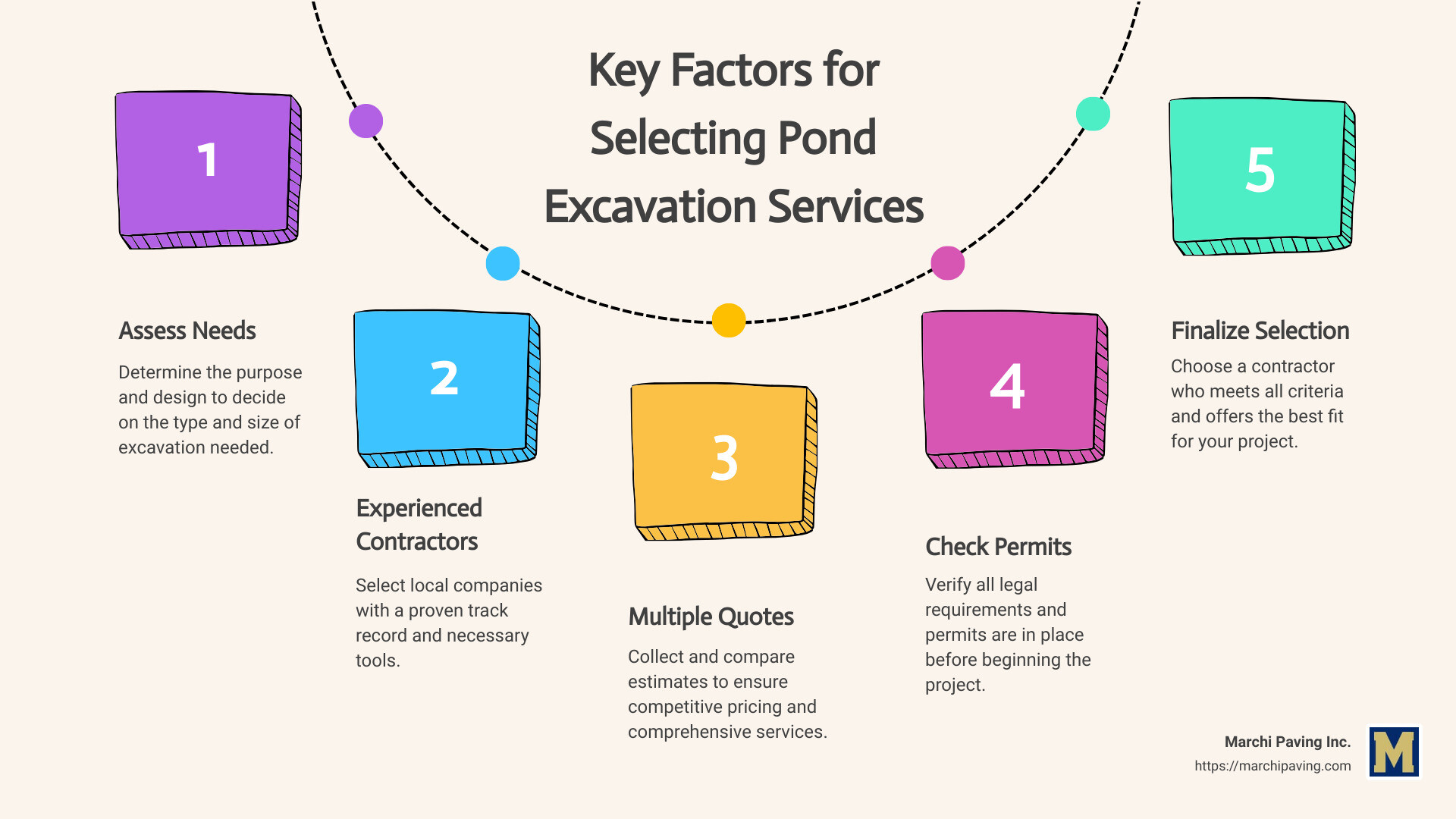
By keeping these points in mind, you can efficiently steer the process and select the best service for your pond excavation needs.
Basic pond excavation services near me glossary:
– drainage and excavation services near me
– excavating and landscaping services near me
– hydro excavation services near me
Understanding Pond Excavation
Pond excavation is more than just digging a hole and filling it with water. It’s a detailed process that involves careful planning and consideration of multiple factors to ensure a successful outcome.
Depths
The depth of your pond is crucial. It affects everything from the types of plants and fish you can have, to the overall health of the ecosystem. Typically, a pond should be at least 18 inches deep to prevent freezing in winter. However, if you’re planning to stock fish, deeper ponds of 3 feet or more are recommended to provide a safe habitat.
Shapes
The shape of your pond influences both its aesthetic appeal and functionality. Natural-looking ponds often have irregular shapes with gentle curves, mimicking the contours found in nature. This design not only improves the visual appeal but also provides varied habitats for different species. Rectangular or circular shapes, while less common in natural settings, can be easier to maintain and are often used for specific purposes like swimming or irrigation.
Planting Areas
Incorporating planting areas into your pond design is essential for creating a balanced ecosystem. These areas, often referred to as shelves, are shallow sections where aquatic plants can thrive. Plants help stabilize the pond’s ecosystem by providing oxygen, offering shelter for wildlife, and reducing algae growth by competing for nutrients. When planning your pond, consider including shelves at different depths to accommodate a variety of plant species.
Utility Depressions
Utility depressions are a practical aspect of pond excavation. These are specific areas designed for functional purposes, such as housing pumps or filtration systems. They are typically dug deeper than the rest of the pond to ensure equipment is submerged and operates efficiently. Proper planning and placement of utility depressions can significantly improve the pond’s functionality and maintenance.
By understanding these key elements—depths, shapes, planting areas, and utility depressions—you can create a pond that is both beautiful and functional. Whether you’re aiming for a serene garden feature or a lively wildlife habitat, attention to these details will help ensure your pond meets your needs and thrives for years to come.
5 Best Pond Excavation Services Near Me
Finding the best pond excavation services near me can be a game-changer for your landscaping project. A well-excavated pond adds beauty, increases property value, and provides a habitat for wildlife. Here are five top services to consider:
Choose a service that understands your local terrain and climate. Local companies have the advantage of knowing the soil type and weather patterns, which can affect excavation work. This local expertise ensures that your pond is dug to withstand seasonal changes and local environmental conditions.
- Experience with Hydro Excavation
Hydro excavation uses pressurized water to break up soil, which is then vacuumed up. This method is particularly useful for pond excavation as it reduces the risk of damaging underground utilities. It’s a safer and more precise option compared to traditional digging methods. If you have underground pipes or cables, look for services that offer hydro excavation.
- Customer Reviews and Testimonials
Reviews can tell you a lot about a company’s reliability and quality of work. Look for services with positive feedback from past clients. A review might highlight how a company exceeded expectations, like one client who praised an excavation service for their professionalism and attention to detail, leaving them with the perfect yard change.
- Versatile Equipment and Techniques
The best pond excavation services use a range of equipment to handle different project scales. From mini excavators for tight spaces to larger machinery for expansive ponds, the right tools make a difference. Ensure the company uses modern, well-maintained equipment to ensure efficiency and safety on the job.
- Comprehensive Service Offering
Look for companies that offer comprehensive services beyond just digging. This might include pond design, installation of water features, and landscaping. A full-service provider can save you time and money by handling all aspects of your pond project from start to finish.
By considering these factors, you can find the best pond excavation services near me to bring your vision to life. Selecting a reliable and experienced provider ensures your pond will be a lasting and beautiful feature on your property.
Benefits of Using an Excavator for Pond Digging
When it comes to pond digging, choosing the right equipment is crucial. Excavators are the go-to machines for this task, offering efficiency and precision. Here’s why using an excavator is beneficial for your pond project:
Compact Excavator
Compact excavators are perfect for smaller ponds or tight spaces. They are agile and can maneuver in areas where larger machines might struggle. This makes them ideal for residential projects where space is limited.
- Size and Flexibility: These machines are smaller and lighter, which means they can work in confined spaces without causing damage to the surrounding landscape.
- Precision Digging: Their size allows for more precise digging, which is essential when shaping the pond and creating planting areas.
Standard Excavator
For larger ponds or projects that require moving more earth, a standard excavator is the best choice. These machines offer more power and reach, making them suitable for bigger jobs.
- Higher Capacity: Standard excavators can handle more substantial volumes of soil, speeding up the excavation process.
- Versatility: They come with various attachments that can be used for different tasks, such as trenching for utility depressions or grading the pond’s edges.
Job Requirements
Choosing between a compact and standard excavator depends on your specific job requirements.
- Project Scale: Consider the size and depth of your pond. Larger projects may necessitate the use of a standard excavator.
- Site Conditions: Evaluate the terrain and access points. Compact excavators are better for sites with limited access or delicate surroundings.
- Budget and Timeline: Compact excavators might be more cost-effective for smaller projects, while standard excavators are efficient for larger tasks, potentially reducing the overall project timeline.

In summary, selecting the right excavator for your pond digging project can improve efficiency and ensure a smooth process. Whether you opt for a compact or standard excavator, understanding your project’s specific needs will help you make the best choice.
Hydro Excavation vs. Traditional Excavation
When it comes to choosing the right method for pond excavation services near me, understanding the differences between hydro excavation and traditional methods is key.
Hydro Excavation
Hydro excavation uses pressurized water to break up soil, which is then vacuumed into a debris tank. This method is particularly useful when working near sensitive underground utilities.
- Precision and Safety: Hydro excavation is less likely to damage underground utilities like water pipes, gas lines, or electrical cables. This minimizes the risk of costly repairs and improves worker safety.
- Less Disruption: The process is non-destructive and precise, making it ideal for projects in residential areas where minimizing disruption is crucial.
- Environmental Impact: Hydro excavation is considered more environmentally friendly as it reduces soil disturbance and the potential for erosion compared to traditional digging methods.
Traditional Excavation
Traditional excavation methods involve using mechanical equipment like backhoes or excavators to dig and move soil. This approach is often chosen for its speed and ability to handle larger volumes of earth.
- Speed and Efficiency: Traditional excavation can be faster for large-scale projects where precision is less of a concern. It’s suitable for creating expansive pond shapes or when working in open areas without underground utilities.
- Cost-Effectiveness: In some cases, traditional methods may be more cost-effective, especially for straightforward projects with fewer obstacles.
Choosing the Right Method
Deciding whether to use hydro or traditional excavation depends on several factors:
- Proximity to Utilities: If your pond project is near underground utilities, hydro excavation may be the safer option.
- Project Scale and Location: For larger projects or those in rural areas, traditional methods might be more suitable.
- Budget Considerations: Evaluate the costs associated with each method. Hydro excavation might be more expensive upfront but can save money by avoiding utility damage.
Understanding the advantages and limitations of each excavation method can help you select the best approach for your pond project. Whether you prioritize precision and safety with hydro excavation or opt for the speed of traditional methods, the right choice will ensure your project is completed efficiently and effectively.
Frequently Asked Questions about Pond Excavation
Can you dig a pond with an excavator?
Absolutely! Excavators are essential tools for pond digging. They come in various sizes to fit different job requirements. A compact excavator is ideal for smaller projects or areas with limited access. It’s perfect for creating intricate pond shapes or working in tight spaces. On the other hand, a standard excavator is better suited for larger projects. It can move more earth quickly, making it efficient for digging deeper ponds or creating larger water features.
What is an excavation pond?
An excavation pond is a water body created by digging into the ground. The design can vary in depths and shapes depending on the intended use. Some ponds include planting areas for aquatic plants, which add beauty and help maintain water quality. Others may have utility depressions for collecting runoff or managing stormwater. The flexibility in design makes excavation ponds popular for both aesthetic and functional purposes.
How do I choose the right excavation service?
Choosing the right excavation service involves several considerations:
- Experience and Expertise: Look for companies with a proven track record in pond excavation. They should understand the local soil conditions and have experience with similar projects.
- Equipment and Technology: Ensure the company uses modern equipment like compact and standard excavators. Advanced tools can make the excavation process more efficient and precise.
- Safety and Compliance: Verify that the company follows safety guidelines and local regulations. This is crucial, especially if your project involves digging near utilities.
- Reputation and Reviews: Check online reviews and ask for references. A reputable company will have positive feedback from past clients.
- Cost and Estimates: Obtain detailed quotes from multiple companies. Compare the services offered and ensure there are no hidden fees.
By carefully evaluating these factors, you can find reliable pond excavation services that meet your needs and budget.
Conclusion
When it comes to pond excavation services near me, Marchi Paving Inc. stands out as a leader in the industry. With over two decades of experience, we specialize in delivering high-quality projects using cutting-edge technology. Our expertise ensures that each excavation job is executed with precision and care.
Advanced Equipment: We invest in state-of-the-art machinery, which allows us to perform complex excavations efficiently. Whether it’s a compact excavator for small, intricate pond designs or a standard excavator for larger water features, we have the right tools for every job. This commitment to using advanced equipment not only speeds up the process but also improves the quality of the final result.
In-House Project Execution: Unlike many contractors, we handle every aspect of your project in-house. This means you get consistent quality and communication from start to finish. Our team of skilled professionals takes pride in their work, ensuring that your pond excavation is completed on time and to your satisfaction.
Choosing Marchi Paving Inc. for your pond excavation needs means partnering with a company that values excellence and customer satisfaction. Our dedication to quality craftsmanship and innovative solutions sets us apart, making us the preferred choice for excavation services.
Ready to get started on your pond project? Contact us today for a consultation and experience the Marchi Paving difference.
Excavation Companies Hiring Near Me: Top 5 Exciting Jobs
When searching for excavation companies hiring near me, you’re likely looking for immediate job opportunities in the excavation industry. Here’s a quick overview to get you started:
- Current Openings at Top Companies: Check reputable companies like Marchi Paving Inc. in North Chelmsford, MA, known for comprehensive excavation services.
- Diverse Job Roles: Opportunities typically range from heavy equipment operators to project managers.
- Growing Industry Demand: With construction projects booming, especially in Middlesex County, the need for skilled workers is increasing.
The excavation industry plays a crucial role in construction and infrastructure development. It’s all about laying the groundwork—literally—for homes, businesses, and public spaces. For property managers and homeowners, selecting the right excavation team is paramount to project success. The industry offers diverse career paths, promising not only stable employment but also chances for skill improvement and professional growth.
Whether your interest lies in site preparation or operating sophisticated machinery, there are numerous positions available. With construction growing rapidly, particularly in areas like parking lot paving and residential projects, now is an opportune time to pursue a career in excavation.

Excavation companies hiring near me vocabulary:
– dirt work near me
– dozer work near me
– excavator service near me
Benefits of Working in Excavation
Working in the excavation industry offers several appealing benefits that make it a rewarding career choice. Let’s explore some of the key advantages you can expect when you find excavation companies hiring near me.
Job Stability
The demand for excavation services is strong and consistent. As urban areas expand and infrastructure projects grow, the need for skilled excavation workers remains steady. This means you can enjoy a stable career with less worry about job security. Companies like Marchi Paving Inc. are always on the lookout for talented individuals to join their team, ensuring continuous employment opportunities.
Career Growth
The excavation field offers numerous paths for career advancement. Starting as an equipment operator can lead to roles such as site supervisor or project manager. With experience and dedication, you can climb the ranks and take on more responsibilities. Companies often provide training programs to help you develop the skills needed for higher-level positions.
Skill Development
Working in excavation helps you build a diverse skill set. You’ll learn to operate different machinery, understand site plans, and work with various materials. This hands-on experience is invaluable and can be transferred to other areas within the construction industry. The ability to adapt and learn new techniques is a significant asset in your career.
Competitive Pay
Excavation jobs offer competitive salaries that reflect the skills and expertise required. Operators, supervisors, and managers in this field often earn higher wages compared to other construction roles. The pay is a testament to the importance and complexity of the work involved in excavation projects.
In summary, pursuing a career in excavation not only provides job stability and growth opportunities but also allows you to develop a broad range of skills while earning a competitive salary. If you’re considering a career change or looking to enter the construction industry, keep an eye out for excavation companies hiring near me.
How to Find Excavation Companies Hiring Near You
Searching for excavation companies hiring near me can be straightforward if you know where to look. Here are some practical methods to help you find job opportunities in the excavation industry.
Job Boards
Online job boards are a great starting point. Websites like Indeed, Monster, and Glassdoor often list a variety of excavation jobs. You can filter results by location to find positions near you. Regularly checking these sites can keep you updated on the latest openings.
Company Websites
Visit the websites of local excavation companies, like Marchi Paving Inc., to find job postings. Many companies list career opportunities directly on their sites. This can also give you insight into the company’s culture and the types of projects they handle.
Local Classifieds
Don’t overlook local classifieds, both online and in print. Websites like Craigslist and local newspapers often have job listings that might not appear on larger job boards. These platforms can be especially useful for finding smaller, local companies that are hiring.
Networking
Networking is a powerful tool in any job search. Connect with people in the industry through social media platforms like LinkedIn. Attend local construction and trade events to meet potential employers. Building a network can lead to job leads and referrals, which are invaluable in the job search process.
By utilizing these resources, you can efficiently find excavation companies hiring near me and take the next step in your career.
Top Excavation Company Hiring Near You
Finding the right job in the excavation industry can be a game-changer. Here is a top excavation company that is currently hiring near you. This company not only offers great job opportunities but also provides a pathway for career growth.
Marchi Paving Inc.
Profile: Based in North Chelmsford, MA, Marchi Paving Inc. is known for its expertise in both residential and commercial excavation services. Their commitment to quality and safety makes them a top choice for job seekers.
Job Openings: They are currently looking for skilled laborers and heavy equipment operators. Opportunities for site supervisors and project managers may also be available.
Application Process: Interested candidates can visit their careers page to apply online. The application process is straightforward, with an emphasis on relevant experience and certifications.
By exploring opportunities at Marchi Paving Inc., you can find promising positions in the excavation industry. Whether you’re a seasoned professional or just starting, this company offers a range of positions to match your skills and career goals.
Qualifications and Skills Needed for Excavation Jobs
Working in the excavation industry can be rewarding, but it requires specific skills and qualifications. Here’s what you need to know if you’re eyeing a position in excavation companies hiring near me.
Required Skills
- Technical Skills: Understanding how to operate heavy machinery like mini excavators and bulldozers is crucial. Familiarity with equipment such as those highlighted in the mini excavator services is beneficial.
- Safety Awareness: Safety is a top priority. You should be well-versed in safety protocols to prevent accidents on-site.
- Problem-solving: Being able to quickly assess situations and determine the best course of action is essential, especially when unexpected issues arise during excavation.
- Physical Fitness: Excavation work is physically demanding. You need the stamina to handle long hours and heavy lifting.
Certifications
- OSHA Certification: It’s often required to ensure you understand workplace safety standards.
- Heavy Equipment Operator Certification: This certification demonstrates your ability to safely operate heavy machinery.
- First Aid/CPR Certification: Being prepared for emergencies can be a plus in the field.
Experience Levels
- Entry-Level: Positions like laborers or apprentices often don’t require prior experience. However, a basic understanding of construction or machinery can be helpful.
- Mid-Level: Roles such as equipment operators or site supervisors usually require 1-3 years of experience in similar settings.
- Senior Level: Project managers and site engineers typically need over 5 years of experience in excavation or construction, along with leadership skills.
Training Programs
Many companies offer training programs to help you advance your skills. For instance, Marchi Paving Inc. provides opportunities for on-the-job training, allowing you to learn from experienced professionals. These programs can cover everything from machinery operation to advanced safety techniques.

By focusing on these skills and qualifications, you can position yourself as a strong candidate for roles in the excavation industry. Whether you’re just starting or looking to move up, continuous learning and certification can open doors to new opportunities.
Types of Excavation Jobs Available
When exploring opportunities in excavation companies hiring near me, it’s important to understand the variety of roles available. Each position plays a crucial part in the success of excavation projects. Here’s a look at some common jobs you might find:
Heavy Equipment Operator
Heavy equipment operators are the backbone of any excavation project. They handle machines like bulldozers, backhoes, and mini excavators. Operators need to be skilled in using equipment efficiently and safely. The ability to maneuver machinery in tight spaces, as seen with the mini excavators, is essential. Operators should also perform routine maintenance checks to ensure everything runs smoothly.
Site Supervisor
Site supervisors oversee the entire excavation process. They coordinate between different teams and ensure that the project stays on schedule and within budget. Supervisors must have strong leadership skills and a keen eye for detail. They are responsible for safety compliance and often handle unexpected challenges on-site. Experience in managing construction projects is typically required for this role.
Laborer
Laborers are the hands-on workers who perform various tasks to support the excavation process. This can include setting up equipment, clearing debris, and assisting operators. While this role is often entry-level, laborers gain valuable experience that can lead to advanced positions. Physical fitness and a willingness to work in all weather conditions are important for this job.
Project Manager
Project managers plan and execute excavation projects from start to finish. They handle everything from budgeting to hiring and logistics. This role requires excellent organizational skills and the ability to think strategically. Project managers often have years of experience in excavation or construction and a deep understanding of how to deliver projects efficiently.
Each of these roles offers unique challenges and opportunities for growth in the excavation industry. Whether you’re operating machinery or managing an entire project, there’s a place for you in this dynamic field.
Tips for Applying to Excavation Companies
Applying for a job in the excavation industry can be straightforward if you know how to present yourself effectively. Here are some practical tips to help you stand out when applying to excavation companies hiring near you.
Resume Tips
Your resume is your first impression, so make it count. Focus on highlighting relevant experience and skills that match the job description.
- Tailor your resume: Customize your resume for each application. Emphasize experience with excavation equipment or construction projects.
- Highlight certifications: If you have certifications like OSHA safety training or equipment operation licenses, make sure they are prominently displayed.
- Use clear formatting: Keep your resume easy to read with clear headings and bullet points. Stick to one or two pages.
Cover Letter Advice
A well-crafted cover letter can set you apart from other candidates. It’s your chance to express why you’re a great fit for the company.
- Be specific: Mention the company by name and explain why you want to work there. Reference specific projects or values that resonate with you.
- Show enthusiasm: Demonstrate your passion for the industry and the role. Employers appreciate candidates who are genuinely interested in their work.
- Keep it concise: Limit your cover letter to a single page. Focus on the most compelling reasons why you should be hired.
Interview Preparation
Preparing for an interview can boost your confidence and improve your performance.
- Research the company: Learn about the company’s history, services, and recent projects. This shows you’re serious about the opportunity.
- Practice common questions: Be ready to discuss your experience, skills, and how you handle challenges. Practice answering questions clearly and confidently.
- Prepare your own questions: Have a few questions ready to ask the interviewer. This shows you’re engaged and interested in the role.
By following these tips, you’ll be well-equipped to make a strong impression on potential employers in the excavation industry. Whether you’re aiming for a role as a heavy equipment operator or a project manager, presenting yourself effectively is key to landing the job.
Frequently Asked Questions about Excavation Jobs
What qualifications do I need for an excavation job?
To start a career in excavation, you typically need a mix of practical skills and certifications. Many roles, such as heavy equipment operators, require specific licenses to operate machinery safely. For example, having an OSHA safety training certification is often essential.
For entry-level positions, like laborers, a high school diploma might be sufficient. However, for more specialized roles, such as site supervisors or project managers, experience in construction or a related field can be crucial. Additionally, technical training programs can provide valuable hands-on experience and knowledge about operating various excavation equipment.
Are there part-time excavation jobs available?
Yes, part-time excavation jobs are available, though they might be less common than full-time positions. These roles can be ideal for those seeking flexibility or looking to gain experience in the field without committing to a full-time schedule.
Part-time positions are often found in local classifieds or through networking within the industry. They might include roles like laborers or seasonal workers, especially during peak construction periods.
How can I get excavation experience with no prior background?
Starting with no experience is possible by targeting entry-level positions or enrolling in training programs. Many companies offer on-the-job training for roles that don’t require prior experience, such as general laborer positions.
Another effective way to gain experience is through apprenticeships or internships. These opportunities allow you to learn from seasoned professionals while building your skills. Additionally, attending workshops or courses on equipment operation can provide a solid foundation and make you a more competitive candidate when applying to excavation companies hiring near you.
Conclusion
In conclusion, the excavation industry offers a wealth of opportunities for those looking to build a rewarding career. With roles ranging from heavy equipment operators to project managers, the field provides job stability, competitive pay, and a chance for skill development. Whether you’re just starting or looking to advance, the industry is ripe with potential for growth.
At Marchi Paving Inc., we pride ourselves on our commitment to excellence. With over 20 years of experience, we offer high-quality, in-house project execution using advanced equipment. Our team is dedicated to delivering exceptional results for every project, whether it’s asphalt paving, excavation, or drainage solutions. If you’re seeking excavation companies hiring near me, consider exploring opportunities with us. Our excavation services page is a great place to start your journey.
The key to a successful career in excavation is to stay informed and proactive. Look for job openings on company websites, job boards, and local classifieds. Networking can also open doors to new opportunities. Equip yourself with the necessary skills and certifications, and don’t hesitate to reach out to companies like Marchi Paving Inc. for potential career paths.
We look forward to paving the way to your success in the excavation industry!
Retaining Walls Contractor: Top 5 Reliable Experts 2024

The retaining walls contractor is the backbone of any successful landscaping project. Retaining walls are essential in changing your outdoor spaces into beautiful and functional areas. Whether you’re looking to improve the aesthetic appeal of your garden or control erosion and manage water drainage, a skilled contractor is crucial.
- Purpose: Retaining walls prevent soil erosion and stabilize land.
- Benefits: Improve beauty, improve usability, and add value to your property.
- Choosing a Contractor: Look for experience, licenses, and positive customer reviews for reliable outcomes.
Incorporating retaining walls in your landscaping offers both practical and visual benefits. They help manage slopes, create terraces for planting, and add unique dimensions to your property. These walls can be constructed using a variety of materials, like natural stone, concrete blocks, or timber, depending on your style and needs.
Choosing the right contractor ensures that your retaining wall is not only attractive but also durable and effective. With the right expertise, a retaining walls contractor can make your vision a reality, ensuring that your landscape remains both stunning and sustainable.
Retaining walls contractor glossary:
– retaining wall repair near me
– retaining wall engineer near me
– retaining wall landscaping near me
The Importance of Retaining Walls in Landscaping
Retaining walls are more than just functional structures; they’re crucial elements in landscaping that provide multiple benefits. Let’s break down why these walls are so important.
1. Soil Erosion Control
One of the primary roles of retaining walls is to prevent soil erosion. In areas with heavy rainfall or sloped terrain, soil can easily wash away, leading to landscape damage and potential property issues. Retaining walls act as a barrier, holding the soil in place and maintaining the land’s integrity.
2. Effective Water Drainage
Water drainage is another critical aspect managed by retaining walls. By directing water flow, these walls prevent pooling and flooding, which can damage plants and structures. Proper drainage solutions integrated into the wall design can significantly reduce water-related issues on your property.
3. Land Stability
Retaining walls provide essential support to unstable land. They are particularly useful in hilly or uneven terrains, where they can prevent landslides and soil movement. By stabilizing the land, retaining walls create safer and more usable outdoor spaces.
4. Aesthetic Appeal
Beyond functionality, retaining walls improve the visual appeal of your landscape. They can be designed with various materials, such as natural stone or concrete blocks, to complement your home’s style. These structures add texture and depth, creating visually interesting landscapes that increase property value.
A well-constructed retaining wall offers a blend of practical advantages—like erosion control and land stability—and aesthetic improvements that make your outdoor spaces more inviting and valuable.
Types of Retaining Walls
Retaining walls come in various styles and materials, each offering unique benefits and aesthetics. Here’s a closer look at some popular types:
Dry Stacked or Gravity Retaining Wall
Dry stacked or gravity retaining walls are built without mortar. Instead, they rely on the careful placement of stones and gravity to hold them in place. Natural stone, such as granite or limestone, is often used for its timeless beauty and durability. These walls are perfect for those seeking a rustic, natural look that blends seamlessly with the landscape.
Advantages:
- No mortar needed: Simplifies construction and allows for natural drainage.
- Aesthetic appeal: Offers a classic, organic look with natural stones.
Considerations:
- Skill required: Precision stacking is crucial for stability.
- Height limitations: Best suited for lower walls due to reliance on weight for stability.
Concrete Block Retaining Wall
Concrete block retaining walls are a popular choice for their strength and versatility. These walls are constructed using cinder blocks that are stacked, mortared, and often reinforced with steel. Stone veneers or solid stone toppers can be added for a refined finish.
Advantages:
- Durable and strong: Suitable for higher walls and heavy loads.
- Customizable appearance: Can be dressed up with various veneers for a polished look.
Considerations:
- Installation complexity: Requires professional expertise for proper construction.
- Cost: Generally higher due to materials and labor.
Timber Sleepers and Gabion Walls
Timber sleepers and gabion walls offer unique and flexible solutions for retaining wall needs. Timber walls are constructed using railroad ties or treated timber, providing a natural, warm aesthetic. Gabion walls use wire mesh baskets filled with stones or other materials, creating an industrial yet earthy look.
Advantages:
- Eco-friendly options: Timber can be sourced sustainably, and gabion walls use recycled materials.
- Versatile designs: Both types allow for creative and adaptable design solutions.
Considerations:
- Longevity: Timber may require regular maintenance to prevent rot, while gabion walls need sturdy construction to avoid collapse.
- Design flexibility: Gabion walls can be filled with various materials for different textures and colors.
In summary, each retaining wall type offers distinct advantages and considerations. Whether you prefer the natural beauty of dry-stacked stones, the robustness of concrete blocks, or the adaptability of timber and gabion walls, there’s a solution to fit your landscaping needs.
How to Choose the Right Retaining Walls Contractor
Choosing the right retaining walls contractor is crucial for a successful project. Here’s how to make the best choice:
Evaluating Contractor Credentials
- Experience Matters
Look for contractors with a proven track record. Experience means they’ve handled various challenges and know how to deliver quality work. - Licensing and Insurance
Ensure the contractor holds a valid general contractor license. This confirms they meet local building codes and regulations. Also, verify their insurance coverage. This protects you from liabilities during the project. - Safety Standards
Contractors should adhere to strict safety standards. This not only ensures the well-being of their workers but also protects your property from potential damage.
Reading Customer Reviews and Testimonials
- Trust the Reviews
Platforms like Angie’s List, Yelp, and the Better Business Bureau (BBB) offer insights into a contractor’s reputation. Look for consistent positive feedback about their reliability and workmanship.

- Project Portfolio
Request to see a portfolio of past projects. This gives you a glimpse into their style and the quality of their work. A diverse portfolio can indicate versatility and skill. - Testimonials
Satisfied customers often share their experiences. Testimonials can highlight a contractor’s strengths, such as their professionalism, communication, and ability to stay on budget.
By focusing on these aspects, you can find a retaining walls contractor who will bring your landscaping vision to life with expertise and care.
Cost Considerations for Retaining Walls
When planning a retaining wall project, understanding the costs involved is essential. Costs can vary widely based on materials, labor, project complexity, and permits. Let’s break it down.
Material Costs
The choice of materials significantly impacts the overall cost of your retaining wall. Here’s a quick overview:
- Concrete Blocks: These are a popular choice for their durability and affordability. They typically range from $10 to $100 per square foot depending on the quality and design complexity.
- Wood: Timber is a cost-effective option, usually priced between $13 and $28 per square foot. However, wood may require more frequent maintenance compared to other materials.
- Natural Stone: Known for its aesthetic appeal and longevity, natural stone is more expensive, costing anywhere from $13 to $95 per square foot. Granite and limestone are common choices for their resilience and beauty.
- Bricks: Bricks offer a classic look and are priced between $16 and $38 per square foot. They can be used as a veneer or as the primary material with proper reinforcement.

Labor Costs
Labor costs are a significant part of the budget. They can be calculated in two main ways:
- Per Square Foot: Labor costs vary based on the complexity of the project and the material used. Expect to pay anywhere from $10 to $100 per square foot for labor alone.
- Hourly Rates: Some contractors may charge by the hour, especially for smaller projects or repairs. Rates can vary widely but generally fall between $50 and $100 per hour.
Project Complexity
The complexity of your project can increase costs. Factors like site preparation, the slope of the land, and drainage requirements add to the expense. Complex projects require more skilled labor and longer timelines, which can drive up both material and labor costs.
Permits
In many areas, building a retaining wall over a certain height requires a permit. For walls over three feet high, you may need to obtain a building permit. Permit fees vary by location, so it’s wise to check with your local authorities or consult your retaining walls contractor for guidance.
Understanding these cost considerations helps you plan effectively and ensures your retaining wall project aligns with your budget. In the next section, we’ll address some frequently asked questions about retaining walls and their contractors.
Frequently Asked Questions about Retaining Walls Contractors
When planning a retaining wall project, it’s common to have several questions about costs, materials, and design. Let’s address some of these frequently asked questions to guide you through the process.
How do you calculate labor cost for a retaining wall?
Labor costs for building a retaining wall can be calculated in a couple of ways. The most common methods are:
- Per Square Foot: This method is straightforward. Labor costs can range from $10 to $100 per square foot, depending on the complexity of the project and the materials used. For example, installing natural stone might require more skill and time than using concrete blocks, thus increasing the cost.
- Hourly Rates: Some contractors prefer to charge by the hour, especially for smaller projects or repairs. Typically, hourly rates fall between $50 and $100 per hour. It’s important to discuss these rates with your contractor to understand how they impact your overall budget.
What is the most cost-effective retaining wall?
Choosing the right material is crucial for balancing cost and durability. Here’s a look at some cost-effective options:
- Concrete Blocks: These are a popular choice due to their affordability and strength. Concrete blocks are durable and can be installed quickly, making them a cost-effective option for many projects.
- Wood: Timber, especially treated wood, is another budget-friendly choice. While wood is cheaper upfront, it may require more maintenance over time compared to masonry options.
Both materials offer affordability, but the choice will depend on your project’s specific needs and your budget.
Who designs a retaining wall?
Designing a retaining wall isn’t just about aesthetics; it’s about ensuring stability and functionality. Here’s who might be involved:
- Wall Design Engineer: These professionals focus on the technical aspects of the wall design, ensuring it can withstand the forces acting upon it.
- Site Civil Engineer: They assess the land and its characteristics, like soil type and slope, to ensure the wall design fits the environment.
- Geotechnical Engineer: These experts evaluate the soil and its ability to support the wall, providing crucial input for the design process.
Collaborating with these professionals ensures your retaining wall is not only beautiful but also safe and long-lasting.
By understanding these aspects, you can make informed decisions about your retaining wall project. Next, we’ll explore more on choosing the right contractor for your needs.
Conclusion
At Marchi Paving Inc., we pride ourselves on being more than just a retaining walls contractor. With over 20 years of experience, we understand that every project is unique and requires a personalized approach. Our commitment to high-quality execution ensures that your retaining wall not only meets but exceeds your expectations.
Our advanced equipment and skilled team allow us to handle every aspect of the project in-house. This means we maintain strict quality control from start to finish, ensuring that your project is completed on time and within budget. Our clients trust us to deliver durable, aesthetically pleasing retaining walls that improve the beauty of their landscapes while providing essential functions like erosion control and land stability.
Choosing the right contractor is crucial to the success of your retaining wall project. We invite you to experience the difference with Marchi Paving Inc. Let us bring your vision to life with our expert hardscaping services. Contact us today to get started on your next project.
Landscape and Hardscape: Top 3 Amazing Benefits 2024
Landscape and hardscape are two crucial components in creating outdoor spaces that are both beautiful and functional. While landscape refers to all living elements like grass, plants, and trees, hardscape includes non-living materials such as stones, brick, and wood. Each plays a distinct role, and their integration is key to a stunning and harmonious outdoor living area.
Understanding the interplay between these elements is essential for property owners in Middlesex County, MA, who aim to improve their commercial or residential spaces. Here are the key points to consider:
- Aesthetic Improvement: A well-integrated design leverages both landscape’s natural beauty and hardscape’s structured appeal to boost curb appeal.
- Functionality: Hardscapes provide structure and support, facilitating accessibility and safety, while landscapes bring life and vibrancy.
- Value Addition: Thoughtful planning and balance between landscape and hardscape can significantly increase property value through improved aesthetics and usability.
Whether you are aiming to improve your property’s aesthetic or to increase its value and functionality, integrating landscape and hardscape effectively addresses these goals.

Landscape and hardscape word guide:
– hardscape maintenance service
– hardscapes landscaping
– landscape professionals near me
Understanding Landscape and Hardscape
Creating a harmonious outdoor space involves blending landscape and hardscape elements. But what exactly do these terms mean? Let’s dive in.
What is Hardscape?
Hardscape refers to the non-living elements of outdoor design. Think of it as the backbone or framework of your yard. These are the materials that provide structure and functionality.
- Materials: Common hardscape materials include stone, concrete, brick, wood, and metal. These materials are durable and require minimal maintenance.
- Structures: Examples of hardscape structures include patios, walkways, retaining walls, and decks. These features help organize space, provide pathways, and create focal points.
Hardscape elements not only add visual interest but also improve the usability of outdoor spaces. For instance, a well-designed patio can serve as an extension of your indoor living area, perfect for entertaining guests or enjoying a quiet evening.

What is Landscape?
On the other hand, landscape encompasses all the living, organic components of your outdoor area. These elements bring life, color, and texture to your space.
- Living Elements: This includes plants, trees, flowers, shrubs, and grass. Each element plays a role in creating a vibrant and inviting environment.
- Examples: Imagine a lush garden filled with colorful flowers and a variety of trees providing shade and habitat for wildlife. Landscapes can transform a simple yard into a serene oasis.
Landscaping not only improves the beauty of your property but also contributes to environmental benefits. Trees and plants improve air quality, reduce erosion, and provide habitats for birds and other wildlife.

Differences and Integration
While landscape and hardscape serve different purposes, their integration is key to creating a cohesive outdoor space. Hardscape provides the necessary structure and durability, while landscape adds life and softness.
- Balance: A yard with too much hardscape might feel sterile, while one with only landscape elements might feel overgrown. The key is to find a balance that suits your personal style and functional needs.
- Design: Integrating both elements can improve the visual harmony and practical use of your outdoor area. For example, a stone pathway meandering through a garden can provide both accessibility and aesthetic appeal.
By understanding the roles of landscape and hardscape, you can create an outdoor space that is not only beautiful but also functional and sustainable.
Benefits of Integrating Landscape and Hardscape
Combining landscape and hardscape elements can transform your outdoor area into a cohesive, functional, and visually appealing space. Let’s explore the benefits of this integration.
Aesthetic Appeal
Integrating landscape and hardscape improves the curb appeal of your home. A well-designed outdoor space with both elements can create visual harmony and design balance.
- Curb Appeal: Features like a stone patio surrounded by lush greenery instantly catch the eye and invite admiration. This can significantly increase your property’s attractiveness and value.
- Visual Harmony: Blending hard materials like stone or brick with soft, organic elements such as flowers and trees creates a balanced look. This harmony makes the space feel inviting and well thought out.
Practical Benefits
Combining landscape and hardscape elements also brings practical advantages, such as durability, accessibility, and low maintenance.
- Durability: Hardscape features like patios and walkways are built to last. They withstand weather changes and heavy foot traffic, providing a reliable structure for your outdoor activities.
- Accessibility: Pathways and decks make navigating your garden easy, even for those with mobility challenges. This accessibility improves the usability of your space.
- Low Maintenance: While plants require regular care, hardscape elements need less upkeep. They offer a stable foundation, reducing the time and effort needed for maintenance.
Environmental Impact
Integrating landscape and hardscape can also have a positive environmental impact. Eco-friendly practices, drainage solutions, and wildlife habitats are just a few benefits.
- Eco-Friendly Practices: Using permeable pavers and other sustainable materials helps manage water runoff and reduces the need for artificial storm drainage systems.
- Drainage Solutions: Hardscape features like retaining walls can improve drainage, preventing waterlogging and ensuring your plants receive the right amount of moisture.
- Wildlife Habitat: Landscaping with native plants and trees supports local wildlife. Birds, bees, and butterflies find food and shelter, turning your yard into a thriving ecosystem.
By thoughtfully integrating landscape and hardscape, you can create an outdoor space that is not only beautiful but also functional, durable, and environmentally responsible.
Popular Hardscape Elements
When it comes to creating a cohesive outdoor space, hardscape elements like patios, walkways, and retaining walls play a crucial role. They provide structure, accessibility, and aesthetic appeal to any landscape design.
Patios
Materials: Patios can be constructed from a variety of materials, including concrete, stone pavers, flagstone, and natural stone. Each material offers unique benefits in terms of durability and appearance. For example, stone pavers are known for their strength and longevity, while flagstone provides a natural, rustic look.
Design Ideas: A patio can serve as the heart of your outdoor space, perfect for dining, relaxing, or entertaining. Consider incorporating built-in seating or a fire pit to improve its functionality. For smaller spaces, using irregularly shaped pavers can create a more intricate pattern and maximize the area.
Installation Tips: When installing a patio, ensure a solid foundation to prevent shifting and settling over time. Proper drainage is also essential to avoid water pooling. Hiring a professional can help ensure these critical aspects are addressed.
Walkways
Materials: Walkways are often made from gravel, flagstone, brick, or concrete. Flagstone and natural stone are popular choices due to their strength and timeless appeal. These materials can withstand the elements and heavy foot traffic.
Safety: Safety is a key consideration when designing walkways. Ensure that the surface is slip-resistant, especially in areas prone to rain or snow. Using textured stones or adding anti-slip coatings can help.
Design Tips: Walkways should improve the flow of your outdoor space. Consider creating gentle curves to guide the eye and soften the landscape. Edging materials like wood or stone can help define the pathway and add a finished look.
Retaining Walls
Materials: Retaining walls can be constructed from a range of materials, including concrete blocks, natural stone, or stone veneer. These materials not only provide strength but also add a decorative element to your landscape.
Erosion Control: One of the primary functions of retaining walls is to control soil erosion. They hold back soil on sloped landscapes, creating flat, usable spaces for planting or recreation.
Design Ideas: Retaining walls can be more than just functional. Incorporate raised planter beds on top of the wall to add greenery and color. Consider using materials that complement other hardscape elements for a cohesive look.
By thoughtfully incorporating these hardscape elements, you can improve the functionality and beauty of your outdoor space, making it a place where you and your family will love to spend time.
Popular Landscape Elements
While hardscape elements provide structure, landscape elements bring life and color to your outdoor space. Let’s explore some of the most popular landscape elements: lawns, gardens, and trees.
Lawns
Maintenance: Keeping a lush, green lawn requires regular care. This includes mowing, watering, and fertilizing. Seasonal care is crucial, especially in colder climates where lawns need extra attention before winter.
Alternatives: If maintaining a traditional lawn feels overwhelming, consider alternatives like artificial turf. It offers a low-maintenance option that stays green year-round without the need for mowing or watering.
Benefits: A well-kept lawn improves the curb appeal of your home, providing a soft, inviting space for relaxation and play. Lawns also help with cooling the surrounding area and reducing dust.
Gardens
Types: Gardens come in many forms, from colorful flower beds to practical vegetable gardens. Each type offers unique benefits and can be custom to your preferences and climate.
Planting Tips: When planning a garden, consider the sunlight, soil type, and water needs of your plants. Grouping plants with similar needs can simplify maintenance and ensure healthy growth.
Seasonal Care: Regularly update your garden with seasonal plants to keep it vibrant year-round. Mulching helps retain moisture and suppress weeds, while also adding nutrients to the soil as it decomposes.
Trees
Selection: Choosing the right tree for your landscape depends on several factors, including size, growth rate, and climate suitability. Native trees are often a good choice as they are adapted to local conditions.
Placement: Thoughtful placement of trees can provide shade, reduce energy costs, and improve privacy. Avoid planting too close to structures to prevent root damage.
Benefits: Trees offer numerous benefits, including improved air quality, wildlife habitat, and aesthetic appeal. They can also increase property value by adding beauty and a sense of permanence to your landscape.
By integrating these landscape elements with your hardscape features, you create a harmonious outdoor space that is both functional and beautiful. This balance allows for a seamless transition between the built environment and nature, offering a place of enjoyment and relaxation.
Tips for Creating Cohesive Outdoor Spaces
Creating a cohesive outdoor space involves thoughtful planning, smart design, and consistent maintenance. Let’s dig into each of these aspects to help you craft a space that blends landscape and hardscape elements seamlessly.
Planning Your Space
Layout: Begin by sketching a layout of your outdoor area. Consider how you want to use the space. Do you need a patio for entertaining, a garden for growing plants, or a play area for kids? Functionality should be at the core of your design. Ensure there’s a logical flow between areas, like easy access from the kitchen to an outdoor dining space.
Budget: Set a realistic budget. Hardscape elements like patios and walkways can be costly, but they add value to your property. Balance your spending by choosing a mix of high-impact features and cost-effective solutions, like using gravel paths instead of stone.
Design Tips
Matching Materials: For a harmonious look, match hardscape materials with elements of your home’s exterior. If your house has stone accents, consider using similar stone in your patio or walkways. This creates a seamless visual connection.
Focal Points: Design your space with focal points in mind. A fire pit or a water feature can draw the eye and create a gathering spot. But remember to include areas for the eyes to rest, like a simple lawn or a cluster of shrubs.
Curves and Lines: Straight lines can make a space feel rigid. Incorporate curves and rounded edges in your design to add a natural feel. Curved walkways or circular patios can soften the look and make your space more inviting.
Maintenance Tips
Cleaning: Regular cleaning prevents stains and keeps your hardscape looking fresh. Avoid harsh tools like wire brushes that can scratch surfaces. A gentle pressure wash can work wonders on stone and concrete.
Sealing: Protect hardscape surfaces by applying a sealant. This helps prevent cracks and damage from weather changes. Reapply sealant as needed to maintain its protective benefits.
Seasonal Care: Adapt your maintenance routine to the seasons. In fall, clear leaves and debris to prevent staining and mold growth. In winter, protect hardscape from freeze damage by ensuring proper drainage and covering delicate features.
By carefully planning, designing, and maintaining your outdoor space, you can create a cohesive environment that is both beautiful and functional. This blend of landscape and hardscape elements not only improves your home’s curb appeal but also provides a space for relaxation and enjoyment.
Frequently Asked Questions about Landscape and Hardscape
Frequently Asked Questions about Landscape and Hardscape
What does hardscape mean in landscaping?
Hardscape refers to the non-living elements in landscaping. These are the sturdy, man-made features that provide structure and functionality to an outdoor space. Examples include patios, walkways, retaining walls, and decks. Think of hardscape as the backbone of your yard. It sets the stage for all the soft, living elements to shine.
Incorporating hardscape into your design is crucial for creating usable spaces. A well-placed patio can serve as an outdoor dining area, while a stone path can guide guests through your garden. These elements are not only practical but also add visual interest and texture to your landscape.
What is the difference between hardscape and softscape?
Hardscape and softscape are two sides of the same coin. While hardscape includes the non-living elements like stone, wood, and concrete, softscape consists of all the living components. This means grass, plants, trees, and flowers. If it grows, it’s part of the softscape.
Creating a balance between hardscape and softscape is key to a harmonious outdoor space. Too much hardscape can make your yard feel like a parking lot, while an overabundance of softscape might resemble a jungle. Striking the right balance ensures that your yard is both beautiful and functional, providing areas for relaxation and enjoyment.
What is the difference between hardscaping and masonry?
Both hardscaping and masonry involve working with solid materials, but they’re not exactly the same. Hardscaping is a broader term that includes all non-living landscaping elements, from patios to pergolas. It focuses on creating functional outdoor spaces.
Masonry, on the other hand, is a specific type of hardscaping. It involves the craft of building structures with individual units like bricks, stones, or concrete blocks. Masonry is often used to construct features such as walls, fireplaces, and stone pathways.
While all masonry is hardscaping, not all hardscaping is masonry. Understanding this distinction can help you communicate more effectively with contractors and make informed decisions about your outdoor projects.
Conclusion
Creating a cohesive outdoor space by integrating landscape and hardscape elements offers numerous benefits. A well-designed combination of these elements not only improves the aesthetic appeal of your home but also boosts its functionality and value.
Aesthetic Appeal and Harmony
Integrating landscape and hardscape brings visual harmony to your yard. With the right balance, your outdoor space can become a serene oasis that reflects your personal style. Imagine a beautiful stone walkway meandering through lush gardens or a cozy patio surrounded by vibrant flowers and shrubs. These combinations create a welcoming environment for both relaxation and entertainment.
Functional and Practical Benefits
Beyond beauty, merging landscape and hardscape increases the functionality of your outdoor areas. Hardscape elements like patios and retaining walls offer durable, low-maintenance solutions that stand the test of time. They provide structure and accessibility, making your yard more usable throughout the year. Meanwhile, softscape elements add life and color, enhancing the overall experience of your outdoor space.
Environmental Impact
Thoughtful integration of hardscape and landscape can also have positive environmental impacts. Incorporating eco-friendly practices, such as using permeable pavers, helps with water drainage and reduces runoff. Additionally, well-planned gardens and trees can provide habitats for local wildlife, promoting biodiversity in your backyard.
Marchi Paving Inc.
At Marchi Paving Inc., our expertise in both hardscaping and landscaping allows us to create outdoor spaces that are not only beautiful but also practical and sustainable. With over 20 years of experience, we pride ourselves on delivering high-quality, in-house project execution using advanced equipment. Whether you’re looking to improve your home’s curb appeal or create a functional outdoor living area, we are here to help you achieve your vision.
In conclusion, integrating landscape and hardscape elements is a smart investment that improves the beauty, functionality, and value of your home. By working with experts like Marchi Paving Inc., you can transform your outdoor space into a cohesive and inviting environment that you and your family will enjoy for years to come.
Do I Need a Permit to Replace My Sewer Line? 5 Crucial Facts
Do I need a permit to replace my sewer line? The quick answer is most likely yes. In New England states like Massachusetts, New Hampshire, Maine, Vermont, and Rhode Island, almost all sewer line replacements typically require a permit. These permits ensure that work meets local safety standards and follows municipal regulations.
- Permits ensure safety and compliance with local plumbing codes.
- Replacing sewer lines often involves excavation, which requires permits.
- Hiring a licensed contractor can help manage your permit needs efficiently.
Replacing a sewer line is not just a task; it’s a crucial project that ensures your property’s drainage system functions properly. But whether you’re a homeowner or a property manager, understanding the necessary permit requirements can be daunting. Without these permits, you might face delays, fines, or even safety issues.
Why are these permits essential? They’re crucial for maintaining safety standards and ensuring compliance with local plumbing codes. Not only do they protect your property, but they also safeguard the surrounding community by ensuring that all work is performed correctly and safely.
Septic and sewer line work isn’t a straightforward task. It involves excavation, dealing with potentially hazardous materials, and ensuring that all connections are made to code. That’s why working with professionals who understand both the technical and legal requirements is so important.

Do i need a permit to replace my sewer line terminology:
– repair sewer line
– trenchless sewer line replacement
– sewer line repair near me
Do I Need a Permit to Replace My Sewer Line?
Understanding Local Regulations
When replacing a sewer line, understanding local regulations is critical, especially in New England states like Massachusetts, New Hampshire, Maine, Vermont, and Rhode Island. Each municipality may have its own set of rules, but generally, permits are required to ensure safety and compliance with local plumbing codes.
Permits are not just bureaucratic problems. They play a vital role in maintaining public safety and environmental standards. Local codes are designed to prevent issues like contamination or improper installations that could lead to costly repairs or public health risks.
Common Permit Requirements
For most sewer line work, including excavation and replacement, obtaining a permit is mandatory. This is due to the potential risks involved, such as damaging underground utilities or causing structural issues to nearby buildings.
Here’s a quick overview of common requirements you may encounter:
- Excavation Permits: Necessary for any digging activities, these permits ensure that the work will be done safely and won’t interfere with existing utilities.
- Plumbing Compliance: Your project must adhere to local plumbing codes, which outline how sewer lines should be installed or replaced to meet safety and environmental standards.
- Municipal Oversight: Some cities require inspections throughout the project to ensure compliance with the permit conditions. This helps catch any issues early and ensures that the work meets all necessary standards.
In New England, the process can vary slightly from town to town. Always check with your local authorities to understand the specific requirements for your area. Hiring a licensed contractor familiar with these regulations can simplify the process and help ensure your project proceeds without a hitch.
Permits might seem like a hassle, but they’re your assurance that the work will be done right, protecting both your property and the community.
Types of Sewer Line Work Requiring Permits
When it comes to sewer line work, understanding the types of projects that require permits is crucial. Whether you’re installing a new sewer line or replacing an old one, permits ensure the work is done safely and complies with local regulations.
New Sewer Line Installations
New installations are a significant undertaking that almost always require a permit. This is because they involve connecting to municipal sewer systems, which can impact public infrastructure. The permit process ensures that the installation follows local codes and standards, protecting both the environment and public health.
For new installations, here’s what you typically need:
- Installation Permits: These are essential for connecting a property to the municipal sewer system. They ensure the new line is installed correctly and won’t disrupt existing services.
- Municipal Connections: Approval from local authorities is necessary since the work involves public sewer systems. This often includes inspections to confirm compliance with local standards.
Sewer Line Repairs and Replacements
Repairs and replacements also commonly require permits, especially if they involve significant excavation or structural changes. While minor repairs might not need a permit, extensive work that affects the main sewer line will.
Key considerations include:
- Repair Permits: If the repair involves excavation or altering the main sewer line, a permit is likely required. This ensures the work adheres to safety standards and doesn’t damage nearby utilities.
- Excavation: Any digging or trenching work typically needs an excavation permit. This helps prevent accidents or damage to existing underground infrastructure.
- Licensed Contractors: Hiring a licensed contractor is often a requirement for obtaining a permit. They have the expertise to steer local regulations and ensure the work is compliant.
In New England, each state and municipality may have its own specific requirements, so check with local authorities before starting any sewer line work. A licensed contractor familiar with these regulations can help streamline the process and ensure everything is done correctly.
How to Obtain a Sewer Line Replacement Permit
Getting a permit for sewer line replacement might sound daunting, but breaking it down into clear steps can simplify the process. Here’s how you can steer the permit application process smoothly.
Steps to Apply for a Permit
- Contact Local Authorities: Start by reaching out to your local sewage or water board. Each New England state—MA, NH, ME, VT, and RI—may have different requirements, so it’s crucial to get the specifics for your area.
- Gather Necessary Documentation: Before submitting your application, ensure you have all required documents. This typically includes detailed plans of the proposed work, proof of property ownership, and any previous permits related to the property.
- Submit the Application: Fill out the application form provided by your local authority. Be thorough to avoid delays. It’s often recommended to apply online if the option is available, as it can expedite the process.
- Pay Permit Fees: Be prepared to pay a fee when you submit your application. Fees can vary based on the scope of work and local regulations, so check with your local authority for the exact amount.
- Approval Process: Once submitted, your application will go through an approval process. This may involve inspections or reviews by local officials to ensure compliance with safety and environmental standards.
- Receive Permit: After approval, you will receive your permit. This document is essential for legally proceeding with your sewer line replacement.
Working with Licensed Contractors
Hiring a licensed contractor can be a game-changer in the permit process. Here’s why:
- Expertise in Compliance: Licensed professionals are well-versed in local codes and regulations. They can ensure your project meets all necessary standards, reducing the risk of project delays or fines.
- Permit Assistance: Many contractors offer services to handle the permit application process for you. This can save time and ensure all paperwork is correctly completed.
- Ensuring Safety: A licensed contractor not only helps with compliance but also ensures the work is done safely and efficiently, protecting your property and the surrounding area.
In New England, working with a licensed contractor familiar with the specific requirements of your state can streamline the permit process and help you avoid common pitfalls. Always verify the contractor’s credentials and experience before hiring to ensure you’re getting the best service possible.
Frequently Asked Questions about Sewer Line Permits
Do I need a permit for minor sewer repairs?
When it comes to minor sewer repairs, the need for a permit can vary. Generally, small fixes like clearing a clog or replacing a short section of pipe (less than five feet) might not require a permit. However, check with your local authorities in New England—MA, NH, ME, VT, and RI—since each area may have unique rules. Always better to be safe than sorry!
What happens if I don’t get a permit?
Skipping the permit process can lead to serious legal consequences. If you’re caught working without a permit, you might face hefty fines. In some cases, authorities might issue a stop-work order, which could delay your project significantly. This not only disrupts your timeline but can also increase costs as you might need to undo and redo work to meet compliance.

How long does it take to get a permit?
The processing time for a sewer line replacement permit can vary based on your location and the complexity of the project. Typically, it might take anywhere from a few days to a few weeks. To avoid delays, plan your project timeline accordingly and submit all required documentation promptly. Engaging a licensed contractor can often speed up this process, as they are familiar with local procedures and can help ensure everything is in order.
Conclusion
Replacing a sewer line is a significant undertaking, and understanding the permit requirements is crucial for a smooth process. At Marchi Paving Inc., we specialize in sewer line services across New England, ensuring compliance with local regulations in MA, NH, ME, VT, and RI.
Our team of professionals is equipped with advanced tools and extensive experience, allowing us to handle your sewer line replacement efficiently and safely. We understand the intricacies of local plumbing codes and can assist you in navigating the permit application process, ensuring your project meets all safety and compliance standards.
Why Choose Marchi Paving Inc.?
- Expertise in Sewer Line Services: With over 20 years of experience, we provide comprehensive solutions for all your sewer line needs, from installations to repairs.
- Professional Assistance: Our licensed contractors are well-versed in local permit requirements, reducing the risk of delays and legal issues.
- Advanced Equipment: We use state-of-the-art machinery to deliver high-quality results, ensuring your sewer line is durable and reliable.
Don’t let permit challenges delay your sewer line project. Trust Marchi Paving Inc. to guide you through every step, providing the expertise and support you need for a successful outcome.
For more information on our services, visit our excavation services page and see how we can assist with your sewer line replacement needs.
How to Build a Block Retaining Wall: 5 Expert Tips
How to build a block retaining wall involves creating a sturdy outdoor structure that not only prevents soil erosion but also adds beauty to your landscape. For those eager to jump into the project, here are the basics:
- Choose materials like interlocking concrete blocks.
- Mark your wall’s location and shape using stakes and string.
- Excavate a trench for a solid foundation.
- Lay a paver base, then stack blocks, leveling each course.
- Include drainage to handle water runoff.
- Finish by backfilling to stabilize the wall.
Building a retaining wall can transform a sloped yard into a functional, eye-catching space. This DIY project is labor-intensive and you may need a helper, but the results are worth the effort.
Retaining walls are more than just functional structures; they’re a way to improve your property’s aesthetic and create usable garden beds or terraces. They can turn a sloped yard into an neat, multi-use space.
To successfully build these walls, you’ll employ a mix of skill, patience, and physical labor. Enlisting a helper can make tasks such as handling heavy blocks and ensuring precision much easier. With thoughtful planning and preparation, your retaining wall will be a reliable structure that stands the test of time.

Easy how to build a block retaining wall word list:
– concrete retaining wall blocks
– how to cut retaining wall blocks
– interlocking retaining wall blocks
Things to Consider Before Building a Retaining Wall
When you’re ready to tackle how to build a block retaining wall, there are several key considerations to keep in mind. These factors will ensure your project goes smoothly and safely.
Utility Lines
Before you dig, call 811 to check for underground utility lines. This is crucial to avoid damaging gas, water, or electrical lines. Safety first!
Building Permits and Local Codes
Depending on the height and location of your wall, you might need a building permit. Check local building codes and any homeowner association (HOA) restrictions. Some areas have specific guidelines for retaining walls, especially if they’re over a certain height.
DIY-Friendly Materials
For a DIY project, choose materials that are easy to work with. Interlocking concrete blocks are a popular choice. They fit together easily and provide extra stability. Visit local stores for ideas and to see what’s available.
Drainage
Proper drainage is vital. When soil gets wet, it exerts more pressure on the wall. To alleviate this, plan to backfill with well-draining materials like gravel. For higher walls, or areas with wet soil, consider adding a drainage pipe.
Soil Mix
The type of soil behind your wall matters. Clay soil retains water, while sandy soil drains too easily. Aim for a well-draining soil mix that provides stability.
Material Estimation
Measure the total length and height of your wall to determine how many blocks you’ll need. Calculate the number of blocks per course and the total number of courses. Remember to buy 10% more than your estimate to account for any mistakes or future repairs.
Weather Conditions
Plan your build for a dry period. Wet conditions can make the ground unstable and complicate the construction process.
Additional Materials
Apart from blocks, you may need landscape fabric, gravel, a perforated drain line, paver base, paver sand, and landscape block adhesive. Your specific situation will determine the exact materials required.
By considering these factors, you’ll set a solid foundation for your retaining wall project, ensuring it’s both effective and long-lasting. Next, we’ll dive into planning your wall’s location to maximize both function and aesthetics.

Planning the Location
When planning the location for your block retaining wall, precision is key. Proper measurements and tools will help ensure your wall is both functional and visually appealing.
Measurements
Start by measuring the area where you plan to build your wall. Accurate measurements will help you determine the number of blocks needed and ensure the wall fits perfectly in your space. Measure the length, height, and desired curvature if your wall is not straight.
Garden Stakes and Mason’s Line
To outline your wall, use garden stakes and mason’s line. Place stakes at each end of the wall and stretch the mason’s line between them. This line will serve as a guide, helping you maintain a straight or appropriately curved wall.
String Level
Attach a string level to the mason’s line to ensure it is level. This step is crucial for maintaining a consistent height across the entire wall. A level base is essential for the stability of the retaining wall.
Curved Walls
If you want a curved wall, adjust your stakes and mason’s line to match the desired curve. Use a flexible hose or rope to outline the curve before placing the stakes. This will help you visualize the curve and make adjustments as needed.
Safety Tips
Safety should always be a priority. Wear protective gear such as gloves and goggles when handling tools and materials. Be cautious when digging to avoid hitting any utility lines.
By taking the time to plan the location and layout of your retaining wall, you’ll set the stage for a successful build. Next, we’ll look at the steps for preparing the ground to ensure a solid foundation.
How to Build a Block Retaining Wall
Building a sturdy block retaining wall starts with a solid foundation. Follow these steps to ensure your wall stands strong for years to come.
Preparing the Ground
Trench Depth and Width
Begin by digging a trench for your retaining wall. The trench should be deep enough to bury at least half the height of your first course of blocks plus an additional 3 inches for the paver base. Typically, this means a trench depth of 4 to 8 inches, depending on your block size. The width should be twice that of a single block to provide stability.
Use a trenching shovel for precise digging. Once your trench is ready, compact the soil with a hand tamper to create a firm base. This step is crucial for preventing future settling.
Laying the Base
Gravel and Stone Size
Fill the trench with a paver base, using crushed stone between 1/2 inch and 3/4 inch in size. This type of stone provides excellent drainage and compacts well. Distribute the gravel evenly and tamp it down to ensure a level base.
Leveling
Check the base with a 4 or 6-foot level to ensure it’s even from end to end. Use a torpedo level to check the front-to-back level. Adjust as necessary to achieve a perfectly level surface.
Laying the First Course of Blocks
Positioning and Leveling
Start laying your first course of blocks at the lowest end of the trench. Position each block carefully, ensuring it sits level. Use a rubber mallet to tap blocks into place if needed.
Once the first course is complete, fill the space behind the wall with gravel. Tamp the gravel to stabilize the wall and prevent soil erosion.
Cutting End Blocks
Guideline and Tools
For a staggered pattern, you’ll need to cut end blocks in half on every even-numbered course. Use a straight edge to mark a guideline on the block. If your blocks have V-shaped notches, they can guide your cuts.
Safety Gear
Always wear safety gear, including gloves, goggles, and a dust mask. Use a hammer and chisel to score along the guideline, then strike firmly to split the block. Alternatively, a masonry saw can provide a cleaner cut.
Laying Additional Courses
Staggered Blocks and Interlocking
Continue laying additional courses, ensuring the blocks are staggered for strength. If your blocks have interlocking features, align them properly. Consider using landscape adhesive for added stability, especially for capstones.
Debris Removal
Brush off any debris from each block layer before adding the next. This ensures a clean surface for proper adhesion and stability.
Installing Drain Pipe (Optional)
Perforated Pipe and Gravel Cover
In areas prone to heavy rains, install a perforated drain pipe behind the wall. Cover the pipe with a drain sleeve to prevent clogging. Lay the pipe on a bed of gravel and cover it with more gravel for effective drainage.
Backfilling the Wall
Gravel, Sand, and Landscape Fabric
Backfill the wall with gravel or sand. If using sand, cover the backside of the wall with landscape fabric to prevent it from seeping between blocks.
Tamping and Soil Mix
Tamp the backfill material as you go to eliminate hollow spots and ensure it settles completely. Fill the remaining space with a well-draining soil mix suitable for planting.
By following these steps, you’ll master the art of building a block retaining wall. Next, we’ll explore the finishing touches that improve both the functionality and aesthetics of your wall.
Finishing Touches
Now that your block retaining wall is standing strong, it’s time to add the finishing touches that will make it both functional and beautiful.
Capstone Blocks and Construction Adhesive
The top layer of your retaining wall deserves special attention. Capstone blocks are the crowning glory. They not only improve the look but also add stability. Place each capstone block so it overhangs the retaining wall blocks by about 1 to 1.5 inches. This little ledge provides a neat finish and helps shed water away from the wall.
To secure these capstone blocks, use a strong construction adhesive. Make sure the blocks and caps are clean from any dirt or debris before applying the adhesive. This ensures a firm bond and prevents future movement. If the surfaces aren’t clean, the adhesive won’t hold properly.
Topsoil and Sod
Once your capstones are in place, focus on the area in front of the wall. You can fill it with topsoil to prepare for planting. If you plan to grow grass, lay sod over the topsoil. This will create a lush, green finish that complements your wall.
Landscaping
Finally, think about how to integrate your retaining wall into the overall landscape. Consider adding shrubs, climbing plants, or succulents along the wall. These plants can turn your retaining wall into a vibrant garden feature, making it look like a natural part of your landscape.
By following these steps, your block retaining wall will not only be sturdy but also a beautiful addition to your outdoor space. Up next, we’ll answer some frequently asked questions to help you perfect your wall-building skills.
Frequently Asked Questions about Building a Block Retaining Wall
What do you put under a block retaining wall?
Underneath a block retaining wall, have a solid foundation to ensure the wall’s stability and longevity. Start with a layer of crushed gravel as the base. Crushed gravel is preferred over rounded stones like pea gravel because its angular shape allows it to interlock better, providing a stable foundation. This layer should be about 4-6 inches deep.
Why crushed gravel? It aids in water drainage, preventing water from building up behind the wall, which could cause it to lean or collapse. Proper drainage is crucial, as poor drainage is one of the most common causes of retaining wall failure.
How deep should a block retaining wall be?
The depth of a block retaining wall, specifically its footing, is a key factor in its stability. The footing should be approximately 4-6 inches deep and about twice the width of the blocks you are using. This ensures that the blocks are well-anchored and can handle the pressure from the soil behind the wall.
For example, if you’re using blocks that are 8 inches wide, your trench should be about 16 inches wide. The bottom of the first row of blocks should sit about halfway into the soil level, providing a sturdy base.
How do you prepare ground for retaining wall blocks?
Ground preparation is vital for a successful block retaining wall. Start by trenching to the required depth and width, as mentioned above. Use a trenching shovel to make the job easier and more precise.
Next, create a paver base by distributing the crushed gravel evenly across the trench. Use a tamper or plate compactor to compact the gravel, ensuring it’s solid and level. Compacting the base helps prevent future settling, which can cause the wall to shift or crack.
Finally, check the block height to ensure each course is level as you build. This will help maintain the structural integrity of the wall and ensure it looks professional and neat.
By addressing these common questions, you can ensure your block retaining wall is built on a solid foundation and is prepared to withstand the test of time.
Conclusion
At Marchi Paving Inc., we pride ourselves on delivering exceptional quality and craftsmanship in every project we undertake. Based in Chelmsford, MA, our team is dedicated to providing top-notch hardscaping services, including the construction of durable and aesthetically pleasing block retaining walls.
Our commitment to high-quality execution sets us apart. We understand that building a block retaining wall is more than just stacking blocks. It requires careful planning, precise execution, and attention to detail to ensure the wall can withstand environmental pressures and last for years to come.
With over 20 years of experience, we use advanced equipment to improve the efficiency and precision of our work. This allows us to handle projects of any size, ensuring that every detail meets our exacting standards. Our in-house execution approach means we maintain strict quality control, providing you with a seamless project experience from start to finish.
Whether you’re looking to create a stunning landscape feature or need a functional solution to manage soil erosion, our team is here to help. We invite you to explore our comprehensive range of hardscaping services and see how we can transform your outdoor space into a masterpiece.
Choose Marchi Paving Inc. for your next project and experience the difference that comes with partnering with a team dedicated to excellence.

