

Paver Companies Near Me: Top 5 Trusted by Locals
When considering an upgrade to your outdoor space, finding paver companies near me can transform your property with stunning and durable solutions. Here’s what you should look for:
- Expertise in Paver Installation: Look for companies with experience in working with different types of pavers including natural stone, concrete, and brick, as they offer a range of design options to perfectly match your space.
- Customized Outdoor Spaces: Quality hardscaping with pavers can create neat patios, walkways, or driveways, enhancing the beauty and functionality of your property.
- Value Addition: A well-executed paver installation not only boosts curb appeal but also potentially increases property value.
- Strong Customer Service: Rely on companies known for excellent customer service to ensure your project is completed to your satisfaction.
In Middlesex County, MA, upgrading your outdoor areas with pavers has never been easier. Whether you’re looking to improve your home’s appeal or need reliable solutions for commercial properties, the right paver company can make a world of difference.
 and brick pavers with their key features like durability, aesthetics and cost considerations, visual representation of outdoor spaces improved with these paver types, emphasis on customization possibilities and customer satisfaction – paver companies near me infographic infographic-line-3-steps-neat_beige
Paver companies near me definitions:
– paver contractors
– driveway contractors
– driveway paving
Understanding Paver Options
When it comes to creating beautiful outdoor spaces, the choice of paver material is crucial. Let’s break down the options available for your project:
Natural Stones
Natural stones like granite, limestone, and flagstone bring a timeless elegance to any outdoor area. Each stone is unique, offering a one-of-a-kind appearance that can lift the aesthetic of your property. Natural stones are not only visually appealing but also incredibly durable, making them a popular choice among homeowners seeking both beauty and longevity.
Concrete Pavers
Concrete pavers are versatile and practical. They come in various shapes, sizes, and colors, allowing for endless design possibilities. Whether you want a sleek modern look or something more traditional, concrete pavers can adapt to your vision. They are also known for their durability and low maintenance, making them a cost-effective option for many.
Brick Pavers
Brick pavers add a classic touch to any outdoor space. Available in different colors and patterns, brick pavers can transform patios, walkways, and driveways into charming, inviting areas. They are known for their strength and ability to withstand harsh weather conditions, making them a reliable option for long-term use.

Design Choices
With so many paver options, the design possibilities are vast. Whether you’re aiming for a rustic, modern, or classic look, pavers offer the flexibility to create a custom design that complements your home’s architecture. You can mix materials, play with patterns, and even incorporate features like borders or inlays to add a personal touch to your outdoor space.
Choosing the right paver material and design is essential in achieving the outdoor space of your dreams. With the right combination, you can improve the functionality and beauty of your property, making it a perfect place for relaxation and entertainment.
Benefits of Choosing Pavers
Choosing pavers for your outdoor projects comes with a host of benefits. Let’s explore why pavers are a top choice for many homeowners.
Durability
Pavers are built to last. They can withstand heavy foot traffic, harsh weather, and the test of time. Unlike concrete, which can crack under pressure, pavers are designed to flex and move with the ground, reducing the risk of damage. This makes them an ideal choice for high-traffic areas like driveways and walkways.
Low Maintenance
One of the standout features of pavers is their low maintenance nature. They are easy to clean and, if a paver gets damaged, you can simply replace the individual piece rather than an entire section. This saves time and money in the long run. A simple rinse or occasional sweep is often all that’s needed to keep them looking pristine.
Boosted Curb Appeal
Pavers significantly improve the curb appeal of any property. With a variety of styles, colors, and patterns available, you can create a stunning visual impact that complements your home’s architecture. Whether it’s a classic brick pathway or a sleek modern patio, pavers offer a versatile solution to boost your home’s aesthetic.
Increased Home Value
Investing in pavers can also increase your home’s value. A well-designed outdoor space with quality pavers is attractive to potential buyers and can lead to a higher resale value. According to experts, homes with beautiful landscapes and hardscapes tend to sell faster and at a higher price.
 ompanies near me infographic 4_facts_emoji_blue
Choosing pavers for your outdoor projects not only lifts the beauty of your home but also offers practical benefits that can improve your lifestyle and property value.
Paver Companies Near Me: Finding the Right Fit
When searching for paver companies near me, it’s crucial to find a company that combines local expertise, excellent customer service, and efficient project execution. Let’s explore what makes a paver company the right fit for your project.
Local Expertise
Choosing a company with local expertise can make a significant difference in the outcome of your project. Local companies understand the unique climate and soil conditions of your area, which is essential for ensuring the longevity of your pavers. They can recommend the best materials and techniques suited for your specific environment, ensuring that your project stands the test of time.
Customer Service
Outstanding customer service is a hallmark of a reputable paver company. From the first consultation to the final installation, a company that prioritizes customer satisfaction will communicate clearly, listen to your needs, and provide guidance throughout the process. A strong focus on customer service means that your concerns will be addressed promptly, and your vision will be brought to life with precision.
Project Execution
Efficient project execution is key to a successful paver installation. A reliable company will have a proven track record of completing projects on time and within budget. They should employ skilled professionals who use high-quality materials and advanced equipment to ensure a seamless installation. Attention to detail during project execution not only improves the aesthetic appeal but also ensures the durability and functionality of your outdoor space.
By focusing on these critical aspects—local expertise, customer service, and project execution—you can confidently choose a paver company that will transform your outdoor space into a beautiful and enduring asset.
Cost Considerations for Paver Projects
When planning a paver project, understanding the cost factors is crucial. Let’s break down the key elements that affect the overall expense of your paver installation.
Material Costs
The choice of materials significantly impacts the cost. Natural stones, like granite or limestone, often command a higher price due to their beauty and durability. On the other hand, concrete pavers offer a more budget-friendly option without sacrificing style. Brick pavers fall in between, providing a classic look at a moderate price.
Labor Fees
Labor costs are another significant factor. Skilled labor is essential for a quality installation, ensuring your pavers are laid correctly and will last for years. The complexity of the design and the condition of the site can also affect labor fees. More intricate designs or challenging site conditions may require more time and expertise, increasing the cost.
Project Size
The size of your project directly influences the total expense. Larger areas require more materials and labor, leading to higher costs. However, some companies offer discounts for larger projects due to economies of scale, which can help manage your budget.
Budget-Friendly Options
If you’re looking for budget-friendly options, consider concrete pavers. They offer a wide range of design choices and are less expensive than natural stone. Additionally, opting for a simpler design can reduce both material and labor costs.
Discussing your budget with your chosen paver company can help you find cost-effective solutions that still meet your aesthetic and functional needs. They can provide guidance on where to save and where to invest for the best results.
Understanding these cost considerations will help you plan effectively and ensure that your paver project aligns with your financial goals.
Frequently Asked Questions about Paver Companies
How much for 1,000 square feet of pavers?
Estimating the cost for installing pavers over 1,000 square feet involves several factors. Material costs are a primary consideration. Natural stone pavers, while beautiful and durable, tend to be more expensive. Concrete pavers are a more budget-friendly option, offering a balance between affordability and style.
Labor fees also play a significant role in the total cost. Skilled contractors ensure proper installation, which is crucial for durability. The complexity of the design and site conditions can affect labor costs. A simple design with easy site access may reduce labor fees.
In general, the cost for 1,000 square feet of pavers will vary based on the materials chosen and the specifics of the project. It’s always a good idea to get a detailed quote from a local expert to better understand the potential expenses.
Is a paver patio cheaper than concrete?
When comparing a paver patio to a concrete one, the initial cost can vary. Concrete might seem cheaper upfront, especially for a basic slab. However, the long-term value of pavers often outweighs this initial savings.
Pavers offer greater durability and require less maintenance over time. If a paver gets damaged, it can be replaced individually without affecting the rest of the patio. In contrast, repairing concrete often involves patching or resurfacing, which can be costly.
Moreover, pavers provide a range of design options, enhancing the aesthetic appeal and potentially increasing home value. While the initial cost of a paver patio may be higher, the long-term benefits and reduced maintenance often make it a worthwhile investment.
What is the most affordable paver?
For those seeking budget-friendly options, concrete pavers are typically the most affordable choice. These pavers offer versatility in design, with various shapes, sizes, and colors available. Despite their lower cost, concrete pavers provide a durable and easy-to-maintain surface.
Another budget-conscious option is to opt for simpler designs or patterns, which can reduce both material and labor costs. It’s essential to discuss your budget and goals with your paver company to find the best solutions that align with your needs.
Choosing the right materials and design can help you achieve a beautiful outdoor space without breaking the bank. Always consider both the initial cost and the long-term value when selecting your pavers.
Conclusion
At Marchi Paving Inc., we believe that high-quality execution is the cornerstone of every successful paving project. Our commitment to excellence is evident in every detail, from the materials we choose to the precision of our work. With over 20 years of experience, we’ve honed our skills to deliver results that stand the test of time.
What sets us apart is our use of advanced equipment. This investment in technology allows us to complete projects efficiently and accurately, ensuring a smooth, durable surface that both looks great and performs well. Our in-house project execution means that we maintain strict quality control, ensuring that every aspect of your project meets our high standards.
As a local business in Chelmsford, MA, we understand the unique needs of our community. We take pride in offering custom solutions that improve the beauty and value of your home. Whether you’re looking to install a new driveway, patio, or walkway, we’re here to bring your vision to life with impeccable craftsmanship.
Ready to transform your outdoor space? Contact us today to get a detailed quote and experience the Marchi Paving difference. Your journey to a beautiful, durable, and functional outdoor space begins with us.
Commercial Snow Plow Equipment: Top Picks 2025
Commercial snow plow equipment is crucial for efficient snow removal, especially during harsh winters common in areas like Middlesex County, MA. Here’s what you need to know in a nutshell:
- Pickup Trucks: Essential vehicles to mount and transport snow plows.
- Snow Plow Attachments: Specialized blades for plowing streets, parking lots, and alleys. Options include adjustable plows for various conditions, like the Meyer Super Blade.
- Snow Blowers: Effective for clearing driveways and walkways, available in single-stage and two-stage models.
- Salt Spreaders: Essential for ice control, ensuring parking lots and sidewalks are safe for use.
A shining example is Western Products, located in Milwaukee, Wisconsin, which offers a variety of commercial grade snow plows and salt/sand spreaders designed for personal, commercial, and light municipal use. Western’s UltraMount 2® system showcases how easy and quick snow plow installation can be, reflecting the company’s promise of “MORE JOBS. DONE FASTER.”
With brands like Toro providing powerful snow blowers and innovative solutions, property managers and homeowners have access to reliable equipment that can handle everything from tight driveways to large municipal roads.
 -blues-accent_colors
Commercial snow plow equipment helpful reading:
– commercial snow plow blades
– commercial snow plow contract
– commercial snow plow cost
Essential Commercial Snow Plow Equipment
When the snow starts piling up, having the right commercial snow plow equipment can make all the difference. Here’s a quick guide to the essentials:
Pickup Trucks
Pickup trucks are the backbone of any snow removal operation. They not only transport snow plows but also provide the power needed to clear roads and lots. A robust pickup truck can handle heavy-duty tasks, making it indispensable for contractors and municipalities alike.
Snow Plow Attachments
Snow plow attachments are the heart of snow removal. These specialized blades come in various forms to suit different needs. For instance, adjustable plows offer flexibility by expanding at the touch of a button, perfect for both narrow driveways and open lots.
Snow Blowers
Snow blowers are ideal for clearing smaller areas like driveways and sidewalks. They come in single-stage and more powerful two-stage models. These options ensure that snow doesn’t stand a chance even in the toughest winter conditions.
Salt Spreaders
Salt spreaders are key for ice control, keeping surfaces safe after the snow is cleared. They distribute salt or sand evenly, preventing ice buildup on roads and sidewalks. This not only ensures safety but also helps maintain accessibility during winter months.
With these tools in your arsenal, snow removal becomes a manageable task rather than a daunting challenge. Whether you’re a contractor or a municipality, investing in the right equipment ensures efficiency and safety throughout the winter season.
Latest Innovations in Snow Removal Technology
In commercial snow plow equipment, technology is changing the game. Let’s explore some of the latest innovations that are helping keep our roads and sidewalks clear and safe.
Autonomous Snowplows
Imagine snowplows that can operate without a driver. Autonomous snowplows are making this a reality. These self-driving machines use sensors and cameras to steer snowy terrains, reducing the need for human operators. This technology not only saves labor costs but also increases safety by minimizing human exposure to harsh winter conditions.
GPS Fleet Tracking
Managing a fleet of snowplows is no small task. GPS fleet tracking systems provide real-time data on vehicle locations, routes, and performance. This allows for efficient deployment of resources, ensuring that snow removal operations are as effective as possible. With GPS tracking, operators can quickly adjust routes based on changing weather conditions, making sure every area gets the attention it needs.
Automated Snow Measurements
Knowing how much snow has fallen is crucial for planning snow removal operations. Automated snow measurement systems provide accurate data on snow depth and density. This information helps operators decide which equipment to deploy and when, optimizing the use of resources and reducing unnecessary trips.
Eco-Friendly De-Icing
Traditional de-icing methods often involve chemicals that can harm the environment. Eco-friendly de-icing solutions are changing that by using biodegradable and less harmful materials. These innovations not only protect the environment but also meet the increasing demand for sustainable practices in snow removal.
Top Picks for Commercial Snow Plows
When it comes to commercial snow plow equipment, choosing the right plow can make all the difference. Here are some top picks that stand out for their features and performance.
Adjustable Plows
Adjustable plows offer flexibility with just the touch of a button. These plows can expand their width to tackle both narrow driveways and wide-open lots efficiently. This adaptability makes them a favorite among contractors who deal with varying snow removal scenarios.
Contractor-Grade Moldboard
For those who need to move a lot of snow quickly, a contractor-grade moldboard is essential. Its robust design ensures durability and efficiency, even in the toughest conditions.
LED Lights
Visibility is crucial during snow plowing, especially at night or during heavy snowfall. Plows equipped with LED lights provide bright, reliable illumination. This feature not only improves safety for the operator but also improves the effectiveness of the snow removal process.
Ground Clearance
High ground clearance is a critical feature for navigating uneven and snow-packed roads. Plows with industry-leading ground clearance can handle deeper snow without getting stuck. This feature is particularly important for trucks operating in areas with heavy snowfall, ensuring they can continue working without interruption.
Choosing the right commercial snow plow involves considering your specific needs and the conditions you’ll face. With options like adjustable plows, contractor-grade moldboards, LED lights, and high ground clearance, you can be ready for anything winter throws your way.
Best Practices for Efficient Snow Removal
When winter hits hard, having the right equipment and strategies is key to efficient snow removal. Here are some best practices to keep your operations running smoothly.
Sidewalk Vehicles
Sidewalks are often tricky to clear due to their narrow paths and proximity to buildings. Specialized sidewalk vehicles are designed to handle these challenges. They offer precise control and are compact enough to steer tight spaces. By using these vehicles, you can ensure that sidewalks remain safe and accessible, even in the heaviest snowfalls.
Power Brooms
Power brooms are excellent for clearing light snow and debris from sidewalks and driveways. Unlike traditional shovels, power brooms sweep snow away quickly without damaging the surface underneath. This makes them ideal for maintaining properties where aesthetics and surface integrity are important. They save time and reduce the physical strain on operators, allowing for more efficient snow removal.
Two-Stage Snow Blowers
For heavier snowfalls, two-stage snow blowers are a must-have. These machines use an auger to break up snow and a powerful impeller to throw it far away from the cleared area. This two-step process makes them more efficient than single-stage blowers, especially in deep snow. Two-stage snow blowers are perfect for larger areas like parking lots and driveways, where speed and power are essential.
By incorporating these tools and techniques into your snow removal strategy, you can tackle winter with confidence. Next, we’ll address some frequently asked questions about commercial snow plow equipment to further improve your understanding.
Frequently Asked Questions about Commercial Snow Plow Equipment
What equipment do you need to start a snow removal business?
Starting a snow removal business requires a few essential pieces of commercial snow plow equipment. Here’s a quick rundown of what you’ll need:
- Pickup Truck: A sturdy pickup truck is the backbone of any snow removal operation. It provides the power and mobility needed to steer through snow-covered areas.
- Snow Plow Attachment: Attach a snow plow to the front of your truck to clear roads, driveways, and parking lots efficiently. Adjustable plows are particularly useful as they can be widened or narrowed at the touch of a button, making them versatile for different spaces.
- Snow Blowers: For areas that are too tight for a truck, like narrow sidewalks and alleys, snow blowers are essential. Two-stage snow blowers are especially effective for heavy snowfall.
- Salt Spreaders: To prevent ice build-up, salt spreaders are crucial. They can be attached to your truck to evenly distribute salt or sand, ensuring surfaces remain safe and slip-free.
How profitable is snow plowing?
Snow plowing is a lucrative industry, contributing to a $19 billion market. The business is scalable, meaning you can start small and grow over time. As demand for snow removal services increases during winter, there are plenty of opportunities to expand your client base. With the right equipment and efficient practices, snow plowing can be a highly profitable venture.
Can you plow snow with a 1500 truck?
Yes, you can plow snow with a RAM 1500 or similar 1/2-ton pickup truck. These trucks are powerful enough to handle most residential and light commercial snow plowing tasks. When equipped with the right snow plow attachment, a RAM 1500 can effectively clear driveways, small parking lots, and streets. It’s important to ensure your truck has the necessary suspension and powertrain to support the additional weight and stress of a plow.
Conclusion
At Marchi Paving Inc., we understand the importance of having the right commercial snow plow equipment for efficient snow removal. Our commitment to high-quality execution and advanced equipment ensures that every project we undertake meets the highest standards. With over 20 years of experience, we have honed our skills and invested in state-of-the-art machinery to deliver exceptional results.
Our in-house team of skilled professionals allows us to maintain strict quality control on every project. This ensures that each detail is executed with precision, providing our clients with reliable and durable solutions. Whether it’s clearing a commercial parking lot or keeping municipal roads safe, our equipment and expertise are always up to the task.
We pride ourselves on using cutting-edge technology to improve our services. From adjustable plows that can tackle any space to LED lights that improve visibility during night operations, our equipment is designed to make snow removal faster and more efficient. Our fleet is equipped with the latest innovations, allowing us to handle any challenge winter throws our way.
Choosing Marchi Paving Inc. means partnering with a team dedicated to excellence. We are committed to keeping your property safe and accessible throughout the winter months. Ready to experience the Marchi Paving difference? Contact us today to learn more about our commercial snow removal services.
Excavation Contract: 5 Crucial Tips for Success 2025
An excavation contract is a crucial legal agreement between a contractor and a client that clearly defines the scope of excavation work, project timelines, and payment terms. It’s essential for avoiding misunderstandings and ensuring legal protection.
Excavation contracts serve as foundational documents on construction projects, particularly those involving significant earth-moving tasks. They specify all necessary details about the work to be performed, including site location and the type of excavation required. By clearly outlining roles, responsibilities, and potential risks, these contracts help both parties avoid disputes and manage expectations throughout the project.
For property managers or homeowners in Middlesex County, MA, who juggle various contractors, ensuring that each party fulfills their duties is paramount. A comprehensive excavation contract is a tool to achieve this, fostering smooth relationships and timely project execution.
 yment terms, and insurance requirements – excavation contract infographic infographic-line-5-steps-neat_beige
Simple excavation contract word guide:
Understanding Excavation Contracts
Excavation contracts are more than just pieces of paper; they are blueprints for a successful project. They detail the scope of work, timelines, payment terms, and responsibilities of both parties involved.
Scope of Work
The scope of work is the heart of any excavation contract. It clearly describes what the excavation project will entail. This includes the site location, the type of excavation required, and any specific client requirements. For instance, if you’re digging a foundation, the contract should specify the depth, width, and any special techniques needed, like rock blasting.
Timelines
Time is money, especially in construction. Excavation contracts need to lay out a clear timeline for the project. This includes the start date, completion date, and milestones for key phases. For example, a contract might specify that site grading should be completed by a certain date to allow for the next stage, such as pouring concrete.
Payment Terms
Payment terms are crucial for keeping both parties happy. These terms outline the total project cost, when payments are due, and what forms of payment are accepted. A typical structure might include an upfront deposit, progress payments at various milestones, and a final payment upon completion. This helps ensure that the contractor gets paid on time and the client gets what they paid for.
Responsibilities
Responsibilities in an excavation contract are all about who does what. The contractor’s duties might include obtaining necessary permits and ensuring safety protocols are followed. The client, on the other hand, might be responsible for providing site access and utilities. Clear responsibilities prevent finger-pointing if issues arise.
 t infographic checklist-fun-neon
In summary, a well-drafted excavation contract is your project’s best friend. It keeps everyone on the same page and helps avoid costly misunderstandings. Next, we’ll dig into the key elements that should be included in every excavation contract to ensure robust legal protection and smooth project execution.
Key Elements of an Excavation Contract
When drafting an excavation contract, certain elements are non-negotiable. These components ensure that both parties are protected and that the project runs smoothly.
Project Details
The project details section is where you get specific. It outlines everything about the excavation project, from the site location to the type of work being performed. Think of it as the project’s blueprint. For example, if the project involves digging a trench, the contract should specify its exact dimensions and depth. Including these details helps manage expectations and reduces the likelihood of disputes.
Insurance
Insurance is a must-have in any excavation contract. It protects both the contractor and the client from unforeseen incidents. The contract should specify the types and amounts of insurance coverage required. This might include general liability insurance and workers’ compensation. It’s crucial to ensure that the contractor has the necessary coverage to handle any damages or accidents that occur during the project.
Dispute Resolution
Disputes can arise even with the best-laid plans. That’s why having a dispute resolution clause is essential. This part of the contract outlines how disagreements will be handled. Options might include negotiation, mediation, or arbitration. By having a clear process in place, both parties can resolve issues efficiently without resorting to costly legal battles.
Termination Clause
A termination clause is like an emergency exit in your contract. It specifies the conditions under which either party can end the agreement. This could include failure to meet deadlines or breach of contract terms. It’s important to define the notice period required for termination and any penalties involved. This clause ensures that if things go south, there’s a clear path to exit the agreement.
Incorporating these key elements into your excavation contract provides a solid foundation for a successful project. It ensures that everyone knows their role and what to expect, minimizing the risk of misunderstandings. Up next, we’ll explore how to draft an effective excavation contract using templates and automation platforms to streamline the process.
How to Draft an Effective Excavation Contract
Creating a robust excavation contract doesn’t have to be daunting. By leveraging templates, automation platforms, and ensuring legal compliance, you can streamline the process and protect all parties involved.
Template Usage
Using an excavation contract template is like having a well-organized checklist. It ensures that you don’t miss any critical components. A good template will prompt you to fill in essential details like the project’s scope, timelines, and payment terms. This not only saves time but also reduces the risk of leaving out important information.
For instance, the template should include sections for identifying the parties involved, specifying the location and nature of the excavation work, and detailing any special requirements. This level of detail helps prevent misunderstandings and ensures that everyone is on the same page from the start.
Automation Platforms
Automation platforms can revolutionize the way you draft contracts. These platforms often come with built-in templates and tools that simplify the process. They allow you to input project-specific details quickly and generate a professional contract in minutes.
Moreover, automation platforms can help track changes and manage contract versions, ensuring that all amendments are documented and agreed upon by both parties. This feature is invaluable for maintaining transparency and accountability throughout the project.
Legal Compliance
Ensuring legal compliance is crucial in any excavation contract. This means adhering to local, state, and federal regulations regarding excavation work. The contract should outline who is responsible for obtaining necessary permits and ensuring that all work complies with applicable laws.
Including a section on regulatory compliance in your contract not only protects both parties legally but also demonstrates professionalism and due diligence. It’s essential to stay updated on the latest regulations and incorporate them into your contracts to avoid potential legal issues down the road.
By utilizing templates, leveraging automation platforms, and ensuring legal compliance, drafting an effective excavation contract becomes a much more manageable task. These tools and practices help create a clear, comprehensive agreement that minimizes the risk of disputes and sets the stage for a successful project.
Next, let’s address some frequently asked questions about excavation contracts to further clarify this essential aspect of construction projects.
Frequently Asked Questions about Excavation Contracts
What is the basic excavation contract?
A basic excavation contract is a legal agreement that outlines the essential elements of an excavation project. It includes:
- Scope: This defines what the project entails, such as the type of excavation (e.g., trenching, site grading), excavation depth, and any specific requirements.
- Timelines: Clear start and completion dates, along with any significant milestones, help keep the project on track.
- Payment Terms: This section details the total project cost, payment schedule, and any additional costs that may arise.
A well-drafted contract ensures all parties have a clear understanding of their responsibilities, reducing the likelihood of disputes.
What is included in excavation?
Excavation involves several key activities, including:
- Soil Removal: This is the process of digging and removing soil to prepare the site for construction or other purposes.
- Site Grading: This involves leveling the land to ensure proper drainage and stability for future construction.
- Trenching: Creating narrow, long excavations for utility installations like water or electrical lines.
Each of these activities requires careful planning and execution to ensure safety and efficiency.
What is the rule for excavation?
The 5-4-3-2-1 rule is a guideline used in excavation to ensure safety and efficiency. It involves:
- 5: Maintain a safe distance of at least five feet from the edge of the trench to avoid cave-ins.
- 4: Ensure that all workers have a clear understanding of their roles and responsibilities.
- 3: Use three points of contact when entering or exiting trenches to prevent falls.
- 2: Have at least two escape routes in case of an emergency.
- 1: Assign one person to oversee safety protocols and ensure compliance.
Adhering to safety protocols is crucial in excavation projects to protect workers and prevent accidents.
By understanding these elements, parties involved in an excavation project can create a robust contract that safeguards their interests and ensures a smooth project execution.
Conclusion
At Marchi Paving Inc., we pride ourselves on our excavation expertise and commitment to delivering successful projects. With over 20 years of experience, we’ve honed our skills in a wide range of services, including excavation, asphalt paving, and more. Our in-house project execution ensures that every detail is handled with precision and care.
By leveraging advanced equipment and a dedicated team, we aim to make each excavation project a seamless experience for our clients. From soil removal to site grading, our comprehensive approach covers all aspects of the excavation process, ensuring that projects are completed on time and within scope.
Our focus on safety and regulatory compliance means that you can trust us to manage your project with the utmost professionalism. We understand the importance of clear communication and detailed planning, which is why we emphasize the use of well-crafted excavation contracts. These contracts help prevent disputes and ensure that everyone involved is on the same page.
Whether you’re in Chelmsford or any of the surrounding areas, Marchi Paving Inc. is here to meet your excavation needs. Our reputation for quality and reliability speaks for itself, and we’re dedicated to helping you achieve your project goals.
Ready to start your next excavation project with a team you can trust? Explore our services and see how we can make your project a success.
Underground Water Line: Top 5 Powerful Solutions 2025
Navigating Underground Water Line Solutions
Underground water lines are a vital component of our infrastructure, ensuring a reliable water supply for homes, businesses, and public spaces. For those seeking a quick understanding of the topic, here are the essentials:
- Common Piping Materials:
- Copper: Resists corrosion, high temperatures, but costly.
- PVC: Inexpensive, durable, but restricted in some areas due to chemical leaching concerns.
- HDPE: Flexible, resistant to corrosion, ideal for shifting soils.
- Installation Methods:
- Trenchless: Minimal surface disruption, uses specialized equipment.
- Traditional Trenching: Common, but involves significant excavation.
Choosing the right combination of piping material and installation method is crucial. It depends on factors like soil conditions, water quality, and local regulations.
The choice not only affects durability and reliability but also influences long-term maintenance and overall environmental impact. With options ranging from traditional copper and PVC to modern HDPE, making an informed decision is essential for maintaining a safe and efficient water supply.
 hic infographic-line-3-steps-neat_beige
Simple guide to underground water line:
– repair sewer line
– fix water line leak
– cost to replace water service line
Types of Underground Water Supply Pipes
When it comes to underground water lines, selecting the right pipe material is crucial. Each type has its own strengths and weaknesses, so let’s explore the most common options:
Copper
Copper pipes have been a staple in plumbing for many years. They are known for their excellent corrosion resistance and ability to withstand high temperatures and pressures. Plus, copper is recyclable, making it an environmentally friendly option. However, copper is also quite rigid and more expensive than other materials. This makes it less suitable for areas requiring flexibility or for projects with budget constraints.
Cast Iron
Cast iron pipes are often found in older systems, though they are rarely used in new underground water lines today. While they offer good heat resistance and noise-dampening qualities, they are prone to corrosion over time. This can lead to compromised water quality and potential leaks, making cast iron less desirable for modern installations.
Galvanized Steel / Lead
Historically, galvanized steel and lead pipes were popular choices for water transport. However, they are highly susceptible to corrosion, which can introduce hazardous materials into the water supply. The health risks associated with these materials, as highlighted by incidents like the Flint water crisis, have led to their decline in use for potable water systems.
PVC
PVC (Polyvinyl Chloride) is a widely used material for underground water lines due to its low cost and durability. It is resistant to corrosion and can last over 100 years. However, PVC is rigid, which can limit its application in areas requiring flexibility. Moreover, some regions restrict its use for potable water due to concerns about chemical leaching, despite meeting American Water Works Association (AWWA) standards.
HDPE
HDPE (High-Density Polyethylene) is a top choice for underground water lines, especially in areas prone to soil movement or seismic activity. Its flexibility and seamless joints, created through plastic fusion, make it resistant to leaks and shifts in the ground. HDPE’s durability and corrosion resistance contribute to its long lifespan, often exceeding 100 years. Its adaptability to trenchless installation methods further improves its appeal for modern infrastructure projects.

Choosing the right pipe material for your underground water line depends on various factors, including installation location, environmental conditions, and local regulations. Understanding the unique properties of each material can help ensure a reliable and safe water supply system.
Next, we’ll dive into how to choose the best pipe for your specific needs, considering factors like flexibility, durability, and corrosion resistance.
Choosing the Best Pipe for Your Underground Water Line
When selecting the best pipe for your underground water line, consider several key factors: flexibility, durability, and corrosion resistance. Let’s explore how different materials stack up in these areas.
HDPE: The Flexible and Durable Option
HDPE (High-Density Polyethylene) is a standout choice for many underground water applications. Its flexibility allows it to withstand soil movements and seismic activity without cracking. This flexibility also makes HDPE an excellent candidate for trenchless installation methods, which can save time and reduce surface disruption.
- Durability: HDPE pipes are known for their long lifespan, often exceeding 100 years.
- Corrosion Resistance: Being non-metallic, HDPE pipes resist corrosion, ensuring the purity of the water supply over time.
PEX: Adaptable and Resilient
PEX (Cross-Linked Polyethylene) is another popular choice, particularly for applications requiring flexibility. PEX pipes are easy to install and can be bent around corners, reducing the need for fittings and connectors that could potentially leak.
- Flexibility: PEX’s ability to expand and contract makes it ideal for areas with temperature fluctuations.
- Corrosion Resistance: Like HDPE, PEX is resistant to corrosion, making it a reliable choice for long-term use.
PVC: Cost-Effective and Durable
PVC (Polyvinyl Chloride) is a widely used material due to its affordability and durability. It’s a cost-effective option for many projects, offering a balance between performance and price.
- Durability: PVC pipes can last over 100 years when properly installed.
- Considerations: While PVC is resistant to corrosion, it is quite rigid. This rigidity can limit its use in areas requiring flexibility. Additionally, some regions restrict its use for potable water due to potential chemical leaching concerns.
Choosing the right pipe for your underground water line means balancing these factors based on your specific needs. Whether you prioritize flexibility with HDPE, adaptability with PEX, or cost-effectiveness with PVC, understanding these materials’ strengths will guide you to the best solution for your project.
Next, we’ll explore the various installation methods for underground water lines, highlighting how your choice of pipe material can influence the installation process.
Installation Methods for Underground Water Lines
When it comes to installing an underground water line, the method you choose can significantly impact the project’s cost, time, and environmental impact. Let’s break down the most common installation methods and what makes each unique.
Trenchless Installation
Trenchless installation is a modern approach that minimizes surface disruption. This method is ideal for urban areas where digging trenches would be too disruptive or costly.
- Benefits: It reduces the need for extensive digging, preserving landscapes and infrastructure.
- Applications: Suitable for areas with existing structures or sensitive environments.
Sliplining
Sliplining involves inserting a new pipe into an existing one. This method is often used for rehabilitating old pipes without the need to dig them up.
- Process: A smaller diameter pipe (like HDPE) is slipped into the existing pipe, providing a new, leak-free line.
- Benefits: It’s a cost-effective way to extend the life of old pipes and is less invasive than traditional methods.
Horizontal Directional Drilling (HDD)
Horizontal directional drilling (HDD) is a versatile method used to install pipes without trenching. It involves drilling a horizontal path underground and then pulling the pipe through.
- Applications: Ideal for crossing obstacles like roads or rivers without disrupting the surface.
- Benefits: HDD is precise and can be used in a variety of soil conditions.
Trench Installation
Trench installation is the traditional method of laying underground pipes. It involves digging a trench, laying the pipe, and then backfilling with soil.
- Process: While straightforward, it can be labor-intensive and disruptive to the landscape.
- Considerations: Best suited for open areas where surface disruption is not a concern.
Selecting the right installation method for your underground water line depends on various factors, including the project location, environmental considerations, and budget. Each method has its strengths, and understanding these can help you make an informed decision for your project.
Now that we’ve covered installation methods, let’s move on to frequently asked questions about underground water lines, addressing common queries and concerns.
Frequently Asked Questions about Underground Water Lines
What is the best water line to use underground?
When it comes to choosing the best material for an underground water line, HDPE (High-Density Polyethylene) is often considered the top choice. Its standout feature is the plastic fusion connection method. This technique involves melting the ends of the pipes and fusing them together, creating a seamless, leak-free joint. This is particularly important for underground applications where leaks can be difficult and costly to repair.
HDPE’s flexibility allows it to withstand shifting soils and even seismic activities, making it a durable option for various environmental conditions. It is also highly resistant to corrosion, which ensures the longevity of the water line and protects water quality.
Is PEX or PVC better for underground water lines?
Both PEX and PVC have their advantages, but their suitability depends on specific needs:
- PEX (Cross-Linked Polyethylene): Known for its flexibility, PEX can bend around obstacles, reducing the need for joints and fittings. This makes it easier to install in areas with complex layouts. PEX-A, in particular, is noted for its superior expansion capabilities, which can be beneficial in freeze-prone areas.
- PVC (Polyvinyl Chloride): PVC is a rigid material that offers excellent corrosion resistance. It is generally more affordable and has a long lifespan, often exceeding 100 years. However, it’s not as flexible as PEX, which can make installation more challenging in tight spaces.
In summary, if flexibility and ease of installation are priorities, PEX might be the better choice. If cost and long-term durability are more important, PVC could be the way to go.
How deep should a residential water line be buried?
The depth at which a residential water line should be buried depends on the frost line and soil conditions in your area. The frost line is the depth to which the ground freezes in winter, and water lines need to be buried below this level to prevent freezing.
In general, most water lines are buried at least 12 to 18 inches below the frost line. However, local building codes and soil conditions can influence this depth. For instance, areas with sandy or loose soil might require deeper burial to ensure stability and protection.
It’s essential to consult with local regulations and possibly a professional to determine the appropriate depth for your specific location. This ensures that your underground water line remains functional and free from freeze-related issues, especially in colder climates.
Now that we’ve addressed these common questions, let’s dig into the conclusion and explore how Marchi Paving Inc. provides high-quality underground water line solutions.
Conclusion
At Marchi Paving Inc., we pride ourselves on delivering high-quality underground water line solutions that meet the unique needs of our clients. With over 20 years of experience and a commitment to excellence, we ensure that every project is executed with precision and care.
Why Choose Marchi Paving Inc.?
- Expertise and Experience: Our team of skilled professionals brings extensive knowledge and hands-on experience to every project. We understand the intricacies of underground water line installation and repair, ensuring that your system is built to last.
- Advanced Equipment: We use state-of-the-art equipment to improve the efficiency and accuracy of our work. This allows us to complete projects on time and within budget, without compromising on quality.
- Versatile Solutions: Whether you need a simple repair or a complex installation, we offer a range of solutions custom to your specific needs. From HDPE to PEX and PVC, we select the best materials to ensure durability and performance.
- Customer Satisfaction: Our commitment to customer satisfaction sets us apart. We listen to your needs and work closely with you to deliver results that exceed expectations.
- Safety and Compliance: Safety is a top priority at Marchi Paving Inc. We adhere to all industry standards and regulations, ensuring that every project is completed safely and responsibly.
Ready to safeguard your property with a reliable underground water line solution? Contact us today to experience the Marchi Paving difference. Let us help you protect your landscape and home from water-related issues with our expert services.
Hardscape Construction: 10 Expert Tips for Success
Hardscape construction is essential for creating robust and visually appealing outdoor areas. While hardscape refers to the non-living components like stone, brick, or concrete paths and walls, landscape encompasses living elements such as plants and grass. Combining these two creates beautiful and functional spaces that improve any property.
- Hardscape vs Landscape: Hardscape involves solid, non-living structures. Landscape includes all living, green components.
- Hardscape Construction Elements: Key elements include patios, walkways, and retaining walls.
- Purpose and Benefit: Hardscape offers stability and structure, while landscape adds softness and life.
Incorporating both hardscape and landscape ensures not only structural integrity but also aesthetic harmony in outdoor spaces. Understanding the difference and synergy between these elements is crucial for anyone looking to improve their property.
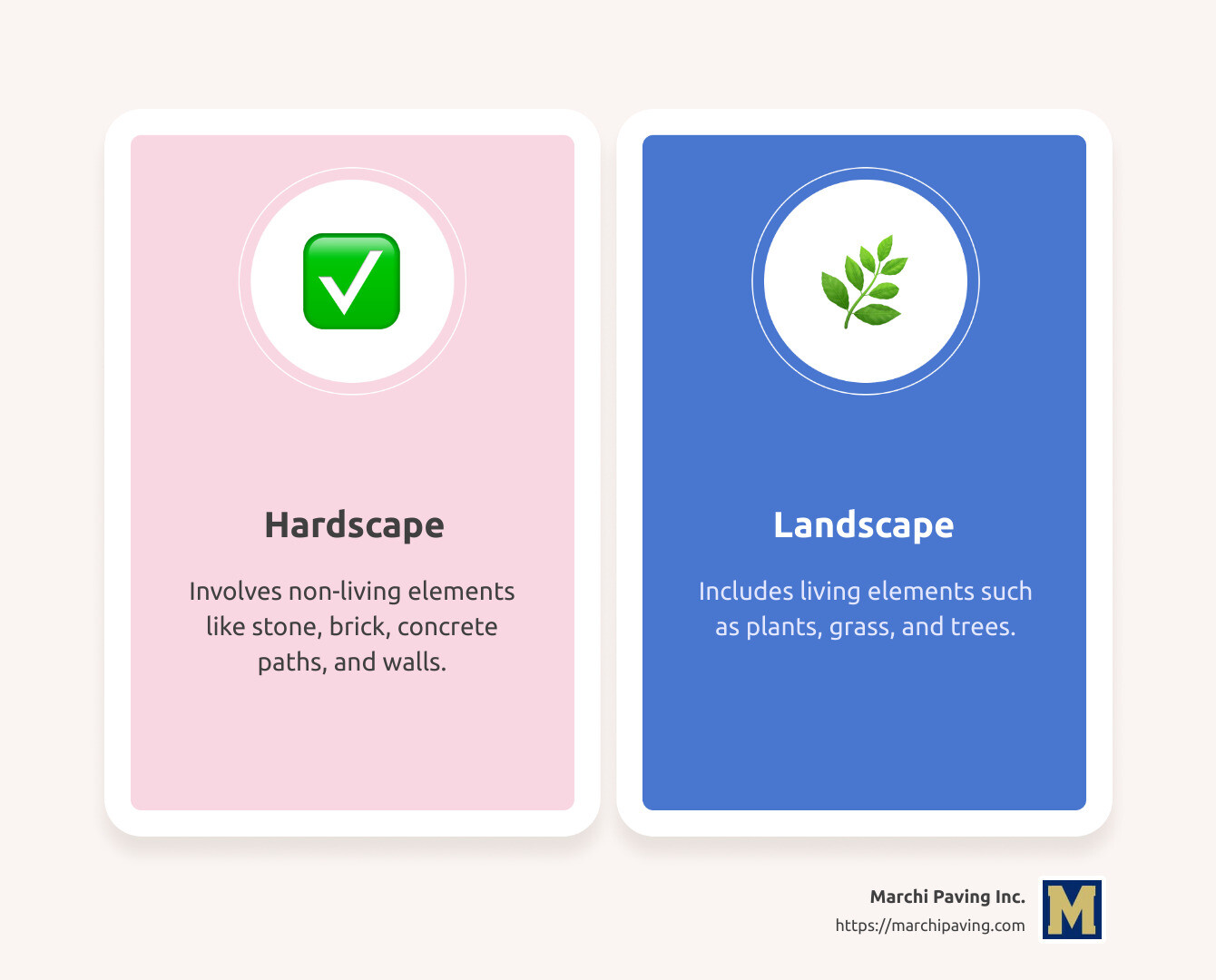 Hardscape construction infographic comparison-2-items-casual
Hardscape construction helpful reading:
Understanding Hardscape Construction
When it comes to hardscape construction, choosing the right materials is crucial. These materials not only need to be durable but also improve the aesthetic and functionality of your outdoor space.
Key Materials Used
- Stone: Stone is a timeless choice for hardscaping. It’s durable, natural, and adds a rustic charm to any area. Whether it’s granite, limestone, or slate, stone can be used for walkways, patios, and retaining walls.
- Bricks: Bricks bring a classic look and are great for creating patterns. They’re often used in patios and walkways. Bricks are known for their strength and can withstand heavy foot traffic.
- Concrete: Concrete is versatile and can be molded into various shapes and sizes. It’s perfect for patios and driveways. Concrete is not only strong but also low maintenance, making it a popular choice for homeowners.
- Pavers: Pavers are an excellent option for those looking for variety. Available in different colors, shapes, and textures, pavers can be used to create unique designs. They are often used for walkways, driveways, and patios.
Popular Hardscape Features
- Patios: A patio is a great way to extend your living space outdoors. Whether you choose stone, brick, or concrete, a patio provides a perfect spot for relaxation and entertainment.
- Walkways: Walkways guide visitors through your garden and connect different areas of your yard. Using materials like stone or pavers can create a beautiful and functional path.
- Retaining Walls: These walls are not just functional; they add depth and dimension to your landscape. Retaining walls help manage soil erosion and can be constructed from stone, brick, or concrete.
- Outdoor Kitchens: An outdoor kitchen can transform your backyard into a culinary haven. Using durable materials like stone or brick ensures that your kitchen withstands the elements while providing a stylish space for cooking and entertaining.

Each of these elements plays a vital role in creating a cohesive and functional outdoor space. By understanding the materials and features available, you can make informed decisions that improve both the beauty and usability of your property.
The Process of Hardscape Construction
Preparing the Ground
Before diving into the installation of hardscape elements, the first step is preparing the ground. This crucial phase ensures that the foundation is solid and ready to support the hardscape features.
Site Preparation involves clearing the area of debris, plants, or any old materials. This step is essential to create a clean slate for construction.
Next, assess the soil condition. Different soil types can affect the stability of your hardscape. For instance, clay soil may require additional drainage solutions to prevent water pooling.
Leveling the ground is also vital. A level base ensures that materials like pavers and stones are laid evenly, preventing future issues like shifting or cracking.
Building Techniques
With the ground prepared, it’s time to focus on the building techniques that ensure a durable and aesthetically pleasing result.
Installation methods can vary depending on the materials used and the specific hardscape feature being constructed. For example, laying pavers involves a meticulous process of placing each piece with precision to maintain pattern and spacing.
Construction techniques play a significant role in the longevity of your hardscape. Proper techniques, such as compacting the base and using the right adhesives, help create a stable structure.
Precision is key during installation. Each element must be placed with care to ensure a seamless fit. This attention to detail not only improves the look but also the functionality of your hardscape.
Irrigation systems and drainage solutions are crucial considerations. Proper drainage prevents water accumulation, which can damage hardscape materials over time. Incorporating these systems during the construction phase ensures that your hardscape remains in good condition for years.
By following these steps and employing the right techniques, your hardscape construction will not only look great but also stand the test of time.

Benefits of Hardscape Construction
Enhancing Property Value
Investing in hardscape construction can significantly boost your property’s value. How? By adding both aesthetic appeal and functional outdoor spaces, your home becomes more attractive to potential buyers.
Curb appeal plays a crucial role in making a lasting first impression. Imagine pulling up to a home with beautifully designed walkways, neat patios, and strategically placed lighting. These features not only improve the visual appeal but also signal a well-cared-for property. In fact, well-executed hardscaping can increase your property’s resale value by up to 20%.
Moreover, hardscape elements are built to last. Thanks to the durable materials like stone, bricks, and concrete, these features require minimal upkeep. This low maintenance aspect is a big selling point for prospective buyers who are looking for long-term value without the hassle of frequent repairs.
Creating Functional Outdoor Spaces
Hardscaping transforms your yard into more than just a patch of grass. It creates functional outdoor spaces that extend your living area beyond the walls of your home.
Think about entertainment areas like outdoor kitchens or cozy fire pits. These spaces provide a perfect setting for family gatherings, barbecues, or simply relaxing under the stars.
The usability of your outdoor space is further improved by features like patios and walkways. These elements offer safe, defined paths and seating areas, making your yard more accessible and enjoyable.
Incorporating hardscape features can turn your yard into a versatile environment, perfect for both relaxation and entertaining. The combination of beauty and functionality not only enriches your daily life but also makes your property more appealing to future buyers.
By investing in hardscape construction, you’re not just upgrading your property; you’re creating a long-term investment that pays off in both enjoyment and increased property value.
Next, we’ll address some common questions about hardscape construction to help you make informed decisions for your outdoor space.
Frequently Asked Questions about Hardscape Construction
What is a hardscape in construction?
Hardscape in construction refers to the non-living elements used to design and improve outdoor spaces. These are solid materials like stone, bricks, concrete, and pavers. Unlike plants or trees, hardscape elements don’t grow or change with the seasons. Instead, they provide structure and functionality to your yard. Think of patios, walkways, and retaining walls—these are all examples of hardscape features that add durability and style to your outdoor environment.
What is the difference between hardscape and landscape?
The main difference between hardscape and landscape lies in the materials used. Hardscape involves solid, non-living elements like stone and concrete, which provide foundation and structure. In contrast, landscape focuses on natural, living elements such as plants, trees, and flowers. While landscaping brings beauty and color, hardscaping provides support and functionality. Together, they create a balanced and harmonious outdoor space that is both beautiful and practical.
What is a hardscape surface?
A hardscape surface is any part of your outdoor space made from hard landscaping materials. These surfaces include patios, driveways, and walkways. They are designed to be functional, offering safe and durable areas for walking, seating, or driving. Hardscape surfaces are essential for defining areas within your yard and making them more usable. By incorporating these surfaces, you can create pathways, seating areas, and more, enhancing the overall usability and aesthetic appeal of your outdoor space.
Conclusion
At Marchi Paving Inc., we pride ourselves on changing outdoor spaces into functional and beautiful extensions of your home. With over 20 years of experience in hardscape construction, we specialize in crafting durable and aesthetically pleasing environments that improve both the value and enjoyment of your property.
Our expert team in Chelmsford, MA, and surrounding areas, is dedicated to delivering high-quality results by using advanced equipment and in-house project execution. We understand that your outdoor space is an important part of your home, and our goal is to create spaces that are not only visually appealing but also practical for everyday use.
Whether you’re looking to add a stunning patio, a functional walkway, or a retaining wall, we have the skills and expertise to bring your vision to life. Our hardscape services are designed to maximize your outdoor living space, providing areas for relaxation, entertainment, and family gatherings.
By choosing Marchi Paving Inc., you’re partnering with a team committed to excellence. We focus on every detail, ensuring that your project is completed on time and to the highest standards.
Ready to transform your outdoor space? Contact us today to learn more about our hardscaping services and how we can help you create the perfect outdoor environment.

