

Driveway Paving Costs: Top 7 Options for 2024
Introduction
When it comes to driveway paving, understanding the costs, materials, and processes involved can feel overwhelming. To make things simpler, let’s break down the essentials.
Key Points
- Cost Range: $1,800 to $9,000 for a new driveway.
- Cheapest Option: Gravel, at $1 to $3 per square foot.
- Common Materials: Asphalt, concrete, gravel, and pavers.
Driveway paving doesn’t just boost your property’s curb appeal, but it also ensures functionality and durability. The total cost to pave a driveway varies based on the size of the driveway, the material used, and other factors like labor and prep work. For a quick decision, consider:
- Gravel: Most affordable, typically $1,200 on average.
- Concrete: Durable, lasting 30-40 years, costing $8 to $12 per square foot.
- Asphalt: Budget-friendly, lasts up to 30 years, costing $2 to $6 per square foot.
- Pavers: High-end look, costing $10 to $50 per square foot.
Equipped with this basic understanding, you’re already ahead in determining what’s best for your driveway paving needs.

Types of Driveway Paving Materials
When it comes to driveway paving, choosing the right material is essential. Each material has its own benefits and drawbacks. Let’s explore the most common options:
Gravel Driveways
Gravel driveways are a cost-effective and simple choice. They consist of loose aggregates like crushed stone or gravel, which are spread and compacted to form a driveway surface.
- Cost: $1 to $3 per square foot.
- Installation: Easy and quick to install.
- Maintenance: Low maintenance, but may require periodic grading and replenishing of gravel.
- Durability: Can last up to 100 years with a solid foundation and regular upkeep.
Gravel is ideal for those seeking an affordable solution and is perfect for larger driveways. However, it might not be the best choice in areas with heavy snowfall, as plowing can displace the gravel.
Asphalt Driveways
Asphalt driveways are popular due to their affordability and ease of installation. Made from a mixture of aggregates and a petroleum-based binder, asphalt offers a smooth and sleek surface.
- Cost: $2 to $6 per square foot.
- Durability: Lasts 15 to 30 years with regular sealing.
- Maintenance: Requires periodic sealcoating to protect against water damage and UV rays.
- Lifespan: 15 to 30 years with proper maintenance.
Asphalt is a budget-friendly option, especially for long driveways. It’s best suited for colder climates, as it can become soft and sticky in hot weather.
Concrete Driveways
Concrete driveways are known for their strength and longevity. They are made from a mixture of cement, water, and aggregates.
- Cost: $8 to $12 per square foot.
- Durability: Can last 30 to 40 years.
- Maintenance: Low maintenance, but may require sealing to enhance appearance and extend lifespan.
- Aesthetic Appeal: Can be colored and stamped to mimic natural stone or pavers.
Concrete is a durable option that complements a range of home styles. However, it can crack in regions with frequent freeze/thaw cycles.
Paver Driveways
Paver driveways offer a high-end look and extensive design options. They consist of individual units made from concrete, clay, or natural stone that fit together like a puzzle.
- Cost: $10 to $50 per square foot.
- Durability: Long-lasting and can withstand heavy traffic.
- Maintenance: Low maintenance; individual pavers can be replaced if damaged.
- Types of Pavers: Concrete, clay, natural stone.
Pavers provide a strong and durable surface with excellent design flexibility. They add to the resale value of a home but can be more expensive and labor-intensive to install.
Turf and Brick Driveways
Turf driveways integrate grass with permeable pavers or concrete blocks, creating an aesthetically pleasing entryway. They are not suitable for regions with heavy snowfall or drought.
Brick driveways offer a classic and elegant look. They are durable and can last for many years with proper maintenance.
- Cost: $7 to $30 per square foot.
- Durability: Long-lasting with proper care.
- Maintenance: Requires regular upkeep to prevent weeds and shifting.
- Aesthetic Appeal: Adds a timeless charm to any property.
Both turf and brick driveways provide environmental benefits and a unique aesthetic appeal. However, they may require more maintenance compared to other materials.
With these options in mind, you can choose the best material for your driveway paving project based on your budget, maintenance preferences, and aesthetic goals.

Next, we’ll dive into the cost factors for driveway paving to help you plan your budget effectively.
Cost Factors for Driveway Paving
When planning your driveway paving project, understanding the cost factors is crucial. From material and labor costs to project dimensions and subgrade conditions, several elements influence the overall investment. Let’s break down these factors:
Material Costs
The material you choose for your driveway greatly affects the overall cost. Here’s a quick rundown of common options:
- Gravel: The most budget-friendly option, ranging from $1 to $3 per square foot. It’s easy to install and low maintenance but may require periodic replenishing.
- Asphalt: Costs between $2 to $6 per square foot, making it a cost-effective choice for colder climates. It does, however, require regular sealing to maintain its durability.
- Concrete: Priced at $8 to $12 per square foot, concrete is durable and low-maintenance, ideal for hot climates but susceptible to cracking in freeze/thaw cycles.
- Pavers: The most versatile and aesthetically pleasing option, costing $10 to $50 per square foot. They offer extensive design options but can be labor-intensive to install.
- Brick and Stone: These materials range from $7 to $30 per square foot. They add a timeless charm to any property but come with higher installation and maintenance costs.
Labor Costs
Labor can make up about half of the total price per square foot. Here’s what to consider:
- Installation: Complex designs or hard-to-reach areas can increase labor costs. For example, curves or unique patterns require more intricate work, driving up expenses.
- Repairs and Maintenance: Regular maintenance like sealing asphalt or fixing cracks in concrete can add to long-term costs. For instance, asphalt should be resealed every few years to extend its lifespan.
Project Dimensions and Subgrade Condition
The size and condition of your driveway site also play a significant role in cost:
- Driveway Size: Larger driveways require more materials and labor, leading to higher costs.
- Subgrade Preparation: The condition of the base layer (subgrade) is crucial. If the existing driveway needs removal or if there’s significant grading or drainage work, expect additional labor and materials. Proper drainage solutions are essential to prevent water damage and ensure longevity.
Regional Pricing Variations
Costs can vary significantly based on your location. Labor and material prices differ from region to region, so get quotes from local contractors to understand the specific costs in your area.
By considering these factors, you can better plan and budget for your driveway paving project. Understanding these elements will help you make informed decisions and avoid unexpected expenses.
Driveway Paving Cost Estimates
Gravel Driveway Cost Estimates
Gravel driveways are the most cost-effective option. The cost ranges from $1 to $3 per square foot. For a typical 600-square-foot driveway, the total project cost can be between $600 and $1,800. Installation is straightforward and doesn’t require specialized skills, making it a good DIY option if you’re looking to save on labor costs.
Asphalt Driveway Cost Estimates
Asphalt driveways are popular for their durability and suitability for colder climates. The cost per square foot ranges from $7 to $13. For a 600-square-foot driveway, you can expect to spend between $4,200 and $7,800. This includes both material and labor costs. Asphalt driveways typically last 15 to 30 years, depending on the quality of installation and maintenance.
Concrete Driveway Cost Estimates
Concrete driveways offer a balance between cost and durability. The cost per square foot ranges from $4 to $7. For a 600-square-foot driveway, the total project cost can be between $2,400 and $4,200. Concrete is a long-lasting option, often lasting 30 to 40 years with minimal maintenance. It can also be customized with colors and patterns, adding to its aesthetic appeal.
Paver Driveway Cost Estimates
Paver driveways are known for their aesthetic appeal and customization options. Costs can vary widely, ranging from $10 to $30 per square foot. For a 600-square-foot driveway, the total project cost can be between $6,000 and $18,000. The type of pavers you choose—concrete, brick, or stone—will significantly affect the cost. Pavers are durable and can be individually replaced if damaged, making them a long-term investment.
Brick and Stone Driveway Cost Estimates
Brick and stone driveways are premium options that offer a classic look. Costs range from $7 to $30 per square foot. For a 600-square-foot driveway, the total project cost can be between $4,200 and $18,000. These materials are durable and can last for decades but require skilled labor for installation, which adds to the cost.
Benefits of Different Driveway Paving Materials
Choosing the right driveway paving material can significantly impact your property’s look, durability, and maintenance needs. Let’s explore the benefits of various popular materials: asphalt, concrete, pavers, and gravel.
Benefits of Asphalt
Durability: Asphalt driveways are known for their long lifespan, typically lasting about 15-20 years with proper maintenance. Regular upkeep can extend this even further.
Maintenance: Asphalt requires periodic sealcoating to protect against water damage and UV rays. Small cracks can be easily repaired with cold mix asphalt, which stays soft in cold temperatures and repels water.
Environmental Impact: Asphalt is highly recyclable. In fact, it’s the most recycled product in America. Using recycled asphalt mix not only benefits the environment but also results in a stronger, longer-lasting surface with better rut resistance.
Aesthetic Appeal: Asphalt offers a sleek, smooth surface that enhances curb appeal. Its dark color also helps melt ice and snow more quickly, adding to safety during winter months.
Quick Installation and Cost Efficiency: Asphalt can be installed quickly and is generally more cost-effective compared to concrete. However, prices can fluctuate with crude oil prices, a key component of asphalt.
Noise Reduction: Asphalt’s open-graded and fine-graded surfaces absorb road noise, making it a quieter option for driveways.
Benefits of Concrete
Durability: Concrete driveways are known for their strength and can handle heavy traffic loads. They typically last longer than asphalt, especially in warmer climates.
Low Maintenance: Concrete requires minimal maintenance. Regular sealing can enhance its appearance and extend its lifespan, but it doesn’t need as much frequent attention as asphalt.
Aesthetic Options: Concrete can be colored and stamped to mimic the appearance of natural stone or pavers, offering a wide range of design possibilities to match your home’s style.
Environmental Impact: Concrete is a sustainable option, especially if you opt for permeable concrete, which allows water to pass through and reduce runoff.
Benefits of Pavers
Customization: Interlocking pavers come in various materials, including concrete, clay, and natural stone. They offer extensive design flexibility with different patterns and colors.
Durability: Pavers provide a strong and durable surface that can withstand heavy traffic. They are also easy to repair; if a paver is damaged, it can be replaced individually without disturbing the surrounding area.
Aesthetic Appeal: Pavers create a high-end look that can significantly enhance your property’s curb appeal. They can be designed to complement any architectural style.
Environmental Impact: Permeable pavers are an environmentally friendly option. They allow water to infiltrate the ground, reducing stormwater runoff and helping recharge groundwater.
Benefits of Gravel
Cost-Effective: Gravel is one of the most budget-friendly driveway paving materials. The initial installation cost is low, and it requires minimal investment over time.
Easy Installation: Gravel driveways are simple to install, making them a quick solution for homeowners looking to pave their driveways without a lengthy process.
Low Maintenance: While gravel driveways need periodic grading and replenishing to keep the surface even, they don’t require sealing or other intensive maintenance practices.
Environmental Impact: Gravel is a permeable material, allowing water to penetrate the ground and reducing runoff. This makes it an eco-friendly choice, especially in areas prone to heavy rainfall.
By understanding the benefits of each material, you can make an informed decision that best suits your needs and budget. Next, we’ll discuss the maintenance and repair of driveway paving to ensure longevity and performance.
Driveway Paving Maintenance and Repair
Proper maintenance and timely repairs are crucial for extending the lifespan of your driveway. Let’s dive into the key aspects of driveway paving maintenance and repair.
Preventative Maintenance
Regular Inspections
Regular inspections help identify small issues before they become big problems. Walk your driveway every few months and look for cracks, potholes, and drainage issues.
Cleaning
Keeping your driveway clean prevents debris from accumulating and causing damage. Sweep away leaves, dirt, and other debris. For stubborn stains, a power washer can be effective.
Sealing
Sealing your driveway protects it from water, oil, and UV damage. Asphalt driveways benefit significantly from sealcoating every 3-5 years. This layer acts as a shield, preventing cracks and potholes.
Crack Filling and Sealcoating
Hot Sealant
Crack filling involves using hot sealant to fill and seal cracks in the pavement. This prevents water from seeping in and causing further damage. It’s a quick and cost-effective way to maintain your driveway.
Protection from Elements
Sealcoating provides a protective layer that shields your driveway from the elements. It guards against water, oil, and UV rays, which can degrade the asphalt over time. Sealcoating can extend the life of your driveway by several years.
Resurfacing and Repaving
Milling
Milling is the process of removing the top layer of asphalt without disturbing the subbase. It’s an excellent option if the subbase is still in good condition but the surface needs repair. Milling is cost-effective and can be completed quickly.
Overlay
An overlay involves adding a new layer of asphalt over the existing surface. This method can smooth out minor imperfections and extend the life of your driveway without the need for a full replacement.
Full Replacement
If your driveway has extensive damage, a full replacement may be necessary. This involves removing the old pavement and installing a new one. Though more costly, it ensures a long-lasting and durable surface.
By following these maintenance and repair strategies, you can keep your driveway in top condition for years to come. Next, we’ll answer some frequently asked questions about driveway paving.
Frequently Asked Questions about Driveway Paving
What is the cheapest option for paving a driveway?
The most cost-effective option for driveway paving is gravel. Gravel driveways are easy to install and require minimal maintenance. The price ranges from $1 to $3 per square foot, making it an affordable choice for many homeowners. On average, the total cost for a gravel driveway is around $1,200. This low price, combined with its durability and ease of installation, makes gravel a popular choice for budget-conscious homeowners.
How much does 1500 square feet of asphalt cost?
For a 1500 square foot asphalt driveway, you can expect to pay between $10,500 to $19,500. This cost includes both materials and labor. Asphalt is a durable option that can last up to 30 years with proper maintenance. The national average cost to install an asphalt driveway is about $4,740, but prices can vary depending on factors such as the thickness of the asphalt, the base material, and regional pricing variations.
What type of paving is best for a driveway?
The best type of paving for a driveway often depends on your specific needs and preferences. Block paving is an excellent option for those seeking durability and aesthetic appeal. Block pavers come in various colors and patterns, allowing for a high degree of customization. They are also very durable and can withstand heavy traffic. Though more expensive than gravel or asphalt, block paving offers a unique and attractive finish that can significantly enhance your home’s curb appeal.
By understanding the different options and costs associated with driveway paving, you can make an informed decision that best suits your needs and budget.
Conclusion
Choosing the right contractor for your driveway paving project is crucial. At Marchi Paving Inc., we pride ourselves on delivering high-quality service and ensuring customer satisfaction.
High-Quality Service
We use only the best materials, from premium-grade asphalt to top-notch sealants. Our focus is on longevity and durability, ensuring your driveway stands the test of time. Whether it’s a residential driveway or a commercial parking lot, our commitment to excellence remains unwavering.
Advanced Equipment
Our investment in state-of-the-art equipment allows us to complete projects efficiently and accurately. Advanced machinery helps us maintain quality while adhering to schedules and budgets. This means you get a smooth, durable surface that looks great and performs well.
Free Estimates
We believe in transparency and providing our clients with accurate information. That’s why we offer free estimates for all our projects. One of our qualified Estimators will visit your site to gather all necessary information and provide you with a detailed, accurate quote.
Ready to start your project? Contact us today for a free estimate and experience the Marchi Paving difference. Let’s make your driveway a lasting and beautiful first impression of your home.
Asphalt Contractor Near Me: Top 5 Outstanding Choices 2024
Why Finding the Right Asphalt Contractor Near You Matters
When you need to find an asphalt contractor near you, getting the right information quickly is crucial. Whether you are fixing a driveway, paving a parking lot, or handling winter wear and tear, selecting a reliable local contractor can save you time and money.
Quick Tips for Finding the Right Asphalt Contractor Near You:
1. Get Recommendations: Ask friends, family, or local realtors.
2. Check Reviews: Look at online reviews and BBB ratings.
3. Verify Credentials: Ensure the contractor has proper licensing and insurance.
Choosing a trusted paving contractor means a longer-lasting solution and fewer headaches. Local experts understand the region’s climate challenges and material needs, ensuring your project withstands the test of time.

How to Find the Best Asphalt Contractors Near You
Finding the best asphalt contractor near me can seem daunting, but with the right approach, it’s quite manageable. Here’s a simple guide to help you locate top-rated local contractors:
1. Search Engines
Start with a basic online search. Type “asphalt contractor near me” into Google or Bing. This will give you a list of local contractors. Visit their websites to learn more about their services, past projects, and customer reviews. A well-maintained website often indicates a professional and reliable company.
2. Local Directories
Local directories like the Better Business Bureau (BBB) can be invaluable. The BBB provides ratings from “A+” to “F” based on customer reviews and complaints. This helps you identify reputable companies and avoid those with unresolved issues.
3. Reviews
Reading reviews is crucial. Websites like Yelp and Google Reviews offer insights into the experiences of previous clients. Look for consistent patterns in the reviews. For instance, if multiple reviews mention poor communication or subpar work quality, it’s a red flag. However, don’t rely solely on one review site. Cross-check reviews across different platforms to ensure consistency.
4. Recommendations
Personal recommendations are often the most reliable. Ask friends, family, or neighbors who have recently had asphalt work done. They can provide accounts of their experiences with local contractors.
You can also ask your realtor or Homeowners Association (HOA) for recommendations. Real estate agents often have a list of trusted service providers, and HOAs usually keep records of approved contractors who have worked in your community.
5. Social Media and Online Forums
Social media platforms and online forums can also be useful. Join local community groups on Facebook or Reddit and ask for recommendations. Many people are willing to share their experiences and suggest reliable contractors.
Summary
To find the best asphalt contractor near me, use search engines, check local directories, read reviews, and ask for recommendations. By following these steps, you’ll be well on your way to hiring a top-rated contractor for your asphalt project.
Top 5 Asphalt Contractors Near You
Finding a top-rated asphalt contractor near me can be a game-changer for your project. Here at Marchi Paving Inc., we are dedicated to providing high-quality asphalt services that meet your needs. Our team is known for its professionalism and efficiency, ensuring that every project is completed to the highest standards. Whether you need a new driveway, parking lot, or any other asphalt service, you can count on us to deliver outstanding results. Contact us today to learn more about how we can assist you with your next paving project.
What to Look for in an Asphalt Contractor
When searching for an asphalt contractor near me, it’s crucial to consider several key factors to ensure you hire a professional who will deliver high-quality work. Here are the main aspects to focus on:
Experience
Experience is vital. Contractors with several years in the business have dealt with various challenges and know how to handle different types of projects.
Tip: Look for contractors with at least five years of experience in asphalt paving.
Licensing
A reputable contractor should have the proper licensing to operate in your area. This ensures they meet local regulations and industry standards. Always ask for their license number and verify it through your state’s licensing board.
Insurance
Insurance is non-negotiable. Ensure the contractor has both general liability and workers’ compensation insurance. This protects you from any liabilities in case of accidents or damages during the project.
“Make sure you receive an insurance certificate directly from the contractor’s insurance agent for both policies,” advises Forbes.
Equipment
Modern and well-maintained equipment can significantly impact the quality and efficiency of the paving job. Contractors using the latest technology are more likely to complete your project efficiently and with better results.
Fact: Companies that invest in advanced equipment can handle complex projects more effectively.
Project Portfolio
Reviewing a contractor’s project portfolio gives you insight into their capabilities and the quality of their work. Ask for examples of similar projects they’ve completed. This will help you gauge whether they can meet your specific needs.
By focusing on these factors, you can confidently choose an asphalt contractor near me who will deliver a durable and aesthetically pleasing driveway, parking lot, or other paving projects.
Cost of Asphalt Paving Services
Understanding the cost of asphalt paving services is crucial for budgeting your project. Here are the key factors to consider:
Pricing Factors
Several factors influence the cost of asphalt paving:
- Material Quality: High-quality asphalt costs more but lasts longer.
- Project Size and Complexity: Larger or more intricate projects require more materials and labor.
- Preparation Work: Removing an old driveway or significant grading increases costs.
- Accessibility: Hard-to-reach areas may require specialized equipment, adding to the expense.
Cost Per Square Foot
The cost to pave an asphalt driveway generally ranges from $7 to $13 per square foot. Factors such as driveway size, customization, and materials used play a significant role in determining the final price.
For example:
– Standard Driveway: Expect to pay around $7 to $10 per square foot.
– Customized Driveway: With special finishes or designs, costs can rise to $10 to $13 per square foot.
Cost Per Ton
Asphalt pricing is often calculated per ton, especially for larger projects:
- 1 Ton of Asphalt: Covers approximately 80-100 square feet at 2 inches thick.
- Cost Per Ton: Typically ranges from $100 to $200, depending on the quality and supplier.
Delivery Costs
Delivery costs can add to the overall expense, especially if the supplier is far from the project site. Always ask for a detailed quote that includes delivery charges.
Location
Your location can significantly impact costs. For instance:
- Urban Areas: Higher labor costs and tighter regulations can increase prices.
- Rural Areas: Lower labor costs but potentially higher delivery charges due to distance.
When budgeting for your project, consider these factors to avoid surprises. Always request detailed quotes from multiple contractors to ensure you get a fair price.
Next, we’ll answer some frequently asked questions about asphalt contractors to further guide your decision.
Frequently Asked Questions about Asphalt Contractors
How do you estimate an asphalt job?
Estimating an asphalt job involves several factors:
- Cost per square foot: Typically ranges from $7 to $13.
- Cost per ton: Asphalt materials cost between $100 to $200 per ton.
- Preparation work: Includes costs for removing old pavement and grading the area.
- Accessibility: Hard-to-reach areas may require special equipment, adding to costs.
Always get detailed quotes from contractors to understand where your money is going.
Is asphalt a lucrative business?
Yes, the asphalt business can be lucrative due to:
- Profit potential: High demand for paving services means consistent work.
- Economic stability: Infrastructure projects and home improvements keep the industry stable.
- Daily earnings: Contractors can earn between $200 to $500 per day, depending on the job size and complexity.
Investing in quality equipment and skilled labor can further boost profitability.
What are the benefits of hiring a professional asphalt contractor?
Hiring a professional asphalt contractor offers several benefits:
- Quality work: Professionals ensure a smooth, long-lasting surface.
- Expertise: Experienced contractors know how to handle different materials and conditions.
- Long-term savings: Proper installation reduces future repair costs.
For example, Jerry from HQ Asphalt completed a 150-foot driveway efficiently and followed up to ensure quality, demonstrating the value of hiring a pro.
By understanding these factors, you can make informed decisions and get the best value for your paving project.
Conclusion: Asphalt Contractor Near Me
When it comes to finding the best asphalt contractor near me, Marchi Paving Inc. stands out for several reasons.
High-Quality Service
At Marchi Paving Inc., we pride ourselves on delivering top-notch service. Our commitment to using only the best materials ensures that your asphalt will be durable and visually appealing. We understand that a well-paved driveway or parking lot can significantly enhance your property’s curb appeal and functionality.
Advanced Equipment
We invest in state-of-the-art equipment to ensure precision and efficiency in every project. Our advanced machinery allows us to complete jobs on schedule and within budget without compromising on quality. This means you get a smooth, durable surface that looks great and performs well for years to come.
In-House Project Execution
With over 20 years of experience, our team handles every aspect of the project in-house. This allows us to maintain strict quality control, ensuring that each project meets our high standards. From initial consultation to project completion, you can expect consistent communication and exceptional results.
Choosing Marchi Paving Inc. means partnering with a team dedicated to delivering outstanding results. Ready to start your project? Contact us today to get a detailed quote and experience the Marchi Paving difference.
By focusing on high-quality service, advanced equipment, and in-house project execution, Marchi Paving Inc. ensures that your asphalt project will be completed to the highest standards. Whether you need a new driveway, parking lot, or any other asphalt paving service, we are here to help.
Paving Contractor Guide: 10 Best Tips for 2024 Success
Why Choosing the Right Paving Contractor Matters
When it comes to property management, selecting a paving contractor is one of the most crucial decisions you’ll make. The right choice can mean the difference between a smooth, durable surface and ongoing maintenance headaches.
Quick Tips for Selecting a Paving Contractor:
– Look for experience and expertise in the industry.
– Ensure they use high-quality materials.
– Confirm they have the proper licenses and insurance.
– Seek out positive reviews and references.
– Consider their warranty and customer service guarantees.
A competent paving contractor ensures high-quality and long-lasting paving solutions, essential for both safety and aesthetics. Whether it’s a driveway, parking lot, or any other surface, a skilled contractor uses the best practices to meet your specific needs. With so many options, choose wisely.

What to Look for in a Paving Contractor
When selecting a paving contractor, you want to ensure you’re getting the best quality and service. Here are key factors to consider:
Experience
Experience is crucial. Opt for a contractor with years of industry experience and a proven track record. Companies with a long history in the industry have honed their skills over time, ensuring reliable and high-quality work.
Quality
Quality is non-negotiable. Look for contractors who use high-quality materials and adhere to strict standards. High-quality paving not only looks good but also lasts longer and requires fewer repairs.
Equipment
Modern, well-maintained equipment is a sign of a professional contractor. Outdated or poorly maintained machinery can lead to subpar results. Ensure the contractor uses the latest technology and equipment, as this can significantly impact the efficiency and quality of the project.
Customer Service
Good customer service is essential. The contractor should be responsive, willing to answer questions, and provide clear communication throughout the project. Look for companies that emphasize customer satisfaction and provide free consultations and detailed estimates to ensure transparency.
Warranty
A solid warranty is a sign of a contractor’s confidence in their work. Look for contractors who offer a warranty on their services. A warranty ensures that any issues that arise post-completion will be addressed promptly.
By focusing on these factors—experience, quality, equipment, customer service, and warranty—you can ensure you select a paving contractor who will deliver excellent results for your project.
Top Services Offered by Paving Contractors
When looking for a paving contractor, understand the range of services they offer. This ensures that you get the right expertise for your specific needs. Here are the top services you can expect from a professional paving contractor:
Asphalt Paving
Asphalt paving is one of the most common services offered. It involves laying down a mixture of aggregate materials and bitumen to create smooth, durable surfaces. This service is ideal for:
- Driveways: A well-paved driveway can last up to 30 years with proper maintenance.
- Roads and highways: Ensuring safe and smooth travel.
- Parking lots: Handling heavy traffic and providing a stable surface.
Concrete Paving
Concrete paving is another popular service, especially for areas requiring high durability and low maintenance. Concrete is often used for:
- Curbs and gutters: Providing structure and drainage.
- Flatwork: Including sidewalks, patios, and other flat surfaces.
Driveway Paving
Driveway paving is a specialized service focusing on residential properties. Whether you need a new driveway or repairs to an existing one, a professional contractor can handle:
- Installation: From excavation to base preparation and asphalt or concrete laying.
- Repair: Fixing cracks, holes, and other damages to extend the life of your driveway.

Parking Lot Paving
For commercial properties, parking lot paving is essential. This service includes:
- Design: Planning the layout to maximize space and ensure smooth traffic flow.
- Traffic Management: Implementing measures like signage and markings to improve safety and efficiency.
Seal Coating
Seal coating involves applying a protective layer to asphalt surfaces. Benefits include:
- Protection: Shields the asphalt from UV rays, water, and chemicals.
- Aesthetics: Enhances the appearance, making the surface look new.
- Longevity: Extends the life of the asphalt by preventing cracks and other damage.
Resurfacing
When an asphalt surface becomes too worn, resurfacing is a cost-effective solution. It involves:
- Milling: Removing the top layer of old asphalt.
- New Layer: Laying a fresh layer of asphalt over the existing surface.
Striping
Striping is crucial for parking lots and roads. It includes:
- Thermoplastic Striping: Durable and highly visible markings for parking spaces, directional signage, and handicapped spaces.
- Re-striping: Refreshing old or faded lines to maintain safety and organization.

These services ensure that your paved surfaces are durable, safe, and visually appealing. Whether it’s a residential driveway or a commercial parking lot, a professional paving contractor can handle all your paving needs.
How to Hire the Best Paving Contractor
When it comes to hiring the best paving contractor, there are several key steps you should follow to ensure you make the right choice. Here’s a simple guide to help you through the process:
Research
Start by conducting thorough research. Use search engines like Google to find local paving contractors. Look for companies with well-maintained websites that showcase their services and past projects. This can give you a feel for their professionalism and reliability.
Reviews
Reading reviews is crucial. Check platforms like Google Reviews, Yelp, and the Better Business Bureau (BBB). Consistent positive feedback can indicate a trustworthy contractor. Pay attention to any recurring complaints, as they could be red flags.
Quotes
Get detailed quotes from multiple contractors. This allows you to compare prices and services. Make sure each quote is itemized, so you understand what you’re paying for. The cheapest option isn’t always the best. Quality and reliability matter more in the long run.
Licenses
Ensure the contractor is licensed to operate in your area. A valid license shows that they meet local regulations and standards. Ask for their license number and verify it on your state’s official website.
Insurance
A reputable paving contractor should have both general liability and workers’ compensation insurance. This protects you from any accidents or damage that might occur during the project. Ask for proof of insurance directly from their insurance agent.
Contracts
Before any work begins, make sure you have a written contract. The contract should include:
- Scope of Work: Detailed description of the project.
- Timeline: Start and completion dates.
- Payment Terms: Total cost, payment schedule, and any deposits required.
- Warranty: Details of any warranties on materials and workmanship.
Having a clear contract helps prevent misunderstandings and protects both parties.
By following these steps, you’ll be well on your way to hiring a reliable and professional paving contractor. This ensures your project is completed on time, within budget, and to your satisfaction.
Benefits of Hiring a Professional Paving Contractor
Safety
Hiring a professional paving contractor ensures your paving project meets all safety standards. Professionals follow established protocols to reduce hazards, ensuring the safety of both workers and the public.
Durability
Professional paving contractors use high-quality materials and advanced techniques to deliver durable results. Asphalt, for instance, is known for its longevity and resistance to harsh weather conditions.
Aesthetics
A well-paved surface significantly enhances the curb appeal of any property. Professionals have the expertise to create aesthetically pleasing designs that complement the style of your home or commercial building.
Value
Investing in a professional paving contractor adds value to your property. High-quality paving not only improves the appearance but also increases the property’s market value. This is especially important for commercial properties, where a well-maintained parking lot or driveway can make a positive impression on clients and customers.
Efficiency
Professional contractors complete projects efficiently, minimizing disruption to your daily activities. For instance, asphalt paving is quick to install, meaning less downtime for commercial properties. Professionals also have the right equipment and skills to get the job done right the first time, saving you time and money in the long run.
Frequently Asked Questions about Paving Contractors
How Profitable is a Paving Company?
Paving companies can be highly profitable, especially when they manage their projects and resources well. Profit margins in the paving industry can vary, but successful companies often see healthy margins due to the recurring nature of maintenance and repair work.
Revenue Growth: Paving companies can experience significant revenue growth, particularly if they expand their service areas or take on larger projects.
EBITDA Margins: The EBITDA (Earnings Before Interest, Taxes, Depreciation, and Amortization) margins for paving companies can be quite attractive. Efficient operations, combined with strong demand for paving services, contribute to these favorable margins.
Conclusion
Choosing the right paving contractor can make a significant difference in the success of your project. At Marchi Paving Inc., we pride ourselves on delivering high-quality execution and ensuring customer satisfaction every step of the way. With over 20 years of experience in the industry, we have the expertise, advanced equipment, and dedication to handle any paving project, no matter the size or complexity.
Why Choose Marchi Paving Inc.?
- High-Quality Execution: We use only the best materials, from premium-grade asphalt to top-notch sealants, ensuring your pavement is durable and aesthetically pleasing.
- Advanced Equipment: Our state-of-the-art machinery enhances the efficiency and precision of our work, allowing us to complete projects on schedule and within budget.
- Experience: With over two decades of experience, our team of highly skilled professionals handles every aspect of the project in-house, maintaining strict quality control.
Ready to Start Your Project?
Partner with Marchi Paving Inc. and experience the difference. Get a detailed quote and see how we can exceed your expectations. Visit our Driveway Contractor Near Me page to get started.
For more information or to get started with us, call 617-964-9999 or complete the estimate form on our website, and we will respond to your request as quickly as possible.
Follow us on Facebook | Follow us on Instagram | Follow us on LinkedIn
Thank you for considering Marchi Paving Inc. for your paving needs. We look forward to working with you!
Top 5 Asphalt Companies in 2024: Best & Trusted
Looking for top-rated asphalt companies for your next paving project? You’re in the right place. Whether you need asphalt paving, driveway repair, or parking lot maintenance, choosing the right company can make all the difference. Here’s a quick list of leading asphalt companies:
- Company A – Specializes in installation, repair, and resurfacing.
- Company B – Experts in driveway paving, parking lot paving, and sealcoating.
- Company C – Known for crack filling, pothole patching, and line striping.
- Company D – Handles residential driveways, commercial parking lots, and industrial properties.
- Company E – Offers asphalt resurfacing, repaving, and excavation services.
Choosing the right asphalt company ensures durability, cost-effectiveness, and curb appeal for your property. Whether you manage residential or commercial properties in Chelmsford, MA, this guide will help you find a reliable company that meets your needs.

Factors to Consider When Choosing an Asphalt Company
Selecting the right asphalt company is crucial for ensuring your project is done right. Here are key factors to consider:
Experience
Experience is a strong indicator of a company’s reliability and skill. Companies with several years in business have likely faced and overcome various challenges. This experience translates into a higher likelihood of successful project completion.
- Years in Business: Look for companies with a long track record. For instance, companies with over 20 years of experience, like Marchi Paving Inc., are known for their detailed and meticulous work, reflecting their extensive experience.
- Project Portfolio: Ask for examples of past projects. A diverse portfolio can give you confidence in their ability to handle your specific needs.
Licensing and Insurance
Proper licensing and insurance protect you from legal and financial risks.
- Certifications: Ensure the company holds necessary state contractor licenses. This shows they meet industry standards. For example, Marchi Paving Inc. emphasizes partnering with licensed companies to ensure regulatory compliance.
- Liability Coverage: Verify that the company has general liability insurance and workers’ compensation. This protects you from being held liable for any accidents or damages during the project. Always request an insurance certificate directly from the contractor’s insurance agent to confirm coverage.
Customer Reviews
Customer reviews provide insights into the company’s reliability and quality of work.
- Testimonials: Look for detailed testimonials that mention professionalism, quality of work, and timeliness. Positive feedback across multiple sites is a good sign.
- Ratings: Check ratings on platforms like the Better Business Bureau (BBB), Yelp, and Google Reviews. Consistent positive feedback is a good indicator of a reliable company.
- Feedback: Pay attention to common themes in reviews. If multiple customers mention poor communication or subpar work quality, consider it a red flag. Conversely, positive patterns indicate a reliable company.
Taking these factors into account will help you choose an asphalt company that meets your needs and ensures a successful project.
Services Offered by Leading Asphalt Companies
Leading asphalt companies offer a wide range of services to meet both residential and commercial needs. Below, we’ll break down the key services: installation, maintenance, and repair.
Installation
Asphalt installation services are foundational for creating new surfaces like driveways, parking lots, and walkways. Here’s what you can expect:
- New Driveways: Asphalt driveways are popular due to their durability and cost-effectiveness. Proper installation involves excavation, base preparation, and laying down the asphalt mix. For example, companies like Marchi Paving Inc. have received praise for their efficient and high-quality driveway installations.
- Parking Lots: Commercial properties often require extensive parking lots that can handle heavy traffic. Leading companies design and install these lots to maximize space and ensure smooth traffic flow. This includes proper base preparation and asphalt laying to withstand daily wear and tear.
- Walkways: Asphalt walkways are not only functional but also add aesthetic value to properties. They are designed to be smooth and durable, making them ideal for parks, residential complexes, and commercial properties.
Maintenance
Regular maintenance is crucial for extending the life of asphalt surfaces. Leading asphalt companies offer several key maintenance services:
- Sealcoating: This involves applying a protective layer over the asphalt to shield it from UV rays, water, and chemicals. Sealcoating also gives the surface a fresh, jet-black finish. It’s recommended to reseal asphalt every 1-3 years, depending on traffic levels. According to Marchi Paving Inc., regular sealcoating is essential for keeping bike trails and other surfaces in top shape.
- Crack Sealing: Cracks can quickly expand if not addressed. Crack sealing involves filling these cracks to prevent water ingress and further damage. This service is vital for maintaining the integrity of the asphalt.
- Pothole Repair: Potholes can be hazardous and unsightly. Leading companies offer pothole patching services to restore the surface’s smoothness and safety. Proper pothole repair can prevent further deterioration and extend the life of the pavement.
Repair
Over time, asphalt surfaces may require more extensive repairs. Leading companies offer various repair services to address these needs:
- Resurfacing: When the asphalt surface becomes too worn, resurfacing can be a cost-effective solution. This involves laying a new layer of asphalt over the existing one, providing a fresh, durable surface.
- Repaving: For severely damaged areas, repaving might be necessary. This involves removing the old asphalt and installing a new layer. It’s a more intensive process but ensures a long-lasting result.
- Drainage Solutions: Proper drainage is essential to prevent water damage. Leading companies offer solutions to improve drainage, such as installing new drainage systems or adjusting the slope of the surface to ensure water flows away properly.
Image: A freshly paved asphalt driveway, showcasing the quality and durability of professional installation.
By offering a comprehensive range of services, leading asphalt companies ensure that your surfaces remain functional, safe, and visually appealing for years to come.
Frequently Asked Questions about Asphalt Companies
What is the average cost of asphalt paving?
The cost of asphalt paving varies based on several factors, including the size of the project, materials used, and labor costs. On average, you can expect to pay between $7 to $13 per square foot for paving an asphalt driveway. The price for replacing an asphalt driveway usually ranges from $8 to $15 per square foot.
Material Costs: The type and quality of asphalt used can affect the price. Higher-grade materials may cost more but offer better durability and appearance.
Labor Costs: Labor costs can vary based on the complexity of the project and the experience of the crew. Always get detailed quotes from multiple contractors to ensure you’re getting a fair price.
How do I know if an asphalt company is reputable?
Choosing a reputable asphalt company can make all the difference in the quality and longevity of your project. Here are some key indicators:
Certifications: Verify that the company holds the necessary licenses and certifications. This ensures they meet industry standards and regulations.
Customer Reviews: Look for testimonials and reviews from previous clients. Positive feedback and high ratings are good indicators of reliable service. For example, Jerry from HQ Asphalt received praise for his professionalism and quality of work.
Years in Business: Experience matters. Companies with many years in the industry are likely to have the expertise needed to handle various paving projects. For instance, Asphalt Maintenance Inc. was commended for their detailed work and unbeatable prices, reflecting their extensive experience.
What maintenance does asphalt require?
Regular maintenance is crucial to extend the life of your asphalt surfaces. Here are some key maintenance tasks:
Sealcoating Frequency: Sealcoating should be done every 1-3 years. This process adds a protective layer to your asphalt, guarding against moisture, chemicals, oils, and UV rays. It also gives your driveway or parking lot a fresh, jet-black finish.
Crack Filling: Cracks in asphalt can occur due to various reasons, including weather changes and heavy traffic. Filling these cracks as soon as they appear is essential to prevent further damage. Delaying repairs can turn small cracks into larger, more expensive issues.
Pothole Repair: Potholes can form when water seeps into cracks and freezes, causing the asphalt to expand and break apart. Prompt pothole repair is necessary to maintain a smooth and safe surface.
By keeping up with these maintenance tasks, you can ensure that your asphalt surfaces remain in top condition for years to come.
Conclusion
Choosing the right asphalt company can make all the difference in the success of your paving project. At Marchi Paving Inc., we pride ourselves on delivering high-quality service and using advanced equipment to ensure every job is done right.
With over 20 years of experience, we have the expertise to handle any project, big or small. Our commitment to excellence means you get a smooth, durable surface that stands the test of time.
Ready to start your project? Contact us today to get a detailed quote and experience the Marchi Paving difference.
Top 10 Asphalt Paving Contractors in 2024: Expert Picks
Finding the Best Asphalt Paving Contractors
When it comes to hiring asphalt paving contractors, you want the job done right the first time. Whether you need a new driveway, a parking lot, or road paving, this guide will help you make an informed decision. We’ll cover everything from the benefits of asphalt paving to tips for choosing the best contractor.
In a nutshell, here are the key points you need to know:
- Experience: Look for contractors with a proven track record.
- Credentials: Ensure they are licensed, insured, and bonded.
- Reputation: Read customer reviews and testimonials.
- Estimates: Get detailed quotes from multiple contractors.
- Technology and Equipment: Choose contractors who use the latest tools and techniques.

What is Asphalt Paving?
Asphalt paving is a popular choice for driveways, parking lots, and roads. It’s known for its durability, cost-effectiveness, and quick installation.
Asphalt vs. Concrete Paving
Material Differences
– Asphalt is made from a mixture of aggregates (like crushed rock, gravel, or sand) and bitumen, a sticky, black substance that binds everything together.
– Concrete is made from a mix of cement, water, sand, and gravel.
Cost Comparison
– Asphalt is generally cheaper to install than concrete. Prices can fluctuate with crude oil prices, a key component of asphalt.
– Concrete tends to be more expensive but lasts longer, especially in warmer climates.
Durability
– Asphalt driveways can last up to 20 years or more with proper maintenance.
– Concrete driveways can last even longer, often exceeding 30 years.
Maintenance
– Asphalt requires periodic sealcoating to protect against water damage and UV rays. Small cracks can be easily repaired.
– Concrete requires less frequent maintenance but can crack in cold climates due to freeze-thaw cycles.
Benefits of Asphalt Paving
Durability
– Asphalt is known for its long lifespan, typically lasting about 15-20 years with proper maintenance. Regular upkeep can extend this even further.
Cost-Effectiveness
– Asphalt is more economical than concrete, making it a popular choice for homeowners and businesses alike.
Quick Installation
– Asphalt can be installed quickly, often in just a day or two. This minimizes disruption to your daily life or business operations.
Maintenance
– Asphalt requires periodic sealcoating and minor repairs, which are relatively easy and inexpensive to perform.
Environmental Impact
– Asphalt is highly recyclable, making it an eco-friendly option. Using recycled asphalt mix results in a stronger, longer-lasting surface.
Aesthetic Appeal
– Asphalt offers a sleek, smooth surface that enhances curb appeal. Its dark color also helps melt ice and snow more quickly, adding to safety during winter months.
In summary, asphalt paving offers a blend of durability, cost-effectiveness, and quick installation, making it a great choice for many projects. Next, we’ll dive into how to choose the best asphalt paving contractors to ensure your project is a success.
How to Choose the Best Asphalt Paving Contractors
Choosing the right asphalt paving contractors is crucial to ensure your project is done correctly. Here are some essential tips and questions to guide you.
Questions to Ask Potential Contractors
Experience
– How long have you been in the asphalt paving business?
Look for contractors with a proven track record. Experienced contractors are more likely to deliver quality work.
Credentials
– Are you licensed, insured, and bonded?
This protects you in case of accidents or damage. Always verify their credentials.
Project Timeline
– When can you start, and how long will it take?
A clear timeline helps you plan better. Ask about potential delays.
Warranty
– Do you offer a warranty, and what does it cover?
A good warranty shows the contractor stands by their work. Ask about the warranty period and what it includes.
References
– Can you provide references from recent projects?
Contact past clients to gauge their satisfaction. Positive reviews are a good sign.
Red Flags to Watch Out For
Unlicensed Contractors
– Avoid contractors who can’t provide proof of licensure. This often indicates a lack of qualifications and legal compliance.
Vague Estimates
– Be cautious of contractors who give unclear or overly general estimates. A detailed estimate should include all costs.
Lack of Communication
– Poor communication can lead to misunderstandings and delays. Make sure the contractor is responsive and clear in their communication.
Case Study: A homeowner in Beaumont, TX, hired a contractor without checking their license. The project was delayed, and the quality was subpar. After verifying with the BBB, they found multiple unresolved complaints against the contractor. Always do your homework!
By asking the right questions and watching for red flags, you can select a reliable contractor who will deliver high-quality results. Next, we’ll explore the top asphalt paving services available for residential and commercial projects.
Top Asphalt Paving Services
When it comes to asphalt paving, there are several key services that both homeowners and businesses can benefit from. Let’s break down the most common types of asphalt paving services and what they entail.
Residential Asphalt Paving
Driveway Paving
Your driveway is often the first thing people notice about your home. A well-paved driveway not only enhances curb appeal but also ensures safety and durability. Asphalt driveways are popular for their smooth finish and cost-effectiveness.
Driveway Installation
Installing a new driveway involves several steps: excavation, base preparation, and asphalt laying. Each step must be meticulously executed to ensure a long-lasting surface. Proper installation can make your driveway last up to 30 years.
Maintenance
Regular maintenance is crucial to extend the life of your driveway. This includes filling cracks, patching holes, and applying sealcoating. Maintenance not only keeps your driveway looking new but also prevents costly repairs down the line.
Sealcoating
Sealcoating adds a protective layer to your asphalt driveway. It shields the surface from UV rays, water, and chemicals, enhancing its appearance and prolonging its lifespan. Experts recommend applying sealcoating every 2-3 years.
Commercial Asphalt Paving
Parking Lot Paving
A well-paved parking lot is essential for any business. It creates a positive first impression and ensures safety for customers and employees. Parking lot paving involves careful planning to maximize space and ensure smooth traffic flow.
Road Paving
Smooth and even roadways are crucial for safe and efficient transportation. Road paving services ensure minimal disruptions and long-lasting surfaces, whether for a corporate office park or a residential subdivision.
Striping
Once the asphalt is laid and cured, striping is essential to define parking spaces, lanes, and directional arrows. Proper striping improves traffic flow and enhances safety.
Maintenance
Commercial properties require regular maintenance to keep their asphalt surfaces in top condition. This includes crack sealing, pothole repair, and periodic resurfacing. Regular upkeep helps avoid larger, more expensive repairs.
Sealcoating
Just like residential driveways, commercial parking lots and roads benefit from sealcoating. It protects the asphalt from wear and tear, extends its lifespan, and maintains a clean, professional appearance.
By understanding these essential asphalt paving services, you’ll be better equipped to choose the right solutions for your home or business. Next, we’ll delve into the cost factors and average expenses associated with asphalt paving projects.
Cost of Asphalt Paving
Understanding the costs involved in asphalt paving can help you budget and plan effectively. Here, we’ll break down the cost factors, average costs for different projects, and tips to save money.
Average Costs for Different Projects
Cost Factors
Several factors influence the cost of asphalt paving:
- Material Costs: Asphalt typically costs between $7 to $13 per square foot.
- Labor Costs: Labor can vary based on location and complexity.
- Project Size: Larger projects require more materials and labor.
- Preparation Work: Removing an old driveway or fixing drainage issues can increase costs.
- Accessibility: Hard-to-reach areas might need specialized equipment.
Driveway Paving Cost
Paving a driveway is a common residential project. Here’s what you can expect:
- New Installation: $7 to $13 per square foot.
- Resurfacing: $1.75 to $2.25 per square foot.
- Repair Costs: Crack sealing costs $0.50 to $1 per linear foot, while pothole repair ranges from $50 to $150 per pothole.
Parking Lot Paving Cost
For commercial projects like parking lots, costs can be higher:
- New Installation: $8 to $15 per square foot.
- Resurfacing: Costs are similar to driveways but can vary based on size and complexity.
- Maintenance: Regular sealcoating costs $0.10 to $0.25 per square foot.
Tips to Save on Asphalt Paving
Seasonal Discounts
Some contractors offer discounts during the off-peak season, usually in colder months. However, keep in mind that weather conditions may affect the quality of work.
Bulk Projects
If you have multiple paving needs (e.g., driveway and parking lot), bundling them together can often result in cost savings. Contractors might offer a discount for larger, combined projects.
Maintenance Tips
Regular maintenance can extend the lifespan of your asphalt and save you money in the long run:
- Sealcoating: Apply every 2-3 years to protect against UV rays and water damage.
- Crack Sealing: Address cracks early to prevent larger issues.
- Pothole Repair: Fix potholes promptly to avoid more extensive damage.
By considering these factors and tips, you can make informed decisions and potentially save money on your asphalt paving projects.
Next, we’ll explore frequently asked questions about asphalt paving contractors to help you choose the right professional for your needs.
Frequently Asked Questions about Asphalt Paving Contractors
What is the difference between asphalt and concrete paving?
Asphalt Composition: Asphalt is made from a mixture of aggregates (like crushed rock, gravel, or sand) and a binder called bitumen. This binder holds everything together and gives asphalt its flexibility.
Concrete Composition: Concrete, on the other hand, is made from a mix of cement, water, and aggregates. The cement acts as a binder, but unlike bitumen, it hardens and sets over time, making concrete rigid.
Cost: Asphalt is generally cheaper to install than concrete. According to the research, asphalt can be more economical, especially for larger projects like driveways and parking lots.
Durability: Asphalt is flexible, which means it can handle temperature changes and heavy loads better than concrete. However, concrete is more durable in the long run but can crack in cold climates due to freeze-thaw cycles.
How long does asphalt paving last?
Lifespan: Asphalt paving can last up to 30 years if properly maintained. The key to longevity is regular maintenance like sealcoating and crack sealing.
Maintenance: Regular maintenance is crucial. Asphalt should be sealcoated every 2-3 years to protect against UV rays and water damage. Cracks should be sealed promptly to prevent them from becoming larger issues.
Weather Impact: Weather plays a significant role in the lifespan of asphalt. In hot climates, asphalt can soften and warp. In cold climates, water can seep into cracks, freeze, and expand, causing further damage.
What should I look for in an asphalt paving contractor?
Credentials: Always check if the contractor has the proper licensing and insurance. This protects you from liability and ensures the contractor meets local regulations.
Experience: Look for contractors with at least 10 years of experience. Experienced contractors are more likely to deliver high-quality work and handle any issues that arise efficiently.
Reviews: Check online reviews and ratings from sources like the Better Business Bureau (BBB). Look for contractors with high ratings and positive feedback from past clients.
By asking these questions and considering these factors, you can ensure you choose the best asphalt paving contractor for your project.
Conclusion
When it comes to asphalt paving contractors, choosing the right one can make a huge difference. At Marchi Paving Inc., we pride ourselves on delivering high-quality service with a seamless project experience.
We use only the best materials, ensuring that your asphalt surfaces are durable and long-lasting. Our in-house team of skilled professionals handles every aspect of the project, maintaining strict quality control from start to finish. This approach allows us to meet your specific needs and exceed your expectations.
Our advanced equipment enhances the efficiency and precision of our work. This means we can complete projects on schedule and within budget, without compromising on quality. Whether it’s a residential driveway or a commercial parking lot, our focus is on providing a smooth, durable surface that looks great and performs even better.
Marchi Paving Inc. is not just a contractor; we are your partner in delivering outstanding results. Ready to start your project? Contact us today to get a detailed quote and experience the Marchi Paving difference.
By choosing Marchi Paving Inc., you invest in a team dedicated to quality, efficiency, and customer satisfaction. Let’s pave the way to a better future together.
Top 5 Driveway Contractors: Best Choices for 2024
Driveway Contractors: Enhancing Your Home’s Value and Appeal
A driveway contractors project is a key investment for any homeowner. Whether you’re updating your existing driveway or installing a new one, the importance can’t be overstated.
Key Benefits of a New Driveway:
- Increased Property Value: A freshly paved driveway can significantly boost your home’s market value.
- Enhanced Curb Appeal: A well-designed driveway adds to the overall aesthetics of your property, making a great first impression.
- Improved Functionality: Say goodbye to uneven surfaces and potholes, making it easier and safer to navigate your property.
If you’re considering hiring a driveway contractor, they bring expertise, quality materials, and professional equipment to ensure your project lasts for years to come. Quick installations, design flexibility, and long-term benefits make this an investment worth every penny.
How to Choose the Best Driveway Contractors
Choosing the right driveway contractors can make or break your project. Here’s how you can ensure you hire the best:
Research and Reviews
Start with an online search. Look for driveway contractors near you and compare their ratings and customer reviews. Websites like Yelp and Google Reviews are great for this.
Look for consistent feedback. If multiple reviews mention poor communication or shoddy work, it’s a red flag. On the other hand, glowing reviews about professionalism and quality are good signs.

Photos of previous projects are also crucial. Check if the driveways look pristine or if there are visible cracks and missing pieces. This will give you a visual representation of the contractor’s work quality.
Cost Estimates and Budget
Get multiple quotes from different contractors. This will give you a good idea of the going rate for your project. When requesting estimates, provide detailed information:
- Type of driveway (asphalt, concrete, gravel, etc.)
- Your budget
- Project timeline
- Driveway size
Ask questions about their pricing, process, and experience. A detailed bid should outline the work involved, materials needed, project length, and estimated cost.
Licensing and Insurance
Make sure the contractor is properly licensed and insured in your state. This is non-negotiable. Check with your city and state governments to see what’s required.
Ask for proof of insurance coverage. This includes general liability and workers’ compensation. It protects you from potential liabilities in case of accidents or damages during the project.
By following these steps, you’ll be well on your way to hiring a reputable contractor who can deliver a high-quality driveway that stands the test of time.
Next, we’ll dive into the different types of driveways you can choose from, including their pros and cons.
Types of Driveways
Concrete Driveways
Concrete driveways are a popular choice due to their low cost and versatility. You can choose from a wide range of design options, colors, and textures to match your home’s aesthetic. Concrete is durable and can last for decades with minimal maintenance.
However, concrete can crack over time, especially in areas with freeze-thaw cycles. Regular sealing can help minimize this issue and extend the lifespan of your driveway.
Asphalt Driveways
Asphalt driveways are known for their cost-effectiveness and durability. They are made from a mixture of stones, sand, and asphalt cement, creating a strong and resilient surface. Asphalt driveways can last between 12 to 20 years, with some lasting up to 30 years with proper maintenance.
Regular maintenance, such as sealing and crack repair, is essential to keep your asphalt driveway in good condition. The initial installation cost is lower than concrete, making it a budget-friendly option.
Gravel Driveways
Gravel driveways are the least expensive option. They offer a rustic look and come in various colors and types of crushed stone. Gravel driveways are easy to install and can be a DIY project for many homeowners.
However, they require regular maintenance. Gravel tends to settle and shift over time, so you’ll need to replenish it periodically to maintain a level surface. They may not be ideal for areas with heavy snowfall, as plowing can displace the gravel.
Paver and Brick Driveways
Paver and brick driveways are known for their design options and durability. They can be arranged in various patterns and colors, offering a unique and attractive look. Pavers are more durable than concrete and can last 30 to 40 years with minimal maintenance.
Though they come with a higher installation cost, the long-term benefits often outweigh the initial expense. They require less maintenance and are easy to repair—simply replace the damaged pavers without disturbing the rest of the driveway.
Now that you know the different types of driveways, let’s move on to the installation process and what you can expect.
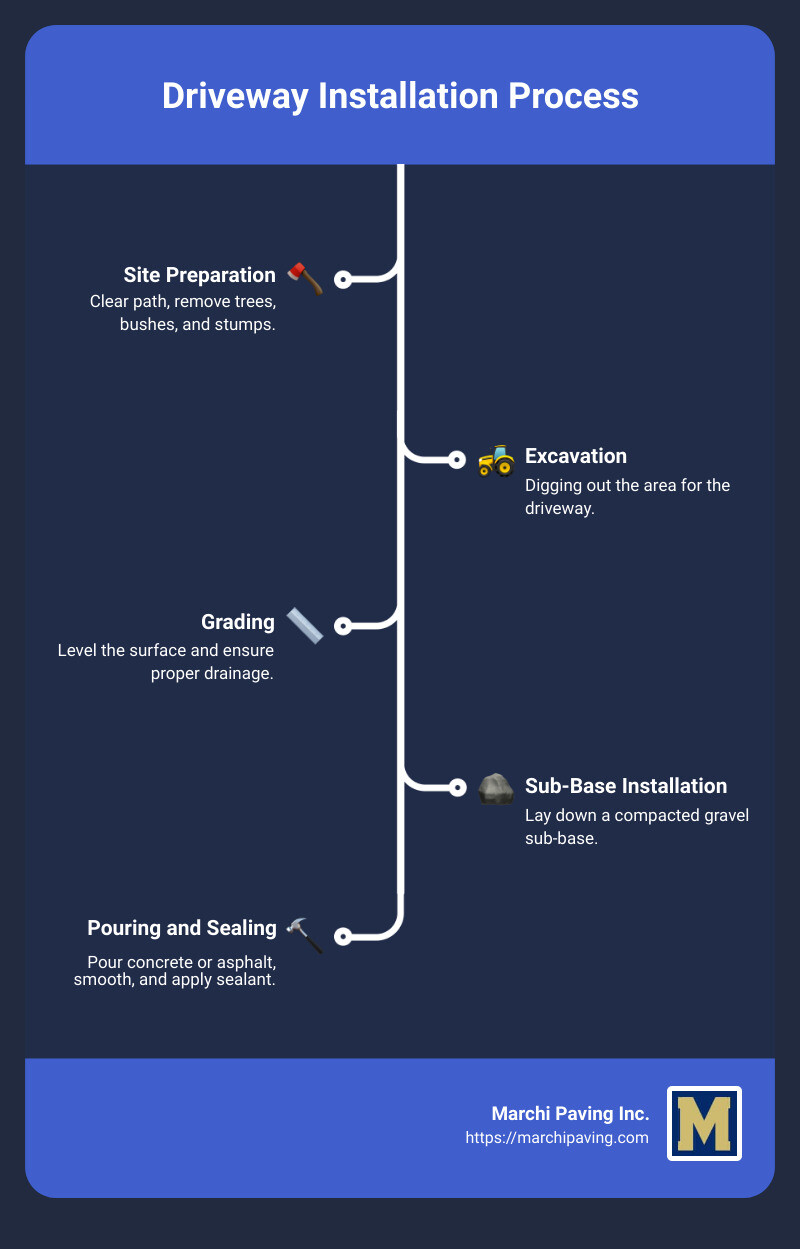
Driveway Installation Process
Site Preparation and Excavation
The first step in any driveway installation is site preparation and excavation. This involves clearing the area where the driveway will be laid. Trees, bushes, and stumps must be removed to create a clear path. This ensures there are no obstacles that could disrupt the driveway’s foundation.
Next, the ground is excavated. This means digging out the soil to the required depth. The depth depends on the type of driveway you choose, but typically ranges from 4 to 8 inches. Proper excavation is crucial for the stability and longevity of your driveway.
Grading and Sub-Base Installation
Once the site is prepared, the next step is grading and sub-base installation. Grading involves creating a level surface. This ensures that the driveway will be even and smooth. Proper grading also helps with drainage, preventing water from pooling on the driveway.
The sub-base is then installed. This is usually a layer of compacted gravel or a similar material. The sub-base provides a stable foundation for the driveway and helps with drainage. It should be 4 to 8 inches deep, depending on your soil type. Compacting the gravel is essential to prevent settling and ensure the driveway remains level over time.
Pouring and Sealing
With the sub-base in place, it’s time for pouring and sealing. Depending on your choice, either concrete or asphalt will be poured over the sub-base.
For concrete driveways, the concrete is poured and then smoothed out. It needs to be left to cure, which can take several days. A sealant is often applied to protect the concrete from stains and weather damage.
For asphalt driveways, the asphalt is poured hot and then smoothed out. Asphalt driveways also need time to cure, usually 24 to 48 hours. Like concrete, asphalt benefits from a sealant to extend its lifespan and maintain its appearance.
Proper sealing is crucial. It protects the driveway from the elements and prevents damage from water, oil, and other substances.
Now that you understand the installation process, let’s discuss how to maintain and repair your driveway to keep it looking its best.
Driveway Maintenance and Repairs
Regular Maintenance
Keeping your driveway in top shape requires regular maintenance. Here are some essential steps to follow:
Cleaning
Regular cleaning prevents debris from accumulating and causing damage. Sweep away leaves, dirt, and other debris. For stubborn stains, a power washer can be effective. Clean driveways not only look better but also last longer.
Sealing
Sealing your driveway is crucial. It protects the surface from water, oil, and UV damage. For asphalt driveways, sealcoating every 3-5 years is recommended. This acts as a shield, preventing cracks and potholes. Concrete driveways also benefit from periodic sealing to prevent stains and freeze-thaw damage.
Preventing Stains
To prevent unsightly stains, clean spills immediately. Oil, gasoline, and other chemicals can penetrate the surface if left untreated. Use a degreaser for tough stains and rinse thoroughly with water.
Repairing Cracks and Damage
Even with regular maintenance, driveways can develop cracks and other issues over time. Here’s how to address them:
Crack Sealing
Small cracks can be sealed using a hot sealant. This prevents water from seeping in and causing more extensive damage. It’s a quick and cost-effective way to prolong the life of your driveway.
Resurfacing
If your driveway has extensive surface damage but the sub-base is still in good condition, resurfacing might be the solution. This involves adding a new layer of material over the existing surface. It’s less expensive than a full replacement and can make your driveway look new again.
Pothole Repair
Potholes can be hazardous and unsightly. They should be patched as soon as they appear. Patching involves filling the hole with new material and compacting it to ensure a smooth, even surface. This prevents further damage and improves the appearance of your driveway.
Regular maintenance and timely repairs can significantly extend the lifespan of your driveway. Up next, we’ll answer some frequently asked questions about driveway contractors and their services.
Frequently Asked Questions about Driveway Contractors
How much does a driveway cost?
The cost of a driveway varies depending on several factors:
- Material Type: Asphalt, concrete, gravel, and pavers all have different price points. For example, an asphalt driveway typically costs between $3 and $5 per square foot.
- Size of the Driveway: Larger driveways require more materials and labor, increasing the total cost.
- Preparation Work: If the site needs significant grading or removal of existing pavement, expect higher costs.
- Thickness of the Material: Thicker layers provide more durability but also add to the cost.
- Location: Costs can vary based on local labor rates and material availability.
To get an accurate estimate, get multiple quotes from local driveway contractors. This will help you compare pricing and services.
How long do driveways last?
The lifespan of a driveway depends on several factors:
- Material Quality: Asphalt driveways generally last between 12 to 20 years, while concrete driveways can last up to 30 years or more.
- Quality of Installation: Proper underlayment, drainage, and root management are crucial for longevity.
- Maintenance: Regular cleaning, sealing, and immediate crack repair can extend the life of your driveway.
- Usage: Heavy vehicles and frequent traffic can reduce the lifespan.
A well-maintained driveway not only lasts longer but also looks better and is safer to use.
What do paving contractors do?
Paving contractors offer a range of services, including:
- Installation: This involves site preparation, excavation, grading, sub-base installation, and pouring of materials like asphalt or concrete.
- Repaving: For driveways that are damaged but don’t need a full replacement, repaving involves adding a new layer of material over the existing one.
- Site Visits and Bids: Contractors will visit your site to assess the project and provide a detailed bid. This bid should outline the work involved, materials needed, approximate length of the project, and estimated cost.
When hiring a paving contractor, make sure to ask about their experience, licensing, and insurance to ensure you’re getting quality service.
Up next, we’ll dive into the different types of driveways and their unique features.
Conclusion
Choosing the right driveway contractor can make all the difference in the quality and longevity of your driveway. At Marchi Paving Inc., we are committed to providing top-notch service and ensuring your driveway stands the test of time.
Professional Consultation
We believe in starting every project with a thorough professional consultation. Our team will visit your site, assess your needs, and provide expert advice tailored to your specific situation. We’ll discuss various options, from materials to design, ensuring you make an informed decision that aligns with your vision and budget.
High-Quality Service
Our dedication to high-quality service is evident in every project we undertake. From using premium-grade materials to employing skilled professionals, we ensure that every aspect of your driveway installation is handled with the utmost care and precision. Our goal is to deliver a driveway that not only looks great but also performs well for years to come.
Advanced Equipment
We invest in state-of-the-art equipment to enhance the efficiency and precision of our work. Advanced machinery allows us to complete projects on schedule and within budget, without compromising on quality. This means you get a smooth, durable surface that enhances your property’s curb appeal and value.
Local Expertise in Chelmsford, MA
Being a local business in Chelmsford, MA, we understand the specific needs and challenges of our community. Our customer-centric approach involves transparent communication, detailed project planning, and personalized solutions tailored to meet your specific needs.
Choosing Marchi Paving Inc. means partnering with a team dedicated to delivering outstanding results. Ready to start your project? Contact us today to get a detailed quote and experience the Marchi Paving difference.
Paving Contractors: Top 10 Best Experts in 2024
Looking for paving contractors but don’t have time to read the full article? Here’s what you need to know:
- Quality: Choose contractors known for high-quality materials and craftsmanship.
- Reliability: Look for strong track records of meeting deadlines and customer satisfaction.
- Experience: Ensure the company has experience in your specific type of project.
Getting the Best Paving Contractors for Your Project
When it comes to paving your driveway or any other paved area, choosing the right paving contractors is crucial. Paving contractors handle everything from selecting materials to overseeing the construction process, ensuring the job is done right.
Key Points to Consider
Material Choices: Asphalt and concrete are the most common materials. Each has its pros and cons depending on climate, budget, and desired appearance.
Project Scope: Understand what you need—whether it’s a new driveway, a parking lot, or simple repair work. Your project requirements will guide your choice of contractor.
Safety and Longevity: Quality paving improves the curb appeal and safety of your property. A well-done job can last decades with minimal maintenance.
In the following sections, we dive deeper into how you can find the best paving contractors, understand cost implications, and ask the right questions to ensure a successful paving project.

Understanding Asphalt and Blacktop
When it comes to paving, asphalt and blacktop are two terms you might hear often. While they are similar, they have some key differences.
Asphalt vs. Blacktop
Asphalt is a mixture of aggregates (like sand, gravel, or crushed stone) and bitumen, which is a sticky, black binder. It’s known for its durability and is commonly used for major highways and high-traffic areas.
Blacktop, on the other hand, is a type of asphalt that has a higher percentage of crushed stone. This makes it less durable than traditional asphalt but more suitable for residential driveways and playgrounds.
Heating Temperatures
The production of these materials also differs in their heating temperatures:
- Hot Mix Asphalt: Produced at temperatures between 160-180°C. This high temperature makes it very durable, which is why it’s used for highways and airport runways.
- Warm Mix Asphalt: Made at lower temperatures, requiring less energy and emitting fewer fumes. It’s safer for workers and better for the environment but not as robust as hot mix asphalt.
Bitumen Content
Bitumen is the key ingredient that holds the aggregates together. The bitumen content in asphalt is generally higher, giving it more strength and durability. This is why asphalt is preferred for areas that bear heavy loads, like highways.
Blacktop, with its higher crushed stone content and lower bitumen, is more porous. This makes it less ideal for areas with heavy rainfall or freezing temperatures but perfect for residential applications.
Major Highways
Asphalt’s durability makes it the go-to choice for major highways. It can handle the weight and constant pressure from heavy vehicles. Its smooth surface also reduces noise levels, making for a quieter ride.
Fun Fact: Roads constructed with top-notch asphalt not only last longer but also improve the overall driving experience by reducing noise and providing a smoother ride.
In the next section, we’ll explore how to find the best paving contractors for your project, ensuring you get the quality and reliability you need.
How to Find the Best Paving Contractors
Finding the right paving contractors can make a big difference in the success of your project. Here’s how to ensure you choose the best:
Search Engines
Start with a simple online search. Type in “paving contractors near me” or “asphalt paving services.” This will give you a list of local businesses. Check their websites for details about their services, past projects, and customer reviews. A well-maintained website often indicates a professional and reliable company.
Local Pros
Ask around. Your family, friends, and neighbors might know a great paving contractor. Personal recommendations are often the most trustworthy. Real estate agents and homeowners associations (HOAs) are also good sources for referrals. They usually have a list of approved contractors who have done good work in your area.
Quotes Comparison
Get at least three quotes. This will help you compare prices and services. Make sure the quotes are detailed. They should include the cost of materials, labor, and any additional fees. Be wary of quotes that are significantly lower than others. This could indicate lower quality materials or workmanship.
Hiring Tips
Check Licenses and Insurance: Ensure the contractor is licensed and insured. This protects you from liability in case of accidents or damages. You can verify their license on your state’s website.
Ask for References: A reputable contractor should provide references. Call these references to ask about their experience with the contractor.
Review Online Ratings: Look up the contractor on the Better Business Bureau (BBB) website. BBB ratings range from A+ to F. Also, check reviews on Google, Yelp, and Angi.com. Consistent positive reviews are a good sign.
Ask the Right Questions: During your initial conversation, ask about their experience, the types of projects they specialize in, and their approach to your specific needs. Here are a few key questions:
– Can you provide proof of licensure and insurance?
– Do you have experience with similar projects?
– Can you provide a sketch of the project?
– What are your payment expectations?
– May I have an estimate in writing?
Get It in Writing: Always get a written estimate. This should include the scope of work, materials to be used, timeline, and payment terms. Make sure you and the contractor are clear on the design and expectations.
By following these steps, you’ll be well on your way to hiring a reliable and skilled paving contractor. This will ensure your project is completed on time, within budget, and to your satisfaction.
Next, we’ll dive into the costs associated with paving projects, helping you understand what to expect and how to budget effectively.
Cost of Paving Projects
When it comes to paving projects, understanding the costs involved is crucial. Here, we’ll break down the cost of asphalt driveways, including labor and materials, the national average, and the factors that can influence these costs.
Asphalt Driveway Cost
Asphalt driveways typically range from $7 to $15 per square foot. This includes both materials and labor. The price can vary based on several factors, such as location, the thickness of the asphalt, and the complexity of the job.
National Average
The national average cost to install an asphalt driveway is about $4,740. However, keep in mind that this is just an average. Your specific project could cost more or less depending on various factors.
Labor and Materials
Materials: Asphalt is generally an affordable paving material. The cost of the asphalt itself usually ranges from $2 to $6 per square foot. Other materials, like the compacted gravel base, will add to the overall cost.
Labor: Skilled labor for asphalt paving can range from $5 to $9 per square foot. This includes preparation work like removing old pavement, grading, and ensuring proper drainage, as well as laying down and compacting the asphalt.
Cost Factors
Several factors can influence the overall cost of your paving project:
- Driveway Size and Shape: Larger driveways or those with complex shapes will require more materials and labor, increasing the cost.
- Preparation Work: If your existing driveway needs significant prep work, such as removing old pavement or addressing drainage issues, expect higher costs.
- Accessibility: Difficult-to-reach locations may require specialized equipment, increasing labor costs.
- Thickness and Durability Requirements: Driveways intended for heavy vehicles may need thicker asphalt, which costs more.
- Regional Costs and Labor Rates: Prices can vary based on your location. Get quotes from local contractors to get an accurate estimate.
Additional Features and Add-ons
Optional features like decorative borders, colored asphalt, or enhanced drainage solutions can add to the overall cost. While these features improve aesthetics and functionality, they also require additional budgeting.
Seasonal Considerations
The time of year can affect costs. Some contractors offer discounts during off-peak seasons, typically in colder months. However, weather conditions may not be ideal for paving during these times, so plan accordingly.
By understanding these cost factors, you can make informed decisions and budget for your asphalt driveway paving project.
Next, we’ll explore the different types of asphalt available for your paving needs.
Questions to Ask Your Paving Contractor
When hiring paving contractors, asking the right questions can save you time, money, and headaches. Here are essential questions to ensure you choose the best contractor for your project:
1. Experience
How long have you been in the paving business?
Experience matters. Contractors with years of experience are more likely to deliver high-quality work. For instance, Marchi Paving boasts over two decades of expertise, ensuring they have the skills to handle any paving project.
2. Licensing
Do you have a valid contractor license?
A valid license shows the contractor meets local regulations and industry standards. Always ask for their license number and verify it on your state’s licensing board website.
3. Insurance
Are you insured?
Ensure the contractor has both general liability insurance and workers’ compensation insurance. This protects you from liability for property damage or worker injuries. Always request an insurance certificate directly from the contractor’s insurance agent.
4. Subcontractors
Will you be using any subcontractors?
If subcontractors are involved, ensure they are also licensed and insured. Knowing who will be working on your property helps avoid any surprises.
5. Cleanup
Who is responsible for site cleanup?
A good contractor will include cleanup in their services. Confirm this to avoid additional costs and ensure your property is left in good condition.
6. Damage Responsibility
Who is responsible for any damage during the project?
Clarify who will handle any accidental damage to your property. A reputable contractor will take responsibility and have a plan for addressing such issues.
7. Guarantees
Do you offer any guarantees or warranties?
A warranty shows the contractor stands by their work. Ask about the warranty period and what it covers. For example, some contractors provide a warranty that covers repairs for a specific time after the project’s completion.
8. Free Estimates
Do you provide free estimates?
Most reputable contractors offer free, detailed estimates. This helps you understand the project’s scope and cost without any upfront commitment.
9. Timeline
What is the project timeline?
A clear timeline helps you plan better. Ask when they can start, how long the project will take, and what factors could cause delays. For instance, Jerry from HQ Asphalt completed a 150-foot driveway in just one day after providing an estimate.
10. Change Orders
How do you handle change orders?
Changes can occur during a project. Knowing how the contractor handles them ensures you are prepared for any adjustments in cost or timeline.
11. References
Can you provide references?
Speaking to past clients can give you insights into the contractor’s reliability and quality of work. Look for positive feedback and consistent praise for their professionalism and results.
12. Previous Work
Can I see examples of your previous work?
Reviewing past projects helps you gauge the contractor’s expertise and style. Look for a portfolio that matches your vision and requirements.
Asking these questions ensures you hire a reputable and skilled paving contractor, setting the stage for a successful project.
Next, we’ll explore the different types of asphalt available for your paving needs.
Types of Asphalt
When it comes to paving, there are several types of asphalt that paving contractors use, each with its own unique properties and applications. Let’s break down the most common types:
Hot Mix Asphalt
Hot Mix Asphalt (HMA) is produced at high temperatures, typically between 160-180°C. This type of asphalt is known for its durability and strength, making it ideal for high-traffic areas like highways and airport runways. The high production temperature helps to achieve a dense, cohesive mixture that can withstand heavy loads and harsh weather conditions.
Warm Mix Asphalt
Warm Mix Asphalt (WMA) is produced at lower temperatures compared to HMA. This results in reduced energy consumption and fewer emissions, making it more environmentally friendly. While it is safer for workers and better for the environment, WMA is generally less robust than HMA. Therefore, it’s more suitable for low-traffic areas and light vehicles.
Emulsified Asphalt
Emulsified Asphalt involves suspending small cement granules in water, followed by adding an emulsifying agent like soap. This makes the mixture less viscous and easier to work with, especially in cooler temperatures. Once applied, the water evaporates, leaving behind a solid cement layer. This type is often used for road maintenance and surface treatments.
Foamed Asphalt
Foamed Asphalt is created by injecting cold water into hot asphalt binder. The water turns into steam, creating a foamy mixture that expands and becomes more workable. This method produces a high-volume, yet thin, asphalt layer that quickly returns to its original form. Foamed asphalt is useful for recycling old pavements and improving the base layers of roads.
Cutback Asphalt
Cutback Asphalt combines asphalt cement with a petroleum solvent to reduce its viscosity. This makes it easier to apply in colder temperatures. However, the solvent evaporates once the asphalt is laid, which can be both costly and harmful to the environment. Due to these drawbacks, its use is becoming less common.
Thin Overlays
Thin Overlays are a cost-effective solution for improving the surface quality of roads. Made from recycled materials and warm-mix asphalt, thin overlays are designed to reduce noise levels and provide a smoother ride. They are often used to extend the lifespan of existing pavements without the need for complete reconstruction.
Porous Asphalt
Porous Asphalt is designed to allow water to drain through the pavement surface, reducing runoff and improving water management. This makes it an excellent choice for parking lots, driveways, and other areas where water drainage is a concern. Porous asphalt helps to prevent flooding and improves the quality of nearby water bodies by filtering pollutants.
Understanding these different types of asphalt can help you make an informed decision for your paving project. Each type has its own set of benefits and ideal applications, ensuring that your specific needs are met effectively.
Benefits of Asphalt Paving
Durability
Asphalt is renowned for its durability. With proper maintenance, asphalt driveways can last up to 30 years. Regular upkeep like sealcoating and crack filling can extend this lifespan even further. This makes asphalt a long-term investment for homeowners and businesses alike.
Smooth Appearance
One of the standout features of asphalt is its sleek, smooth surface. This not only enhances curb appeal but also provides a comfortable driving experience. The dark color of asphalt can even help melt ice and snow faster during winter months, adding an extra layer of safety.
Noise Reduction
Asphalt is excellent for noise reduction. Its open-graded and fine-graded surfaces absorb road noise, making it a quieter option for driveways and roads. This can be particularly beneficial in residential areas where noise pollution is a concern.
Cost-Effectiveness
When it comes to cost, asphalt paving is generally more economical than concrete. It can be installed quickly, reducing labor costs. Additionally, asphalt is recyclable, which can lower the overall expense and make it a more sustainable choice.
Water Drainage
Porous asphalt is a game-changer for water drainage. It allows water to seep through the pavement surface, reducing runoff and improving water management. This makes it an excellent choice for parking lots, driveways, and other areas where water drainage is a concern. Porous asphalt helps to prevent flooding and improves the quality of nearby water bodies by filtering pollutants.
Colored Asphalt
While traditional asphalt is black, it can be colored to match your aesthetic preferences. Colored asphalt can add a unique touch to your property, making it stand out. This is particularly useful for commercial properties looking to enhance their brand image.
Understanding these benefits can help you make an informed decision for your paving project. Each advantage ensures that your specific needs are met effectively, making asphalt a versatile and reliable choice for various applications.
Frequently Asked Questions about Paving Contractors
How much does a blacktop cost?
The cost of blacktop varies depending on several factors. Generally, you can expect to pay between $3 to $5 per square foot. For a small driveway of 10×20 feet, the cost ranges from $600 to $1,000.
Factors that affect cost:
- Size of the driveway: Larger driveways require more materials and labor.
- Thickness of the asphalt layer: Thicker layers are more durable but cost more.
- Preparation work: Significant grading or removal of old pavement can increase costs.
- Location: Local labor rates and material availability can affect prices.
For a more detailed estimate, it’s best to get quotes from multiple contractors.
Is asphalt cheaper than concrete?
Yes, asphalt is generally cheaper than concrete.
Cost Comparison:
- Installation cost: Asphalt costs about $7 to $15 per square foot, including labor and materials. Concrete ranges from $8 to $18 per square foot.
- Long-term costs: Asphalt may require more frequent maintenance, but it’s less expensive to repair. Concrete lasts longer but is more costly to fix when damaged.
Conclusion: While asphalt is cheaper upfront, consider long-term maintenance when making your decision.
Can you put asphalt over concrete?
Yes, you can put asphalt over concrete, but there are important considerations.
Base Material: The existing concrete must be stable and in good condition. If the concrete has major cracks or is uneven, it can affect the new asphalt layer.
Stability and Compaction: Proper compaction is crucial for a durable asphalt overlay. The concrete base must be well-prepared to ensure the new asphalt adheres properly.
Advantages:
- Cost-effective: Reusing the existing concrete base can save money.
- Time-saving: Less preparation work is needed compared to starting from scratch.
Limitations:
- Potential for future issues: If the concrete base shifts or cracks, it can cause problems for the new asphalt layer.
For a successful project, consult with experienced paving contractors to assess the condition of your existing concrete and ensure proper installation.
Conclusion
When it comes to selecting a paving contractor, you want a company that combines experience, quality, and advanced technology. At Marchi Paving Inc., we bring over 20 years of industry expertise to every project, ensuring high-quality execution from start to finish.
High-Quality Execution
Our commitment to quality starts with using only the best materials. From premium-grade asphalt to top-notch sealants, every project is designed to stand the test of time. This dedication to quality ensures your pavement is not only durable but also aesthetically pleasing.
Advanced Equipment
We invest in state-of-the-art equipment to enhance the efficiency and precision of our work. Our advanced machinery allows us to complete projects on schedule and within budget, without compromising on quality. This means you get a smooth, durable surface that looks great and performs well.
Over 20 Years of Experience
With over two decades of experience, we have tackled a wide range of paving projects. Our team of highly skilled professionals handles every aspect of the project in-house, allowing us to maintain strict quality control. This extensive experience ensures that we can meet and exceed your expectations, no matter the size or complexity of the project.
When you choose Marchi Paving Inc., you’re not just getting a contractor; you’re partnering with a team dedicated to delivering outstanding results.
Ready to start your project? Contact us today to get a detailed quote and experience the Marchi Paving difference.
Paver Contractors: Top 10 Benefits in 2024
Your Guide to the Best Paver Contractors
Looking for the best paver contractors to spruce up your outdoor space and boost your property’s appeal? We’ve got you covered. Understanding the nuances of paver installation and the numerous benefits of pavers is crucial for selecting the right contractor for your project.
Here’s a quick snapshot of why pavers could be your best choice and what to look for in a top-notch paver contractor:
- Durability: Pavers last long and endure adverse weather.
- Aesthetic Appeal: Available in various colors, styles, and textures.
- Versatility: Suitable for patios, pathways, driveways, and more.
- Low Maintenance: Easy to clean and replace if needed.
- Eco-Friendly: Often made from natural materials and allow water percolation.
Choosing the right paver contractor involves considering their experience, customer reviews, and their ability to meet your specific needs.

Why Choose Pavers?
Pavers offer a wide range of design options. Whether you want a modern, rustic, or classic look, you can find pavers that match your style. They come in various textures, colors, and styles, allowing you to create a unique outdoor space that complements your home’s architecture.
For example, at Marchi Paving Inc., we offer a variety of patio pavers that can transform your outdoor living area. Our pavers are available in multiple materials and designs, ensuring a perfect match for your home’s aesthetic.
Durability and Safety
One of the main reasons homeowners choose pavers is their durability. Pavers are known for their ability to withstand wear and tear, making them ideal for high-traffic areas like driveways and walkways. Unlike concrete, pavers do not crack easily, which means they can endure heavy loads and shifting ground.
Additionally, pavers offer a nonskid surface, making them a safe choice for areas prone to getting wet, such as pool decks. Pool deck pavers from Marchi Paving Inc. are slip-resistant and can handle constant exposure to water and chemicals, ensuring both safety and longevity.
Environmentally Friendly
Pavers are an eco-friendly choice for your outdoor spaces. Many pavers are made from local natural aggregates, which reduces the carbon footprint associated with long-distance transportation. Unlike asphalt, pavers do not contain petroleum-based products, making them a more sustainable option.
Moreover, pavers allow for water percolation, which means they help reduce stormwater runoff and prevent soil erosion. This feature is especially beneficial for areas with heavy rainfall, as it helps manage water flow and supports groundwater recharge.
Types of Paver Projects
Patio Pavers
Transform your outdoor living space with patio pavers. They come in various materials like brick, concrete, and natural stone. These pavers offer endless design possibilities, allowing you to match your home’s architecture and style perfectly.
Materials: Brick, concrete, natural stone
Designs: Modern, rustic, classic
Home Architecture: Seamlessly integrates with any style
Pool Deck Pavers
Ensure safety and elegance around your pool with pool deck pavers. These pavers are designed to be slip-resistant and withstand constant exposure to water and pool chemicals.
Slip-Resistant: Reduces the risk of slips and falls
Water Exposure: Handles water without damage
Chemical Resistance: Resists pool chemicals
Driveway Pavers
Boost your home’s curb appeal with driveway pavers. These pavers are built to endure heavy vehicular traffic and resist wear and tear.
Curb Appeal: Enhances the look of your home
Heavy Vehicular Traffic: Withstands the weight of cars
Wear and Tear Resistance: Long-lasting and durable
Pathway and Walkway Pavers
Create inviting paths through your garden or to your front door with pathway and walkway pavers. They add both functionality and beauty to your property.
Garden Paths: Enhance your garden’s aesthetics
Front Door Paths: Welcoming and practical
Functionality and Beauty: Combines utility with charm
Backyard Pavers
Achieve a cohesive look in your outdoor space with backyard pavers. They offer the perfect balance of aesthetics and practicality, making your backyard a go-to spot for relaxation.
Cohesive Outdoor Space: Creates a unified look
Aesthetics: Beautiful designs
Practicality: Functional and easy to maintain
Fire Pit Pavers
Elevate your outdoor gatherings with fire pit pavers. These pavers are designed to withstand high temperatures, providing a safe and cozy environment.
High Temperature Resistance: Safe for fire pits
Safe Environment: Ideal for gatherings
Retaining Wall Pavers
Enhance your landscape and prevent soil erosion with retaining wall pavers. These pavers add both beauty and functionality to your outdoor space.
Landscape Enhancement: Improves the look of your yard
Soil Erosion Prevention: Keeps soil in place
Paver Steps
For safe and attractive access to different levels in your outdoor area, consider paver steps. These steps are both practical and aesthetically pleasing.
Safe Access: Easy and safe to navigate
Aesthetic Appeal: Enhances the look of your landscape
By understanding the different types of paver projects, you can choose the one that best fits your needs and enhances your outdoor living space. Whether it’s a patio, pool deck, or driveway, pavers offer a durable and stylish solution.
Next, we’ll explore the paver installation process to help you understand what to expect when you hire a professional.
The Paver Installation Process
Consultation and Design
The journey to your dream outdoor space begins with a consultation. During this phase, we sit down with you to understand your vision and requirements. We’ll discuss your preferences and any specific needs you have.
Once we have a clear understanding, our team moves on to the design phase. Here, we create a layout that complements your space and fulfills your needs. We use the latest design tools to provide a detailed sketch, ensuring you know exactly what to expect.
Site Preparation
Proper site preparation is crucial for a successful installation. This involves clearing the area of any debris, plants, or old materials. Next, we grade the land to ensure it’s level and has proper drainage. This step is essential to prevent water pooling, which can damage your pavers over time.
Laying the Base
A solid foundation is key to the longevity of your pavers. We start by laying a base made of high-quality materials like gravel. This base is carefully compacted to create a stable and level foundation. A well-prepared base ensures that the pavers will not shift or settle unevenly.
Placing the Pavers
Now comes the exciting part—placing the pavers. Our skilled professionals meticulously place each paver, ensuring precision and uniformity in pattern and spacing. This step requires a keen eye for detail to maintain the aesthetic appeal and structural integrity of the project.
Cutting and Edging
To fit the design perfectly, some pavers might need cutting. We use specialized tools to make precise cuts, ensuring a seamless fit. We also install edging to maintain the integrity and shape of the installation. Edging helps keep the pavers in place and prevents them from shifting over time.
Sand Filling and Compaction
After the pavers are in place, we fill the joints with sand. This step enhances the stability of the pavers and prevents them from shifting. We then compact the pavers to ensure they are firmly set. This process is repeated until all joints are full and the surface is stable.
Sealing and Finishing
The final step is sealing and finishing. We apply a sealant to protect the pavers from the elements and maintain their color and texture. This layer of protection helps extend the lifespan of your pavers, keeping them looking new for years to come.
By following this meticulous process, we ensure that your paver installation is not only beautiful but also durable and long-lasting. Ready to transform your outdoor space? Contact us today to get started on your paver project!
How to Find the Best Paver Contractors
Choosing the right paver contractors can make or break your project. Here’s how to find the best ones.
Research and Reviews
Start with an online search. Look for local paver contractors and check their websites. A professional site often indicates a reliable company.
Next, read customer reviews. Websites like Yelp and Google Reviews are great for this. Look for patterns—if multiple reviews mention poor communication or subpar work quality, that’s a red flag.
Don’t rely on just one source for reviews. Cross-check reviews across different platforms to ensure consistency.
Qualifications and Experience
Certifications are crucial. Make sure the contractor has relevant certifications, like state contractor licenses and memberships in professional organizations. These validate their commitment to industry standards.
Experience matters too. Look for contractors with several years in business. This indicates they’ve successfully completed various projects and overcome different challenges.
Warranties and Cost Estimates
A good contractor will offer project guarantees. This means they stand behind their work and will fix any issues that arise.
Always get cost estimates in writing. This protects you from unexpected charges. Make sure the estimate includes everything—materials, labor, and any additional costs.
Ask about their payment expectations. It’s common to pay a deposit upfront, but you should reserve the final payment for when the job is satisfactorily completed.
By following these steps, you can ensure you hire the best paver contractors for your project. Ready to get started? Contact Marchi Paving Inc. today!
Frequently Asked Questions about Paver Contractors
Why are pavers so expensive?
Pavers can be pricey due to several factors:
- Material Type: High-quality materials like natural stone or brick tend to be more expensive than concrete pavers. The durability and aesthetic appeal of these materials justify their higher cost.
- Contractor Hiring: Experienced paver contractors charge more for their expertise. Their skill ensures the job is done right, reducing long-term maintenance costs.
- Region: Costs vary by location. Areas with higher living costs or limited supply of materials will have higher prices.
- Demand: High demand for paver installation can drive up prices, especially during peak seasons like spring and summer.
What is a cheap paver?
Concrete pavers are often the most affordable option. They offer a great balance between cost and performance.
- Affordability: Concrete pavers generally range from $8 to $15 per square foot, including installation. This makes them accessible for many homeowners.
- Design Options: Despite their lower cost, concrete pavers come in various shapes, sizes, and colors. This allows for customization to match your home’s style without breaking the bank.
How much does it cost to make a concrete paver?
The cost of making a concrete paver includes both material and labor costs.
- Material Cost: The raw materials for concrete pavers—cement, water, and aggregates—are relatively inexpensive. However, the quality of these materials can impact the final cost.
- Installation Labor Cost: Labor is a significant part of the total cost. Skilled labor ensures the pavers are installed correctly, which adds to the expense. Labor costs can range from $5 to $11 per square foot, depending on complexity.
In summary, while pavers can be expensive, their durability and aesthetic appeal make them a worthwhile investment. Concrete pavers offer a cost-effective solution without compromising on design options.
Conclusion
At Marchi Paving Inc., our goal is to provide you with the best paver solutions for your projects. Whether you are looking to enhance your driveway, patio, or pool deck, we have the expertise and equipment to deliver outstanding results.
High-Quality Execution
Our commitment to quality starts with using the best materials. From premium-grade asphalt to top-notch sealants, every project is designed to stand the test of time. This dedication ensures your pavement is not only durable but also aesthetically pleasing.
Case Study: One of our clients, Julie Vaughn, praised our ability to manage and deliver a flawless driveway installation despite delays caused by other contractors on-site. This highlights our ability to maintain high-quality execution even under challenging conditions.
Advanced Equipment
We invest in state-of-the-art equipment to enhance the efficiency and precision of our work. Our advanced machinery allows us to complete projects on schedule and within budget, without compromising on quality. This means you get a smooth, durable surface that looks great and performs well.
Fact: Advanced equipment not only speeds up the installation process but also ensures that every paver is placed with exact precision, leading to a more durable and aesthetically pleasing result.
Customer Satisfaction
Customer satisfaction is at the heart of what we do. We pride ourselves on our meticulous attention to detail and exceptional service. Our team is dedicated to delivering high-quality work, from the initial consultation to the final walk-through.
Quote: “The only people I could rely on were Marchi Paving, and the job was absolutely flawless,” said Julie Vaughn, a satisfied customer.
We also offer warranties and honest cost estimates to give you peace of mind and confidence in our services. Our transparent pricing ensures there are no hidden costs, and our warranties protect your investment.
Ready to transform your outdoor space with beautiful, durable pavers? Contact us today to get a detailed quote and experience the Marchi Paving difference.
By focusing on high-quality execution, advanced equipment, and customer satisfaction, Marchi Paving Inc. stands out as your best choice for paver contractors. We look forward to working with you to create the outdoor space of your dreams.
Backyard Drainage Solutions Near Me: 10 Best Tips for 2024
Why Backyard Drainage Solutions Are Important
Backyard drainage solutions near me are essential to prevent water damage, protect your landscape, and maintain a healthy outdoor environment. Proper drainage systems ensure that your yard remains functional and beautiful, even during heavy rains.
Prevent Water Damage: Stagnant water can weaken your home’s foundation, leading to costly repairs.
Landscape Protection: Effective drainage solutions protect plants and soil from erosion and drowning.
Health Safety: Standing water can become a breeding ground for mosquitoes and other pests.
Marchi Paving Inc. offers a range of drainage solutions tailored to your specific needs. Whether it’s installing French drains to divert water or setting up sump pump systems for below-grade areas, we have the expertise to keep your property safe and dry.

Common Backyard Drainage Solutions
Aerate Lawn
Aerating your lawn is a simple yet effective way to improve drainage. By creating small holes in the soil, you allow water, air, and nutrients to penetrate the grass roots more efficiently. This process helps reduce soil compaction and improves water absorption.
Amend Soil
Sometimes, poor drainage is due to the type of soil in your yard. Amending the soil with organic matter like compost or peat moss can improve its texture and drainage capabilities. This allows water to move through the soil more freely, preventing waterlogging.
Regrade Yard
If water tends to pool in certain areas of your yard, regrading might be necessary. This involves reshaping the land to create a gentle slope, directing water away from your home and towards a designated drainage area. Proper regrading ensures that water flows naturally and reduces the risk of flooding.
Build Retaining Wall
Retaining walls not only add aesthetic appeal but also serve a functional purpose in managing water flow. They can be used to create terraces on sloped areas, preventing soil erosion and controlling water runoff. Retaining walls are particularly useful in landscapes with significant elevation changes.
Install French Drain
French drains are a popular choice for homeowners dealing with excess water. These systems consist of a trench filled with gravel and a perforated pipe that redirects water away from problem areas. The gravel helps filter the water, while the pipe carries it to a designated drainage point. French drains are highly effective and can be customized to fit your yard’s layout.
Dig Dry Well
A dry well is an underground structure designed to collect and disperse excess water. It works by allowing water to slowly seep into the surrounding soil, reducing surface water accumulation. Dry wells are ideal for areas with limited space or where traditional drainage methods are not feasible.
Install Dry Creek Bed
A dry creek bed is a decorative yet functional way to manage water flow. It involves creating a shallow trench lined with rocks and gravel, mimicking a natural creek. During heavy rains, the dry creek bed channels water away from your yard, preventing flooding and erosion.
Rain Garden
Rain gardens are designed to capture and absorb rainwater runoff. They are typically planted with water-tolerant plants that help filter and absorb the water. Rain gardens not only improve drainage but also add beauty to your landscape and support local wildlife.

By implementing these backyard drainage solutions, you can protect your property from water damage and maintain a healthy, attractive landscape. Marchi Paving Inc. specializes in customized drainage solutions tailored to your specific needs. Whether you’re dealing with minor water issues or major flooding, we have the expertise to provide effective and lasting solutions.
How to Fix a Yard with Poor Drainage
Dealing with poor drainage in your yard? Here are some effective solutions to consider:
Aerate Lawn
Aerating your lawn helps improve soil permeability. This process involves creating small holes in the soil to allow air, water, and nutrients to penetrate the grass roots. Regular aeration can significantly enhance water absorption and reduce surface runoff.
Amend Soil
Amending the soil involves adding organic materials like compost or sand to improve soil structure and drainage. Poorly draining soil, such as clay-heavy soil, benefits greatly from these amendments. This helps water move through the soil more efficiently, preventing pooling and waterlogging.
Regrade Yard
Regrading your yard means adjusting the slope to ensure water flows away from your home and other structures. This can involve reshaping the landscape to create a gentle slope that directs water to designated drainage areas. Proper regrading can prevent water from accumulating in unwanted areas.
Build Retaining Wall
Building a retaining wall can help manage water flow and prevent erosion. Retaining walls are particularly effective in sloped areas. They hold back soil and create a barrier that directs water away from vulnerable spots. This can help protect both your landscape and your home’s foundation.
Install French Drain
French drains are a popular and effective solution for poor drainage. They consist of a trench filled with gravel and a perforated pipe that redirects water away from problem areas. French drains are ideal for managing water around elevated planters or areas prone to flooding.
Dig Dry Well
Dry wells are subsurface structures designed to collect and gradually disperse excess water into the ground. They are useful in areas with limited space or where traditional drainage methods aren’t feasible. Dry wells help manage runoff and prevent water from pooling on the surface.
Install Dry Creek Bed
Dry creek beds are both functional and decorative. These shallow, rock-lined channels mimic the appearance of a natural creek and help direct water flow during heavy rains. They are particularly effective in controlling erosion and preventing water from accumulating in low-lying areas.
Rain Garden
Rain gardens are designed to capture and absorb rainwater runoff from roofs, driveways, and other surfaces. These gardens are planted with water-tolerant plants that help filter and absorb the water. Rain gardens not only improve drainage but also add beauty to your landscape and support local wildlife.
By implementing these backyard drainage solutions, you can protect your property from water damage and maintain a healthy, attractive landscape. Marchi Paving Inc. specializes in customized drainage solutions tailored to your specific needs. Whether you’re dealing with minor water issues or major flooding, we have the expertise to provide effective and lasting solutions.
Adding Drainage to Your Yard
When it comes to backyard drainage solutions near me, there are several strategies you can use to keep your yard dry and your landscape healthy. Let’s break down some of the most effective methods:
Aerate Lawns Regularly
Aerating your lawn is a simple yet powerful way to improve drainage. By perforating the soil with small holes, you allow water, air, and nutrients to penetrate the grass roots. This helps reduce soil compaction and promotes better water absorption. Regular aeration can make a noticeable difference, especially in areas with heavy clay soil.
Plant Water-Hungry Plants
Planting water-hungry plants in your yard can help absorb excess water. These plants thrive in moist conditions and can significantly reduce standing water. Consider adding plants like willows, ferns, and certain types of grasses to areas prone to flooding.
Install Channel Drains
Channel drains are excellent for areas where water tends to pool, such as driveways and patios. These drains capture runoff and direct it away from your property. They are installed in trenches and covered with grates, making them both functional and discreet. Channel drains are particularly useful for preventing water from seeping into your home’s foundation.
Replace Driveways with Porous Materials
Traditional concrete driveways can exacerbate drainage issues by preventing water from soaking into the ground. Replacing your driveway with porous materials like gravel, permeable pavers, or porous concrete allows water to pass through and be absorbed by the soil below. This reduces runoff and helps keep your yard dry.
Regrade Yard
If your yard has low spots where water collects, regrading can be an effective solution. By reshaping the land to create a gentle slope, you can direct water away from problem areas and towards designated drainage points. Regrading requires careful planning and execution, but it can provide a long-term solution to persistent drainage issues.
For more detailed information on these methods, check out Marchi Paving’s drainage solutions.
By integrating these strategies into your landscape design, you can effectively manage water runoff and prevent flooding. Up next, let’s dive into how to redirect runoff to prevent yard flooding.
Redirecting Runoff to Prevent Yard Flooding
Redirecting runoff is crucial to prevent yard flooding. Here are some effective methods:
Swale
A swale is a shallow, wide channel designed to redirect water. It helps manage stormwater runoff by guiding it away from your yard and towards a designated drainage area. Swales are often constructed on slopes or alongside driveways to prevent erosion and control water flow.
French Drain
A French drain is a popular solution for redirecting excess water. It consists of a trench filled with gravel or rock, containing a perforated pipe that captures and carries water away. This system works on the principle of gravity, allowing water to flow naturally towards a designated drainage area. Marchi Paving Inc. has experience in installing French drains, ensuring proper design and implementation for optimal functionality.
Catch Basin
Catch basins, also known as storm drains, are essential for collecting and controlling surface water runoff. They are typically installed at low points or areas prone to pooling water, such as driveways, parking lots, or yards. Catch basins consist of a grated inlet that directs water into an underground basin or pipe system. Marchi Paving Inc. can assess your property’s requirements and install catch basins strategically to effectively divert excess water and prevent flooding.
Splash Blocks
Splash blocks are simple yet effective tools placed at the base of downspouts to direct water away from your foundation. They prevent the concentrated flow of water from eroding soil and causing damage. Splash blocks come in various materials and designs, making them a versatile option for any landscape.
Downspout Extensions
Downspout extensions are another easy way to redirect runoff. These extensions attach to your existing downspouts and carry water further away from your home’s foundation. They are particularly useful in preventing water from pooling near your house and causing potential damage.
By implementing these methods, you can effectively manage water runoff and keep your yard dry. Up next, let’s explore the different types of backyard drains.
Types of Backyard Drains
When it comes to managing water in your backyard, choosing the right type of drain is key. Here are some common options to consider:
Catch Basins
Catch basins, also known as storm drains, are essential for controlling surface water runoff. They are typically installed at low points in your yard where water tends to pool. Think of them as the first line of defense against flooding.
How They Work:
Catch basins have a grated inlet that collects water and debris. The water then flows into an underground basin or pipe system, redirecting it away from your yard.
Benefits:
– Effective for large volumes of water
– Prevents flooding in low-lying areas
– Can be integrated with other drainage systems
Area Drains
Area drains are similar to catch basins but are often used in specific spots like patios, driveways, or pool decks. They connect to a network of underground pipes that lead water away from these areas.
How They Work:
Water enters through a grate and flows into a pipe system. This system channels the water away from your home and yard.
Benefits:
– Ideal for targeted areas
– Helps prevent water damage to hardscapes
– Easy to maintain
Channel Drains
Channel drains, also known as trench drains, are long, narrow drains that capture runoff from large, flat surfaces. They are perfect for driveways, patios, and pool decks.
How They Work:
These drains have a grated surface that sits flush with the ground. Water flows into the channel and is directed to a drainage system or sewer.
Benefits:
– Great for large surface areas
– Reduces erosion and water pooling
– Can be customized to fit any length
French Drains
French drains are a popular choice for redirecting water away from your yard. They consist of a trench filled with gravel or rock and a perforated pipe that captures and carries water away.
How They Work:
Water enters the trench, flows through the gravel, and into the perforated pipe. The pipe then directs the water to a designated drainage area, often using gravity.
Benefits:
– Excellent for areas with heavy rainfall
– Prevents water from damaging foundations
– Can be hidden underground for aesthetic purposes
Each of these drainage solutions has its unique advantages. Choosing the right one depends on your specific needs and yard layout.
By understanding the different types of backyard drains, you can make an informed decision to keep your yard dry and functional. Up next, let’s look at customized drainage solutions tailored to your yard’s unique conditions.
Customized Drainage Solutions
When it comes to backyard drainage solutions near me, one size does not fit all. Every yard is different, and a customized approach ensures that your property gets the best possible drainage system. Here’s how we tailor drainage solutions to meet your specific needs:
Yard Analysis
Understanding your yard’s unique characteristics is the first step. Our team will conduct a thorough yard analysis to identify problem areas and potential solutions.
Slope Assessment
The slope of your yard plays a crucial role in drainage. Water naturally flows downhill, so we assess your yard’s slope to determine how water moves across your property. This helps us design a system that effectively redirects water away from your home and garden.
Soil Type
Different soils absorb and drain water at different rates. Sandy soil drains quickly, while clay soil retains water. Knowing your soil type helps us choose the right drainage solution. For example, French drains work well in clay soils because they help redirect water away from the surface.
Proximity to Home
The closer water is to your home, the higher the risk of foundation damage and basement flooding. We consider the proximity of water sources to your home to design a system that keeps water at a safe distance.
Oahu Sprinkler Case Study
Companies like Oahu Sprinkler customize drainage solutions by analyzing yards, slopes, and soil types. They offer a variety of systems, from French drains to catch basins, ensuring quick and efficient installation tailored to each property.
By taking these factors into account, we can design a drainage system that not only solves your current water problems but also prevents future issues. This customized approach ensures your yard remains dry and your home protected.
Up next, we’ll answer some frequently asked questions about backyard drainage solutions.
Frequently Asked Questions about Backyard Drainage Solutions Near Me
How to fix a yard with poor drainage?
Fixing a yard with poor drainage can seem daunting, but there are several effective solutions:
Aerate Lawn: Aerating your lawn allows water to penetrate the soil more easily, reducing surface runoff.
Amend Soil: Adding organic matter or sand to your soil can improve its drainage capacity.
Regrade Yard: Adjusting the slope of your yard ensures water flows away from your home and not towards it.
Build Retaining Wall: Retaining walls can help manage water flow and prevent erosion.
Install French Drain: A French drain redirects water away from problem areas using a trench filled with gravel and a perforated pipe.
Dig Dry Well: Dry wells collect excess water and allow it to slowly infiltrate the ground.
Install Dry Creek Bed: A dry creek bed channels water away from your yard, mimicking a natural watercourse.
Rain Garden: Planting a rain garden with water-tolerant plants can absorb excess water and reduce runoff.
How do I add drainage to my yard?
Adding drainage to your yard involves several practical steps:
Aerate Lawns Regularly: Regular aeration helps improve soil structure and water infiltration.
Plant Water-Hungry Plants: These plants can soak up excess water, reducing pooling in your yard.
Install Channel Drains: Channel drains capture runoff from hard surfaces like patios and driveways.
Replace Driveways with Porous Materials: Using materials like gravel or permeable pavers allows water to seep into the ground.
Regrade Yard: Ensure your yard slopes away from structures to prevent water from accumulating near your home.
How do I stop water from draining into my yard?
Preventing water from draining into your yard requires strategic solutions:
Swale: A swale is a shallow, wide channel that redirects water away from your yard.
French Drain: As mentioned, a French drain effectively redirects water away from problem areas.
Catch Basin: Catch basins collect and divert surface water to prevent flooding.
Splash Blocks: Placed under downspouts, splash blocks guide water away from your home’s foundation.
Downspout Extensions: These extensions direct water further away from your home, reducing the risk of water pooling around the foundation.
Implementing these backyard drainage solutions near me can protect your landscape and home from water damage, ensuring a dry and safe environment.
Conclusion
At Marchi Paving Inc., we understand the importance of effective drainage solutions in maintaining the health and beauty of your landscape. Our team is committed to delivering high-quality execution for every project, ensuring your property remains safe and dry.
We offer a range of drainage solutions tailored to your specific needs. Whether you require a French drain to redirect water away from problem areas or catch basins to collect and divert surface water, we have the expertise to get the job done right. Our solutions are designed to prevent flooding and protect your landscape from water damage.
High-Quality Execution
Our commitment to quality begins with the use of top-notch materials and advanced techniques. We ensure that every drainage system we install is built to last, providing you with long-term peace of mind. Our attention to detail and dedication to excellence set us apart from the competition.
Advanced Equipment
We invest in state-of-the-art equipment to enhance the efficiency and precision of our work. This allows us to complete projects on time and within budget, without compromising on quality. Our advanced machinery ensures that your drainage system is both effective and durable.
When you choose Marchi Paving Inc., you’re not just hiring a contractor; you’re partnering with a team dedicated to delivering outstanding results. Our extensive experience and commitment to customer satisfaction make us the go-to choice for all your drainage needs.
Ready to protect your landscape and home from water damage? Contact us today to get a detailed quote and experience the Marchi Paving difference.

