

French Drain System: Top Benefits & Tips for 2024 Success
Protect Your Property with a French Drain System
A French drain system is a highly effective solution for managing excess water on your property. Tired of dealing with wet basements or soggy yards? A French drain could be exactly what you need.
Quick Overview:
– Purpose: Redirects water away from your home’s foundation to prevent damage.
– Benefits:
– Prevents basement flooding
– Reduces soil erosion
– Mitigates mold and mildew growth
In this guide, we’ll cover everything you need to know about French drains—from the basics of how they work to their many benefits. Read on to discover how this simple yet efficient drainage system can protect your property, and why it might be the perfect solution for you.

What is a French Drain System?
A French drain system is a trench filled with gravel or rock that contains a perforated pipe. This design redirects surface water and groundwater away from an area, helping to prevent water damage and flooding.
The History of French Drains
The name “French drain” comes from Henry Flagg French, a 19th-century farmer and judge from Concord, Massachusetts. In his 1859 book Farm Drainage, French detailed a system to drain excess water from crop fields to improve yield and prevent flooding. His design used sections of ordinary roofing tile with gaps to let water in. This simple yet effective solution was later refined to include specialized perforated drain tiles.
Types of French Drains
French drains come in various types to suit different needs:
- Exterior French Drain: Installed around the outside perimeter of a foundation at the footing level. It helps keep groundwater away from the foundation.
- Interior French Drain: Installed around the inside perimeter of a basement or crawl space. It channels water to a sump pit inside the home.
- Curtain Drain: A shallow trench installed uphill of the area you want to dry out. It intercepts water and diverts it away.
- Filter Drain: Similar to a curtain drain but with added filtration materials to prevent clogging.
- Collector Drain: Designed to collect water from a specific area and redirect it to a drainage point.
- Dispersal Drain: Used to spread out water over a large area, often part of a septic system.
- Fin Drain: A narrow trench filled with a perforated pipe and gravel. It’s often used in sports fields and other large areas.
Fun Fact
Henry French’s original French drains were made of terracotta tiles. Today, most French drains use perforated PVC pipes, which are more durable and effective.
How Does a French Drain System Work?
A French drain system is a simple yet effective way to manage water around your property. Let’s break down how it works and why it’s so effective.
The Role of Gravity
Gravity is the driving force behind a French drain system. Water naturally flows downhill, and the French drain uses this principle to channel water away from problem areas. By creating a slight slope in the trench, water is guided into the drain and away from your home or yard.
Perforated Pipe
At the heart of the French drain system is the perforated pipe. This pipe, usually made of durable PVC, has small holes that allow water to enter. The pipe is laid in a trench and surrounded by gravel, which helps filter out debris and allows water to flow freely into the pipe.
Gravel
Gravel plays a crucial role in a French drain system. It surrounds the perforated pipe and acts as a filtration medium. The gravel allows water to seep into the pipe while keeping out dirt and debris that could clog the system. The gravel also helps to disperse the water evenly, preventing erosion.
Sump Pit
In some French drain systems, especially those designed to protect basements, a sump pit is included. The sump pit is a basin that collects water from the drainage pipes. It’s typically located at the lowest point of the system, ensuring that all excess water is directed there.
Sump Pump
Once the sump pit fills with water, a sump pump kicks in. The sump pump is an electric device that pumps the collected water out of the sump pit and away from your home. This is especially useful in areas with high water tables or heavy rainfall, where natural drainage might not be sufficient.
By combining these elements—gravity, perforated pipe, gravel, sump pit, and sump pump—a French drain system effectively manages water around your property, keeping your home dry and safe.
Types of French Drain Systems
French drain systems come in various forms, each designed to address specific drainage issues. Understanding these types can help you choose the right solution for your property.
Exterior French Drain
An exterior French drain is installed around the outside perimeter of your home at the footing level. This type of drain helps prevent water from seeping into your foundation by collecting groundwater and directing it away from your home. It typically consists of a perforated pipe surrounded by gravel and wrapped in landscape fabric to prevent clogging.
Interior French Drain
An interior French drain is installed around the inside perimeter of your basement or crawl space. This type of system is particularly effective for homes with existing water seepage issues. The drain collects water that infiltrates through the foundation walls and channels it to a sump pit, where a sump pump then ejects it away from the house.
Curtain Drain
A curtain drain is similar to a traditional French drain but is buried shallower and covered by soil, allowing for turf grass or other vegetation to grow over it. This makes the drain less visible and blends it seamlessly into your landscape. Curtain drains are ideal for intercepting surface water and shallow groundwater.
Filter Drain
A filter drain is designed specifically for draining groundwater. It typically involves a perforated pipe surrounded by gravel or other aggregate material that filters out sediment, ensuring that only clean water enters the drainage system.
Collector Drain
A collector drain combines the functions of drainage and surface water interception. It is often connected to underground pipes to quickly divert surface water, and it usually includes a cleanable filter to prevent debris from clogging the system.
Dispersal Drain
A dispersal drain is used to distribute wastewater from a septic tank. This type of drain ensures that wastewater is evenly spread across a designated area, allowing it to percolate into the soil without causing surface pooling.
Fin Drain
A fin drain features a vertical section of aggregate material, called the “fin,” that extends perpendicularly upward from a subterranean perforated pipe. This design allows for efficient drainage while being more cost-effective to build than traditional French drains.
Benefits of Installing a French Drain System
Installing a French drain system can offer several key benefits that protect your home and improve your property. Let’s break down these benefits:
Foundation Protection
One of the main benefits of a French drain system is that it protects your home’s foundation. Excess water around your foundation can lead to serious problems, such as bowed or cracked walls. By channeling water away, a French drain prevents hydrostatic pressure from building up around your foundation. This keeps the foundation stable and can save you from costly repairs.
“Without this pressure, the foundation stays stable, and you don’t have to worry about issues such as bowed and/or cracked foundation walls.” – The Real Seal
Hydrostatic Pressure Relief
Hydrostatic pressure occurs when water accumulates in the soil around your home. This pressure can push against your foundation walls, causing them to crack or bow. A French drain system helps relieve this pressure by redirecting water away from the foundation, ensuring that your home remains structurally sound.
Soil Erosion Prevention
If your home is built on erosion-prone soil, excess groundwater can wash away the soil around your foundation. This can destabilize your home and lead to expensive repairs. A French drain helps prevent soil erosion by effectively managing and redirecting groundwater, keeping your foundation secure.
“A French drain also helps protect a foundation from damage caused by expansive soil, a type of soil that expands and pushes against the foundation when it soaks up moisture and then shrinks as it dries out.” – The Real Seal
Eco-Friendly
French drains are an eco-friendly solution for managing water around your home. They help reduce the risks of structural problems while keeping your basement or crawl space dry. By preventing water accumulation and soil erosion naturally, French drains contribute to a healthier environment.
Mold Prevention
Water buildup around your foundation can seep into your basement or crawl space, leading to moisture problems and mold growth. Mold not only damages your property but also poses health risks. A French drain system keeps the ground around your foundation dry, reducing the likelihood of mold and mildew growth.
By understanding these benefits, you can see how a French drain system can protect your home and improve the overall quality of your property. Up next, we’ll cover the steps involved in installing a French drain system, so you can be prepared for the process.
How to Install a French Drain System
Ready to protect your property with a French drain system? Here’s a step-by-step guide to help you get started.
Tools and Materials
Tools:
– Digging shovel
– Mattock
– Bow rake
– Utility knife
– Line level with mason’s line
– Wooden grade stakes
– Hammer
– Permanent marker
– Tape measure
Materials:
– Filter fabric (water-permeable)
– Landscape staples
– Drainage gravel (10-20mm pea shingle)
– 4-inch diameter perforated drain pipe with filter sleeve
Trench Digging
Step 1: Plan the Layout
First, identify the problem area and decide where the French drain will start and end. Use spray paint or stakes to mark the route. Ensure the trench slopes downward at least 1 inch for every 10 feet to use gravity for water flow.
Step 2: Call 8-1-1
Before digging, call 8-1-1 to mark any underground utility lines. This free service will help you avoid damaging any cables or pipes.
Step 3: Dig the Trench
The trench should be about 18 inches deep and 9 to 12 inches wide. Use a digging shovel or consider renting a trencher for larger projects. Make sure the trench maintains a consistent slope.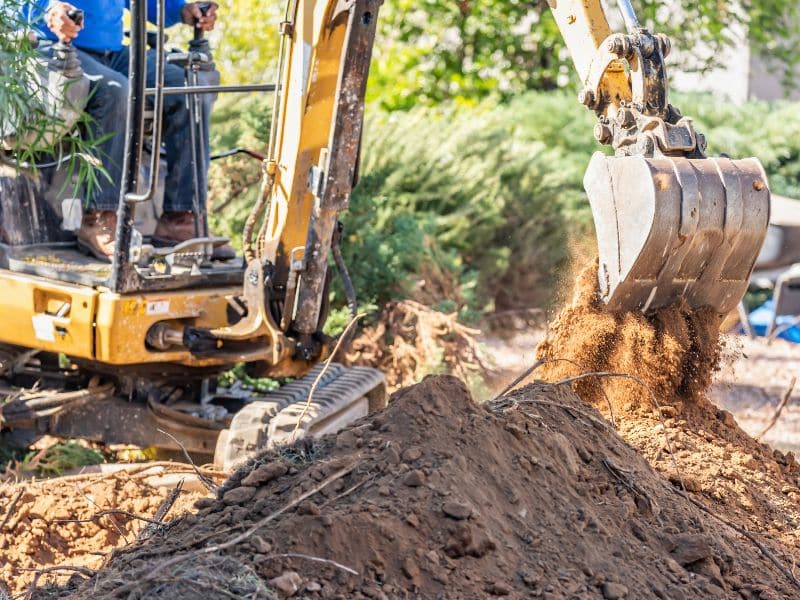
Gravel and Perforated Pipe
Step 4: Line the Trench with Filter Fabric
Lay water-permeable filter fabric or a weed barrier in the trench. Leave at least 10 inches of excess fabric on the sides. This will prevent dirt and silt from clogging the drain.
Step 5: Pour the Gravel Bedding
Pour and compact about 3 inches of gravel along the bottom of the trench. This will serve as a bedding for the drainage pipe.
Step 6: Install the Perforated Pipe
Place the perforated pipe on top of the gravel bedding, ensuring the holes face downward. Secure any necessary fittings to extend the pipe from the water collection point to the drainage outlet.
Landscape Fabric and Slope
Step 7: Cover with Gravel and Filter Fabric
Cover the pipe with about 3 inches of gravel, but keep it below ground level. Fold the excess filter fabric over the gravel for an additional layer of protection.
Step 8: Backfill with Topsoil
Fill the trench with topsoil and compact it to cover the entire French drain system. Temporarily cover the inlet grate to prevent stones or soil from falling in.
Municipal Storm Drain Connection
If possible, connect the French drain to a municipal storm drain for efficient water disposal. Check local regulations and get necessary permissions before making this connection.
By following these steps, you can successfully install a French drain system to protect your property from water damage. Next, we’ll explore the cost factors and long-term benefits of installing a French drain system.
Cost of Installing a French Drain System
Average Cost
Installing a French drain system can be a significant investment, but it’s one that can save you from costly water damage repairs. On average, you can expect to spend around $6,200 for a professionally installed French drain. However, costs can vary widely based on several factors. For instance, the price range typically falls between $1,600 and $13,000.
Factors Affecting Cost
Several factors can influence the cost of installing a French drain system:
- Type of French Drain:
- Exterior French Drains: These are usually more expensive, ranging from $10 to $50 per linear foot. They require extensive digging around the home’s foundation.
- Interior French Drains: These cost more per linear foot, from $40 to $100, due to the specialized membranes and additional labor involved.
- Length of the Drainage Trench: The longer the trench, the higher the cost. Material costs and labor charges increase with the length of the trench.
- Soil Type: Certain soil types, like clay, require more labor to dig through, increasing the overall cost.
- Depth and Width of the Trench: Deeper and wider trenches require more materials and labor, which can drive up costs.
- Additional Features: Adding features like a sump pump or connecting to a municipal storm drain can increase the total cost.
Long-Term Benefits
While the initial cost may seem high, the long-term benefits of a French drain system make it a worthwhile investment:
- Foundation Protection: French drains help prevent hydrostatic pressure from building up around your foundation, reducing the risk of cracks and structural damage.
- Flood Prevention: They effectively manage surface water and groundwater, preventing basement flooding.
- Soil Erosion Control: By redirecting water, French drains can help prevent soil erosion around your property.
- Mold Prevention: Keeping your basement dry reduces the risk of mold growth, which can be harmful to health.
Cost Comparison
When comparing the cost of a French drain to other waterproofing solutions, it’s clear why many homeowners opt for this system. While it’s not the cheapest option, it offers comprehensive protection that other methods may lack. For example:
- Sump Pumps: While useful, they only address water that has already entered your basement. Costs range from $300 to $1,500.
- Waterproof Coatings: These are less expensive, costing between $500 to $3,000, but they do not address the root cause of water intrusion.
In summary, while the upfront cost of a French drain system can be substantial, the long-term benefits and comprehensive protection it offers make it a sound investment.
Common Mistakes to Avoid When Installing a French Drain System
Installing a French drain system can be a DIY project, but it’s easy to make mistakes. Here are some common pitfalls to avoid:
Improper Slope
A French drain relies on gravity to move water. If the slope isn’t right, water won’t flow properly.
- Minimum Slope: Ensure a slope of at least 1% (1 inch drop per 10 feet of pipe).
- Check Regularly: Use a level and stakes to verify the slope as you dig.
Inadequate Depth
If the trench isn’t deep enough, the system won’t work effectively.
- Standard Depth: Aim for 18 inches deep for yard drainage, and deeper for foundation drains.
- Measure Often: Keep checking the depth as you dig to stay consistent.
Wrong Materials
Using the right materials is crucial. Incorrect choices can lead to clogs and inefficiency.
- Perforated Pipe: Use high-quality perforated PVC pipes.
- Filter Fabric: Line the trench with water-permeable filter fabric to keep out dirt and roots.
- Gravel: Use clean, large gravel or landscaping stone.
Poor Maintenance
Even the best-installed French drain needs upkeep.
- Regular Checks: Inspect the drain periodically for clogs or damage.
- Cleanouts: Install cleanout access points to make maintenance easier.
- Avoid Overloading: Ensure the drain isn’t overwhelmed by excessive water from other sources.
By avoiding these common mistakes, you can ensure your French drain system works efficiently and lasts for years.
Next, let’s move on to frequently asked questions about French drain systems.
Frequently Asked Questions about French Drain Systems
What are the disadvantages of a French drain?
While a French drain system offers many benefits, there are some drawbacks to consider:
- Difficulty of Installation: Installing a French drain can be labor-intensive. It involves digging trenches, laying pipes, and backfilling with gravel. This process can be challenging, especially if you have no prior experience.
- External Pipe Clogs: The perforated pipes can get clogged with debris, such as leaves, dirt, and roots. Regular maintenance is crucial to keep the system functioning properly.
- Mud-Related Clogging: If not installed correctly, mud can seep into the trench and clog the system. Using a geotextile filter membrane can help prevent this issue.
How deep does a French drain need to be?
The depth of a French drain depends on its purpose:
- General Yard Drainage: For typical yard drainage, the trench should be 8 inches to 2 feet deep. This depth is sufficient to manage surface water and prevent pooling.
- Foundation and Retaining Walls: For protecting foundations or retaining walls, the trench needs to be deeper. Aim for a depth that reaches the footing level of the foundation, which can be several feet deep.
Is it worth putting a French drain in?
Absolutely, installing a French drain system is worth it for several reasons:
- Cost-Effective: While the initial cost can be high, the long-term benefits outweigh the expenses. A French drain helps prevent costly water damage to your home’s foundation.
- Property Protection: By diverting water away from your home, a French drain protects your property from erosion and structural damage. This can save you money on repairs and maintain the value of your home.
- Attractive to Prospective Buyers: Homes with effective drainage systems are more appealing to buyers. A well-installed French drain can increase your property’s market value.
By addressing these common questions, we hope to provide a clearer understanding of French drain systems. If you have more questions, reach out to us at Marchi Paving Inc.
Conclusion
In summary, a French drain system is a valuable investment for any property. It effectively manages groundwater, protects your foundation, prevents soil erosion, and keeps your basement dry. Whether you’re dealing with surface water or groundwater, installing a French drain can save you from costly repairs and maintain the value of your home.
At Marchi Paving Inc., we specialize in the installation and maintenance of French drain systems. With over 20 years of experience, our team is dedicated to providing high-quality, affordable drainage solutions tailored to your specific needs. We use only the best materials to ensure durability and effectiveness, giving you peace of mind.
If you’re considering installing a French drain system or need help with an existing one, don’t hesitate to contact us. Our experts are here to answer your questions and provide a free estimate for your project.
Visit our Drainage Solutions page for more information or call us at 617-964-9999. Let’s keep your property safe, dry, and beautiful together!
For more details on how we can help with your drainage needs, explore our drainage services.
Backyard Drainage Solutions: Top 10 Proven Fixes in 2024
The Importance of Backyard Drainage
Backyard drainage solutions are essential for maintaining a beautiful and functional yard. They prevent standing water, which can turn your lawn into a swampy mess and invite mosquitoes and other pests. Inadequate drainage can also weaken your home’s foundation, leading to costly repairs.
Quick Answers:
- Prevent standing water: Solutions such as dry wells, French drains, and rain barrels can help.
- Protect your foundation: Slope your yard and add downspout extensions to keep water away.
- Enjoy your yard more: Install a dry creek bed or aerate your lawn for better drainage.
By understanding the importance of proper drainage, you can take steps to protect your property and enjoy your outdoor spaces more fully. Whether it’s a simple fix like installing downspout extensions or a more involved project like building a dry well, there are plenty of options.

Common Causes of Backyard Drainage Problems
Understanding the root causes of backyard drainage issues is the first step in solving them. Here are some common culprits:
Yard Slope
Your yard’s slope, or pitch, plays a big role in how water drains. Ideally, your yard should slope away from your house to keep water from pooling near the foundation. If your yard is flat or slopes towards your home, water can accumulate, leading to soggy soil, brown grass patches, and even foundation damage.
“If your yard rests towards the bottom of a hilly area, water will begin to pool in the lowest sections of the yard since it has nowhere else to go.” — Conor Battles, The Basement Guys Cleveland
Compacted Soil
Compacted soil can be a major drainage issue, especially after construction projects like installing a pool or a gazebo. Hardpan clay is particularly problematic because it retains moisture longer than other types of soil. This can result in pooling water and other complications like root rot and mold growth.
“Most yard drainage issues are caused by homeowner projects. When developers set up a master plan, drainage is usually set correctly.” — Robert Sherwood, French Drain Man
Short Gutter Downspouts
Gutters are supposed to direct water away from your home, but if the downspouts are too short, water can still puddle around your foundation. This can lead to basement flooding and mold growth.
First sign: Big puddles under your downspout.
Barriers Like Sidewalks and Rocks
Sidewalks, walkways, and rocks can act as barriers that prevent water from draining properly. If these barriers are higher than the soil surface, water can flow off them and into your yard, causing standing water and even erosion.
First sign: Standing water in low spots.
Runoff Erosion
Runoff from stormwater or downspouts can strip away topsoil, leaving behind compacted dirt that can’t absorb water easily. This can lead to thin, patchy grass and exposed tree roots, and can even damage plant beds.
First sign: Thin, patchy areas of grass.
Broken Water or Sewer Lines
Excessive water pressure can cause underground water lines to break, leading to leaks. If you have a septic tank, standing water near the unit or drain field could indicate septic tank flooding.
First sign: Unusual wet spots in the yard without recent rainfall.
By identifying these common causes, you can take the necessary steps to fix your backyard drainage problems. Whether it’s regrading your yard or extending your downspouts, knowing the source of the issue is crucial for effective solutions.
DIY Backyard Drainage Solutions
Slope the Ground Away From the House
One of the simplest yet most effective backyard drainage solutions is to slope the ground away from your house. This prevents water from pooling near your foundation, which can cause serious damage over time.
How to Do It:
1. Add clay-like soil around your home’s foundation.
2. Ensure the top of the slope leaves at least 4 inches between the soil and the bottom of the siding.
3. Avoid using bagged topsoil or mulch, as these are permeable and may wash away.
Why It Works:
Clay-like soil packs tightly and helps direct water away from your home, keeping your foundation dry and secure.
Replace Hardscapes With Drainage Materials
Hardscape materials like concrete and asphalt are great for patios and driveways, but they can sometimes direct water toward your house. Replacing these with drainage-friendly materials can make a big difference.
Options:
– Crushed Gravel
– Pea Gravel
Why It Works:
Gravel materials allow water to seep through, reducing runoff and preventing water from pooling near your home.
Install a Rain Barrel
Rain barrels are a fantastic way to collect and reuse rainwater, helping to manage yard drainage while conserving water.
How to Do It:
1. Place a rain barrel next to a downspout.
2. Reconfigure the downspout to direct water into the barrel.
3. Use the collected water for your garden or lawn.
Add a Channel Drain
If you have a concrete or asphalt driveway that directs water toward your house, a channel drain can help.
How to Do It:
1. Cut a narrow trench into the concrete or asphalt.
2. Place a long channel drain in the trench.
Why It Works:
The channel drain redirects water away from your home, preventing it from pooling near your foundation.
Install a French Drain
French drains are excellent for managing surface water, especially if it originates from off your property.
How to Do It:
1. Dig a trench and fill it with gravel.
2. Place a perforated PVC pipe in the trench.
3. Cover the pipe with more gravel.
Why It Works:
Water flows through the gravel and into the PVC pipe, which then swiftly redirects it away from your home.
Advanced DIY Solutions for Backyard Drainage
Aerate Your Lawn
Aerating your lawn is a simple yet effective way to improve yard drainage. By creating small holes in the soil, aeration allows air, water, and nutrients to penetrate the grass roots. This helps to break up compacted soil, making it easier for water to soak into the ground rather than pooling on the surface.
How to Do It:
1. Use a lawn aerator or a pitchfork to punch holes in the soil.
2. Focus on areas that tend to get waterlogged.
Benefits:
– Enhances water absorption
– Improves lawn health
– Reduces surface runoff
Install a Catch Basin
A catch basin is a great solution for managing water from gutters and downspouts. It captures water and directs it away from your home’s foundation through buried PVC pipes that lead to a drain emitter.
How to Do It:
1. Dig a hole at the bottom of each downspout.
2. Install the catch basin and connect it to buried PVC pipes.
3. Ensure the pipes lead to a safe drainage area.
Why It Works:
– Prevents water from pooling around the foundation
– Directs water far away from the house
Build a Dry Creek Bed
A dry creek bed is both functional and decorative. It involves creating a planned channel using rocks to direct stormwater where you want it to go, such as a swale or catch basin.
How to Do It:
1. Dig a shallow trench in a meandering path.
2. Line the trench with various sizes of rocks.
3. Add plants along the edges for added stability and aesthetics.
Benefits:
– Controls erosion
– Directs water away from problem areas
– Adds a beautiful landscape feature
Add Downspout Extensions
Downspout extensions are a quick and inexpensive way to move water farther away from your home’s foundation. These flexible plastic tubes can be easily clamped onto existing downspouts.
How to Do It:
1. Attach the extension to the end of the downspout.
2. Ensure it extends at least four feet away from the foundation.
Why It Works:
– Moves water away from the house
– Prevents foundation damage
Create a Yard Drain
Yard drains act like shower drains but are installed directly into the ground. They passively channel water through hidden pipes to a termination point, such as a dry well.
How to Do It:
1. Identify the lowest points in your yard where water tends to collect.
2. Install the yard drain at these points and connect it to underground pipes.
3. Ensure the pipes lead to a designated drainage area.
Benefits:
– Efficiently removes water from low spots
– Prevents water accumulation in problem areas
By implementing these advanced DIY solutions, you can tackle more complex drainage issues in your yard, ensuring that your landscape remains healthy and your home stays dry.
Next, we’ll discuss professional solutions for severe drainage issues.
Professional Solutions for Severe Drainage Issues
Regrade Your Property
Regrading is a major project that involves reshaping the slope of your yard. This helps direct water away from your home and other structures.
Why Regrade?
- Prevents water from pooling near your foundation
- Reduces erosion and soil compaction
- Improves overall yard drainage
How It Works:
- Assessment: A professional will assess your yard’s slope and identify problem areas.
- Machinery: Heavy machinery, like bulldozers and graders, are used to move soil and create a gentle slope.
- Precision: Ensuring a proper slope is crucial. Even a 1% slope (1 inch drop per 10 feet) can make a big difference.
When to Call a Pro: If your yard has severe flooding or if DIY solutions haven’t worked, it’s time to call in the experts.
Install a Sump Pump
A sump pump is essential for properties with basements or crawl spaces. It collects water and pumps it away from your home, preventing flooding.
Why Install a Sump Pump?
- Keeps your basement dry
- Prevents water damage and mold growth
- Automatically removes excess water
How It Works:
- Sump Pit: A pit is dug at the lowest point of your basement or crawl space.
- Pump Installation: The sump pump is installed in the pit. When water fills the pit, the pump activates.
- Discharge Pipe: The pump moves water through a discharge pipe, directing it away from your home.
Considerations: Sump pumps require regular maintenance and electricity to operate. They are a reliable solution for homes prone to flooding.
Build a Dry Well
A dry well is an underground basin filled with rocks. It collects and slowly disperses water into the surrounding soil.
Why Build a Dry Well?
- Effective for managing large volumes of water
- Prevents water from pooling on the surface
- Helps water percolate into the soil
How It Works:
- Excavation: A large hole is dug in a low-lying area of your yard.
- Rock Filling: The hole is filled with rocks, creating a porous basin.
- Water Collection: Water is directed into the dry well, where it slowly seeps into the ground.
Best For: Areas with limited space or where traditional drainage isn’t feasible. Dry wells are often used in combination with other drainage systems like French drains or yard drains.
By understanding and utilizing these professional solutions, you can effectively manage severe drainage issues in your yard. Next, we’ll address some frequently asked questions about backyard drainage solutions.
Frequently Asked Questions about Backyard Drainage Solutions
What is the best material for backfill in wet areas?
The best material for backfill in wet areas is coarse-grained soil. This includes materials like sand and gravel. These materials allow water to move through them easily, preventing water from pooling and causing damage.
- Sand: It’s great for drainage because it doesn’t compact easily and allows water to flow through it.
- Gravel: Larger particles that create spaces for water to pass through, making it an excellent choice for drainage.
Using coarse-grained soil helps keep the area dry and prevents water from damaging your yard or foundation.
Does adding downspout extensions really work?
Yes, adding downspout extensions really works. They help by moving water away from your house, protecting your foundation from water damage.
- How They Work: Downspout extensions are flexible plastic tubes that you clamp onto the end of your downspout. They direct water further away from your home.
- Benefits: By moving water away from the foundation, you reduce the risk of basement flooding and soil erosion near your home.
Tip: Make sure the extensions are long enough to carry water at least four feet away from your house.
How do you drain a swampy backyard?
Draining a swampy backyard involves a few steps to identify and solve the problem.
- Determine the Cause: Identify why your yard is swampy. It could be due to poor soil, improper grading, or excessive water from downspouts.
- Till the Soil: Use a cultivator to break up compacted soil. This improves water absorption.
- Install a Dry Well: A dry well is an underground basin filled with rocks that collects and slowly releases water into the surrounding soil.
- Grow Trees and Shrubs: Plant water-loving trees and shrubs to help absorb excess water.
Additional Solutions:
– Aerate Your Lawn: This introduces air into the soil, helping water to drain more effectively.
– Add Downspout Extensions: These help move water away from your house and prevent it from pooling in your yard.
Conclusion
At Marchi Paving Inc., we understand the importance of effective drainage solutions for maintaining the health and beauty of your landscape. With over 20 years of experience serving Chelmsford, MA, and surrounding areas, we have honed our skills to deliver high-quality project execution tailored to your specific needs.
Our commitment to quality begins with using top-notch materials and advanced techniques. We ensure that every drainage system we install is built to last, providing you with long-term peace of mind. Our attention to detail and dedication to excellence set us apart from the competition.
We also invest in state-of-the-art equipment to enhance the efficiency and precision of our work. This allows us to complete projects on time and within budget, without compromising on quality. Our advanced machinery ensures that your drainage system is both effective and durable.
When you choose Marchi Paving Inc., you’re not just hiring a contractor; you’re partnering with a team dedicated to delivering outstanding results. Our extensive experience and commitment to customer satisfaction make us the go-to choice for all your drainage needs.
Ready to protect your landscape and home from water damage? Contact us today to get a detailed quote and experience the Marchi Paving difference.
Residential Drainage Solutions: Top 10 Effective Systems in 2024
Residential drainage solutions are critical for keeping your property safe and functional. Whether you’re a homeowner or a property manager, knowing how to manage water drainage can save you from costly repairs and headaches. Quick answers to your drainage concerns could look like this:
- Prevent water damage: Proper drainage prevents foundation issues and basement flooding.
- Protect landscaping: Keep your plants and yard healthy by directing water away.
- Enhance safety: Eliminate standing water that can become a breeding ground for pests.
Effective drainage systems protect your home’s foundation and landscaping. They ensure that water is directed away from your property, preventing damage and maintaining a healthy environment. Understanding which system fits your needs—surface drainage, subsurface drainage, slope drainage, or downspouts and gutters—is the first step to solving any water-related problems.
Having the right drainage solution in place offers peace of mind and boosts your property’s value, making it a worthwhile investment. Keep reading to learn how to choose and implement these systems effectively.

Common Causes of Yard Drainage Problems
One of the most common causes of yard drainage problems is improper grading. Ideally, your lawn should slope away from your home’s foundation to prevent water from pooling around it. When the grading is off, water can accumulate and cause significant damage to your foundation and landscaping.
Blocked Gutters
Blocked rain gutters and downspouts are another frequent culprit. If rain runoff from your roof pools near the foundation, it can lead to severe issues. Make sure your gutters are clear and that downspouts are directing water far enough away from your home.
Underground Springs
Sometimes, underground springs can surface in your yard, creating persistent wet areas. These springs can be a minor nuisance or a major problem, especially if they are near your foundation. Identifying and managing these springs is crucial for effective yard drainage.
Inadequate Systems
Over time, some drainage systems become inadequate. They may get clogged, crushed, or simply outgrown by the volume of water they need to handle. Sometimes, the original system was not designed correctly, leading to persistent drainage issues.
Obstructions
Driveways, sidewalks, and roads can block the natural flow of water, making drainage problems worse. Additions to your home, such as new garages, patios, or raised landscaping beds, can also redirect water to undesirable areas, exacerbating drainage issues.
Understanding these common causes helps in diagnosing and fixing yard drainage problems. Next, we’ll dive into the types of residential drainage systems that can address these issues effectively.
Types of Residential Drainage Systems
Understanding the different types of residential drainage systems is key to solving yard drainage problems effectively. Each system has unique features and benefits, making them suitable for different scenarios. Here’s a breakdown of the most common types:
Surface Drainage
Surface drainage systems are designed to remove excess water from the ground’s surface. These systems typically involve a series of shallow ditches or channels that guide water away from your property.

How It Works:
– Ditches are installed in a parallel pattern.
– Water flows through these channels to a main drain or away from your property.
Best For:
– Low-lying or flat properties.
– Areas prone to water pooling around the foundation.
Benefits:
– Prevents water from collecting around your home.
– Reduces the risk of foundation damage.
Subsurface Drainage
Also known as French drains, subsurface drainage systems deal with water below the soil surface. These systems use perforated pipes buried underground to collect and redirect water.

How It Works:
– A trench is dug and a perforated pipe is placed inside.
– The trench is filled with gravel to promote water flow.
– Water enters the pipe through the perforations and is carried away from your property.
Best For:
– Properties with extensive landscaping.
– Areas where waterlogging affects plant growth.
Benefits:
– Prevents waterlogging.
– Protects plants and shrubbery from excess water.
Slope Drainage
Slope drainage systems use the natural incline of your property to direct water away. This method often involves regrading the land to ensure water flows downhill and away from your home.

How It Works:
– Pipes are anchored on a small incline.
– Water flows naturally down the slope and away from your property.
Best For:
– Properties on uneven terrain.
– Areas where regrading can effectively direct water into a storm sewer.
Benefits:
– Prevents water from pooling in uneven areas.
– Mitigates potential foundation issues due to an uneven plain.
Downspouts and Gutters
Downspouts and gutter systems are essential for managing roof water. They work together to collect rainwater from the roof and direct it away from your home.

How It Works:
– Gutters collect rainwater from the roof.
– Downspouts channel the water from the gutters to the ground.
– Downspout extenders can be used to direct water further away from the foundation.
Best For:
– Homes in areas with heavy rainfall.
– Properties where roof water needs to be efficiently managed.
Benefits:
– Prevents roof water from damaging the foundation.
– Reduces the risk of basement moisture and flooding.
By understanding these types of residential drainage systems, homeowners can better choose the right solution for their specific needs. Next, we’ll explore some effective residential drainage solutions in more detail.
Effective Residential Drainage Solutions
When it comes to keeping your yard and home dry, there are several effective residential drainage solutions to consider. Let’s dive into some of the most common and effective methods:
Grading
Grading involves reshaping the land to ensure water flows away from your home. Proper grading is often the least expensive and most effective solution for poor drainage.
Best For:
– Yards with uneven terrain.
– Areas where water pools near the foundation.
Benefits:
– Prevents water from accumulating near the home.
– Reduces the risk of foundation damage.
Downspout Extensions
Adding downspout extensions can make a huge difference. Simply extending your downspouts by a few feet can direct water far away from your foundation.
Best For:
– Homes with short downspouts.
– Properties where roof water needs to be kept away from the foundation.
Benefits:
– Prevents water from pooling near the home.
– Reduces the risk of basement flooding.
Buried Pipes
Buried pipes can move collected water far away from your home. These systems often involve connecting downspouts to underground pipes that lead to a safe drainage area.
Best For:
– Homes with significant roof runoff.
– Properties with limited space for surface drainage.
Benefits:
– Keeps water far from the foundation.
– Reduces surface water in the yard.
Catch Basins
Catch basins are buried reservoirs used to collect surface water. They are particularly useful in low-lying areas or where water flow is obstructed.
Best For:
– Yards with low spots.
– Areas where grading is not possible.
Benefits:
– Efficiently collects and directs water.
– Prevents water from pooling in undesirable areas.
French Drains
French drains combine a gravel-filled trench with a perforated pipe to move water away from an area. They are ideal for diverting both surface and underground water.
Best For:
– Homes with water seeping into the foundation.
– Yards with slopes directing water towards the home.
Benefits:
– Protects the foundation from water damage.
– Effectively moves water away from problem areas.
Grate Drains
Grate drains are often used to drain water from driveways, patios, and other paved areas. These systems consist of a grated inlet that directs water into an underground pipe.
Best For:
– Driveways and patios.
– Low areas in the yard.
Benefits:
– Prevents water from pooling on hard surfaces.
– Redirects water to safer areas.
Sump Pumps
When gravity drainage isn’t an option, a sump pump can be the solution. These pumps are used to remove water from areas where it collects and pump it to a safer location.
Best For:
– Basements and crawl spaces.
– Areas with no natural drainage slope.
Benefits:
– Prevents basement flooding.
– Can handle large volumes of water.
By implementing these residential drainage solutions, you can protect your home and yard from water damage. Next, let’s explore some of the most popular drainage solutions in more detail.
Popular Drainage Solutions Explained
French Drains
French drains are a highly effective solution for water redirection and foundation protection. They consist of a perforated pipe buried in a gravel trench. Water flows through the gravel and into the pipe, which then directs it away from your home. This system is great for areas with poor drainage and helps prevent water from seeping into your basement or crawl space.
Best For:
– Areas with waterlogging issues.
– Protecting foundations.
Benefits:
– Efficient water redirection.
– Reduces the risk of basement flooding.
Catch Basins
Catch basins are designed to collect surface water and direct it into a drainage system. These are buried reservoirs with a grated top that allows water to enter while keeping debris out. They are particularly useful in low-lying areas where water tends to pool.
Best For:
– Driveways and parking lots.
– Yards with water pooling issues.
Benefits:
– Prevents standing water.
– Reduces erosion and water damage.
Channel Drains
Channel drains, often used in driveways and patios, act like in-ground gutters. They capture surface water and direct it away from your property. These drains are installed flush with the ground, making them a discreet yet effective solution for managing water flow.
Best For:
– Driveways and patios.
– Areas with heavy rainfall.
Benefits:
– Efficient water movement.
– Minimizes water pooling.
Dry Wells
Dry wells are underground structures that manage stormwater runoff. They consist of underground barrels or tanks that collect water and allow it to disperse slowly into the surrounding soil. This method ensures controlled dispersion of excess water.
Best For:
– Areas with limited drainage options.
– Managing large volumes of runoff.
Benefits:
– Prevents surface flooding.
– Reduces soil erosion.
Rain Gardens
Rain gardens are depressed areas in your yard designed to absorb excess water. They are planted with grasses and shrubs that help with water absorption and pollutant filtration. This solution not only manages water but also enhances the aesthetic appeal of your yard.
Best For:
– Managing runoff in landscaped areas.
– Filtering pollutants from stormwater.
Benefits:
– Improves water quality.
– Adds beauty to your landscape.
By understanding these residential drainage solutions, you can choose the best method to protect your home and enhance your yard. Next, let’s explore the costs associated with installing these systems.
Cost of Installing Drainage Systems
Understanding the costs associated with installing residential drainage solutions is crucial for planning and budgeting. Here’s a breakdown of what you can expect.
Average Costs
The cost of installing a drainage system in your yard typically ranges from $2,500 to $8,000. However, this can vary widely depending on the type of system and other factors. For instance, a simple buried downspout might cost as little as $500, while a more complex system like a French drain combined with a dry well can go up to $13,000.
Factors Affecting Cost
Several factors can influence the cost of your drainage system:
- Type of System: Different systems have different costs. For example, French drains and channel drains have different price ranges.
- Length of the Drainage Trench: Longer trenches mean higher costs due to more materials and labor.
- Soil Type: Certain soils, like clay, are harder to dig through and can increase labor costs.
- Depth and Width of the Trench: Deeper and wider trenches require more materials and labor.
- Additional Features: Adding elements like sump pumps or connecting to municipal storm drains can increase the total cost.
Cost Ranges for Different Systems
Here are some typical costs for various drainage solutions:
- French Drains: These cost between $10 and $100 per linear foot, depending on the length, depth, and location. A 100-foot French drain could cost between $1,000 and $10,000.
- Channel Drains: These are more expensive, ranging from $30 to $100 per linear foot. For a 100-foot project, expect to pay between $3,000 and $10,000.
- Dry Wells: Installing a dry well can range from $1,150 to $4,350, depending on size and materials.
- Catch Basins: These typically cost between $1,000 and $4,000.
- Underground Downspouts: These are more affordable, costing between $300 and $800.
Cost Comparison
When comparing the costs of different drainage solutions, it’s clear why many homeowners opt for systems like French drains. While not the cheapest option, they offer comprehensive protection that other methods may lack. For example:
- Sump Pumps: Useful but only address water that has already entered your basement. Costs range from $300 to $1,500.
- Waterproof Coatings: Less expensive, costing between $500 to $3,000, but they don’t address the root cause of water intrusion.
While the initial cost of a drainage system can be substantial, the long-term benefits make it a worthwhile investment. Proper drainage protects your foundation, prevents flooding, controls soil erosion, and reduces the risk of mold.
Next, we’ll delve into the benefits of proper drainage systems and how they can protect your home and enhance your property.
Benefits of Proper Drainage Systems
Foundation Protection
A proper drainage system is crucial for protecting your home’s foundation. Water pooling around your foundation can lead to cracks and structural damage. According to the National Association of Home Builders, good drainage can prevent costly repairs and maintain the structural integrity of your home.
Landscaping Preservation
Effective drainage systems also help in preserving your landscaping. Poor drainage can drown plants, cause soil erosion, and create unsightly muddy areas. The National Association of Realtors found that good landscaping can increase a home’s value by up to 12%. Proper drainage ensures your garden remains beautiful and healthy.
Erosion Control
Erosion can be a significant issue, especially in sloped areas. Installing drainage solutions like French drains or retaining walls can help control soil erosion. This not only protects your landscape but also prevents soil from washing away and causing further drainage issues.
Mold Prevention
Standing water and excess moisture can lead to mold growth, which poses health risks and damages property. Proper drainage systems can keep your basement, crawl spaces, and other areas dry, reducing the likelihood of mold. This is especially important for maintaining indoor air quality and the health of your family.
Property Value Increase
Investing in a good drainage system can increase your property’s market value. According to a study by the National Association of Realtors, proper grading and drainage can increase a home’s value by up to 1.5% or more. Homes with effective drainage systems are more appealing to buyers, making them easier to sell.
In the next section, we will explore frequently asked questions about residential drainage solutions to help you make informed decisions about your home’s drainage needs.
Frequently Asked Questions about Residential Drainage Solutions
What is the best drainage system for a home?
The best drainage system for your home depends on your specific needs and property layout. French drains are highly effective for many homes, especially those dealing with waterlogged yards or basements. They consist of a perforated pipe in a gravel-filled trench, redirecting water away from your foundation.
For homes on slopes, slope drainage systems work well, using gravity to move water away. Downspouts and gutters are essential for all homes, directing roof water away from the foundation. Each system has its strengths, so consider your property’s unique conditions.
How do you fix poor drainage?
Fixing poor drainage involves several steps:
- Aerate Lawn: This helps water penetrate the soil more easily, reducing surface runoff.
- Amend Soil: Adding organic matter or sand can improve soil drainage.
- Regrade Yard: Adjust the slope of your yard to direct water away from your home.
- Install French Drain: Redirects water away from problem areas.
- Build Retaining Wall: Manages water flow and prevents erosion.
- Surface Drainage: Removes excess surface water through ditches or channels.
- Subsurface Drainage: Uses underground pipes to move water away from your property.
- Downspouts and Gutters: Ensure they are clear and extend away from the foundation.
What are the four types of drainage systems?
- Surface Drainage: Uses ditches or channels to remove water from the surface. Ideal for flat properties to prevent water pooling.
- Subsurface Drainage: Also known as French drains, these systems use underground pipes to move water away from your property. Perfect for avoiding waterlogging and protecting landscaping.
- Slope Drainage: Utilizes the natural incline of your property to direct water flow. Effective for uneven terrains.
- Downspouts and Gutters: Direct water from your roof away from your home’s foundation, crucial for preventing basement flooding and foundation damage.
By understanding these systems, you can choose the best residential drainage solutions for your home, ensuring long-term protection and peace of mind.
Conclusion
Proper drainage is crucial for maintaining the health and safety of your property. Without effective drainage, water can cause severe damage to your home’s foundation, landscaping, and even your health due to mold growth. As we’ve discussed, there are various residential drainage solutions available, from surface and subsurface drainage systems to slope drainage and downspouts.
A good drainage system can increase your property value significantly. According to the National Association of Realtors, proper grading and drainage can boost your home’s value by up to 1.5%. Furthermore, the National Association of Home Builders states that good landscaping, which includes effective drainage, can increase property value by up to 12%.
At Marchi Paving Inc., we specialize in creating tailored drainage solutions to fit your specific needs. Our team uses advanced equipment and top-notch materials to ensure your drainage system is both effective and durable.
We understand that tackling drainage issues can be overwhelming, but you don’t have to do it alone. Our experts are here to guide you every step of the way. With our commitment to quality and customer satisfaction, you can trust us to protect your home from water damage, increase its value, and give you peace of mind.
Ready to protect your property? Contact us today for a detailed quote and experience the Marchi Paving difference.
Advanced Drainage Solutions: Top 10 Benefits in 2024
The Importance of Advanced Drainage Solutions
When it comes to protecting your property from water damage, advanced drainage solutions are essential. They are designed to manage and control excess water, prevent flooding, and protect your investments.
Key Benefits of Advanced Drainage Solutions:
– Prevents water damage and costly repairs
– Protects landscaping and property foundations
– Enhances soil and lawn health
– Controls groundwater levels and reduces erosion
Why is water management so crucial?
Effective water management ensures that rainwater, stormwater, and other sources of excess water are channeled away safely from your property. Without proper drainage, water can accumulate, leading to various problems like foundation damage, soil erosion, and even health hazards from stagnant water.
Did you know? Advanced Drainage Systems, a leading manufacturer in this field, emphasizes that “every drop of water is managed responsibly, from rainfall to its safe release back to the environment.”

What Are Advanced Drainage Solutions?
Advanced drainage solutions are systems designed to manage water effectively. They help control stormwater, wastewater, and other excess water, ensuring it is safely channeled away from properties. This prevents issues like flooding, foundation damage, and soil erosion.
Definition and Purpose
Advanced drainage solutions involve a range of methods and technologies to handle water. The main goal is to capture, convey, store, and treat water, making sure it doesn’t cause problems. These systems are crucial for both residential and commercial properties.
Components
These solutions typically include:
- Pipes: High-density polyethylene (HDPE) pipes are common. They are durable and efficient in transporting water.
- Catch Basins: These collect surface water and direct it into the drainage system.
- French Drains: Trenches filled with gravel and a perforated pipe to redirect water.
- Retention and Detention Systems: Store water temporarily to prevent flooding.
- Chambers and Basins: Used to manage larger volumes of water.
Water Management
Managing water properly is essential. It involves handling stormwater and wastewater efficiently.
- Stormwater: This is the rainwater that runs off surfaces like roofs and driveways. Advanced systems capture and redirect this water to prevent flooding.
- Wastewater: This includes water from household activities like washing dishes and laundry. Onsite septic systems treat this water, making it safe for release back into the environment.
Real-World Impact
According to a 2023 Harris Poll Survey, 58% of Americans are concerned about how stormwater is managed in their area. Companies like Advanced Drainage Systems are at the forefront, providing innovative solutions to address these concerns. Their work helps prevent floods, recharge aquifers, and improve food security.
Scott Barbour, CEO of Advanced Drainage Systems, highlights the importance of these systems: “With the ever-increasing frequency of large-scale stormwater-related natural disasters, having proper infrastructure in place to capture, convey, store, and treat water has never been more important.”

Conclusion
Understanding advanced drainage solutions is key to managing water effectively. These systems protect properties from water damage and contribute to environmental sustainability.
Next, we’ll explore the different types of advanced drainage solutions available and how they can benefit you.
Types of Advanced Drainage Solutions
When it comes to managing water, advanced drainage solutions offer a variety of options tailored to different needs. Let’s dive into some of the most effective types of systems available:
Stormwater Systems
Stormwater systems are designed to handle excess rainwater and prevent flooding. These systems capture runoff from surfaces like roofs, roads, and parking lots, and channel it away from properties. They include a mix of pipes, catch basins, and detention systems to manage the water flow.
Example: During a recent tropical storm, a well-designed stormwater system installed by Marchi Paving Inc. successfully prevented flooding in a neighborhood prone to water accumulation.
Septic Systems
Septic systems are essential for properties without access to municipal sewer systems. They treat and dispose of wastewater on-site, making them a vital part of rural and suburban water management. A typical septic system includes a septic tank and a drain field, where the treated water is absorbed into the soil.
Retention/Detention Systems
Retention and detention systems are used to manage stormwater by temporarily holding it and then releasing it slowly into the environment.
- Retention Systems: These keep the water on-site, often in a pond or underground tank, allowing it to infiltrate the ground gradually.
- Detention Systems: These hold water temporarily and release it at a controlled rate to prevent overwhelming local waterways.
Chambers
Chambers are underground structures that store and infiltrate stormwater. They are often used in conjunction with other systems to increase storage capacity without taking up surface space. Chambers are particularly useful in urban areas where space is limited.
Basins
Basins, including catch basins and dry wells, are designed to collect and manage surface water.
- Catch Basins: These are installed at low points to capture runoff and direct it into a drainage system.
- Dry Wells: These allow water to percolate into the ground, reducing runoff and recharging groundwater supplies.
Pipes
Pipes are the backbone of any drainage system. They transport water from collection points to disposal areas. Advanced materials like high-density polyethylene (HDPE) and polyvinyl chloride (PVC) ensure durability and efficiency.
Fact: Advanced Drainage Systems (ADS) is the world’s largest producer of HDPE corrugated plastic pipes, which are crucial for effective water management.
Each type of advanced drainage solution plays a unique role in managing water efficiently. Understanding these systems helps you make informed decisions about the best solutions for your property.
Next, we’ll look at the benefits of these advanced drainage solutions and how they contribute to long-term value and sustainability.
Benefits of Advanced Drainage Solutions
Flood Mitigation
Advanced drainage solutions are designed to manage water effectively, reducing the risk of flooding. They capture and redirect excess water away from your property.
Lillyanne A., a satisfied customer, shared her experience: “ADS designed a detailed plan to address our complex drainage problem. We made it through the recent tropical storm with no water drainage problem!”
Environmental Sustainability
Proper drainage systems protect the environment by preventing soil erosion and reducing water pollution. They help maintain natural water cycles and support healthy landscapes.
Fact: Effective drainage systems protect plants and soil from erosion and drowning, preserving your yard’s beauty and health.
Cost Savings
While the initial investment can be high, advanced drainage solutions save money in the long run. They prevent costly water damage to your home’s foundation and reduce the need for frequent repairs.
Example: A well-installed French drain can protect your property from erosion and structural damage, saving you money on repairs and maintaining your home’s value.
Long-Term Value
Investing in advanced drainage solutions enhances your property’s long-term value. Homes with effective drainage systems are more appealing to buyers and can command higher market prices.
Statistic: Homes with advanced drainage systems are more attractive to prospective buyers, increasing property value and marketability.
Resilience
Advanced drainage solutions are designed for durability and performance. Using high-quality materials like HDPE and PVC, these systems withstand severe weather conditions and heavy use.
Fact: Advanced Drainage Systems (ADS) is a leading manufacturer of high-performance thermoplastic pipes, ensuring long-lasting and efficient water management solutions.
Next, we’ll explore the key components of advanced drainage systems and how they work to manage water effectively.
Key Components of Advanced Drainage Systems
Thermoplastic Pipes
Thermoplastic pipes are essential for advanced drainage systems. They are made from materials like polypropylene, polyethylene, and PVC. These pipes are known for their durability, flexibility, and resistance to corrosion, making them ideal for various drainage applications.
- Polypropylene (PP): This material is highly resistant to chemicals and temperature variations. It’s perfect for environments where chemical exposure is a concern.
- Polyethylene (PE): High-density polyethylene (HDPE) is commonly used in underground installations due to its strength and non-reactive nature. It’s excellent for areas with corrosive soil.
- PVC (Polyvinyl Chloride): Widely used for indoor plumbing and some outdoor applications. It’s affordable and versatile, making it a popular choice for many drainage systems.
Fittings
Fittings connect pipes and other components in a drainage system. They include elbows, tees, and couplings, allowing for various configurations to suit specific needs. High-quality fittings ensure a secure and leak-proof system.
Water Filters
Water filters are crucial for maintaining the efficiency of a drainage system. They remove debris and sediments from the water before it enters the pipes, preventing clogs and maintaining smooth water flow.
Water Separators
Water separators help separate clean water from contaminants. They are especially useful in areas prone to oil spills or other pollutants. By removing these contaminants, water separators protect the integrity of the drainage system and the environment.
Each of these components plays a vital role in the effectiveness and longevity of advanced drainage solutions. Next, let’s dive into how these systems work to manage water effectively.
How Advanced Drainage Solutions Work
Capture
The first step in advanced drainage solutions is capturing water. This involves collecting water from various sources like roofs, driveways, and lawns. Systems like French drains, catch basins, and channel drains are often used. They efficiently gather water to prevent pooling and flooding.
Convey
Once captured, water needs to be moved away from the property. This is where pipes come into play. High-quality thermoplastic pipes made of materials like polypropylene and polyethylene are used. These pipes are durable and designed to handle large volumes of water. Gravity-fed systems are preferred because they don’t rely on electricity or pumps, reducing maintenance needs.
Store
In some cases, water needs to be stored temporarily before it can be safely released. Retention and detention systems are used for this purpose. Retention systems keep water for longer periods, allowing it to seep into the ground. Detention systems, on the other hand, hold water temporarily and release it slowly to prevent flooding.
Treat
Treatment is essential to remove contaminants from the water. Water filters and water separators play a crucial role here. They filter out debris, oil, and other pollutants, ensuring that only clean water is released back into the environment.
Lifecycle of Water
Understanding the lifecycle of water is key to effective drainage. Water goes through several stages: capture, conveyance, storage, and treatment. Each stage must be managed efficiently to prevent issues like flooding, erosion, or contamination.
Hydrostatic Pressure
One of the main challenges addressed by advanced drainage solutions is hydrostatic pressure. This pressure builds up when water pools or saturates the soil around your foundation. By capturing and redirecting water away from the property, these systems reduce hydrostatic pressure, preventing water from seeping into basements or crawlspaces.
By efficiently managing each of these stages, advanced drainage solutions provide a comprehensive approach to water management. This not only protects your property but also contributes to environmental sustainability.
Next, we’ll explore how these solutions can be tailored for residential properties.
Advanced Drainage Solutions for Residential Properties
When it comes to protecting your home from water damage, advanced drainage solutions are essential. They help manage water efficiently and prevent problems like flooding, erosion, and foundation damage. Here, we’ll discuss some key components: French drains, catch basins, and channel drains. We’ll also cover their maintenance and installation.
French Drains
French drains are trenches filled with gravel or rock that contain a perforated pipe. They are designed to redirect groundwater and surface water away from your property.
How They Work:
– Gravel and Rock: These materials filter water and prevent debris from clogging the pipe.
– Perforated Pipe: This pipe collects and carries water away from problem areas.
Maintenance: French drains need occasional upkeep to remain effective. You’ll need to clear the gravel of sediment to ensure water can flow freely.
Installation: Proper installation is crucial. The trench should be deep enough to collect groundwater, and the pipe should slope downward to ensure water flows away from your home.
Catch Basins
Catch basins are essential for collecting and controlling surface water runoff. They are typically installed at low points where water tends to pool.
How They Work:
– Grated Inlet: This allows water to enter the basin while keeping out larger debris.
– Underground Basin: This collects water and channels it into a drainage system.
Maintenance: Keep the grates clear of leaves and debris to prevent clogging. Periodic cleaning of the basin is also necessary to remove accumulated sediment.
Installation: Catch basins should be strategically placed in areas prone to water pooling, such as driveways and low spots in the yard.
Channel Drains
Channel drains are long, narrow drains that capture surface water and direct it away from your property.
How They Work:
– Surface Grate: This allows water to enter the drain while keeping out debris.
– Drain Channel: This channels water to a safe discharge point.
Maintenance: Regularly blow off or clear the surface grates to prevent obstructions. Ensure the exit of the drain line is not covered or obstructed.
Installation: Channel drains should be installed in areas where water runoff is high, such as along driveways or patios. Proper slope and alignment are crucial for effective water flow.
Maintenance
Maintaining your drainage system ensures long-term performance. Here are some tips:
– Clear Grates: Regularly remove debris from grates on catch basins and channel drains.
– Inspect Pipes: Check for obstructions or damage, especially after heavy rains.
– Clean Aggregate: For French drains, periodically clean the gravel to remove sediment buildup.
Installation
Proper installation is key to the effectiveness of any drainage system. Here’s what you need to know:
– Professional Assessment: Have a professional evaluate your property’s drainage needs.
– Correct Placement: Ensure drains are placed in strategic locations to maximize water diversion.
– Quality Materials: Use high-quality materials like perforated PVC pipes and real drainage rock.
By understanding and implementing these advanced drainage solutions, you can protect your home from water-related issues. Up next, we’ll discuss how these solutions are applied in commercial and infrastructure projects.
Advanced Drainage Solutions for Commercial and Infrastructure Projects
When it comes to large-scale projects and public infrastructure, advanced drainage solutions are crucial. They help manage stormwater, handle onsite septic wastewater, and ensure the longevity of public spaces.
Stormwater Management
Stormwater management is vital as storms become more frequent and severe. Advanced Drainage Systems (ADS) offers highly engineered solutions to capture, convey, store, and treat stormwater. According to Scott Barbour, CEO of ADS, “Having proper infrastructure in place to capture, convey, store and treat water has never been more important.”
These systems prevent flooding, recharge aquifers, and improve food security. They ensure that communities can thrive even during extreme weather events.
Onsite Septic Wastewater
ADS also specializes in onsite septic wastewater solutions. These systems are essential for areas without access to public sewage systems. They treat and dispose of wastewater efficiently, reducing the risk of contamination and environmental damage.
Infiltrator Water Technologies, a subsidiary of ADS, provides innovative septic systems that are easy to install and maintain. These systems are designed to last, offering a sustainable solution for managing wastewater in remote or rural areas.
Large-Scale Projects
Large-scale projects require robust and reliable drainage solutions. ADS is a leader in providing high-performance, durable pipes and related products. Their thermoplastic pipes, primarily high-density polyethylene (HDPE), are used in construction, infrastructure, and agriculture markets.
These pipes are designed to handle significant volumes of water, making them ideal for large-scale drainage projects. They are also environmentally sustainable, as ADS is one of the largest plastic recycling companies in North America.
Public Infrastructure
Public infrastructure projects benefit greatly from advanced drainage solutions. Proper drainage systems ensure the longevity and safety of roads, bridges, and public buildings. They prevent water damage and reduce maintenance costs over time.
ADS operates over 60 plants and 30 distribution centers, serving customers in all 50 U.S. states and approximately 80 countries worldwide. This extensive network ensures that public infrastructure projects have access to the best drainage solutions available.
By implementing advanced drainage solutions in commercial and infrastructure projects, communities can better manage water resources, protect the environment, and ensure public safety. Up next, we’ll answer some frequently asked questions about these solutions.
Frequently Asked Questions about Advanced Drainage Solutions
What maintenance is required for drainage systems?
Different drainage systems have varying maintenance needs. Here’s a quick breakdown:
- Catch basins and channel drains: These require minimal maintenance. Simply blow off the surface grates or keep them clear from obstructions. If the drain grates clog, pooling will occur. Also, ensure the exit of the drain line is not obstructed. Solid debris can trap at the end of the pipe if covered.
- French drains: These need more attention. French drains rely on clear aggregate to move water into the pipe. You might need to remove and clean the aggregate periodically to keep sediment from clogging the system.
Regular maintenance ensures these systems work effectively and prevent water pooling or damage.
Are French drains the best solution for my drainage problem?
French drains can be very effective, but they aren’t always the best solution for every situation. Here’s what to consider:
- Effectiveness: French drains are great for collecting and absorbing groundwater. However, in areas with clay soil, absorption may be slow, potentially worsening the problem.
- Conditions: The effectiveness of a French drain depends on the specific conditions of your property. For instance, if your property has a lot of surface runoff, a French drain might not be the best option.
- Maintenance: French drains require regular maintenance to keep the aggregate clear and functional. This can be challenging, especially if the drain is meant to handle surface runoff.
It’s best to have a professional evaluate your property to determine the most effective drainage solution.
What is the difference between exterior drainage systems and waterproofing systems?
Understanding the difference between these systems is crucial:
- Exterior drainage systems: These are designed to manage water outside the home, preventing it from entering. They address issues like hydrostatic pressure, which is the pressure caused by water pooling against your foundation walls. By removing this pressure, these systems can prevent water entry. They are often the first line of defense and can eliminate water entry problems even if there are foundation cracks.
- Waterproofing systems: These deal with water after it has entered the structure. They often involve cutting the floor inside the basement or digging trenches in crawlspaces to collect and funnel water to a sump pump, which then pumps it out. These systems don’t address the exterior conditions causing water entry and can sometimes lead to increased water entry over time by allowing the problem to persist.
Choosing the right system depends on the specific issues you’re facing. Exterior drainage systems are generally preferred for preventing water entry, while waterproofing systems are used when water has already penetrated the structure.
Conclusion
In summary, advanced drainage solutions are essential for protecting your property from water damage, whether it’s from stormwater, wastewater, or groundwater. These systems are designed to address the root causes of drainage problems, rather than just treating the symptoms. By capturing, conveying, storing, and treating water effectively, advanced drainage solutions help prevent flooding, reduce environmental impact, and save costs in the long run.
The importance of these solutions cannot be overstated. Proper drainage is crucial for maintaining the health and beauty of your landscape, protecting your home or commercial property, and ensuring long-term resilience. With the increasing frequency of severe weather events, investing in a robust drainage system is more important than ever.
At Marchi Paving Inc., we are committed to delivering high-quality drainage solutions tailored to your specific needs. Our team uses top-notch materials and advanced techniques to ensure that every system we install is built to last. We also invest in state-of-the-art equipment to enhance the efficiency and precision of our work.
When you choose Marchi Paving Inc., you’re not just hiring a contractor; you’re partnering with a team dedicated to delivering outstanding results. Our extensive experience and commitment to customer satisfaction make us the go-to choice for all your drainage needs.
Ready to protect your landscape and home from water damage? Contact us today to get a detailed quote and experience the Marchi Paving difference.
6 Best Commercial Drainage Solutions for 2024
The Importance of Commercial Drainage Solutions
When managing commercial properties, commercial drainage solutions are essential for preventing water damage and ensuring the safety and accessibility of your property.
If you’re skimming, here are the essentials:
1. Water Damage Prevention: Protects foundations and interiors from floods and leaks.
2. Safety and Accessibility: Reduces slippery surfaces and pooling water.
3. Property Longevity: Mitigates erosion and soil displacement.
Commercial properties must have reliable drainage systems to handle heavy rain and prevent costly repairs. Poor drainage can lead to basement flooding, structural damage, and disrupted business operations.
Understanding the various drainage solutions can help property managers make informed decisions to keep their investments safe.

French Drains
When it comes to protecting your commercial property from water damage, French drains are a game-changer. Imagine a simple trench filled with rocks or small gravel and a perforated pipe. This setup might look basic, but it works wonders in redirecting water away from your building’s foundation.
How French Drains Work
A French drain operates on a straightforward principle: gravity. Water naturally flows to the lowest point, and the perforated pipe in the trench captures this water, guiding it away from your property. The trench filled with gravel allows water to seep through easily, preventing any buildup around your foundation.
Foundation Protection
Water can be a silent enemy, causing cracks and leaks in your foundation over time. By installing a French drain, you create a pathway for water to escape, significantly reducing the risk of foundation damage. This not only protects your building but also saves you from costly repairs down the line.
Real-Life Impact
For instance, a commercial property in New Jersey faced recurring basement flooding every rainy season. After installing a French drain, they noticed a drastic reduction in water intrusion. The drain redirected the excess water, keeping the basement dry and the foundation intact.
Key Components
- Trench: Dug around the perimeter of the building or in problem areas.
- Gravel or Rocks: Fill the trench to facilitate water flow.
- Perforated Pipe: Captures and redirects water away from the foundation.
French drains are a reliable and effective solution for managing water on commercial properties. By investing in this simple yet powerful system, you can protect your building’s foundation and ensure the longevity of your property.
Up next, let’s explore another essential commercial drainage solution: Grading.
Grading
Grading is the process of adjusting the slope of the land around your commercial property to ensure water flows away from buildings and other important structures. Proper grading is essential for preventing water accumulation, which can lead to foundation issues, erosion, and other costly problems.
Land Grading
Land grading involves reshaping or leveling the soil to create a natural flow path for water. This is usually done by adding or removing soil to achieve the desired slope. The goal is to make sure water moves away from your building rather than pooling around it.

Slope Adjustment
Slope adjustment is a crucial part of land grading. By creating a gentle slope, you can direct water to designated drainage areas such as swales, catch basins, or retention ponds. The recommended slope is at least 1 inch per foot for the first 6 feet away from the building. This ensures water is effectively redirected.
Water Redirection
Water redirection is achieved through a combination of grading and other drainage solutions like swales or trench drains. By guiding water away from vulnerable areas, you protect your property’s foundation and reduce the risk of flooding.
For example, at the Sacramento International Airport, proper grading combined with the installation of the Dura Slope® trench drain significantly reduced stormwater runoff and installation costs. This shows how effective grading can be when integrated with other drainage solutions.
By investing in proper grading, you not only protect your commercial property from water damage but also enhance its overall appearance and functionality.
Up next, let’s explore another essential commercial drainage solution: Swales.
Swales
Swales are more than just drainage solutions; they are essential for water redirection and can add significant aesthetic appeal to your commercial property.
Aesthetic Appeal
Swales are shallow, wide channels that guide water away from buildings and other structures. Unlike traditional drainage systems, swales can be beautifully integrated into your landscape. Think of them as natural-looking ditches filled with grass or decorative plants. They can make your property look more appealing while also serving a critical function.
Landscaping Integration
One of the best things about swales is how they can be seamlessly integrated into your existing landscape. They can be lined with rocks, plants, and even small trees to make them blend in naturally. This not only helps with water management but also enhances the overall look of your property.
For instance, swales can be used to direct water into a rain garden, another eco-friendly drainage solution. By doing so, you create a beautiful, functional landscape that supports local biodiversity.
Water Redirection
Swales are designed to manage stormwater runoff effectively. They slow down the flow of water, allowing it to be absorbed into the soil. This helps reduce erosion and prevents water from pooling in unwanted areas.
For example, in parking lots or open spaces, swales can guide excess water to a retention pond or other drainage systems. This reduces the risk of flooding and protects your property from water damage.
Swales are not just practical; they are a visually pleasing way to manage water. By incorporating swales into your landscape, you can enhance both the functionality and beauty of your commercial property.
Next, let’s delve into another effective commercial drainage solution: Trench Drains.
Trench Drains
Trench drains are essential for managing surface water in commercial properties. These concrete channels efficiently capture and direct water away from large, flat surfaces like parking lots, driveways, and walkways.
Precast Trench Drain
Precast trench drains are premade sections of concrete that are ready to install. They offer several benefits:
- Easy Installation: Since these drains are manufactured off-site, they can be quickly set up on your property. This saves time and reduces labor costs.
- Weather-Resistant: Precast trench drains are highly durable and can withstand various weather conditions. They are less likely to crack or deteriorate over time.
For example, a shopping mall in New Jersey used precast trench drains to manage runoff in their expansive parking lot. The quick installation minimized disruption to shoppers and provided a long-lasting solution to water pooling issues.
Cast in Place Trench Drain
On the other hand, cast in place trench drains are formed and poured directly on-site. This method has its own set of advantages:
- Precise Location: Because the drains are made on-site, they can be tailored to fit specific areas and elevations. This ensures optimal water flow and drainage efficiency.
- Curing Time: One downside is that cast in place trench drains require a curing period. This means the concrete needs time to set and harden, which can delay the project.
For instance, a sports complex opted for cast in place trench drains to manage water on their athletic fields. The precise placement helped prevent muddy conditions and improved player safety.
Both types of trench drains are effective, but the choice between precast and cast in place depends on your specific needs and project timeline.
Next, we’ll explore another crucial drainage solution: Point Drains.
Point Drains
Point drains are essential for indoor areas where water collection is critical. These drains are typically installed in floors with a slight slope, guiding water directly to the drain. This setup is common in commercial kitchens, bathrooms, and laundry rooms.
Indoor Use
Point drains are perfect for indoor environments. They efficiently handle water spills, leaks, or any excess moisture. For example, in a commercial kitchen, point drains ensure that water from cleaning or food prep areas is quickly removed, keeping the floor dry and safe.
Water Collection
These drains are designed to collect water at a single point. This makes them highly effective in areas where water tends to accumulate. For instance, in a gym shower room, point drains collect water from all directions, preventing puddles and reducing slip hazards.
Sloped Floors
To maximize efficiency, point drains are often paired with sloped floors. The floor is angled slightly towards the drain, ensuring water flows naturally into the drainage system. This setup is crucial in places like commercial bathrooms, where maintaining a dry floor is essential for hygiene and safety.
Point drains are a reliable solution for indoor water management, ensuring your commercial space remains dry and safe. Next, we’ll discuss another innovative drainage system: Slot Drains.
Slot Drains
Slot drains are a sleek and efficient solution for managing water indoors. Their slim design makes them an excellent choice for commercial spaces where aesthetics matter.
Slim Design
Slot drains feature a narrow, unobtrusive opening that blends seamlessly into the flooring. Unlike traditional drains, which can be bulky and noticeable, slot drains are barely visible. This design makes them perfect for high-traffic areas where maintaining a clean and professional appearance is crucial.
No Grate Needed
One of the standout features of slot drains is that they don’t require a grate. This means fewer parts to clean and maintain. The absence of a grate also reduces the risk of clogging, as there are no holes for debris to get stuck in. This makes slot drains a low-maintenance option for busy commercial environments.
Interior Use
Slot drains are ideal for interior applications such as commercial kitchens, bathrooms, and locker rooms. They efficiently manage water flow, preventing puddles and reducing slip hazards. Their design also allows for easy cleaning, ensuring that hygiene standards are maintained.
In summary, slot drains offer a modern, low-maintenance solution for indoor water management. Their slim design and lack of a grate make them a practical choice for any commercial space.
Next, we’ll address some common questions about commercial drainage solutions.
Frequently Asked Questions about Commercial Drainage Solutions
What is the best solution for drainage?
The best drainage solution depends on your specific needs. Here are some common options:
- Channel Drains: These are ideal for areas with heavy surface water, like parking lots and driveways. They quickly collect and divert water away, preventing pooling.
- Dry Wells: Perfect for properties with limited space. These underground structures store excess water and allow it to slowly infiltrate the ground.
- French Drains: Great for foundation protection. They consist of a trench filled with gravel and a perforated pipe to redirect water away from your building.
- Catch Basins: Essential for collecting surface water runoff in low points, such as parking lots and driveways. They help prevent flooding by directing water into an underground system.
- Drain Tiles: These are perforated pipes installed around the foundation to collect and route groundwater away, often used in conjunction with sump pumps.
- Downspouts: These direct water from your roof gutters away from your building, preventing erosion and foundation damage.
- Dry Creeks: These are aesthetically pleasing options that mimic natural watercourses to manage runoff.
- Rain Gardens: These green spaces absorb and filter rainwater, reducing runoff and enhancing the landscape.
What is the most effective drainage system?
The most effective drainage system is one that combines various methods to handle different types of water issues:
- Storage-Based Mechanisms: Systems like retention ponds and dry wells store excess water and release it slowly, reducing flood risk.
- Flood Mitigation: Solutions like catch basins and trench drains quickly divert water away from critical areas.
- Conveyance-Based Systems: These include channel drains and drain tiles that efficiently move water from one place to another.
- Green Spaces: Rain gardens and bioswales not only manage water but also enhance the local ecosystem and aesthetics.
What are the three types of drainage systems?
There are three primary types of drainage systems:
- Surface Drainage: This involves removing excess water from the ground’s surface. It includes features like ditches, swales, and stormwater drains.
- Subsurface Drainage: This deals with water below the ground surface. It uses pipes and drains to move water through the soil, preventing waterlogging and soil erosion.
- Slope Drainage: This type relies on gravity to move water down slopes. It includes systems like downspouts and gutter systems to ensure water flows away from buildings efficiently.
Understanding these systems and their applications can help you choose the right solution for your commercial property.
Next, we’ll wrap up with a look at the high-quality execution and advanced equipment offered by Marchi Paving Inc.
Conclusion
At Marchi Paving Inc., we understand the importance of effective drainage solutions in maintaining the health and beauty of your commercial property. Based in Chelmsford, MA, our team is committed to delivering high-quality execution for every project, ensuring your property remains safe and dry.
High-Quality Execution
Our commitment to quality begins with the use of top-notch materials and advanced techniques. We ensure that every drainage system we install is built to last, providing you with long-term peace of mind. Our attention to detail and dedication to excellence set us apart from the competition.
Advanced Equipment
We invest in state-of-the-art equipment to enhance the efficiency and precision of our work. This allows us to complete projects on time and within budget, without compromising on quality. Our advanced machinery ensures that your drainage system is both effective and durable.
When you choose Marchi Paving Inc., you’re not just hiring a contractor; you’re partnering with a team dedicated to delivering outstanding results. Our extensive experience and commitment to customer satisfaction make us the go-to choice for all your drainage needs.
Ready to protect your landscape and home from water damage? Contact us today to get a detailed quote and experience the Marchi Paving difference.
DIY Yard Drainage Solutions: 12 Best Tips to Save Money
Protect Your Yard and Home with These 12 DIY Yard Drainage Solutions
DIY yard drainage solutions are vital for protecting your yard from standing water and your home’s foundation from potential leaks. Whether you’re dealing with soggy patches, pooling water, or basement leaks, simple and inexpensive methods can make a huge difference.
Here’s a quick glance at the most effective solutions:
1. Slope the ground away from the house
2. Replace hardscapes with drainage materials
3. Install a rain barrel
4. Add a channel drain
5. Install a French drain
6. Aerate your lawn
7. Install a catch basin
8. Build a dry creek bed
9. Add downspout extensions
10. Clean and properly size gutters and downspouts
11. Create a yard drain
12. Build a dry well
Effectively managing yard drainage keeps your property in top shape and prevents costly repairs. Read on to learn how these methods can save you time and money while improving your landscape. By understanding and implementing these DIY solutions, you can ensure that your yard remains dry and your home’s foundation stays secure.

Identify the Cause of Poor Yard Drainage
Before you can fix your yard drainage issues, you need to identify what’s causing them. Here are some common culprits:
Yard Slope
Your yard should ideally slope away from your home to allow water to drain properly. If you notice large puddles forming, your soil might not be graded correctly.
Signs:
– Large puddles in one spot
– Soggy soil and mud
– Brown patches of grass
Risks:
– Foundation damage
– Mold growth
Expert Tip: “If your yard rests towards the bottom of a hilly area, water will begin to pool in the lowest sections,” says Conor Battles from The Basement Guys Cleveland.
Impacted Soil
Have you done any recent construction like installing a pool? Such projects can pack your soil so tightly that it can’t drain properly. Hardpan clay is particularly problematic.
Signs:
– Hard and dense soil
– Pooling water, especially in project areas
Risks:
– Root rot
– Mold growth
– Erosion
Expert Insight: “Most yard drainage issues are caused by homeowner projects,” notes Robert Sherwood from French Drain Man. “When developers set up a master plan, drainage is usually set correctly.”
Short Gutter Downspout
Your gutter is supposed to direct water away from your foundation. If your downspout isn’t long enough, water can still puddle near your home.
Signs:
– Big puddles under your downspout
Risks:
– Foundation damage
– Basement flooding
– Mold growth
Quick Fix: Add extensions to your downspout to move water further away from your house.
Barriers Like Sidewalks, Walkways, and Rocks
Sidewalks and concrete paths can cause flooding if they are higher than your yard. Water flows off these surfaces and into your yard, causing pooling.
Signs:
– Standing water in low spots
Risks:
– Erosion
– Mosquito attraction
– Foundation damage
Runoff Erosion
Stormwater and downspouts can strip away your yard’s topsoil. As topsoil erodes, compacted dirt below can’t absorb water easily, leading to more flooding.
Signs:
– Thin, patchy grass
Risks:
– Exposed tree roots
– Damaged plant beds
– Foundation damage
Broken Water or Sewer Lines
Excessive water pressure can break underground water lines, leading to leaks. If you have a septic tank, look for standing water near the unit or drain field.
Signs:
– Unexplained standing water
Risks:
– Contaminated soil
– Health hazards
By identifying the root cause of your yard drainage problems, you can choose the most effective DIY solution. Next, we’ll dive into 12 Easy DIY Yard Drainage Solutions to help you tackle these issues head-on.
12 Easy DIY Yard Drainage Solutions
Slope the Ground Away From the House
The first and most effective solution is to slope the ground away from your house. This ensures water flows away from your foundation, preventing leaks and damage.
- Grading soil: Use a harder, more clay-like soil that packs tightly.
- Foundation protection: Ensure there’s at least a 4-inch gap between the slope and the bottom of your siding.
Replace Hardscapes With Drainage Materials
Replace concrete and asphalt hardscapes with materials that allow water to drain through, like crushed gravel or pea gravel. These materials help prevent water from pooling and redirect it away from your home.
Install a Rain Barrel
Rain barrels collect water from downspouts, which can be used later for watering gardens. Remember to check local restrictions before setting one up.
- Downspout reconfiguration: Ensure your downspout directs water into the barrel.
Add a Channel Drain
For driveways or walkways that direct water toward your home, a channel drain is a great solution.
- Concrete trench: Cut a narrow trench into the concrete.
- Water redirection: Install the channel drain to divert water away from the house.
Install a French Drain
A French drain is perfect for managing surface water.
- Permeable materials: Fill a trench with gravel and a perforated PVC pipe.
- Water redirection: The pipe directs water away from problem areas.
Aerate Your Lawn
Lawn aeration helps improve soil drainage by creating small holes for air, water, and nutrients.
- Compacted soil: Aeration breaks up compacted soil, enhancing water absorption.
Install a Catch Basin
Catch basins collect water from gutter downspouts and direct it away through buried PVC pipes.
- Gutter downspouts: Install a catch basin at the bottom of each downspout.
- Drain emitter: Ensure the water is directed far away from your foundation.
Build a Dry Creek Bed
A dry creek bed is both functional and attractive.
- Stormwater channel: Create a planned path for water using rocks.
- Xeriscaping: It adds beauty to your yard even when dry.
Add Downspout Extensions
Extend your downspouts to move water farther from your house.
- Downspout elbow: Attach flexible plastic tubes to the downspout.
- Water redirection: Ensure water is directed at least four feet away.
Clean and Properly Size Gutters and Downspouts
Properly sized and clean gutters are crucial for good drainage.
- Gutter maintenance: Clean gutters and downspouts at least twice a year.
- Debris removal: Ensure no blockages that could cause overflow.
Create a Yard Drain
Yard drains act like bathtub drains for your yard.
- Ground-level drainage: Install drains at low points to collect water.
- Hidden pipes: Direct the water to a dry well or another drainage area.
Build a Dry Well
A dry well is an underground basin filled with rocks that collects and slowly disperses water.
- Underground basin: Dig a hole about 4 feet deep.
- Rock-filled: Fill with rocks to allow water to percolate into the soil.

With these DIY yard drainage solutions, you can tackle common drainage issues without breaking the bank. Each method is designed to be simple and effective, helping you maintain a dry and secure yard. Next, we’ll explore some Advanced DIY Yard Drainage Solutions for more complex problems.
Advanced DIY Yard Drainage Solutions
Dig a Creek Bed or Swale
Sometimes, quick fixes just aren’t enough. If your yard still has drainage issues, digging a creek bed or swale could be the answer. Not only does it solve the problem, but it also adds a beautiful feature to your landscape.
Steps to Dig a Creek Bed:
- Mark the Path: Use stakes to outline where you want the creek bed.
- Excavation: Dig a trench with a gradual slope (about 1 inch per 10 feet) using a shovel or excavator.
- Landscape Fabric: Line the trench with landscape fabric to prevent weeds.
- Add Rocks: Fill the trench with small rocks to help with water flow.
- Test the Flow: Run water through the creek bed to ensure it flows smoothly without pooling.
- Add Plants: Surround the creek bed with plants for a natural look.
A swale works similarly but is simpler. It’s a sunken area that collects water but doesn’t have as many rocks. Both options effectively redirect water away from your house.
Construct a Rain Garden
Turning a soggy patch into a rain garden is another advanced solution. Rain gardens are filled with water-loving plants like hostas and ferns, which help absorb excess water.
Steps to Build a Rain Garden:
- Test the Soil: Dig a small hole and fill it with water to see how fast it drains. This helps determine the garden’s depth.
- Excavate: Dig out the garden area based on your soil test.
- Soil and Gravel Mix: Fill the area with a mix of soil and gravel to improve drainage.
- Plant Selection: Choose plants that thrive in wet conditions. They will absorb water and add beauty to your yard.
- Water Flow: You can also connect your rain garden to a downspout or creek bed to manage excess water.
A well-designed rain garden will drain within 24 hours, making it an attractive and functional addition to your yard.
Install a Sump Pump
For significant drainage problems, a sump pump might be necessary. A sump pump collects excess runoff and pumps it away from your property.
Steps to Install a Sump Pump:
- Dig a Pit: Excavate a hole where water tends to collect.
- Install the Pump: Place the sump pump in the pit.
- Connect Pipes: Attach pipes to direct the water away from your home.
- Power Source: Ensure the pump is connected to a reliable power source.
- Test the System: Run water to test if the pump effectively moves water away.
While effective, sump pumps come with installation costs and ongoing maintenance, but they offer a robust solution for severe water issues.
With these advanced DIY yard drainage solutions, you can tackle more complex problems and keep your yard dry and beautiful. Next, we’ll answer some Frequently Asked Questions about DIY Yard Drainage Solutions to help you further.
Frequently Asked Questions about DIY Yard Drainage Solutions
How to divert water in a yard?
Diverting water in your yard can be straightforward if you know the right techniques. Here are some effective DIY yard drainage solutions:
- Till the Soil: Loosen compacted soil to improve water absorption and reduce surface runoff.
- Dry Well: Dig an underground basin filled with rocks to collect and disperse water slowly into the surrounding soil.
- Drainage Pipe: Install perforated PVC pipes to channel water away from problem areas.
- Slope Yard: Adjust the yard’s slope to ensure water flows away from your home and other structures.
How to fix a swampy area in a yard?
Swampy areas can be a headache, but there are simple fixes:
- Aerate Lawn: Aerating creates small holes in the soil, allowing air, water, and nutrients to reach grass roots.
- Amend Soil: Add organic materials like compost or sand to improve soil structure and drainage.
- Regrade Yard: Reshape your landscape to create a gentle slope that directs water away from low spots.
- Build a Retaining Wall: Use retaining walls to manage water flow and prevent erosion in sloped areas.
How to fix a yard with poor drainage?
Poor drainage can lead to many issues, including standing water and foundation damage. Here are some DIY yard drainage solutions:
- Slope Ground: Add dirt to create a slope away from the foundation, using a hard, clay-like soil that packs tightly.
- Replace Hardscapes: Swap out concrete or asphalt with crushed gravel or pea gravel to encourage even drainage.
- Rain Barrel: Reconfigure your downspout to collect rainwater in a barrel for later use, reducing runoff.
- Channel Drain: Install a channel drain across driveways or walkways to redirect water away from your home.
By implementing these DIY yard drainage solutions, you can protect your property from water damage and maintain a healthy, attractive landscape.
Next, we’ll dive into more advanced drainage solutions for those tricky, persistent problems.
Conclusion
At Marchi Paving Inc., we understand that maintaining effective yard drainage is crucial for protecting your property and preserving the beauty of your landscape. Based in Chelmsford, MA, we pride ourselves on delivering high-quality project execution and using advanced equipment to ensure your drainage solutions are both efficient and durable.
High-Quality Project Execution
Our commitment to quality starts with our materials and techniques. We use only the best materials, whether it’s for installing a French drain, creating a dry creek bed, or any other drainage solution. This ensures that your drainage system will stand the test of time and protect your property from water damage.
Advanced Equipment
We invest in state-of-the-art equipment to enhance the precision and efficiency of our work. This allows us to complete projects on time and within budget, without compromising on quality. Our advanced machinery ensures that your drainage system is both effective and durable, providing you with long-term peace of mind.
When you choose Marchi Paving Inc., you’re not just hiring a contractor; you’re partnering with a team dedicated to delivering outstanding results. Our extensive experience and commitment to customer satisfaction make us the go-to choice for all your drainage needs.
Ready to protect your landscape and home from water damage? Contact us today to get a detailed quote and experience the Marchi Paving difference.
Downspout Drainage Ideas: 5 Best Creative Solutions 2024
Smart Downspout Drainage Solutions for Every Home
Downspout drainage ideas are essential for protecting your home and landscaping. Without proper drainage, water can pool around your home, causing serious water damage and weakening your foundation.
Here’s a quick overview of effective downspout drainage solutions:
- Aluminum Extensions: Easy, quick fix to redirect rainwater.
- Splash Blocks: Prevent erosion with decorative options.
- Gutter Guards: Reduce debris and prevent overflows.
- Roll-Out Drain Sleeves: Uncoil during rain to disperse water.
- Rain Barrels: Collect and reuse water, eco-friendly.
Water damage can be costly and frustrating. It weakens your home’s structure, creates mold, and ruins your landscaping.
Effective downspout drainage keeps water away from your foundation. This prevents erosion and maintains the beauty of your yard. Smart drainage solutions can even enhance your landscaping.
By exploring these innovative strategies, you can protect your home and improve your outdoor space. Stay tuned for detailed solutions to each idea!
5 Best Downspout Drainage Ideas
Aluminum Extension
An aluminum extension is a popular and straightforward solution for downspout drainage. It’s a quick-fix that allows you to redirect rainwater further away from your home. These extensions are inexpensive and low maintenance, making them a favorite among homeowners.
Simply attach the aluminum extension to your existing downspout. It installs within seconds and effectively moves water away from your foundation, preventing potential damage.
Splash Blocks
Splash blocks are another excellent option for managing downspout drainage. These are rectangular blocks placed at the base of your downspouts to disperse water. They come in both decorative and basic designs, allowing you to choose one that suits your yard’s aesthetic.
Position the splash block with its open end pointed away from your house. This will prevent water from seeping into the soil around your foundation, reducing the risk of erosion and water damage.
Gutter Guards
Gutter guards help prevent overflows by shielding your gutters from large debris like leaves and sticks. This keeps your drainage system clear and ensures that rainwater flows smoothly through the downspouts.
However, it’s important to note that gutter guards still require regular cleaning to avoid buildup. While they reduce the frequency of maintenance, they are not a completely hands-off solution.
Roll-Out Drain Sleeves
Roll-out drain sleeves are an innovative solution for downspout drainage. These sleeves uncoil during heavy rain and disperse water through small holes, preventing excess water from quickly overflowing. Once the rain stops, the sleeves roll back up, similar to a balloon losing air.
The downside is that these sleeves may not extend during light rainfall, which could hinder proper drainage. Despite this, they are a clever and space-saving option for managing water flow.
Rain Barrels
For those seeking an eco-friendly solution, rain barrels are an excellent choice. They collect water from your gutters into a large tank, which you can then reuse for plants, vegetable gardens, or even washing your car. This not only helps in preventing water from pooling near your home but also allows you to make the most of natural resources.
Rain barrels are easy to install and can significantly reduce your water bill while promoting sustainable living.
By implementing these downspout drainage ideas, you can effectively manage water flow around your home, protecting your foundation and enhancing your landscaping. Up next, let’s dive into some creative and decorative downspout drainage ideas that add both function and beauty to your yard!
Creative and Decorative Downspout Drainage Ideas
Transform your downspout into a rock garden for a natural and visually appealing solution. By stacking flat rocks under the gutter downspout, you create a dry waterfall that not only manages water flow but also adds an aesthetic touch to your yard.

This setup mimics a natural stream bed, allowing rainwater to cascade over the rocks, reducing erosion and spreading the water evenly. It’s a beautiful way to merge functionality with landscaping.
Why not turn your downspout into a water feature? A gutter waterfall can add a touch of elegance and visual interest to your backyard. By directing water down a series of steps or a sculpted pathway, you create a serene and soothing effect.

This idea not only enhances your landscape but also ensures efficient water management. It’s a win-win for both beauty and functionality.
Consider installing a dry creek bed to manage water runoff naturally. A dry creek bed involves creating a shallow trench lined with rocks and gravel, mimicking a natural creek. During heavy rains, it channels water away from your yard, preventing flooding and erosion.

This natural look blends seamlessly with your garden, providing a functional drainage solution that doubles as a charming landscape feature.
A rain chain offers a decorative alternative to traditional downspouts. These chains guide rainwater down from the roof in a controlled manner, creating a beautiful water display.

While not as efficient as downspouts, rain chains add a unique aesthetic to your home. Pair them with a rock bed or a small basin to manage water effectively and enhance your yard’s appearance.
How to Improve Gutter Downspout Drainage
Regular Maintenance
Regular maintenance is crucial for effective gutter downspout drainage. Inspect your gutters at least twice a year to ensure they are free of debris like leaves, sticks, and bird nests. This prevents clogs and overflows that can lead to water damage. Clear debris using a hose or a plumbing snake for tougher clogs.
Pro Tip: Installing gutter guards can significantly reduce the frequency of cleaning by preventing large debris from entering your gutters in the first place.
Extend Downspouts
Extending your downspouts is a simple yet effective way to move water away from your home’s foundation. Aim to extend pipes so that they discharge water at least 4-6 feet away from your house. This helps in protecting your foundation from water damage and prevents pooling around your home.
Flexible extensions are easy to install and can be a quick-fix solution. For a more permanent setup, consider using roll-out drain sleeves that uncoil during rain to disperse water effectively.
Improve Yard Grading
Proper yard grading ensures that water flows away from your home, preventing pooling and potential water damage. The ground should have a proper slope, ideally at least half an inch per foot, for the first 10 feet away from your house. This directs water flow away from your foundation.
Pro Tip: If your yard has low spots where water tends to pool, fill them in and regrade the area to maintain a consistent slope.
Install French Drains
A French drain is an excellent solution for subsurface drainage. It consists of a perforated pipe surrounded by gravel and geotextile fabric, which helps redirect water away from areas prone to flooding.
To install a French drain:
1. Dig a trench about 18 inches deep.
2. Line it with water-permeable filter fabric.
3. Place a perforated pipe in the trench.
4. Cover with gravel and wrap the fabric over the top.
5. Prevent saturation by ensuring the trench slopes away from your home.
By implementing these strategies, you can significantly improve your gutter downspout drainage and protect your home from water damage. Up next, let’s dive into some frequently asked questions about downspout drainage ideas.
Frequently Asked Questions about Downspout Drainage Ideas
What is the best drainage system for downspouts?
The best drainage system for downspouts combines efficiency, cost-effectiveness, and ease of maintenance. Here are some popular options:
- Gutter Guards: These shield your gutters from large debris, reducing the risk of overflow and clogs. However, they still require regular cleaning to remain effective.
- Corrugated Pipes: These black pipes with holes are commonly used for underground drainage. They are flexible and can be easily connected to an existing downspout.
- Storm Drains: Ideal for areas with heavy rainfall, storm drains can effectively channel large volumes of water away from your property.
- Dry Wells: These are underground structures that collect and disperse excess water, allowing it to seep into the surrounding soil gradually.
Choosing the right system depends on your specific needs, budget, and local regulations.
How to disperse water from a downspout?
Properly dispersing water from a downspout is crucial to prevent water damage and flooding. Here are some effective methods:
- Inspect Gutters Regularly: Clear debris to ensure water flows freely. Clogged gutters can cause overflow and damage your foundation.
- Install Gutter Guards: These prevent large debris from entering the gutter, reducing the frequency of clogs.
- Landscape with Plants: Use plants that absorb a lot of water to help disperse excess rainwater.
- Extend Downspouts: Use extensions to move water at least 5-10 feet away from your home. This helps protect your foundation from water damage.
- Use Splash Blocks: Place these at the end of your downspouts to disperse water and prevent soil erosion.
Combining these methods can significantly improve water dispersion and protect your home.
How deep should downspouts be buried?
Burying downspouts correctly is essential for effective water drainage. Here are some guidelines:
- Depth: Bury downspouts at least a foot deep. This ensures they are below the frost line in colder climates, preventing freeze damage.
- Distance: Extend the buried downspouts 5-10 feet away from your home to ensure water is directed away from the foundation.
- Consider Frost Line: In areas with freezing temperatures, make sure the downspout is buried below the frost line to prevent cracking and damage.
Following these guidelines will help you install an effective and durable downspout drainage system.
Conclusion
At Marchi Paving Inc., we understand the critical role that effective drainage solutions play in protecting your home and landscape. Our team of experts is dedicated to providing top-notch downspout drainage ideas that are both innovative and practical.
Expert Solutions
Our extensive experience ensures that we can tackle any drainage challenge you might face. Whether it’s installing aluminum extensions, splash blocks, or rain barrels, we have the expertise to recommend and implement the best solution for your specific needs. Our goal is to keep your property safe from water damage while enhancing its aesthetic appeal.
High-Quality Execution
We pride ourselves on delivering high-quality execution in every project. From using premium materials to employing advanced techniques, we ensure that your drainage system is built to last. Our attention to detail means that every installation is precise, effective, and reliable.
Advanced Equipment
At Marchi Paving Inc., we invest in state-of-the-art equipment to enhance the efficiency and precision of our work. This allows us to complete projects on time and within budget, without compromising on quality. Our advanced machinery ensures that your drainage system is both effective and durable.
Ready to protect your landscape and home from water damage? Contact us today to get a detailed quote and experience the Marchi Paving difference.
Drainage Trench: Top 10 Benefits for 2024 Property Protection
Why Drainage Trenches are Essential for Property Protection
If you’re looking to protect your property from water damage, installing a drainage trench can be a game-changer.
Here’s a quick answer to why drainage trenches are important:
- Prevent Water Damage: Stops water from pooling and seeping into foundations.
- Erosion Control: Directs water flow to prevent soil erosion.
- Safe Surfaces: Keeps walkways and driveways dry and safe.
- Low Maintenance: Easy to clean and maintain.
- Versatile Applications: Suitable for residential, commercial, and industrial use.
A drainage trench is a linear drainage system designed to collect and direct surface water away from your property. Why is this important? Because water buildup can cause devastating damage to your home’s foundation, landscape, and even create safety hazards.
Properly installed drainage trenches manage stormwater runoff, preventing erosion and keeping surfaces safe and stable. They also reduce the risk of mold and mildew, which can be both a health risk and a costly repair.
In short: drainage trenches are essential for protecting your property’s structural integrity and maintaining a safe, dry environment.
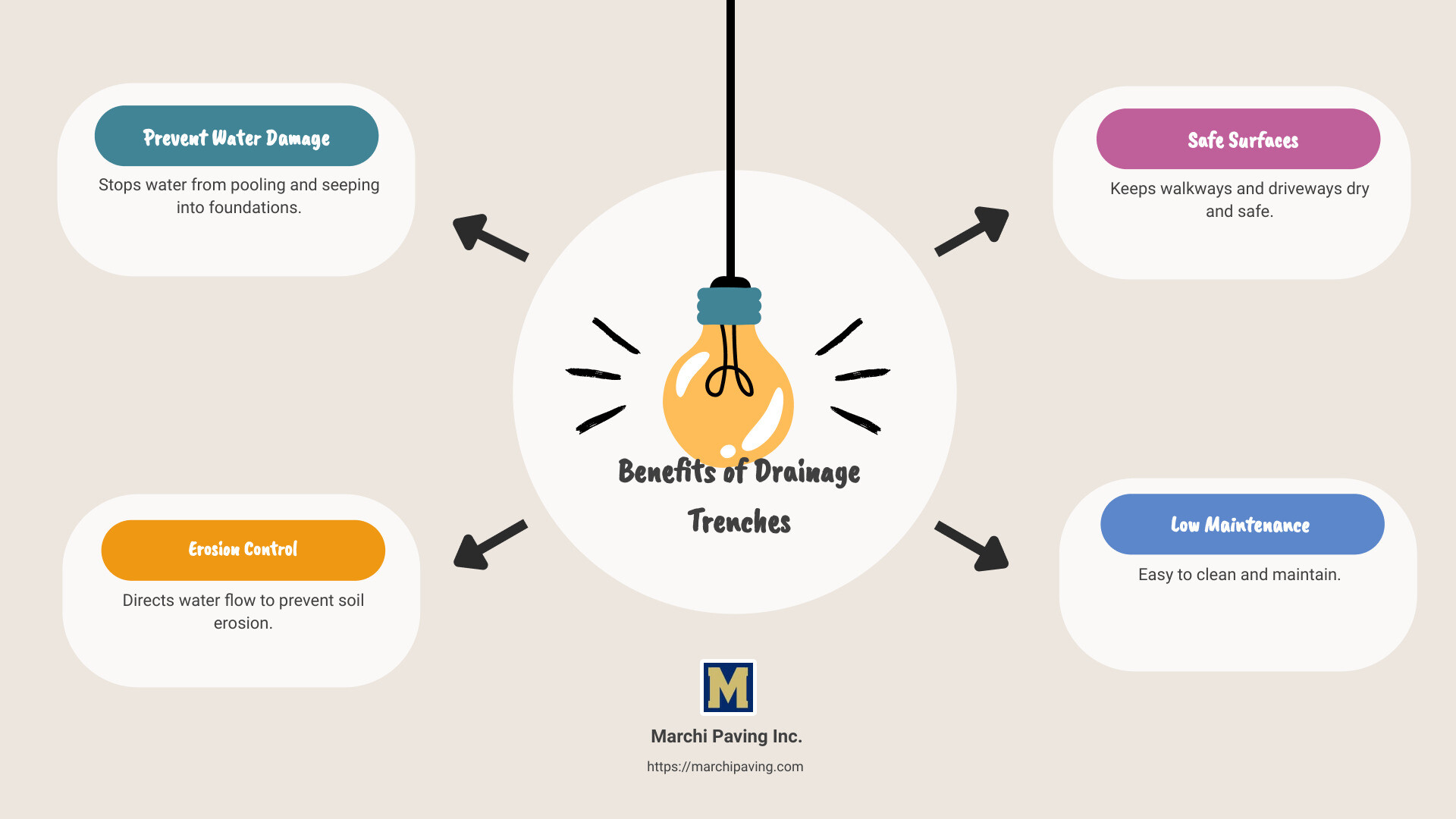
What is a Drainage Trench?
A drainage trench is a type of linear drainage system designed to collect and channel surface water away from an area. These systems are vital for managing stormwater runoff, preventing erosion, and maintaining safe and stable surfaces.
Purpose
The primary purpose of a drainage trench is to manage and direct water flow. Without proper drainage, water can pool on surfaces, leading to issues like flooding, soil erosion, and even structural damage to buildings. By installing a drainage trench, you can effectively control water runoff and protect your property.
Trench Drains
Trench drains, also known as channel drains, are a specific type of drainage trench. They consist of an elongated trench or channel with a grating or drain cover on top. This design allows them to efficiently capture and direct water to a designated outlet.

Benefits of Trench Drains:
– Storm Water Runoff Management: Trench drains are instrumental in stormwater management. They collect rainwater and prevent it from pooling on surfaces, reducing the risk of flooding and water damage.
– Erosion Prevention: By guiding water away from surfaces, trench drains help prevent soil erosion, preserving the integrity of landscapes and structural foundations.
– Safe and Stable Surfaces: In areas where slip hazards are a concern, trench drains enhance safety by keeping surfaces dry and minimizing the risk of accidents.
– Versatility: Trench drains come in various materials such as stainless steel, plastic, ductile iron, and fiber-reinforced concrete, making them suitable for diverse applications, from patios and pool decks to industrial settings.
– Low Maintenance: Designed for easy maintenance, trench drains feature removable grates and simple cleaning processes to ensure ongoing functionality.
Channel Drains
Channel drains are another term often used interchangeably with trench drains. They are long, narrow drains that capture runoff from large, flat surfaces. They are perfect for driveways, patios, and pool decks.
How They Work:
– Grated Surface: Channel drains have a grated surface that sits flush with the ground.
– Water Flow: Water flows into the channel and is directed to a drainage system or sewer.
Benefits of Channel Drains:
– Great for Large Surface Areas: They are ideal for managing water runoff from large, flat surfaces.
– Reduces Erosion and Water Pooling: By capturing and directing water, channel drains reduce erosion and prevent water from pooling.
– Customizable Lengths: Channel drains can be customized to fit any length, making them versatile for various applications.
In summary, drainage trenches—including trench drains and channel drains—are essential tools for managing water runoff, preventing erosion, and maintaining safe surfaces. They come in various materials and designs to suit different needs and applications.
Benefits of Installing a Drainage Trench
Stormwater Management
Drainage trenches are vital for effective stormwater management. They capture and redirect excess water away from your property, preventing flooding and water damage. For example, a French drain system can redirect water away from your home’s foundation, reducing the risk of a wet basement or soggy yard. By managing stormwater efficiently, you protect your property and maintain its value.
Erosion Prevention
Water runoff can cause significant soil erosion, damaging your landscape and foundation. Trench drains and channel drains help prevent this by directing water flow to designated areas. This reduces soil erosion and keeps your landscape intact. For instance, patios and driveways with channel drains experience less erosion, maintaining their appearance and functionality over time.
Safety
Standing water can create slippery surfaces, posing a safety hazard. Installing a drainage trench helps keep walkways, driveways, and other surfaces dry and safe. In high-traffic areas like garages, using durable materials such as stainless steel or ductile iron ensures both strength and longevity, reducing the risk of accidents caused by water pooling.
Low Maintenance
Once installed, drainage trenches require minimal maintenance. Materials like stainless steel and polymer concrete are highly durable and resistant to corrosion, ensuring long-term performance with little upkeep. For residential applications, plastic trench drains offer a cost-effective and low-maintenance solution, making them ideal for homeowners.
Versatility
Drainage trenches are versatile and can be tailored to various applications. From garage trench drains to patio channel drains and pool deck channel drains, there’s a solution for every need. For example, polymer concrete channels are perfect for industrial settings, while plastic trench drainage is suitable for both indoor and outdoor residential projects.
In summary, installing a drainage trench provides numerous benefits, including efficient stormwater management, erosion prevention, enhanced safety, low maintenance, and versatility. These advantages make them a valuable addition to any property, protecting it from water damage and maintaining its aesthetic appeal.
Types of Drainage Trenches
Choosing the right type of drainage trench is crucial for effective water management. Here’s a breakdown of the most common types:
French Drains
French drains are perfect for managing underground water. Named after Henry Flagg French, these drains consist of a trench filled with gravel or rock and a perforated pipe that redirects water away from problem areas. They’re ideal for dealing with water pooling in yards or basement dampness.
Example: A homeowner in Texas used a French drain to solve their yard’s flooding issues, which helped prevent basement water damage.
Channel Drains
Channel drains, also known as trench drains, are designed to collect and move surface water. They’re commonly used in paved areas like driveways, patios, and pool decks. Channel drains can be made from various materials, each suited to different applications.
Patio Channel Drains: For residential patios, plastic channel drains are lightweight, resilient, and cost-effective. They efficiently manage water runoff while being easy to install.
Pool Deck Channel Drains: Stainless steel channel drains are both functional and aesthetically pleasing, making them a popular choice for pool decks. They handle water runoff effectively and complement the sleek look of poolside environments.
Polymer Concrete Channels
Polymer concrete channels combine the strength of traditional concrete with added resistance to corrosion and extreme conditions. These channels are ideal for industrial settings and areas exposed to harsh elements.
Industrial Application: A factory in an industrial park installed polymer concrete channels to manage water runoff from heavy machinery, ensuring durability and long-term performance.
Plastic Trench Drainage
Plastic trench drainage offers a cost-effective solution for both indoor and outdoor projects. These channels are lightweight yet durable, making them suitable for various residential applications.
Indoor and Outdoor Use: Homeowners can use plastic trench drainage for garden areas, driveways, and even indoor spaces prone to water accumulation.
Stainless Steel Trench Drains
Stainless steel trench drains are the go-to choice when durability and aesthetics are important. They are strong enough to handle heavy traffic and have a sleek appearance, making them suitable for both residential and commercial spaces.
Garage Trench Drains: In garages with heavy vehicle traffic, stainless steel trench drains provide the necessary strength and longevity while maintaining a clean and professional look.
Galvanized Stamped Steel
Galvanized stamped steel channels are practical for areas needing both strength and rust resistance. These metal trench drains are perfect for commercial applications and heavy-duty use.
Commercial Settings: A parking lot installation used galvanized stamped steel channels to manage stormwater, ensuring durability and resistance to the elements.
Each type of drainage trench has its unique benefits and applications. Understanding these options can help you choose the best solution for your specific needs, ensuring effective water management and protection for your property.
How to Install a Drainage Trench
Installing a drainage trench might seem daunting, but with the right tools and steps, you can do it yourself. Let’s break it down.
Step-by-Step Guide
1. Plan the Layout
– Mark the Area: Use spray paint or stakes to outline where your trench will go.
– Check Regulations: Make sure to call 8-1-1 to mark any underground utilities before digging.
2. Gather Tools and Materials
– Tools: Digging shovel, utility knife, tape measure, level, hammer, and grade stakes.
– Materials: Filter fabric, drainage gravel, perforated drain pipe, end caps, and schedule 40 PVC adapters.
3. Dig the Trench
– Depth and Width: Typically, trenches should be about 12-18 inches deep and 9-12 inches wide.
– Slope: Ensure a consistent slope, about 1 inch per 10 feet, for proper water flow.
4. Line the Trench
– Filter Fabric: Line the bottom and sides of the trench with water-permeable filter fabric. This prevents soil from clogging the drain.
5. Install the Drain Pipe
– Gravel Bedding: Pour about 3 inches of gravel at the bottom of the trench.
– Perforated Pipe: Place the perforated pipe on top of the gravel, with holes facing downward.
6. Secure the Pipe and Components
– End Caps: Attach end caps to the pipe ends to prevent debris from entering.
– PVC Adapters: If connecting to a schedule 40 PVC pipe, use appropriate adapters to ensure a secure fit.
7. Backfill and Finish
– Gravel Cover: Cover the pipe with more gravel, ensuring it remains below ground level.
– Fold Fabric: Fold the excess filter fabric over the gravel.
– Topsoil: Backfill with topsoil and compact it.
Tools Needed
- Digging Shovel: For excavating the trench.
- Utility Knife: To cut filter fabric and other materials.
- Tape Measure: For accurate measurements.
- Level: To ensure proper slope.
- Hammer and Grade Stakes: To mark and guide the trench depth.
Installation Brackets
Installation brackets are crucial for keeping the trench drain channels level and in place during the pouring process. They prevent any movement, ensuring a stable and effective drainage system.
End Caps
Choosing the right end caps is essential for sealing the ends of your trench drain. The specific end cap required depends on the depth and type of your channel. Always check the product descriptions to match your needs.
Schedule 40 PVC Adapters
To connect your trench drain to a schedule 40 PVC pipe, you’ll need special adapters. These adapters ensure a secure and leak-proof connection, accommodating both 3-inch and 4-inch PVC pipes.
By following these steps and using the right tools and materials, you can successfully install a drainage trench to protect your property from water damage. Next, we’ll look into the costs associated with installing a drainage trench.
Cost of Installing a Drainage Trench
Installing a drainage trench can be a smart investment to protect your property from water damage, but understand the costs involved. Let’s break down the average costs, factors affecting these costs, and how they compare to other drainage solutions.
Average Costs
On average, installing a drainage trench can cost around $6,200. However, the price range typically falls between $1,600 and $13,000. The wide range is due to several factors that can significantly influence the total cost.
Factors Affecting Cost
- Type of Drainage Trench:
- Exterior French Drains: More expensive due to extensive digging around the home’s foundation. Costs range from $10 to $50 per linear foot.
- Interior French Drains: Higher cost per linear foot ($40 to $100) due to specialized membranes and additional labor.
- Length of the Trench: Longer trenches require more materials and labor, increasing the overall cost.
- Soil Type: Certain soil types, like clay, require more labor to dig through, which can raise costs.
- Depth and Width of the Trench: Deeper and wider trenches need more materials and effort, driving up expenses.
- Additional Features: Adding features like sump pumps or connecting to municipal storm drains can also increase the total cost.
Cost Comparison
When comparing the cost of a drainage trench to other waterproofing solutions, it’s clear why many homeowners opt for this system. While it’s not the cheapest option, it offers comprehensive protection that other methods may lack.
- Sump Pumps: Useful but only address water that has already entered your basement. Costs range from $300 to $1,500.
- Waterproof Coatings: Less expensive ($500 to $3,000), but do not address the root cause of water intrusion.
Trench Drain Installation Cost
The cost of installing a trench drain can vary based on the materials used and the complexity of the project. For example:
- Easy 1 – 3 Inch Premium Channels: From $53.00.
- Easy 1 – 3 Inch Stainless Pro Channels: From $68.00.
- Easy 2 – 4 Inch Channels: From $43.00.
These prices reflect the cost of the channels themselves and do not include labor or additional materials like end caps or installation brackets.
By understanding these costs and factors, you can make an informed decision about installing a drainage trench to protect your property.
Next, we’ll explore the various applications of drainage trenches and how they can be used in different settings.
Applications of Drainage Trenches
Drainage trenches are versatile and can be used in various settings to manage water runoff effectively. Here’s how they can be applied in different areas:
Garage Trench Drains
High-traffic garages require durable trench drains to handle the weight and frequency of vehicles. Stainless steel or ductile iron trench drains are ideal for these environments. They provide the necessary strength and longevity to withstand heavy vehicle traffic. This ensures that water is efficiently drained away, preventing puddles and potential damage to the garage floor.
Patio Channel Drains
For residential patios, plastic channel drains are a cost-effective and efficient solution. These lightweight drains manage water runoff from rain or irrigation systems, keeping your patio dry and safe. Their resilience and ease of installation make them perfect for homeowners looking to maintain a neat and functional outdoor space without breaking the bank.
Pool Deck Channel Drains
Pool decks need drainage solutions that are both functional and aesthetically pleasing. Stainless steel trench drains are perfect for this setting. They handle water runoff from the pool deck effectively while providing a sleek look that complements the overall pool area. This prevents water from pooling and creating slippery surfaces, ensuring safety around the pool.
Industrial Settings
In industrial environments, durability and corrosion resistance are crucial. Galvanized stamped steel and polymer concrete channels are excellent choices for these settings. Galvanized steel offers strength and rust resistance, making it suitable for heavy-duty use. Polymer concrete channels, on the other hand, provide added resistance to extreme conditions and corrosion, making them ideal for harsh industrial environments.
Residential Projects
For various residential projects, plastic trench drainage is a versatile option. Its lightweight and durable construction make it suitable for both indoor and outdoor applications, such as garden paths, driveways, and more. This material is cost-effective and easy to install, making it a popular choice for homeowners looking to improve their property’s drainage system.
By understanding the different applications of drainage trenches, you can choose the right solution for your specific needs. Whether it’s for a garage, patio, pool deck, industrial site, or residential project, there’s a drainage trench that fits your requirements perfectly.
Next, we will provide a step-by-step guide on how to install a drainage trench effectively.
Frequently Asked Questions about Drainage Trenches
What is the difference between a French drain and a trench drain?
A French drain and a trench drain serve similar purposes but have distinct differences in design and application.
- French Drain: This system consists of a trench filled with gravel or rock and a perforated pipe that redirects underground water. It’s ideal for managing subsurface water and is often used around foundations to prevent basement flooding.
- Trench Drain: Also known as a channel drain, this is a linear surface drainage system with a grated top. It captures and directs surface water away from areas like driveways, patios, and pool decks. Trench drains are effective for stormwater management and preventing surface water pooling.
Both systems are crucial for effective water management, but choosing between them depends on whether you’re addressing underground water or surface water.
How do I choose the right material for my drainage trench?
Choosing the right material for your drainage trench depends on several factors, including application suitability and durability.
- Plastic: Lightweight, cost-effective, and easy to install. Suitable for residential projects like patios and gardens.
- Polymer Concrete: Durable and resistant to chemicals. Ideal for industrial settings and areas with heavy traffic.
- Stainless Steel: Highly durable and corrosion-resistant. Perfect for commercial kitchens and areas exposed to harsh chemicals.
- Galvanized Stamped Steel: Strong and durable. Suitable for driveways and garages where heavy loads are common.
Consider the specific requirements of your project, such as load capacity, exposure to chemicals, and budget, to select the most appropriate material.
Do I need professional help to install a drainage trench?
Installing a drainage trench can be a DIY project, but professional help is often recommended, especially for complex installations.
- DIY Installation: If you’re handy and the project is straightforward, such as a small patio or garden trench, you might tackle it yourself. Ensure you have the right tools and follow a detailed guide.
- Professional Installation: For larger or more complex projects, such as industrial sites or areas with existing structures, hiring professionals like Marchi Paving Inc. is advisable. They bring expertise, ensure proper installation, and handle permits and utility checks.
Professional installation guarantees that your drainage system is effective and long-lasting, saving you time and potential headaches in the long run.
By understanding these key aspects, you can make informed decisions about your drainage trench needs and ensure your property remains protected from water damage.
Conclusion
Protecting your property from water damage is crucial, and installing a drainage trench is one of the most effective ways to achieve this. Whether you opt for a simple French drain or a robust stainless steel trench drain, these systems ensure stormwater management, erosion prevention, and overall property safety.
At Marchi Paving Inc., we understand the importance of a well-designed and properly installed drainage system. Our team is committed to delivering high-quality solutions tailored to your specific needs. From residential patios to industrial settings, we have the expertise to ensure your property remains safe and dry.
Ready to protect your landscape and home from water damage? Contact us today to get a detailed quote and experience the Marchi Paving difference.
Driveway Drainage Solutions: Top 5 Proven Fixes for 2024
Driveway flooding can be a major headache for homeowners and property managers. Standing water not only damages your driveway but can also lead to costly repairs. Worse yet, it poses a risk to your property’s foundation. Fortunately, there are several driveway drainage solutions that can alleviate these problems effectively.
If you’re looking to quickly understand your options, here are some top methods to prevent driveway flooding and water damage:
- Channel Drains: Captures water and redirects it away.
- French Drains: Uses perforated pipes and gravel to absorb water.
- Catch Basins: Large drains that collect and divert water.
- Permeable Pavers: Allow water to seep through and reduce runoff.
- Slot Drains: Low-profile and aesthetically pleasing options.
Addressing the issue of water pooling on your driveway is crucial. Water with nowhere to go can erode concrete, wash away soil and mulch, and even damage the foundation of your property. Immediate action is vital to prevent these issues from escalating.
To implement an appropriate driveway drainage solution, you need to understand the specific type of problem you’re facing and the best way to solve it. Solutions range from simple installations like French drains to more complex systems like permeable pavers or slot drains.
Understanding Driveway Drainage Problems
Concrete Erosion
Concrete, stone, and asphalt do not absorb water like dirt or grass. When there’s no proper drainage, water starts to collect in puddles. Over time, this standing water leads to concrete erosion, causing cracks, potholes, and other damage.
“Standing water makes it more difficult for a surface to dry and, over time, can cause erosion, leading to cracks, potholes, and other potentially dangerous and costly damage.”
Foundation Damage
Without a concrete driveway drain, water can seep into the foundation of your home. This can cause the foundation to erode and weaken the soil underneath. Water can even seep into the wooden structure above, leading to rot and mold.

Standing Water
Standing water on your driveway is more than just an eyesore. It can be a breeding ground for mosquitoes and other pests. It also makes surfaces slippery and hazardous.
Structural Damage
Just as water can damage your home’s foundation, it can also harm your home’s siding and structure. Water can get under the siding and house wrap, leading to mold and rot. Certain types of siding can also be damaged by excessive water.
“The water can manage to get under the siding and house wrap, where it can damage the actual structure of the home with mold and rot.”
Understanding these issues is the first step in choosing the right driveway drainage solutions. Now, let’s explore the top solutions to these problems.
Top Driveway Drainage Solutions
1. Channel Drains
Channel drains, also known as trench drains, are a popular choice for sloped driveways. They are long, rectangular drains installed inside the driveway to capture and redirect water.
When to Use It: Ideal for driveways that slope towards your home or yard, preventing water from pooling and causing damage.
Installation Notes:
– Use a circular saw with a diamond blade to cut through your driveway.
– Dig a trench about 6 inches deep.
– Fit and connect PVC piping to direct the water away.
– Fill the trench with concrete and compact the gap with an asphalt cold patch.

2. French Drains
French drains use perforated pipes and a fabric liner to filter water slowly into the ground. They work well with the natural slope of your yard to send water away from problem areas.
When to Use It: Best for areas where water pools around the edges of your driveway, especially if it affects your garden or landscaping.
Installation Notes:
– Dig a trench along the trouble spot.
– Lay a perforated pipe wrapped in landscape fabric.
– Cover with gravel or rock to allow water to flow naturally.

3. Catch Basins
Catch basins are large drains that collect surface water and divert it into an underground basin or pipe system. They are essential for managing stormwater runoff.
When to Use It: Ideal for low points in your driveway or yard where water tends to pool.
Installation Notes:
– Place the catch basin at the lowest point.
– Connect it to underground piping to direct water away from your property.
– Ensure the grated inlet is clear of debris for optimal performance.

4. Permeable Pavers
Permeable pavers allow water to seep through the surface and into the ground, reducing runoff and promoting groundwater recharge.
When to Use It: Great for eco-friendly solutions and areas with heavy rainfall.
Installation Notes:
– Lay an aggregate base before installing the pavers.
– Ensure proper spacing to allow water to flow through.
– Regularly maintain to prevent clogging.

5. Slot Drains
Slot drains are aesthetically pleasing and efficient. Made from stainless steel, they are durable and easy to maintain.
When to Use It: Perfect for modern homes looking for a sleek design that is also ADA compliant.
Installation Notes:
– Ensure the slot drain is level with the ground.
– Install pre-sloped and pre-assembled designs for easy setup.
– Opt for a self-cleaning system for minimal maintenance.

These driveway drainage solutions offer effective ways to manage water runoff and protect your property. Next, let’s discuss the factors to consider when choosing the right solution for your driveway.
1. Channel Drains
Channel drains, also known as trench drains, are a popular solution for managing water runoff on driveways. These long, narrow drains capture and redirect stormwater, preventing it from pooling and causing damage.
How Channel Drains Work
Channel drains consist of a grated surface that sits flush with the ground. Water flows into the channel through the grate and is directed to a drainage system or sewer. This setup is especially useful for driveways with a slight slope, as it catches water exactly where it flows.
Benefits of Channel Drains
- Efficient Water Management: Channel drains quickly capture and redirect large volumes of water, making them ideal for areas with heavy rainfall.
- Durable and Long-lasting: Made from materials like concrete or stainless steel, these drains are built to withstand harsh conditions and heavy vehicle traffic.
- Customizable: They can be tailored to fit any driveway length and width, ensuring a perfect fit for your property.
Installation Tips
- Plan the Route: Mark the channel drain’s route along your driveway. Ensure it’s lower than the pavement to help water flow naturally into the drain.
- Cut the Driveway: Use a circular saw with a diamond-impregnated blade to cut through the driveway material.
- Dig the Trench: Make a trench approximately 6 inches deep along the marked route.
- Fit and Connect Pipes: Connect the drain pipes to the channel drain, directing water to your designated drainage area.
- Secure with Concrete: Fill the trench with concrete to secure the channel drain in place.
- Patch and Compact: Use an asphalt cold patch to fill gaps between the channel drain and the driveway.
Case Study: Effective Use of Channel Drains
A Houston contractor, Chuck Waltman, emphasizes the importance of channel drains in preventing driveway damage. In his experience, these drains help avoid standing water that can gradually erode the driveway foundation. By installing channel drains, homeowners can extend the lifespan of their driveways and maintain their property’s aesthetic appeal.
When to Use Channel Drains
Channel drains are ideal for driveways that experience frequent water runoff, particularly those with a slight slope. They are also beneficial for properties where water tends to pool near the foundation, posing a risk of structural damage.
For more detailed steps on installing channel drains, check out this guide.
Next, we’ll explore another effective driveway drainage solution: French drains.
2. French Drains
French drains are a popular and effective solution for managing driveway drainage issues. They work by collecting and redirecting water away from trouble spots, preventing water from pooling and causing damage.
How French Drains Work
A French drain consists of a trench filled with gravel and a perforated pipe. The trench is lined with landscape fabric to prevent soil from clogging the system. Water seeps through the gravel and enters the perforated pipe, which then carries the water away to a designated drainage area.
Key Components
1. Perforated Pipes:
These pipes have small holes that allow water to enter from the surrounding soil. They are placed at the bottom of the trench and help channel water away from the area.
2. Landscape Fabric:
This fabric lines the trench to keep soil and debris from clogging the gravel and perforated pipe. It ensures that the system remains effective over time.
3. Gravel:
Gravel is placed around the perforated pipe, providing a path for water to flow into the pipe. It also helps filter out larger debris and supports water absorption.
Installation Steps
- Plan the Layout:
Identify the problem area and decide where the French drain will start and end. Mark the route with stakes or spray paint. - Dig the Trench:
The trench should be about 18 inches deep and 9 to 12 inches wide. Ensure it slopes downward at least 1 inch for every 10 feet to use gravity for water flow. - Line the Trench:
Lay the landscape fabric in the trench, leaving enough excess on the sides to fold over the gravel later. - Add Gravel:
Pour about 3 inches of gravel into the trench and compact it to create a stable base for the perforated pipe. - Place the Perforated Pipe:
Lay the perforated pipe on top of the gravel, ensuring the holes face downward. Secure any necessary fittings to extend the pipe. - Cover with Gravel:
Add more gravel to cover the pipe, keeping it below ground level. Fold the excess landscape fabric over the gravel for added protection. - Backfill with Topsoil:
Fill the trench with topsoil and compact it to cover the entire French drain system.
When to Use French Drains
French drains are ideal for driveways that experience higher levels of subsurface water. They are particularly effective in areas where water tends to gather and cause issues, such as near the edge of a driveway or around a garden.
For more detailed steps on installing French drains, check out this guide.
Next, we’ll discuss another essential driveway drainage solution: catch basins.
3. Catch Basins
Catch basins are a robust solution for managing large volumes of water on your driveway. They consist of a large drain and an underground basin that collects and diverts water away from your property.
How Catch Basins Work
Catch basins are designed to capture surface water and direct it into an underground basin. From there, the water is diverted to a designated drainage area, such as the street or a storm drain.
Key Components:
– Large Drain: Positioned at the lowest point of the driveway to capture water.
– Underground Basin: Holds the excess water temporarily.
– Outlet Pipe: Diverts water to a safer location.
Benefits of Catch Basins
- Effective Water Diversion: Catch basins can handle large amounts of water, making them ideal for big driveways or areas prone to heavy rainfall.
- Stormwater Management: They help manage stormwater by diverting it to municipal systems or other designated areas.
- Prevents Flooding: By capturing and diverting water, catch basins prevent water from pooling on your driveway and causing damage.
Installation Tips
Installing a catch basin involves several steps and is best handled by professionals. However, understanding the basics can help you communicate your needs effectively:
- Identify Low Points: Determine where water tends to pool.
- Excavate the Area: Dig a hole for the basin at the identified low point.
- Install the Basin: Place the basin in the hole and connect it to an outlet pipe.
- Cover with a Grate: Ensure the grate is flush with the driveway surface to capture water efficiently.
For more detailed steps on installing catch basins, check out this guide.
When to Use Catch Basins
Catch basins are ideal for driveways with significant water accumulation. They are particularly effective in areas where flooding is a frequent issue.
Next, we’ll explore another efficient driveway drainage solution: permeable pavers.
4. Permeable Pavers
Permeable pavers are a smart and eco-friendly solution to driveway drainage problems. They allow water to pass through the surface, reducing runoff and preventing flooding.
Aggregate Base
Permeable pavers are installed over an aggregate base. This base typically consists of clean, angular gravel which creates voids for water to flow through. The aggregate base not only supports the pavers but also acts as a detention area for stormwater. This setup can absorb over 1000 inches of rain per hour, making it highly effective for areas with frequent heavy rainfall.
Stormwater Absorption
One of the key benefits of permeable pavers is their stormwater absorption capability. When it rains, water seeps through the gaps between the pavers and filters down into the aggregate base. From there, it slowly infiltrates into the soil, recharging groundwater and reducing surface runoff. This prevents water from pooling on your driveway and reduces the risk of flooding.
Eco-Friendly
Permeable pavers are an eco-friendly choice for driveway drainage. They are often made from 100% post-consumer recycled plastic, which helps reduce waste. Furthermore, the natural filtration process through the pavers and aggregate base helps remove pollutants from stormwater before it reaches the groundwater. This bioremediation process is beneficial for the environment, as it helps keep our water sources clean.
TRUEGRID
TRUEGRID is a leading brand in permeable pavers. Their pavers are designed to be durable and easy to install, making them a popular choice for homeowners. A family in Florida, for example, solved their flooding driveway issue by installing TRUEGRID pavers. The system absorbs water instantly, even during heavy rains, ensuring their driveway remains dry and functional.
In addition to these benefits, permeable pavers require minimal maintenance and are a cost-effective solution compared to traditional concrete or asphalt driveways. They are also aesthetically pleasing, as they can be filled with various materials like gravel, grass, or even mulch.
For more information on how permeable pavers can transform your driveway, visit TRUEGRID.
Next, let’s look at another efficient solution for driveway drainage: slot drains.
5. Slot Drains
Slot drains are an effective and visually appealing option for driveway drainage. Unlike traditional grated systems, slot drains are sleek and blend seamlessly into the driveway surface.
Aesthetically Pleasing
One of the main advantages of slot drains is their minimalistic design. They sit flush with the driveway surface, making them almost invisible. This design ensures that the overall look of your driveway remains clean and uncluttered. No more bulky grates or noticeable drainage systems disrupting the appearance of your property.
Stainless Steel Option
Slot drains offer the option of stainless steel construction, which comes with several benefits:
- Durability: Stainless steel is incredibly strong and can withstand the weight of vehicles without cracking or breaking.
- Corrosion Resistance: It is resistant to rust and corrosion, ensuring longevity even in harsh weather conditions.
- Hygienic: The non-porous nature of stainless steel makes it resistant to bacteria, adding an extra layer of safety.
ADA Compliant
Safety is a critical factor, especially for residential properties. Slot drains are designed to be ADA compliant. This means they are:
- Grate-Free: No grates mean fewer tripping hazards.
- Level with Ground: The drain is perfectly level with the surrounding surface, making it easy for wheelchairs, strollers, and bikes to pass over.
- Slim Design: The slim profile ensures that there’s no risk of tripping, making it safe for everyone.
Easy Maintenance
Maintenance is a breeze with slot drains. Traditional grated drains require removing the grate to clean the system, which can be cumbersome. In contrast, slot drains are designed for easy access and cleaning:
- Quick Cleaning: Cleaning a slot drain takes about 15 minutes.
- Self-Cleaning Option: Some slot drains come with a self-cleaning and flushing system, making maintenance even easier.
Chuck Waltman, a contractor from Houston, says, “Standing water can gradually damage the foundation of your driveway over time. Slot Drain is our preferred solution for this. Not only does it help drain any standing water, it lasts longer as well.”
For a reliable, aesthetically pleasing, and easy-to-maintain driveway drainage solution, slot drains are an excellent choice.
Next, let’s explore the factors to consider when choosing a driveway drainage solution.
Factors to Consider When Choosing a Driveway Drainage Solution
Selecting the right driveway drainage solution can be tricky. Here are some key factors to consider:
Driveway Slope
The slope of your driveway is crucial. A properly sloped driveway directs water away from your home and into designated drainage areas. If the slope is incorrect, water can pool and cause damage.
“For driveways with minor slope issues, regrading may be the simplest solution,” says Brower. This involves adjusting the pitch of the driveway to improve water flow.
Water Volume
Consider the amount of water your driveway needs to handle. Heavy rainfall or frequent storms can overwhelm some drainage systems.
For instance, French drains are great for areas with moderate water volume. They use perforated pipes buried under gravel to absorb and redirect water. However, for heavy water flow, channel drains or catch basins might be more effective.
Drainage Location
Where will the water go? It’s important to direct water away from your home and other structures. Safe zones are areas away from your building structure or pedestrian walkways.
Stormwater channeling can help guide water into these safe zones. Swales, or shallow channels, can also be used to direct water flow effectively.
Professional Consultation
While some drainage solutions can be DIY, consulting a professional ensures the job is done right. Professionals can assess your specific situation and recommend the best solution.
“We will only start a project once we have correctly evaluated the area; that’s our promise to you,” says Pavertime, a trusted name in the industry. This ensures peace of mind and effective results.
Considering these factors will help you choose the best driveway drainage solution for your property.
Next, let’s look at the benefits of implementing driveway drainage solutions.
Benefits of Implementing Driveway Drainage Solutions
Prevent Erosion
One of the main benefits of implementing driveway drainage solutions is preventing erosion. When water pools on your driveway, it can gradually wear away the surface. Over time, this leads to cracks and potholes. By installing a proper drainage system, you can channel water away from your driveway, preserving its integrity.
“Standing water can gradually damage the foundation of your driveway over time,” says Chuck Waltman, a Houston contractor. A good drainage system helps to avoid this issue, ensuring your driveway lasts longer.
Protect Foundation
Excess water isn’t just bad for your driveway; it can also harm your home’s foundation. Water that doesn’t drain properly can seep into the ground and reach your foundation. This can cause cracks and weaken the structure. By directing water away from your home, you protect your foundation from potential damage.
Avoid Structural Damage
Water pooling around your home can lead to severe structural damage. It can weaken walls, floors, and even the roof over time. Proper drainage solutions, like French drains and channel drains, help avoid these costly issues. They ensure that water is efficiently directed away from your home, keeping it safe from water-related problems.
Enhance Property Value
A well-maintained driveway with efficient drainage not only looks good but also adds value to your property. Potential buyers are more likely to be interested in a home that doesn’t have water issues. Effective drainage solutions can make your property more appealing and increase its market value.
“Homes with effective drainage systems are more appealing to buyers,” notes a report from Marchi Paving Inc. This can be a significant advantage if you ever decide to sell your home.
Next, we’ll address some frequently asked questions about driveway drainage solutions.
Frequently Asked Questions about Driveway Drainage Solutions
What is the best drainage for a driveway?
The best drainage for a driveway often depends on your specific situation, but channel drains and B125 drainage channels are popular choices.
Channel drains, also known as trench drains, are perfect for sloped driveways. They capture water and channel it away efficiently. These drains are installed inside the driveway and work well for areas with heavy rainfall.
B125 drainage channels are robust and can handle light vehicular traffic. They are great for residential driveways and help manage stormwater effectively.
How to fix drainage problems in a driveway?
Fixing drainage problems in a driveway can involve several methods:
- Channel Drains: Ideal for sloped driveways. Install them to catch and redirect water.
- French Drains: Use perforated pipes and gravel to absorb and channel water away.
- Swales: Create subtle depressions in your landscape to direct water flow.
- Culverts: These pipes allow water to flow under the driveway.
- Permeable Pavers: These pavers let water seep through to the ground, preventing pooling.
- Regrading: Adjust the slope of your driveway to direct water away from your home.
Each solution has its pros and cons, so choose one that suits your specific drainage needs.
What is the best material for a driveway drainage?
When it comes to materials, gravel driveways are often recommended for their excellent water absorption properties. Gravel allows water to seep through, reducing runoff and pooling.
However, maintenance is key. Regularly raking and adding more gravel can help keep the driveway in good condition.
For more permanent solutions, materials like permeable pavers are also excellent. They combine durability with effective water absorption, making them a long-term solution for driveway drainage.
By understanding these common questions, you can make informed decisions about your driveway drainage solutions. In the next section, we’ll delve into the factors to consider when choosing the right solution for your needs.
Conclusion
At Marchi Paving Inc., we understand the importance of effective driveway drainage solutions. Water damage and flooding can cause serious issues, but with the right drainage system, you can protect your property and enhance its value.
Professional Installation
When you choose us, you’re choosing a team of experts dedicated to delivering high-quality results. Our professionals are trained to assess your specific needs and recommend the best solutions. From channel drains to permeable pavers, we ensure that every installation is tailored to your property.
High-Quality Execution
Our commitment to quality begins with the materials we use. We only use top-notch materials that are built to last. Whether it’s installing a French drain or a catch basin, our attention to detail ensures that your drainage system will perform effectively for years to come.
Advanced Equipment
We invest in state-of-the-art equipment to enhance the efficiency and precision of our work. This allows us to complete projects on time and within budget, without compromising on quality. Our advanced machinery ensures that your drainage system is both effective and durable.
Ready to protect your driveway from water damage? Contact us today to get a detailed quote and experience the Marchi Paving difference.

