

Foundation Drainage Solutions: Top 5 Proven Fixes in 2024
Why Foundation Drainage is Crucial for Your Home’s Safety
When it comes to protecting your home, foundation drainage solutions are essential. These systems help keep moisture away from your foundation, which is key for maintaining the structural integrity of your house. Imagine the nightmare of dealing with a cracked foundation or moldy basement—no one wants that.
A good foundation drainage system helps you avoid:
- Moisture damage: Excess water can seep into your foundation, causing cracks and weakening the structure.
- Structural safety issues: Over time, accumulated moisture can lead to significant and expensive repairs. Proper drainage can prevent this.
- Pest infestations: Wet, damp areas are attractive to pests like termites, which can cause even more damage.
Taking proactive steps to ensure proper drainage can save you a lot of headaches and money down the road.

What is Foundation Drainage?
Foundation drainage is a system designed to remove excess water from around your home’s foundation. This is crucial for maintaining the structural integrity of your home and preventing moisture-related damage.
Definition
Foundation drainage systems consist of various components working together to direct water away from your home. These systems are typically installed on the exterior of your foundation walls and along the footing—the lowest part of your foundation.
Purpose
The primary purpose of foundation drainage is to expel excess water that seeps into the ground near your home. This prevents water from accumulating around your foundation, which can lead to several issues:
- Cracks and structural damage: Excess moisture can cause the soil around your foundation to expand and contract, leading to cracks.
- Mold and mildew: Persistent moisture can promote the growth of mold and mildew, which can affect your health and damage your home.
- Pest infestations: Wet environments attract pests like termites, which can further damage your home.
Exterior Foundation Drain
An exterior foundation drain is installed along the outer face of your home’s foundation wall and the wall footing. This system usually consists of a perforated pipe covered with a mesh permeable “sock” to prevent soil from clogging the pipe.
The pipe is then covered with gravel and backfilled with soil:
- Gravel: The gravel layer above the pipe allows water to flow easily towards the drain.
- Soil cover: The soil cover keeps the system hidden and maintains the aesthetic appeal of your landscape.
How It Works
The system works by collecting water that seeps into the ground near your home. The water then flows through the gravel and into the perforated pipe. From there, the water is directed away from your foundation, typically to a sewer or a designated drainage area.

Benefits
Having a proper foundation drainage system offers several benefits:
- Prevents water accumulation: Keeps water away from your foundation.
- Reduces settlement issues: Minimizes soil movement and structural damage.
- Minimizes soil erosion: Protects the landscape around your home.
- Prevents mold and mildew growth: Keeps your basement or crawl space dry.
- Reduces pest infestations: Deters termites and other pests attracted to moisture.
Effective foundation drainage solutions are essential for protecting your home and ensuring its longevity. Next, we’ll explore the different types of foundation drainage solutions available and how to choose the best one for your needs.
The Importance of Foundation Drainage
Effective foundation drainage solutions play a crucial role in maintaining the integrity of your home. Let’s dive into why they are so important:
Prevent Water Accumulation
Water pooling around your foundation can lead to major problems. When water accumulates, it can seep into your basement or crawl space, causing dampness and potential flooding. This not only damages your home but also creates an unhealthy living environment.
Case in Point: A homeowner in Louisiana noticed water stains and a musty smell in their basement. Upon inspection, they discovered that poor drainage was allowing rainwater to seep through the walls. Installing a French drain system solved the problem, keeping their basement dry and odor-free.
Reduce Settlement Issues
Water can cause the soil around your foundation to expand and contract. This movement leads to settlement issues, where parts of your foundation sink or shift. Over time, this can cause cracks in your walls and floors, leading to costly repairs.
Fact: Homes without proper drainage are more likely to experience significant settlement within the first 10 years. This is especially true in areas with heavy clay soils that retain water.
Minimize Soil Erosion
Without proper drainage, water runoff can erode the soil around your home. Erosion not only affects your landscaping but can also undermine the stability of your foundation.
Tip: Installing gutters and downspouts that direct water away from your home can significantly reduce soil erosion. Pairing these with grading drainage solutions ensures that water flows safely away from your foundation.
Mold and Mildew Prevention
Moist environments are breeding grounds for mold and mildew. These fungi can grow on your basement walls, floors, and even in your crawl space. Mold not only causes structural damage but also poses health risks, such as allergies and respiratory issues.
Quote: “A dry basement is crucial for preventing mold growth and maintaining a healthy home environment,” says a foundation specialist from Marchi Paving Inc.
Pest Infestation Reduction
Moisture attracts pests like termites, ants, and rodents. These pests can cause significant damage to your home’s structure and pose health risks to your family. By keeping your foundation dry, you reduce the likelihood of pest infestations.
Statistic: Homes with proper drainage systems are 50% less likely to experience termite infestations compared to those without.
Proper foundation drainage solutions are not just about keeping your home dry; they are about preserving its structural integrity and ensuring a safe, healthy living environment.
Next, we’ll explore the different types of foundation drainage solutions available and how to choose the best one for your needs.
Types of Foundation Drainage Solutions
French Drain
A French drain is a popular and effective solution to manage water around your foundation. It consists of a perforated pipe surrounded by porous backfill like gravel or crushed stone. This setup allows water to seep into the pipe and be carried away from your home, reducing the risk of flooding and water damage.
Pros:
– Cost-effective: French drains are relatively inexpensive compared to other drainage solutions.
– Long-lasting: With proper installation, they can last between 30 and 40 years.
– Aesthetic: They blend seamlessly into your landscape.
Cons:
– Installation challenges: The process can be long and tedious, requiring the removal of existing structures like decks or walkways.
– Not suitable for all locations: Homes near water sources or utility lines may face installation restrictions.
Footing Drain
Footing drains are similar to French drains but are installed at the footing level of your foundation walls. This system also uses a perforated pipe and porous backfill to direct water away from your home.
Pros:
– Effective: Prevents water from accumulating around your foundation, reducing the risk of settlement.
– Durable: Can last up to 50 years with proper installation.
– Cost-effective: Similar to French drains in terms of cost.
Cons:
– Installation timing: Best installed when the concrete foundation is poured, making retrofitting costly.
– Maintenance needs: The pipes can clog with mud, requiring regular maintenance.
– Environmental impact: Nitrates from the soil can seep into nearby water bodies, causing contamination.
Grading Drainage
Grading drainage involves creating a slope around your home that naturally redirects water away from the foundation. This is one of the simplest and most natural ways to manage water flow.
Pros:
– Inexpensive: Generally the least costly drainage solution.
– Natural water redirection: Uses the landscape to guide water away without clogging issues.
– Increases usable space: Ideal for homeowners who enjoy gardening or landscaping.
Cons:
– Potential soil issues: Over-saturation can harm garden soils.
– Installation quality matters: Poorly executed grading can lead to water pooling and damage to your home’s lower trim boards.
– Mosquito risk: Standing water can become a breeding ground for mosquitoes.
Sump Pit and Pumps
Sump pit and pumps are essential for areas with heavy rainfall or snowfall. The system collects water in a catch basin and pumps it out when it reaches a certain level, using a sensor-triggered pump.
Pros:
– Effective for heavy rainfall: Ideal for climates with frequent heavy rain or snow.
– Automated: The pump activates automatically when water levels rise.
Cons:
– Electricity dependency: Requires a power source, which can be a limitation during power outages.
– Installation cost: Generally more expensive to install than other drainage solutions.
– Maintenance: Regular checks are needed to ensure the system is functioning correctly.
Understanding the different types of foundation drainage solutions will help you choose the best one for your home. Each solution has its unique benefits and challenges, so consider your specific needs and conditions before making a decision.
Best Practices for Foundation Drainage Solutions
When it comes to foundation drainage solutions, following best practices can make a significant difference in protecting your home. Here are some key strategies:
Grading Soil
Proper soil grading is crucial. The ground around your home should slope away from the foundation. This natural slope helps direct water away from the structure, minimizing the risk of water accumulation.
Steps to grade soil effectively:
1. Measure the slope: Ensure a minimum slope of 6 inches over the first 10 feet away from the foundation.
2. Add soil as needed: Use good-quality topsoil to build up low areas.
3. Compact the soil: Compact the soil to prevent future settling.
Tip: Always check local regulations before making significant changes to your yard’s grading. Some areas have specific requirements to manage stormwater runoff.
Installing Gutters
Gutters play a vital role in managing roof runoff. Properly installed gutters and downspouts can significantly reduce the amount of water that reaches your foundation.
Best practices for gutter installation:
– Extend downspouts: Ensure downspouts extend at least 4-6 feet away from the foundation.
– Regular maintenance: Clean gutters regularly to prevent clogs.
– Use splash blocks: Place splash blocks under downspouts to direct water away.
Fact: Some gutter systems can even drain underground, providing an added layer of protection.
Using Drainage Boards
Drainage boards, also known as drainage mats, help direct water away from the foundation. These boards have a dimpled design that creates channels for water to flow through.
Benefits of drainage boards:
– Reduce hydrostatic pressure: The dimpling moves water away before pressure can build up.
– Prevent water pooling: Ensures water doesn’t stay trapped around the concrete.
Recommendation: Consider adding a moisture barrier behind the drainage board material to keep moisture from infiltrating toward the foundation.
Combining Solutions
Sometimes, a single solution isn’t enough. Combining different drainage methods can offer more comprehensive protection.
Examples of combined solutions:
– Grade the soil and install gutters: This dual approach ensures both surface and roof runoff are managed effectively.
– Use a French drain with a sump pump: For areas with heavy rainfall, combining these can provide robust protection.
Case Study: Many older homes with basements use a combination of grading, French drains, and sump pumps. This multi-faceted approach has proven effective in managing water and preventing basement flooding.
By implementing these best practices for foundation drainage solutions, you can protect your home from water damage, reduce maintenance costs, and extend the life of your foundation.
Leading directly into the next section, we’ll discuss how to fix drainage around the foundation, including drainpipe positioning and avoiding low spots.
How to Fix Drainage Around Foundation
Proper drainage around your foundation is crucial to prevent water damage. Here are the key steps to fix drainage issues:
Drain Pipes Positioning
Positioning your drain pipes correctly is essential. The pipes should be placed around the perimeter of your foundation, ideally below the surface. This helps collect water and direct it away from your home.
Pro Tip: Ensure the pipes slope away from the foundation. A slight incline is enough—about 1 inch per 10 feet. This helps gravity do its job.
Example: A homeowner in a flood-prone area installed perimeter drain pipes with a proper slope and saw a significant reduction in basement water issues.
Avoiding Low Spots
Low spots around your foundation can collect water, leading to pooling and potential damage.
Steps to Avoid Low Spots:
1. Grade the Soil: Ensure the soil slopes away from the foundation. This can be done by adding soil and creating a gentle slope.
2. Check for Depressions: Regularly inspect the area around your foundation for any dips or depressions and fill them in.
Case Study: A house in a rainy region had recurring water pooling issues. By regrading the soil and filling low spots, the homeowners effectively redirected water away from the foundation.
Flexible vs. Rigid Pipes
Choosing between flexible and rigid pipes depends on your specific needs and soil conditions.
Flexible Pipes:
– Advantages: Easier to install in curved areas, less likely to break under pressure.
– Disadvantages: Can collapse if not properly supported, may not handle large volumes of water as efficiently.
Rigid Pipes:
– Advantages: More durable, better for straight runs, handles high water volume well.
– Disadvantages: Harder to install in uneven terrain, more prone to cracking if the ground shifts.
Recommendation: Use flexible pipes for areas with many turns and rigid pipes for straight, long runs. Combining both types can offer the best of both worlds.
Example: A homeowner used flexible pipes around curved garden beds and rigid pipes along the house’s straight edges. This hybrid approach ensured efficient drainage and minimized maintenance issues.
By carefully positioning drain pipes, avoiding low spots, and choosing the right type of pipes, you can effectively fix drainage around your foundation. This will help protect your home from water damage and extend the life of your foundation.
Next, we’ll address some frequently asked questions about foundation drainage solutions, including the best materials and practices.
Frequently Asked Questions about Foundation Drainage Solutions
What is the best material for drainage around foundation?
The best materials for drainage around your foundation include trench, drainpipe, gravel, and soil cover.
- Trench: Digging a trench around your foundation is the first step. It should be deep enough to collect water but not too deep to affect the foundation’s stability.
- Drainpipe: Use perforated drainpipes. These pipes allow water to enter and be redirected away from the foundation.
- Gravel: Surround the drainpipe with gravel. Gravel helps water flow freely into the drainpipe and prevents soil from clogging the system.
- Soil Cover: Cover the gravel with a layer of soil. This prevents the gravel from being exposed and helps maintain the aesthetic of your yard.
How to fix drainage around foundation?
Fixing drainage around your foundation involves several steps:
- Drain Pipes: Position drain pipes correctly. They should be slightly sloped to ensure water flows away from the foundation.
- Footing Base: Ensure the footing base is stable. The base should be well-compacted to support the drainpipes.
- Avoiding Low Spots: Low spots can collect water. Make sure the ground is graded away from the foundation to avoid these areas.
Using flexible pipes around curved areas and rigid pipes along straight edges can also enhance drainage efficiency.
What are the best practices for foundation drains?
Some best practices for foundation drains include:
- French Drains: French drains are a popular choice. They use perforated pipes and gravel to redirect water away from the foundation. They are cost-effective and long-lasting.
- Gutter Systems: Install gutters and downspouts to direct rainwater away from the foundation. Extend downspouts to ensure water is carried far from the house.
- Swales: Swales are shallow, wide channels that redirect water away from specific areas. They are often used alongside driveways or slopes to control water flow and prevent erosion.
By combining these solutions, you can create a comprehensive drainage system that protects your foundation from water damage.
Next, let’s explore some common questions and answers about foundation drainage solutions to help you make informed decisions.
Conclusion
Proper foundation drainage solutions are essential to protect your home from water damage and ensure its long-term stability. While it might be tempting to tackle these projects on your own, professional installation is crucial for several reasons.
Importance of Professional Installation
Expertise and Experience: Professionals have the knowledge and experience to design and install the most effective drainage system for your specific needs. They understand soil types, local regulations, and the best materials to use.
Avoiding Common Pitfalls: Improper installation can lead to issues like pipe clogging, system collapse, or water pooling near the foundation. Professionals know how to avoid these problems, ensuring your system works efficiently.
Long-Term Durability: A professionally installed system is built to last. Experts use high-quality materials and advanced techniques to create a durable solution that will protect your home for years to come.
Long-Term Benefits
Foundation Longevity: Proper drainage extends the life of your foundation by preventing water from causing cracks, erosion, and other structural issues.
Increased Property Value: A well-maintained drainage system can boost your home’s value. Potential buyers will appreciate the reduced risk of water damage and the added protection for the foundation.
Health and Safety: Effective drainage minimizes the risk of mold and mildew growth, which can cause health problems. It also reduces the likelihood of pest infestations, making your home safer and healthier.
Marchi Paving Inc. Expertise in Drainage Solutions
At Marchi Paving Inc., we specialize in designing and installing foundation drainage solutions tailored to your unique needs. Our team uses top-notch materials and advanced equipment to ensure every project is completed to the highest standards.
Customer Satisfaction: We pride ourselves on delivering outstanding results and ensuring our clients are satisfied with their drainage systems. Our commitment to quality and attention to detail set us apart from the competition.
Comprehensive Services: From French drains to sump pumps, we offer a wide range of drainage solutions to protect your home. Our experts will assess your property and recommend the best options to keep your foundation dry and secure.
Ready to protect your home from water damage? Contact us today for a detailed quote and experience the Marchi Paving difference.
By investing in professional foundation drainage solutions, you can safeguard your home and enjoy peace of mind knowing your foundation is well-protected.
Water Line Repair Service: Top 5 Urgent Fixes 2025
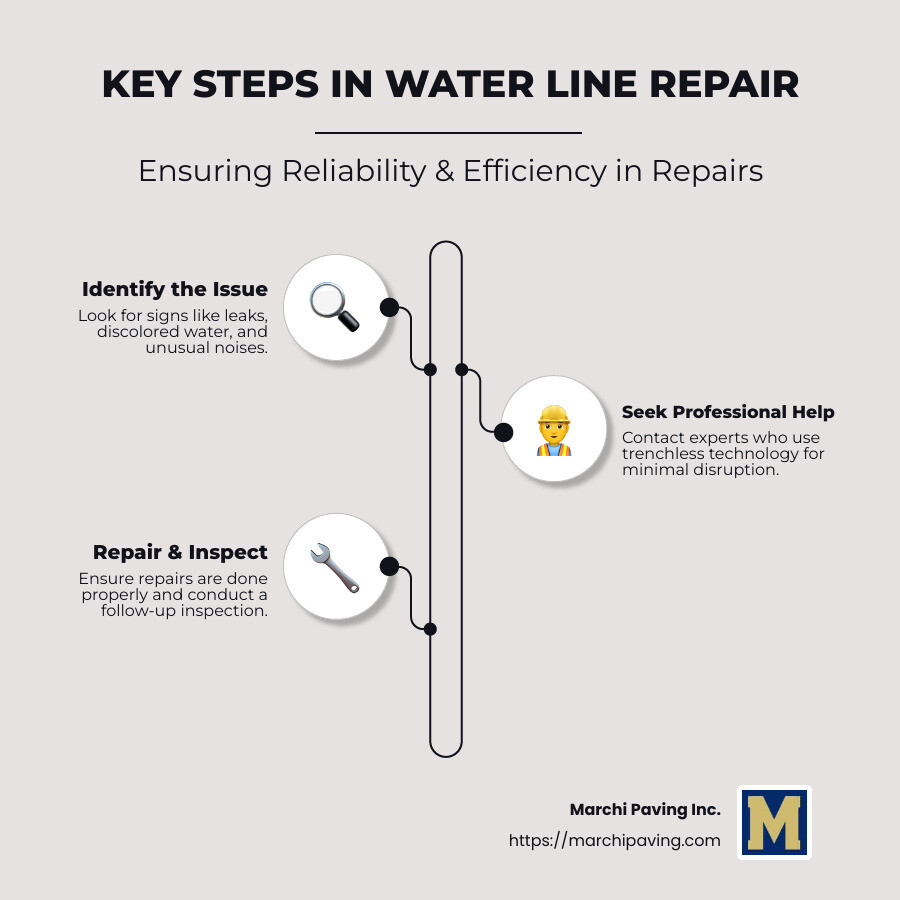
Water line repair service is crucial for ensuring the uninterrupted flow of clean water to homes and businesses. When water line issues arise, such as leaks or low water pressure, addressing them promptly is essential to prevent further damage and costly repairs. Here’s a quick guide to understand the basics:
- Common Issues: Leaks, discolored water, low water pressure
- Importance of Repair: Avoid expensive water bills, property damage
- Seeking Professional Help: Use of trenchless technology to minimize disruption
Water line problems can be daunting. Whether it’s a small leak or a significant break, they can disrupt daily life and lead to severe complications if not treated. In Middlesex County, MA, having access to reliable water line repair services means homeowners and property managers can trust experts like Marchi Paving Inc. to handle these issues with advanced techniques and a commitment to quality.
Addressing water line problems promptly not only saves money in the long run but also ensures water quality and property safety. Professional help is indispensable as modern repair methods, such as trenchless technology, offer efficient and minimally invasive solutions that protect your landscape and reduce repair time.
Water line repair service further reading:
– fix water line leak
– main water line repair cost
– underground water line
Understanding Water Line Problems
Water line issues can cause significant inconvenience and damage if not addressed promptly. Understanding the common problems, like leaks and low water pressure, and the materials involved can help you identify and address these issues efficiently.
Leaks
Leaks are one of the most common water line issues. They can occur due to several reasons, such as aging pipes, corrosion, or external damage from tree roots. If left unchecked, leaks can lead to severe water damage and increased utility bills.
- Signs of a Leak: Look for unexplained puddles in your yard or a sudden spike in your water bill. These are often indicators of a hidden leak.

Low Water Pressure
Experiencing low water pressure can be frustrating. This problem can stem from several factors, including blockages, leaks, or issues with the municipal water supply. Low water pressure can affect daily activities like showering and washing dishes, making it essential to address the root cause quickly.
- Common Causes: Blocked pipes, leaks, or issues with the local water supply.
Pipe Materials
The type of pipe material used in your water line can significantly affect its longevity and susceptibility to problems. Common materials include:
- Galvanized Steel: Often found in older homes, prone to corrosion and rust.
- Copper: Durable and resistant to corrosion but can be expensive.
- PVC and CPVC: Affordable and resistant to corrosion, but not as durable as metal pipes.
- PEX: Flexible and resistant to scale and chlorine, making it a popular choice for modern installations.
Each material has its pros and cons, affecting how often repairs might be needed and the overall lifespan of your water lines.
Understanding these elements can help you recognize when it’s time to call in a professional for a water line repair service. With Marchi Paving Inc., you can trust that your water line issues will be handled with expertise and care, ensuring minimal disruption to your daily life.
Water Line Repair Service: What to Expect
When it comes to water line repair service, knowing what to expect can make the process less daunting. Here’s a breakdown of the repair process, the role of trenchless technology, and the importance of professional inspection.
Repair Process
Water line repairs can vary depending on the damage, but the general steps are straightforward:
- Initial Assessment: A professional plumber will first assess the situation. This involves identifying the problem, whether it’s a leak, blockage, or something else.
- Planning the Repair: Based on the assessment, a detailed plan is made. This includes deciding on the repair method and gathering necessary materials.
- Executing the Repair: The actual repair work is carried out. This can involve replacing damaged sections or using advanced methods like trenchless technology.
- Testing and Cleanup: After repairs, the system is tested for leaks or pressure issues. The area is then cleaned up to restore it to its original state.
Trenchless Technology
Gone are the days of digging up your entire yard to fix a water line. Trenchless technology has revolutionized the repair process:
- Minimal Digging: This method involves little to no excavation, reducing damage to your property.
- Pipe Lining: A new lining is inserted into the existing pipe, sealing leaks without removing the old pipe.
- Pipe Bursting: The old pipe is broken while simultaneously pulling in a new one, all without extensive digging.
These innovative techniques save time and reduce the cost of repairs. They also minimize disruption to your daily activities.
Professional Inspection
A thorough inspection by a professional is crucial before any repair work begins:
- Accurate Diagnosis: Professionals use specialized tools to pinpoint the exact issue. This ensures the right repair method is chosen.
- Preventive Measures: Inspections can reveal potential issues before they become major problems, saving you money in the long run.
- Peace of Mind: Knowing that experts are handling your water line repair gives you confidence that the job will be done correctly.
Incorporating these advanced methods and thorough inspections ensures that your water line issues are resolved efficiently and effectively. With Marchi Paving Inc., you can expect top-notch service custom to your specific needs, ensuring your water lines remain in peak condition.
Signs You Need Water Line Repair
Identifying the signs of water line issues early can save you from costly repairs and damage. Here are some common indicators that you might need a water line repair service:
Discolored Water
If you notice that your tap water looks rusty or brown, it’s a clear sign that something is wrong. Discoloration often means that there’s corrosion inside your pipes or that sediment is being stirred up due to a leak. This can affect water quality and may pose health risks.
Pooling Water
Unexplained wet spots in your yard, especially when it’s not rained recently, can indicate a leaking water line. This pooling occurs when water escapes from the pipes and rises to the surface. Over time, this can lead to soil erosion and damage to your landscaping.
Unusual Noises
Hearing strange noises like hissing, bubbling, or banging when you turn on the taps? These sounds can be a sign of air trapped in the pipes or water hammer, which often results from a leak or blockage. Ignoring these noises can lead to more significant issues down the line.

Recognizing these signs early and contacting a professional can prevent further damage and ensure your water supply remains uninterrupted. If you encounter any of these issues, it’s crucial to act promptly and seek expert assistance to maintain the integrity of your home’s plumbing system.
Steps to Take When a Water Line Breaks
When a water line breaks, quick action is essential to prevent significant damage to your property. Here’s a step-by-step guide on what to do:
Turn Off the Water
First things first, locate your main water shut-off valve and turn it off immediately. This crucial step stops the flow of water and minimizes potential flooding and water damage. The shut-off valve is usually found in the basement, crawl space, or near the water meter. Make sure everyone in your household knows where this valve is and how to operate it.
Contact a Professional Plumber
Once the water is turned off, your next move is to call a professional plumber. It’s important to choose a reliable service with experience in handling water line issues. A skilled plumber can quickly assess the situation, identify the source of the problem, and provide a solution. In cases of emergency, look for services that offer 24-hour assistance to ensure help arrives swiftly.
Document the Damage
While waiting for the plumber, take the time to document the damage. Use your phone or a camera to take clear photos and videos of the affected areas. This documentation is valuable for insurance claims and can help the plumber understand the extent of the damage. Be sure to capture images of any water pooling, structural damage, or affected belongings.
Taking these steps promptly can help protect your property and reduce repair costs. Acting quickly and calling in experts is the best way to handle a broken water line.
Frequently Asked Questions about Water Line Repair
Can you repair a water supply line leak?
Yes, you can repair a water supply line leak, but it requires the right tools and knowledge. Tools you’ll need include pipe cutters, wrenches, and leak detection equipment. However, fixing a leak isn’t just about having the right tools—knowledge is key. Understanding the type of pipe material, whether it’s galvanized steel, copper, or PEX, is crucial for proper repair. In some cases, replacement of the damaged section might be necessary to ensure a long-lasting fix.
How do you fix an underground water line?
Fixing an underground water line involves several steps. First, you need to locate the break. This can be done using specialized leak detection equipment that helps pinpoint the issue without unnecessary digging. Once the break is located, excavation is required to access the damaged section of the pipe. Modern techniques like trenchless technology can minimize disruption by allowing repairs without extensive digging. After accessing the pipe, a replacement or repair of the damaged section is performed, ensuring a reliable fix.
How often should water lines be replaced?
The frequency of water line replacement depends on several factors, including the material lifespan of the pipes. For example, galvanized steel pipes typically last 20-50 years, while copper pipes can last 50-70 years. Regular inspection of your water lines is essential to identify any signs of wear or damage early on. If issues like leaks or reduced water pressure occur, it might be time for a replacement. Proactive maintenance and timely inspections can extend the lifespan of your water lines and prevent unexpected failures.
Conclusion
When it comes to ensuring your water line is in top shape, Marchi Paving Inc. is your go-to expert. With over 20 years of experience, we specialize in a range of services including water and sewer line repairs. Our commitment to quality and customer satisfaction sets us apart, making us a trusted choice in Chelmsford, MA, and surrounding areas.
Our professional service is backed by a team of highly skilled technicians who use advanced equipment to tackle even the most complex water line issues. We understand that water line problems can be stressful, which is why we focus on providing efficient and minimally disruptive solutions. Whether it’s a minor leak or a major break, we have the expertise to handle it all.
We employ cutting-edge techniques like trenchless technology to repair underground lines without the need for extensive digging. This not only saves time but also minimizes disruption to your property. Our goal is to restore your water line to optimal condition quickly and effectively.
For those looking to maintain their water lines proactively, we offer regular inspections to catch potential issues before they become major problems. This approach helps extend the lifespan of your water system and saves you money in the long run.
Choose Marchi Paving Inc. for your water line repair needs and experience the difference that professional, high-quality service can make. Learn more about our excavation services and how we can help you today.
Thank you for considering us as your trusted partner in maintaining the integrity of your water and sewer lines.
Retaining Wall Drainage: 10 Vital Tips for Success
Retaining wall drainage is crucial for maintaining the stability and longevity of your retaining wall. Here’s why:
- Proper drainage prevents water buildup that can lead to hydrostatic pressure, which can cause walls to bulge or even fail.
- Without effective drainage, retaining walls are prone to soil erosion, weakening their foundation over time.
- A well-designed drainage system ensures that your wall can effectively support the landscape and reduce the risk of water damage.
When dealing with landscaping, many overlook the fact that water is a powerful force. Retaining walls, while strong, need support to withstand the pressure exerted by water that collects behind them. Water buildup can lead to failures, unsightly bulges, and costly repairs.
To avoid these issues, make organization a priority. A combination of systems, such as weep holes, drainage pipes, and gravel backfill, ensures that water flows away from your retaining wall, safeguarding your property and enhancing its beauty.

Basic retaining wall drainage terms:
– retaining wall design
– retaining wall calculator
– how to build retaining walls
Understanding Retaining Wall Drainage
Why Drainage is Essential
Retaining wall drainage is not just an optional feature—it’s a necessity. Water is a powerful force that, if not properly managed, can lead to significant problems. Here’s why drainage is crucial:
- Preventing Wall Collapse: Water buildup behind a retaining wall creates hydrostatic pressure. This pressure pushes against the wall, and if not relieved, can cause the wall to bulge or even collapse. Proper drainage systems like weep holes and drainage pipes help release this pressure.
- Reducing Soil Erosion: Soil erosion is a silent threat to retaining walls. Water that is not properly drained can wash away the soil behind the wall, undermining its stability. A well-designed drainage system helps keep soil in place, preserving the wall’s structural integrity.
- Avoiding Water Damage: Standing water can lead to a host of issues, including damage to nearby structures and the growth of mold and mildew. By directing water away from the wall and surrounding areas, you protect your property from these potential hazards.

Common Drainage Problems
Despite the best intentions, poor drainage can still occur. Here are some common issues:
- Poor Soil Conditions: Certain soils, like clay, are notorious for poor drainage. They retain water, increasing the risk of hydrostatic pressure. Using gravel or other permeable materials can improve drainage in these conditions.
- Inadequate Slope: The land around your retaining wall needs a slight slope to direct water away. Without this, water can pool and cause problems. Ensuring a proper slope during installation is key.
- Clogged Drainage Systems: Even the best drainage systems can fail if not maintained. Clogs from debris or sediment can block water flow, leading to buildup and pressure. Regular maintenance, including cleaning weep holes and checking drainage pipes, is essential to keep things flowing smoothly.
Incorporating these considerations into your retaining wall design can save you time and money in the long run. A well-maintained drainage system not only protects your wall but also improves the overall beauty and functionality of your landscape.
Types of Retaining Wall Drainage Systems
When it comes to retaining wall drainage, selecting the right system is crucial for maintaining stability and preventing water-related issues. Let’s explore the various types of drainage systems that can be integrated into retaining walls to manage water effectively.
Weep Holes
Weep holes are small openings strategically placed at the bottom of a retaining wall. These openings allow water to escape, reducing the hydrostatic pressure that can build up behind the wall. By providing a pathway for water to drain, weep holes help maintain the wall’s integrity and prevent collapse. They are a simple yet effective solution for pressure relief.
Drainage Pipes
Drainage pipes are essential for managing water flow along the length of a retaining wall. These pipes can be either perforated or solid, depending on the specific needs of the site. Perforated pipes are particularly effective as they allow water to enter and be directed away from the wall. This system ensures that water does not accumulate, reducing the risk of pressure buildup and potential damage.
Permeable Drains
Permeable drains use materials like large rocks as backfill to facilitate water penetration. By creating spaces within the backfill, water can easily flow through instead of becoming trapped. This method is particularly useful in preventing soil erosion and maintaining the wall’s stability. The choice of backfill materials plays a critical role in the effectiveness of permeable drains.
Inclined Drains
Inclined drains leverage a downward slope to direct water flow away from the retaining wall. By ensuring that water moves in the right direction, these drains prevent water from pooling at the base of the wall, which can lead to instability. The slope’s angle is crucial and must be carefully designed to ensure effective drainage.
French Drains
French drains are a popular choice for redirecting water away from retaining walls. This system consists of a gravel-filled trench with a perforated pipe at the bottom. The gravel acts as a filter, allowing water to enter the pipe while keeping out debris. The pipe then channels the water away from the wall, effectively reducing pressure and preventing water buildup. French drains are especially useful in areas with high water tables or heavy rainfall.
By understanding these drainage systems, you can choose the most suitable option for your retaining wall. Each system offers unique benefits and can be custom to meet specific site conditions, ensuring long-term performance and stability.
Best Practices for Installing Retaining Wall Drainage
When constructing a retaining wall, proper drainage is key to ensuring its longevity and stability. Here are some best practices to follow:
Footing Drain
A footing drain is essential for almost every retaining wall. Installed at the wall’s foundation, this drainage system typically includes a pipe that is “daylighted” so water can exit effectively. Vince Christofora, a professional engineer, emphasizes that the cost of installing a footing drain is minor compared to the benefits it provides in long-term wall performance. By allowing water to flow away from the wall’s base, a footing drain prevents water pressure from building up, which can lead to wall failure.
Gravel Backfill
Using angular aggregate as gravel backfill is crucial for efficient drainage. Christofora suggests using clean, crushed stone or gravel between 1/2- and 3/4-inch in size. While conventional wisdom recommends at least 12 inches of gravel backfill, more is better. Increasing this layer to 24 inches can significantly improve drainage and the wall’s structural integrity. For existing walls, it’s wise to excavate and check for adequate gravel backfill and a footing drain.
Filter Fabric
Filter fabric, or geotextile underlayment, plays a vital role in preserving the construction of your retaining wall. This permeable fabric acts as a barrier between soil and gravel surfaces, preventing dirt and debris from clogging the drainage system. Use filter fabric under the wall’s gravel footing, between the footing drain’s gravel and soil, and behind the retaining wall. This ensures that your drainage remains effective over time.
Compacting Soil
Compacting the soil behind your retaining wall may seem counterintuitive, but it’s essential. When soil is compacted, it becomes less permeable, reducing hydrostatic pressure and the potential water weight exerted on the wall. Use a compactor to achieve this, or hand-tamp by laying a 1- to 2-inch layer of soil, tamping, and repeating until complete. If using a gas-powered tamper, you can lay up to six inches of soil between tamps.
Ensuring Sufficient Slope
Proper slope is crucial for directing water away from the retaining wall, preventing water pooling and potential damage. The slope should guide water flow effectively, reducing the risk of erosion and maintaining the wall’s stability. Regularly check and adjust the soil slope to ensure it adequately directs water away from the wall, protecting your investment in the long run.
By following these best practices, you can ensure that your retaining wall drainage is effective, preserving the wall’s integrity and preventing costly repairs. Next, we’ll explore some key maintenance tips to keep your drainage system in top shape.
Retaining Wall Drainage Maintenance Tips
Proper maintenance of your retaining wall drainage system is crucial for ensuring its long-term effectiveness and stability. Here are some essential tips to keep your drainage system in top shape:
Regular Inspections
Regular inspections are vital to identify potential issues before they become major problems. Check your retaining wall and its drainage components at least twice a year. Look for signs of water pooling, soil erosion, or any visible damage to the wall itself. These inspections help in maintaining the wall’s stability and preventing future damage.
Fact: Pooling water behind a retaining wall can cause erosion and structural decay, leading to costly repairs.
Cleaning Weep Holes
Weep holes are small openings at the bottom of your retaining wall that allow water to escape, reducing pressure buildup. Over time, debris can clog these holes, impeding water flow and risking wall failure. Regularly clean weep holes by removing any dirt or debris. This ensures that water can flow freely and prevents clogs, which can lead to increased pressure and potential damage.

Checking for Erosion
Erosion can significantly impact the structural integrity of your retaining wall. Soil movement behind the wall can increase pressure, leading to potential collapse. Regularly monitor for signs of erosion, such as soil displacement or changes in the landscape. Address any erosion issues promptly by adding gravel backfill or adjusting the slope to direct water away from the wall.
Tip: Incorporate a gravel backfill and ensure a proper slope to minimize erosion and maintain wall stability.
By following these maintenance tips, you can keep your retaining wall drainage system functioning effectively, protecting your investment and ensuring the longevity of your wall. Next, we’ll address some frequently asked questions about retaining wall drainage to further improve your understanding.
Frequently Asked Questions about Retaining Wall Drainage
What is the proper drainage for a retaining wall?
Proper retaining wall drainage is essential to prevent water buildup, which can lead to wall failure. The key components include:
- Gravel Backfill: Use angular aggregate, such as #57 gravel, to ensure effective drainage. This type of gravel has irregular shapes that create spaces for water to flow through, minimizing hydrostatic pressure on the wall.
- Drainage Pipes: Install perforated pipes behind or beneath the wall to manage subsurface water flow. These pipes help direct water away from the wall, reducing pressure and preventing damage.
- Weep Holes: These are small openings at the bottom of the wall that allow accumulated water to escape. Regularly check and clean these holes to prevent blockages.
Does a 2 ft retaining wall need drainage?
Even a small retaining wall, such as a 2-foot one, can benefit from some drainage solutions, especially if it serves more than just an aesthetic purpose. While the pressure on such a wall is less than that on taller walls, incorporating minimal drainage measures like gravel backfill and weep holes can improve its stability and longevity. This is particularly important if the wall is located in an area prone to heavy rain or poor soil conditions.
What is the best gravel for drainage behind a retaining wall?
The best gravel for drainage behind a retaining wall is angular aggregate, commonly known as #57 gravel or clean crushed stone. This type of gravel is effective because its irregular shapes create spaces that allow water to pass through easily, reducing pressure and preventing erosion. When installing, aim for at least 12 inches of gravel backfill, but more is often better for increased drainage efficiency and structural support.
By understanding these key aspects of retaining wall drainage, you can ensure that your wall remains sturdy and effective over time. In the next section, we’ll dive deeper into more technical aspects of retaining wall construction and maintenance.
Conclusion
At Marchi Paving Inc., we understand that proper drainage is crucial for the longevity and stability of retaining walls. While it might be tempting to tackle such projects on your own, professional installation offers significant advantages.
Why Choose Professional Installation?
Installing a retaining wall with effective drainage requires precision and expertise. Incorrect installation can lead to serious issues like wall collapse or soil erosion. Our team brings over 20 years of experience and uses advanced equipment to ensure each project is executed to the highest standards. By trusting professionals, you not only safeguard your investment but also prevent costly repairs down the line.
Long-Term Benefits of Proper Drainage
A well-installed retaining wall drainage system does more than just protect the wall. It also preserves the surrounding landscape, reduces maintenance needs, and improves the overall aesthetic appeal of your property. With our comprehensive approach, including the use of high-quality materials and meticulous attention to detail, we ensure that your retaining wall remains functional and attractive for years to come.
For those considering a new retaining wall or needing to upgrade an existing one, partnering with experts like us at Marchi Paving Inc. ensures peace of mind and a lasting solution. Our commitment to excellence means your project is in capable hands, from start to finish.
Ready to improve your landscape with a durable and well-drained retaining wall? Contact us today to learn more about our services and how we can help protect your property from water damage.
Drainage Service: Top 3 Amazing Solutions Reviewed 2025
Drainage service is an essential aspect of property management, ensuring that water problems don’t wreak havoc on your home or commercial site. Unmanaged water can lead to severe structural damage, landscape erosion, and expensive repairs.
Here’s a snapshot of why drainage is vital:
- Prevent Foundation Damage: Proper drainage prevents water from weakening your property’s foundation.
- Maintain Landscape Health: Effective systems protect plants from drowning and soil from eroding.
- Improve Site Safety: By addressing water accumulation, drainage minimizes slip hazards and reduces pest infestations.
Every property, whether a modest home or a large commercial lot, faces unique challenges when it comes to water management. Groundwater, rainwater runoff, and seasonal changes all play roles in how water affects your site. Without efficient drainage systems, these water problems can lead to long-lasting harm and safety risks, turning a beautiful landscape into a costly maintenance issue.
As a property manager in Middlesex County, maintaining accessibility and safety while juggling multiple contractors can be daunting. Here’s where the right drainage service steps in, offering solutions custom to your specific needs. Effective site management doesn’t just solve the problems you see today, it also prevents future issues.

Relevant articles related to drainage service:
Understanding Drainage Systems
When it comes to keeping your property safe from water damage, understanding drainage systems is crucial. These systems are designed to manage water flow, prevent flooding, and protect structures from water-related issues. Let’s explore the key components of drainage systems: underground piping, storm water management, and landscape drainage.
Underground Piping
Underground piping is the backbone of any effective drainage system. It involves installing pipes below the surface to carry away excess water. This setup is vital for preventing water from pooling around your home, which can lead to foundation damage and basement leaks. These pipes are often connected to various drainage solutions like sump pumps or gutter downspouts to ensure water is efficiently redirected away from your property.
Storm Water Management
Storm water is a significant concern, especially during heavy rains. Without proper management, storm water can lead to flooding and erosion. Effective storm water drainage systems include surface features like ditches and storm drains, as well as subsurface solutions like French drains. These systems work together to channel water away from critical areas, protecting both your property and the surrounding environment.
Landscape Drainage
Landscape drainage focuses on maintaining the health and appearance of your outdoor spaces. This involves creating systems that prevent water from accumulating on lawns, gardens, and driveways. Techniques like regrading, installing French drains, or building retaining walls can help manage water flow and prevent soil erosion. Proper landscape drainage not only keeps your yard looking great but also prevents water from causing long-term damage to your property.
In conclusion, understanding and implementing the right drainage systems is essential for protecting your property from water-related issues. Whether it’s underground piping, storm water management, or landscape drainage, each component plays a crucial role in ensuring your home or commercial site remains safe and dry.
Next, we’ll explore the top drainage services for your home, including French drains, gutter downspout drainage, and sump pump solutions. Stay tuned to find how these services can safeguard your property from water damage.
Top Drainage Services for Your Home
When it comes to drainage service, choosing the right solutions for your home is key to preventing water damage and maintaining property value. Let’s explore some of the top drainage services available.
French Drains
French drains are a popular choice for homeowners dealing with water accumulation issues. These systems consist of a trench filled with gravel and a perforated pipe that redirects water away from your property. By using gravity, French drains efficiently manage groundwater and protect your foundation from erosion and damage.

Installing a French drain is a cost-effective investment. While initial costs can vary, the long-term benefits—such as preventing costly repairs and maintaining your home’s value—make it worthwhile.
Gutter Downspout Drainage
Gutter downspouts play a crucial role in directing water away from your home’s foundation. Without proper management, water from downspouts can cause foundation damage and basement leaks. Extending downspouts or connecting them to underground drainage systems can effectively prevent these issues.
By ensuring that water is channeled away from your home, you protect your foundation and reduce the risk of basement flooding. This foundation protection is essential for maintaining the structural integrity of your property.
Sump Pump Drainage
Sump pumps are vital for homes with basements or crawl spaces prone to flooding. These systems collect water in a pit and pump it away from your property, keeping your basement dry. Discharge options are crucial in sump pump systems, as they determine how and where the water is expelled.
Sump pumps, combined with proper discharge options, offer excellent basement waterproofing. They help prevent water damage and mold growth, ensuring a safe and healthy living environment.
Foundation Drainage Solutions
Foundation drainage solutions are designed to address water problems at their source. These systems include exterior waterproofing, interior drains, and grading adjustments to prevent water from reaching your foundation.
Proper grading ensures that water flows away from your home, reducing the risk of leaks and structural damage. By investing in foundation drainage solutions, you can protect your home from water infiltration and maintain its value over time.
Selecting the right drainage services is crucial for safeguarding your home against water damage. Whether it’s French drains, gutter downspout drainage, sump pumps, or foundation solutions, each service plays a vital role in protecting your property.
Next, we’ll discuss how to identify drainage problems and what signs to look for around your home. Stay tuned for practical tips on spotting issues early and preventing costly damage.
How to Identify Drainage Problems
Identifying drainage problems early can save you from costly repairs and headaches. Let’s explore the key signs and inspection tips to spot issues before they escalate.
Drainage Symptoms
Recognizing the symptoms of poor drainage is the first step. Here are some common signs:
- New Cracks in Building Faces and Concrete: These often indicate that water is not draining properly. Around 90% of the time, drainage is the main culprit behind these cracks.
- Separations Between Structures and Lawns: If you notice gaps where there were none before, it could be due to water undermining the soil stability.
- Green Patches on Driveways and Paths: Algae thrive in moist conditions. If you see new green growth, water may be pooling where it shouldn’t be.
- Rising Damp on Walls: Damp spots on walls need immediate attention as they can lead to mold and structural damage.
Site Inspection
Conducting a thorough site inspection can help pinpoint drainage issues. Here’s what to look for:
- Soil Condition: Different soils have unique drainage characteristics. Sandy soils, for example, might erode easily, while clay can hold water and cause pooling.
- Topography: The slope of your land affects water flow. Ensure that water flows away from your home, not towards it.
- Runoff Patterns: Observe how water moves during and after rain. Runoff from neighboring properties can also impact your drainage.
Soil Issues
Understanding soil types is crucial for diagnosing drainage problems:
- Sandy Soil: Prone to erosion, sandy soil may lead to unstable foundations if not managed properly.
- Clay Soil: Tends to retain water, causing pooling and potential waterlogging in your yard.
- Impacted Soils: These can become rock-hard, diverting water to areas that can’t handle the excess moisture.
Runoff Concerns
Runoff can dramatically affect drainage:
- Natural Land Formations: These dictate water flow. Construction can alter these formations, impacting drainage.
- Water Tables and Aquifers: On low-lying land, rising water tables can lead to subsidence and erosion.
By understanding these elements, you can better identify and address drainage issues before they cause damage. Next, we’ll answer some frequently asked questions about drainage services and provide insights into costs and system components.
Frequently Asked Questions about Drainage Service
What are drainage costs?
When considering a drainage service, understanding the costs involved is crucial. On average, the cost of drainage systems can vary widely based on several factors. For instance, the cost per linear foot for an exterior French drain ranges from $10 to $50. In contrast, interior French drains can cost between $40 and $100 per linear foot due to the specialized materials and labor required. These figures represent national averages and can fluctuate based on location and specific site conditions.
How much does a drainage system cost around a house?
The typical range for installing a complete drainage system around a house can be quite broad. On the low end, costs might start around $1,600, but they can climb to $13,000 or more for extensive systems. Factors influencing this range include the type of drainage system, the length and depth of trenches, soil type, and any additional features such as sump pumps or connections to municipal storm drains. These are average costs based on internet data, not specific figures for Marchi Paving.
What is included in a drainage system?
A comprehensive drainage system involves several components designed to manage water effectively:
- Gutters and Downspouts: These are essential for directing rainwater away from your roof and foundation. Properly installed gutters prevent water from pooling around the base of your home.
- Stormwater Systems: These systems handle runoff from heavy rains, directing water away from your property to prevent flooding and erosion.
- Sewage Removal: In some cases, drainage systems also integrate with sewage systems to ensure proper waste water management, particularly in areas prone to flooding.
By understanding these components, homeowners can better appreciate the value and necessity of investing in a quality drainage system.
Conclusion
At Marchi Paving Inc., we are committed to providing top-notch drainage solutions that protect your home and landscape from water-related issues. With over 20 years of experience, we pride ourselves on delivering high-quality execution using advanced equipment and techniques. Our dedication to excellence ensures that every project is completed efficiently and to the highest standard.
Unlike some contractors, we handle all aspects of your project in-house. This means you can trust us to manage everything from the initial consultation to the final touches. Our comprehensive approach not only saves time but also ensures that every detail is carefully managed.
Our range of services includes everything from French drains and gutter downspout drainage to sump pump installations and foundation drainage solutions. Each service is custom to meet the specific needs of your property, ensuring long-lasting protection against water damage.
We understand that choosing the right drainage service is a big decision. That’s why we offer personalized consultations to evaluate your specific needs and provide you with a detailed plan that fits your budget and requirements. Our team is always ready to answer any questions you may have and guide you through the process.
Ready to protect your home and landscape with reliable drainage solutions? Contact us today to get a detailed quote and experience the Marchi Paving difference. Let us help you keep your property safe and dry, no matter the weather.
Hill Drainage Solutions: Top 10 Effective Methods for 2024
Hill Drainage Solutions: Your Quick Guide
Managing water flow on hilly properties can be tricky, but hill drainage solutions offer effective ways to protect your home and garden from water damage. If you’re in need of quick answers, here are the primary solutions to consider:
- French Drains: Redirect water away using gravel-filled trenches and perforated pipes.
- Swales: Create shallow, wide channels to guide runoff.
- Retaining Walls: Control water flow and prevent erosion.
- Rain Gardens: Plant water-loving vegetation to absorb excess water.
- Dry Wells: Utilize underground tanks to hold and disperse water slowly.
Effective water management on a slope is crucial for maintaining a healthy and beautiful landscape. Without proper drainage, you could face flooding, erosion, and even damage to your home’s foundation.
We’ll walk you through various options for hill drainage solutions, so you can find the one that best suits your property. Whether it’s a simple DIY project or a more advanced setup, we’ve got you covered.

Understanding Hill Drainage Problems
When dealing with water management on a slope, several factors can contribute to drainage issues. Let’s break down the common problems you might face and why they happen.
Yard Slope or Pitch
A yard with an improper slope can cause water to pool in unwanted areas. If your yard slopes towards your home, you might see large puddles, soggy soil, or even foundation damage. Over time, this can lead to mold growth and other structural issues. Soil that’s hard and dense can make it difficult for water to seep through. This leads to surface runoff, which can erode the soil and cause root rot in plants. Impacted soil is often the result of heavy foot traffic or construction. Gutters and downspouts that don’t extend far enough from your home can create big puddles near your foundation. This can lead to basement flooding and mold growth. Extending your downspouts can help direct water away from your home. Physical barriers such as sidewalks, driveways, and large rocks can block the natural flow of water. This can cause standing water, which attracts mosquitoes and leads to erosion. Runoff from rain or irrigation can erode your yard, especially on a slope. This can thin out grass, expose tree roots, and damage plant beds. Erosion control measures are essential for maintaining a healthy landscape. A broken water or sewer line can create wet spots in your yard and cause low water pressure in your home. High water bills can also be a sign of a leak. Fixing these lines is crucial to prevent further damage and wasted water. When your yard isn’t sloped properly, water can pool in low spots, causing large puddling. This can result in soggy soil, which promotes mold growth and can lead to foundation damage. If your yard is at the bottom of a hilly area, water will naturally gather in the lowest sections since it has nowhere else to go. First Sign: Large puddles in one spot. What Can Happen if I Don’t Fix It? Construction projects like installing a pool can pack your soil so tightly that it can’t drain properly. Hardpan clay is especially problematic. Natural underground springs can also contribute to impacted soil. First Sign: Hard and dense soil, pooling water in project areas. What Can Happen if I Don’t Fix It? If your gutter downspout isn’t long enough, water can pool under it, leading to significant issues. First Sign: Big puddles under your downspout. What Can Happen if I Don’t Fix It? Sidewalks, concrete paths, and rocks can block natural water flow, causing flooding in your yard. If these barriers are at a higher elevation than your soil, water will flow off them and pool in your yard. First Sign: Standing water in low spots. What Can Happen if I Don’t Fix It? Stormwater runoff and downspouts can erode your topsoil, leaving behind compacted dirt that can’t absorb water well. This leads to water pooling and more erosion over time. First Sign: Thin, patchy grass. What Can Happen if I Don’t Fix It? Excessive water pressure can break underground water lines, leading to leaks. If you have a septic tank, standing water near it could indicate flooding. First Sign: Wet spots in the yard, low water pressure, high water bills. What Can Happen if I Don’t Fix It? Overwatering can be a hidden culprit behind poor hill drainage. If your yard has trouble draining, you might be watering too often. Try cutting back on your watering schedule. Tip: Observe the trouble spots. If they improve, your soil might be draining properly but can’t keep up with your watering habits. Shallow areas in your yard can collect water and create puddles. Adding topsoil to these spots can help. Simply scatter topsoil over the low areas and rake it in. Pro Tip: Check the grade of the soil around your home’s foundation. It should drop about 1 inch for every foot away from the house. If not, add more soil to correct the grade. Always ensure that soil does not touch your siding. Your gutter system might be contributing to your yard’s drainage problems. Extending the downspout away from your house can prevent water from pooling near the foundation. Make sure to direct the runoff towards a storm drain or a safe drainage area, not a neighboring property. Reminder: Check your gutters for blockages. A clogged gutter can overflow and cause more damage. Compacted soil can prevent water from draining properly. Aerating your yard creates holes in the soil, allowing air, nutrients, and water to reach the roots of your grass. This can significantly reduce runoff. Steps: Decorative rocks can block water flow and cause pooling. If you notice water collecting around large rocks, consider moving or removing them to create a clear path for rainwater. Tip: Ensure that rainwater has a clear path out of your yard to prevent pooling in undesirable locations. A creek bed is a beautiful and functional way to handle water drainage. It creates a channel that directs water away from your home. For a visual boost, surround the creek bed with plants. A rain garden is a great way to manage water in soggy areas. It uses water-loving plants to absorb excess moisture. Rain gardens not only solve drainage issues but also add beauty to your landscape. A French drain is an effective way to channel water away from problem areas. This system redirects water efficiently and prevents flooding. A dry well collects and disperses water into the surrounding soil. Dry wells are often used at the endpoint of a creek bed or French drain. One of the simplest and most effective hill drainage solutions is to slope the ground away from your house. This method involves grading the soil so that water naturally flows away from the foundation, preventing water from pooling near your home. Steps to Slope the Ground: By keeping water away from your foundation, you protect your home from potential damage and reduce the risk of basement leaks. Hardscape materials like concrete and asphalt can sometimes divert water in the wrong direction, especially if they tilt toward your house. Replacing these materials with drainage-friendly options can solve this issue. Drainage-Friendly Hardscape Materials: Replacing hardscapes with these materials can prevent water from pooling and help maintain the integrity of your yard. Rain barrels are a fantastic way to collect and reuse rainwater while also managing drainage. By reconfiguring your downspouts, you can direct water into a rain barrel for later use in your garden. Benefits of Rain Barrels: Note: Always check local regulations regarding rainwater collection before installing a rain barrel. For areas like driveways or walkways where water tends to pool, a channel drain can be an effective solution. This involves cutting a narrow trench into the concrete or asphalt and installing a long channel drain to redirect water. Installing a Channel Drain: Channel drains are especially useful for preventing water from pooling on hard surfaces and can be easily disguised with plants or ground covers. By implementing these professional hill drainage solutions, you can effectively manage water on sloped terrain and protect your property from damage. Next, we’ll explore frequently asked questions about hill drainage solutions to help you make informed decisions. The best material to use as backfill for wet areas is coarse-grained soil. This includes sand, gravel, and other fine materials. Coarse-grained soil helps improve drainage because it allows water to move through it more easily compared to clay or silt. Pro Tip: When using these materials, make sure they are well-compacted to provide stability while still allowing for proper drainage. Yes, rocks can be very helpful in managing drainage. They are low-maintenance and durable, making them a great choice for long-term solutions. When arranged correctly, rocks can also direct water efficiently. For example, building a dry creek bed with rocks can guide water away from problem areas, adding both functionality and aesthetic appeal to your yard. Absolutely, adding downspout extensions is a simple yet effective way to manage water runoff. These flexible plastic tubes can be clamped onto the end of your downspout, extending it by several feet. This helps in water diversion, pushing water further away from your house and thus protecting your foundation. Pro Tip: Make sure to point the extended downspout towards a storm drain or another safe drainage area to prevent water from pooling in undesirable spots. At Marchi Paving Inc., we understand that effective yard drainage is crucial for maintaining the health and beauty of your landscape. Whether you’re dealing with hill drainage issues, yard puddling, or runoff erosion, our professional solutions are designed to keep your property safe and dry. Our team offers a range of professional drainage solutions tailored to your specific needs. From installing French drains to constructing rain gardens, we have the expertise to implement systems that will effectively manage water on your property. We ensure that every project is executed with precision and attention to detail, providing long-term peace of mind. We invest in state-of-the-art equipment to enhance the efficiency and precision of our work. This allows us to complete projects on time and within budget, without compromising on quality. Our advanced machinery ensures that your drainage system is both effective and durable. When you choose Marchi Paving Inc., you’re not just hiring a contractor; you’re partnering with a team dedicated to delivering outstanding results. Our extensive experience and commitment to customer satisfaction make us the go-to choice for all your drainage needs. Ready to protect your landscape and home from water damage? Contact us today to get a detailed quote and experience the Marchi Paving difference.
Short Gutter Downspout
Barriers Like Sidewalks and Rocks
Runoff Erosion
Broken Water or Sewer Lines
Common Causes of Hill Drainage Issues
Yard Slope or Pitch
– Soggy soil and mud
– Brown patches of grass
– Foundation damage
– Mold growthImpacted Soil
– Low spots in your yard
– Root rot
– Mold growth
– ErosionShort Gutter Downspout
– Foundation damage
– Basement flooding
– Mold growthBarriers Like Sidewalks and Rocks
– Erosion
– Mosquito attraction
– Foundation damageRunoff Erosion
– Exposed tree roots
– Damaged plant beds
– Foundation damageBroken Water or Sewer Lines
– Wasted water
– Further yard damageDIY Hill Drainage Solutions
Water Less Often
Add More Dirt
Extend Your Downspout
Aerate Your Grass
1. Rent an aerator or use a manual spike aerator.
2. Clear your lawn of loose sticks and debris.
3. Aerate the lawn and leave the extra soil to break down naturally.
4. For best results, add fertilizer after aeration.Remove Large Rocks
Advanced Hill Drainage Solutions
Dig a Creek Bed or Swale
Construct a Rain Garden
Install a French Drain
Build a Dry Well
Professional Hill Drainage Solutions
Slope the Ground Away From the House
1. Measure the Slope: Ensure there’s at least a 4-inch drop for the first 10 feet away from your home.
2. Add Grading Soil: Use a clay-like soil that packs tightly, rather than topsoil or mulch, to create a firm slope.
3. Smooth the Surface: Use a rake to smooth out the soil and ensure an even grade.Replace Hardscapes with Drainage Materials
– Crushed Gravel: Allows water to pass through and disperse evenly.
– Pea Gravel: Small, rounded stones that improve drainage and are easy to walk on.Install a Rain Barrel
– Rainwater Collection: Reduces runoff and provides a free water source for your garden.
– Downspout Reconfiguration: Helps direct water away from your home’s foundation.Add a Channel Drain
1. Cut the Trench: Use a saw to cut a narrow trench in the concrete or asphalt.
2. Place the Channel Drain: Install the channel drain in the trench.
3. Direct Water Flow: Ensure the drain directs water away from your house or garage.Frequently Asked Questions about Hill Drainage Solutions
What material is the best backfill for wet areas?
Does rock help with drainage?
Does adding downspout extensions really work?
Conclusion
Professional Solutions
Advanced Equipment
Home Drainage Solutions: Top 10 Best Fixes in 2024
Home Drainage Solutions are vital for maintaining a safe and pleasant environment around your property. Without proper drainage, you might encounter standing water, soggy spots in your yard, and even unpleasant leaks in your basement. These issues not only damage your property but can also become a breeding ground for mosquitoes.
Here’s a quick list of common home drainage solutions:
- Aerate Lawn: Improve water drainage by creating small holes in the soil.
- Amend Soil: Mix in organic matter to improve soil drainage.
- Regrade Yard: Reshape the land to guide water away from key areas.
- Install French Drains: Use gravel and a perforated pipe system to move water.
- Downspout Extensions: Extend downspouts to direct water away from your home.
These solutions will help manage excess water, keep your outdoor space functional and beautiful, and protect your home from water damage.

Identifying Common Yard Drainage Problems
Standing Water in Your Yard
Standing water is one of the first signs of a drainage problem. After a rainstorm, you might notice pools of water that just won’t go away. This can be due to low spots in your yard where water collects, compacted soil that can’t absorb water, or even underground springs adding extra moisture.
Solutions:
- Fill Low Spots: Add soil to level out low areas and reseed with grass.
- Aerate Soil: Use a cultivator to loosen compacted soil and mix in high-quality topsoil.
- Install a French Drain: This involves digging a trench, filling it with gravel, and placing a perforated pipe to redirect water.
- Use a Swale: A shallow channel that directs runoff water away from problem areas.
Poor Yard Grading
Poor grading is a major cause of yard flooding and even basement leaks. If your yard slopes towards your house, water will naturally flow that way, causing issues.
Solutions:
- Regrade Your Yard: Adjust the slope to direct water away from your home.
- Install French Drains: These can help manage surface water.
- Use Swales: These can also help redirect water to safer areas.
- Raised Garden Beds: These can help manage water flow and add beauty to your yard.
Path and Patio Flooding
Flooding around paths and patios can be a headache. Water often pools in these areas if not properly managed.
Solutions:
- Gravel Paths: Gravel allows water to seep through, reducing pooling.
- Catch Basins: These collect water and direct it to an underground drainage system.
- Underground Pipes: These can move water away from paths and patios.
- Gutter Downspouts: Ensure they are properly directed away from these areas.
Downspout and Gutter Problems
Clogged gutters and poorly directed downspouts can cause significant drainage issues. Water can overflow and pool around your home’s foundation.
Solutions:
- Clean Gutters Regularly: At least twice a year to prevent clogs.
- Install Downspout Extensions: Extend downspouts to move water further away from your home.
- Gravel Beds: Place gravel beds where downspouts release water to improve absorption.
Erosion
Erosion can wash away soil and create uneven surfaces in your yard. This often happens in areas with poor drainage.
Solutions:
- Hardscaping: Use materials like stone or concrete to stabilize the soil.
- Dry Creek Bed: Create a decorative creek bed with rocks to channel water.
- Gravel and Decorative Rocks: These help reduce erosion and improve drainage.
By identifying and addressing these common yard drainage problems, you can keep your yard looking great and your home safe from water damage. Next, we’ll explore specific home drainage solutions to help you tackle these issues effectively.
Home Drainage Solutions
When dealing with home drainage problems, it’s important to have effective solutions that keep your yard and home dry. Below are some practical strategies to improve drainage.
Aerate Lawns Regularly
Lawn aeration is a simple but powerful way to improve drainage. By perforating the soil with small holes, you allow water, air, and nutrients to reach the grass roots. This reduces soil compaction and promotes better water absorption. Regular aeration is especially beneficial in areas with heavy clay soil.
Plant More Water-Hungry Plants
Certain plants thrive in moist conditions and can help absorb excess water. Consider adding water-hungry plants like willows, red maples, primrose, and violets to areas prone to flooding. These plants not only improve your landscape but also help manage water levels naturally.
Install Channel Drains Across Driveways
Channel drains, also known as trench drains, are excellent for areas where water tends to pool, such as driveways and patios. These drains capture runoff and direct it away from your property through an underground drainage system. They are installed in trenches and covered with grates, making them both functional and discreet.
Replace Driveways, Patios, and Walkways with Porous Materials
Traditional concrete driveways can worsen drainage issues by preventing water from soaking into the ground. Replacing your driveway with porous materials like porous asphalt, crushed gravel, or decking allows water to pass through and be absorbed by the soil below. This reduces runoff and helps keep your yard dry.
Regrade Your Yard
If your yard has low spots where water collects, regrading can be an effective solution. This involves reshaping the land to create a gentle slope that directs water away from problem areas and towards designated drainage points. Professional regrading often involves adding topsoil to achieve the desired slope, ensuring long-term drainage success.
By integrating these home drainage solutions into your landscape design, you can effectively manage water runoff and prevent flooding. Up next, let’s dive into how to divert rainwater from downspouts to prevent yard flooding.
Diverting Rainwater from Downspouts
Further Away from the Building
One of the simplest ways to divert rainwater from your home is by using downspout extensions. These extensions help push water several feet away from your house, protecting your foundation from water damage.
Downspout extenders are easy to install and can be a quick fix for most homeowners. By directing water away from the foundation, you can prevent issues like basement leaks and erosion around your home.
Into a Rain Barrel

Rain barrels are an excellent way to collect rainwater from your downspouts. Instead of letting the water go to waste, you can store it for later use in your garden.
Benefits of rain barrels:
– Rainwater collection: Saves on your water bill and provides a free source of water for your plants.
– Foundation protection: Prevents water from pooling around your home.
– Environmental impact: Reduces runoff and helps conserve water.
Into a Man-Made Dry Creek Bed
A man-made dry creek bed is both functional and decorative. It involves digging a trench lined with stones that mimics a natural creek. This trench channels water away from your yard, preventing flooding and erosion.
Steps to create a dry creek bed:
1. Dig a trench: Make sure it’s deep enough to handle the water flow.
2. Line with stones: Use various sizes of stones to create a natural look.
3. End with a deep basin: Ensure the water has a place to collect without causing problems elsewhere.
Into a Rain Garden
Rain gardens are beautiful and practical. These are depressed areas in your yard designed to absorb rainwater. They are filled with water-tolerant plants that help filter and soak up the water.
Advantages of rain gardens:
– Water absorption: Helps manage excess rainwater.
– Plant growth: Provides a habitat for plants that thrive in wet conditions.
– Aesthetic appeal: Adds beauty to your landscape.
Into a Grassy Swale
A grassy swale is a shallow ditch filled with grass that helps move water across your yard. It directs water away from problem areas and towards designated drainage points.
How to use a grassy swale:
– Create a shallow ditch: Ensure it has a gentle slope.
– Plant grass: The grass helps slow down water movement and allows it to soak into the ground.
By diverting rainwater effectively, you can protect your home and landscape from water damage. Next, let’s explore major construction drainage solutions that can handle larger volumes of water.
Major Construction Drainage Solutions
Sometimes, minor fixes just won’t cut it. For serious drainage problems, you may need major construction solutions. Here are three effective options: French drains, yard drains, and dry wells.
French Drains
French drains are a popular solution for homeowners dealing with persistent water issues. They consist of a perforated pipe laid in a trench filled with gravel. This setup allows water to enter the pipe and be redirected away from your home.
How French drains work:
– Perforated pipe: The pipe has small holes that let water in.
– Gravel layer: Surrounding the pipe, gravel helps filter and guide the water.
– Water redirection: The water is carried away to a safer location, such as a municipal drain or a rain barrel.
Installing a French drain can be a bit tricky. It involves precise digging and ensuring a proper slope for effective water flow. But once installed, it can significantly reduce water pooling and basement leaks.
Yard Drains
Yard drains function similarly to bathtub drains. They are installed at the lowest point of your yard where water tends to accumulate. This drain is connected to underground plumbing that carries the water away.
How yard drains work:
– Bathtub drain concept: Water collects at the drain and flows into the underground pipes.
– Underground plumbing: The pipes discharge the water to a lower area on your property or a designated drainage point.
Yard drains are excellent for isolated low spots where water tends to sit and cause problems. They are a straightforward and efficient way to manage excess water in your yard.
Dry Wells
Dry wells are another effective solution for handling large volumes of water. Unlike yard drains, dry wells store water in an underground holding tank, allowing it to slowly seep into the surrounding soil.
How dry wells work:
– Underground holding tank: The tank collects and holds water.
– Water absorption: The porous sides of the tank let the water gradually soak into the ground.
– French drain alternative: Dry wells combine the benefits of yard drains and French drains, providing an efficient way to manage water without discharging it elsewhere.
Dry wells are particularly useful in areas with poor natural drainage. They help prevent water from pooling on the surface, reducing the risk of flooding and erosion.
By incorporating these home drainage solutions, you can effectively manage large volumes of water and protect your property from water damage. Next, we’ll answer some frequently asked questions about home drainage solutions.
Frequently Asked Questions about Home Drainage Solutions
How to fix poor drainage around a house?
Redirect runoff: The first step is to make sure water is not pooling around your home. Use methods like downspout extensions to push water further away from the foundation.
Swale: A swale is a shallow, wide ditch that redirects water away from problem areas. It’s simple but effective.
French drain: A French drain is a trench filled with gravel and a perforated pipe that redirects water away from your home. It’s great for managing surface water.
Catch basin: Install catch basins at low points in your yard to collect water and direct it away through underground pipes.
Splash blocks: Place splash blocks under downspouts to direct water away from the foundation.
Downspout extensions: Extend your downspouts to ensure water is carried far away from your home.
What is the best solution for drainage?
Aerate lawn: Regular lawn aeration improves soil permeability, allowing water to penetrate the ground more effectively.
Amend soil: Adding organic matter or sand to your soil can improve its drainage capacity.
Regrade yard: Ensure your yard slopes away from your home to prevent water from accumulating near the foundation.
Build retaining wall: Retaining walls can help manage water flow and prevent erosion.
Install French drain: French drains are versatile and effective for redirecting water away from problem areas.
Dig dry well: Dry wells collect excess water and allow it to slowly infiltrate the ground.
Install dry creek bed: A dry creek bed channels water away from your yard, mimicking a natural watercourse.
Rain garden: Planting a rain garden with water-tolerant plants can absorb excess water and reduce runoff.
How to divert water runoff away from a house?
Channel drains: Install channel drains across driveways or patios to capture runoff and direct it away from your home.
Dry wells: Use dry wells to collect and slowly release water into the ground.
French drains: French drains are excellent for redirecting water away from your home’s foundation.
Catch basins: Place catch basins in areas prone to flooding to collect and divert water.
Drain tiles: Install drain tiles around the foundation to collect and redirect groundwater.
Downspouts: Ensure downspouts are extended far enough from the house to prevent water from pooling near the foundation.
Dry creeks: Create dry creeks to channel water away from your yard naturally.
Rain gardens: Divert water into rain gardens, which absorb and filter runoff while adding beauty to your landscape.
By incorporating these home drainage solutions, you can effectively manage water runoff and protect your property from water damage.
Conclusion
At Marchi Paving Inc., we understand the importance of effective drainage solutions in protecting your home and landscape from water damage. Our team is committed to delivering high-quality execution on every project, ensuring your property remains safe and dry.
High-Quality Execution
Our commitment to quality starts with using top-notch materials and advanced techniques. We ensure that every drainage system we install is built to last, providing you with long-term peace of mind. Our attention to detail and dedication to excellence set us apart from the competition.
Advanced Equipment
We invest in state-of-the-art equipment to improve the efficiency and precision of our work. This allows us to complete projects on time and within budget, without compromising on quality. Our advanced machinery ensures that your drainage system is both effective and durable.
When you choose Marchi Paving Inc., you’re not just hiring a contractor; you’re partnering with a team dedicated to delivering outstanding results. Our extensive experience and commitment to customer satisfaction make us the go-to choice for all your drainage needs.
Ready to protect your landscape and home from water damage? Contact us today to get a detailed quote and experience the Marchi Paving difference.
Landscape and Drainage Solutions: Top 10 Effective Fixes
Tackling Yard Drainage Issues: Why It Matters
Experiencing yard drainage problems can be a headache for any property manager or homeowner. Too much water in your yard can lead to soggy lawns, standing water, and even leaks in your basement. These mishaps not only damage your property but can also cost you a lot in repairs. Plus, standing water can create a breeding ground for mosquitoes, adding to your woes.
Quick Fix for Yard Drainage Problems:
– Identify the Problem Areas: Locate where water pools.
– Aerate Your Lawn: Improve soil absorption.
– Regrade Your Yard: Create slopes for natural water flow.
– Install Drains: Use French drains, catch basins, or swales.
Taking proactive steps to address drainage issues ensures a safer, healthier, and more enjoyable outdoor space.

Identifying Yard Drainage Problems
Dealing with yard drainage problems can be frustrating. Here are common issues to watch out for and how to tackle them.
Standing Water
One of the first signs of a drainage problem is standing water after rain. Ideally, your soil should absorb water, and any excess should flow away from your home. If water pools in your yard, it could be due to:
- Low spots: Fill these with soil and re-seed the grass.
- Compacted soil: Aerate the soil to improve absorption.
- Underground springs: Consider creating a rain garden.
Tip: Always ensure your irrigation system isn’t overwatering your yard.
Poor Yard Grading
Poor grading is a major cause of yard flooding. Water should flow away from your home, not toward it. Improper grading can lead to basement leaks and structural damage. To fix grading issues:
- Regrade your yard: Create a slope that directs water away from your home.
- Install drains: Use French drains or catch basins.
Path and Patio Flooding
Paths and patios can also suffer from poor drainage, leading to water pooling and potential damage. Solutions include:
- Channel drains: Install these along the edges to divert water.
- Porous materials: Replace impervious surfaces with permeable ones, like gravel or decking.
Downspout and Gutter Problems
Improperly managed downspouts and gutters can cause significant drainage issues. Ensure:
- Downspout extensions: Direct water away from your home’s foundation.
- Regular cleaning: Clear gutters to prevent blockages.
Erosion
Erosion can damage your yard and foundation. It often occurs when water flow isn’t properly managed. To combat erosion:
- Retaining walls: Build these to hold soil in place.
- Plant ground cover: Use plants to stabilize the soil.
By identifying and addressing these common drainage problems, you can protect your property and enjoy a healthier, more functional outdoor space.
Common Landscape and Drainage Solutions
Aerate Your Lawn
Lawn aeration is a simple yet effective way to improve drainage. By creating small holes in the soil, you allow air, water, and nutrients to reach the grass roots. This process helps break up compacted soil, making it easier for water to penetrate.
Use a cultivator or an aerator tool for the best results. Aerate your lawn regularly, especially during the growing season. Follow up with a layer of topsoil to further improve soil structure.
Install a French Drain
French drains are a popular solution for managing excess water. They consist of a trench filled with washed gravel and a perforated pipe. The pipe collects water and directs it away from problem areas.
To install a French drain:
- Dig a trench: Ensure it slopes downward to guide water flow.
- Line the trench with geotextile fabric to prevent soil from clogging the pipe.
- Place the perforated pipe at the bottom of the trench.
- Cover the pipe with gravel and fold the fabric over the top.
- Fill the trench with more gravel and cover it with soil.
Create a Rain Garden
A rain garden is a beautiful and practical way to manage water runoff. By planting water-loving plants in a low-lying area, you can capture and absorb excess rainwater.
To create a rain garden:
- Choose a location: Find a spot where water naturally pools.
- Excavate the area: Dig a shallow basin to hold water.
- Mix soil and gravel: Use a mix of soil and gravel to ensure good drainage.
- Plant water-loving plants: Select plants that thrive in wet conditions, such as willows and primroses.
Rain gardens not only improve drainage but also support local wildlife and add aesthetic value to your yard.
Build a Dry Well
Dry wells are underground reservoirs that collect and disperse excess water. They are ideal for areas with limited space or where traditional drainage methods aren’t feasible.
To build a dry well:
- Excavate a hole: Make it deep enough to hold a significant amount of water.
- Install a porous siding: Use materials like gravel or perforated concrete rings.
- Backfill with gravel: Fill the well with gravel to allow water to percolate into the ground.
Dry wells help manage water runoff and prevent pooling on the surface.
Use Channel Drains
Channel drains are perfect for managing water on impervious surfaces like driveways and patios. These drains collect water and direct it away from areas where it can pool and cause problems.
To install a channel drain:
- Cut a trench across the surface where water pools.
- Install the drain: Place the channel drain in the trench.
- Connect to a drainage system: Ensure the drain leads to a suitable outlet.
- Seal and finish: Cover the drain with a grate and seal it with concrete or asphalt.
Channel drains are effective for preventing water pooling and protecting your pavement from water damage.
By implementing these landscape and drainage solutions, you can transform your yard into a healthier, more functional space. Each method addresses specific drainage issues, ensuring your property stays dry and beautiful.
DIY Yard Drainage Solutions
Add More Dirt
Got shallow areas where water collects? Adding more dirt can help. This simple fix involves filling in low spots with topsoil to create a more even surface. Here’s how:
- Identify low spots: Walk around your yard after a rainstorm to find areas where water pools.
- Add topsoil: Fill these spots with topsoil, making sure to smooth it out.
- Re-seed grass: After adding soil, re-seed the area to ensure your lawn stays lush and green.
Adding dirt helps prevent water from collecting and encourages better drainage.
Extend Your Downspout
If water is pooling near your house, extending your downspout can make a big difference. Downspout extensions help divert water away from your foundation, reducing the risk of basement leaks and soil erosion. Here’s what to do:
- Measure and cut: Determine how long the extension needs to be and cut it to size.
- Attach the extension: Connect the extension to your existing downspout.
- Create a gravel bed: Place gravel where the downspout releases water. This helps absorb runoff and prevents soil erosion.
By extending your downspout, you can keep water away from your home and direct it to a safer area.
Construct a Swale
A swale is a shallow channel designed to redirect runoff water to a natural body of water or a designated drainage area. It’s an effective way to manage water flow and prevent flooding. Here’s how to create one:
- Plan the path: Determine the best route for the swale, ideally leading to a natural body of water or a dry well.
- Dig the channel: Dig a shallow trench, making sure it slopes downward.
- Line with grass or gravel: Line the swale with grass or gravel to stabilize the soil and improve water flow.
Constructing a swale helps manage runoff water and keeps your yard dry.
Professional Landscape and Drainage Solutions
Regrade Your Yard
Regrading your yard is one of the most effective ways to manage surface water. Poor yard grading can lead to standing water, which can damage your landscape and even your home’s foundation. Regrading involves reshaping the land to create a downward slope away from your home.
Steps for Regrading:
- Assess the Slope: The yard should ideally have a slope of at least 1 inch per foot for the first 10 feet away from your home.
- Add Soil: If necessary, add soil to create the slope. Make sure to use topsoil, which is rich in nutrients and helps grass grow.
- Compact the Soil: Use a compactor to ensure the soil is firm and won’t settle unevenly over time.
- Plant Grass or Ground Cover: This helps stabilize the soil and prevent erosion.
Proper yard grading ensures that water flows away from your home, reducing the risk of water damage and improving your landscape’s health.
Install a Catch Basin
A catch basin is an underground drain designed to funnel excess water away from low-lying areas. It is particularly useful in areas where water tends to pool, such as around patios or driveways.
Steps for Installing a Catch Basin:
- Identify the Low Points: Determine where water tends to pool in your yard.
- Dig a Hole: Dig a hole large enough to fit the catch basin.
- Install the Basin: Place the basin in the hole, ensuring it is level with the ground.
- Connect to a Drain Pipe: Attach a drain pipe to the basin and run it to a safe discharge point, such as a dry well or storm drain.
- Cover and Secure: Fill the area around the basin with gravel and cover it with a grate.
Installing a catch basin can be labor-intensive but is highly effective at managing water runoff and preventing flooding.
Use a Sump Pump
If water collects in your basement, a sump pump is a crucial solution. A sump pump collects water and pumps it out of your basement, preventing major water damage.
Steps for Installing a Sump Pump:
- Dig a Sump Pit: Dig a pit in the lowest part of your basement, typically in a corner.
- Install the Pump: Place the sump pump in the pit. Make sure it is level and secure.
- Connect to a Drain Pipe: Attach a drain pipe to the pump and run it to an appropriate discharge point, such as a storm drain or a distant part of your yard.
- Install a Check Valve: This prevents water from flowing back into the sump pit.
- Test the System: Pour water into the pit to ensure the pump activates and drains correctly.
Using a sump pump helps to manage basement water collection and prevents water damage, keeping your home dry and safe.
By implementing these professional landscape and drainage solutions, you can effectively manage water runoff and protect your property from water damage. For more complex projects, consider consulting with experts to ensure proper installation and long-term effectiveness.
Frequently Asked Questions about Landscape and Drainage Solutions
How to fix a yard with poor drainage?
Fixing poor yard drainage involves several steps and solutions, each addressing specific problems:
- Aerate Lawn: Aerating your lawn improves soil permeability. This process involves creating small holes in the soil to allow air, water, and nutrients to penetrate the grass roots. Regular aeration can significantly improve water absorption and reduce surface runoff.
- Amend Soil: Adding organic materials like compost or sand to your soil can improve its structure and drainage. This is especially useful for clay-heavy soils that retain water.
- Regrade Yard: Adjusting the slope of your yard ensures water flows away from your home and other structures. Proper regrading can prevent water from accumulating in unwanted areas.
- Build Retaining Wall: Retaining walls help manage water flow and prevent erosion, especially in sloped areas. They hold back soil and create a barrier that directs water away from vulnerable spots.
- Install French Drain: French drains consist of a trench filled with gravel and a perforated pipe that redirects water away from problem areas. They are ideal for managing water around liftd planters or areas prone to flooding.
- Dig Dry Well: Dry wells are subsurface structures designed to collect and gradually disperse excess water into the ground. They help manage runoff and prevent water from pooling on the surface.
- Install Dry Creek Bed: Dry creek beds are shallow, rock-lined channels that mimic natural creeks and help direct water flow during heavy rains. They are effective in controlling erosion and preventing water from accumulating in low-lying areas.
- Create a Rain Garden: Rain gardens capture and absorb rainwater runoff from roofs, driveways, and other surfaces. They are planted with water-tolerant plants that help filter and absorb the water, improving drainage and adding beauty to your landscape.
Do it yourself yard drainage solutions?
If you’re a DIY enthusiast, there are several effective solutions you can implement to improve your yard’s drainage:
- Add More Dirt: Fill in shallow areas where water collects with additional soil. This helps level the ground and prevents water from pooling. Re-seed the grass after adding soil to ensure a smooth, green lawn.
- Extend Your Downspout: Add an extension to your downspout to divert water farther away from your home. This prevents water from pooling near the foundation.
- Aerate Grass: Regularly aerate your lawn to improve soil structure and water infiltration. This reduces surface runoff and helps water penetrate the soil more easily.
- Dig Creek Bed: Create a dry creek bed to channel water away from your yard. This is a natural-looking solution that can effectively manage runoff and prevent erosion.
- Construct a Swale: A swale is a shallow, wide channel that redirects water away from your yard. It’s a simple yet effective way to manage runoff and prevent water from pooling in low areas.
What is the best drainage system for a backyard?
Choosing the best drainage system for your backyard depends on your specific needs and the layout of your property. Here are some of the most effective options:
- Dry Wells: Dry wells are underground reservoirs that collect and slowly disperse excess water into the ground. They are ideal for managing runoff in areas with limited space.
- French Drains: French drains are versatile and effective for redirecting water away from problem areas. They consist of a trench filled with gravel and a perforated pipe, making them suitable for various drainage issues.
- Downspout/Sump Connections: Connecting downspouts to a sump pump system can effectively manage water runoff from your roof. The sump pump collects water and pumps it away from your home, preventing water damage.
By understanding these landscape and drainage solutions, you can choose the best option for your yard, ensuring effective water management and a healthy, attractive landscape.

Conclusion
At Marchi Paving Inc., based in Chelmsford, MA, we pride ourselves on delivering top-notch landscape and drainage solutions. With over 20 years of experience, we have built a reputation for high-quality execution and advanced techniques.
Our services span a wide range, including asphalt paving, excavation, masonry, and drainage solutions. Each project is handled with the utmost care and precision, ensuring that we meet and exceed our clients’ expectations.
One of our core strengths is our ability to handle commercial snow removal efficiently, keeping your property safe and accessible during the harsh winter months. We use advanced equipment and a dedicated team to ensure that every job is completed to the highest standards.
If you’re facing yard drainage problems or need professional landscape solutions, we are here to help. Our team of experts is ready to assess your needs and provide a customized solution that fits your property perfectly.
For more information on our drainage solutions, visit our Drainage Solutions page.
Thank you for considering Marchi Paving Inc. for your landscape and drainage needs.
By choosing us, you’re opting for experience, quality, and reliability. Let’s work together to transform your yard into a well-drained, beautiful space.
Rainwater Drainage Solutions: Top 5 Effective Methods 2024
Ensuring Effective Rainwater Drainage for Your Property
Dealing with rainwater drainage solutions is crucial for maintaining the beauty and health of your landscape. Without proper drainage, heavy rains can lead to several issues such as soil erosion, waterlogged plants, and even property damage. Here’s a quick checklist to address rainwater drainage:
- Install French Drains: Redirect water away from trouble spots.
- Create Rain Gardens: Use native plants to absorb rainfall.
- Use Ground Cover: Slow down runoff with mulch and ground cover plants.
- Build Retaining Walls: Control and direct water effectively.
- Implement Dry Wells: Allow water to seep into the ground gradually.
Rainwater drainage is essential not only for keeping your yard looking green and vibrant but also for protecting the structural integrity of your home. Standing water and poor drainage can weaken foundations, cause soil displacement, and create habitats for pests.
Furthermore, a well-maintained drainage system helps in reducing the physical and financial stress of property repairs. By understanding the challenges and solutions specific to your landscape, you can take effective steps to safeguard your property against the damaging effects of water.

Understanding Rainwater Drainage Challenges
Why Does a Yard Flood?
Flooding in your yard can occur for several reasons, especially in Florida where heavy rainfall is common. Here are the main factors:
Natural Gradient: The slope of your yard can cause water to flow downhill and accumulate in lower areas. During heavy rain, this can quickly lead to flooding if the water isn’t properly managed.
Soil Compaction: Some types of soil, like clay, have poor drainage properties. They can become easily compacted, reducing their ability to absorb water.
Lack of Vegetation: Plants and grasses play a crucial role in absorbing water. Without sufficient vegetation, water can run off more quickly, leading to pooling and erosion.
Common Rainwater Drainage Problems
Several issues can arise from poor rainwater drainage:
Pooling Water: This is when water accumulates in certain areas of your yard, turning it into a swampy mess. Pooling water can damage your lawn and plants and create breeding grounds for pests.
Runoff: Uncontrolled runoff can erode soil and wash away valuable nutrients. This can be particularly problematic on sloped yards where water flows rapidly downhill.
Waterlogged Plants: Excess water can suffocate plant roots, leading to root rot and other diseases. Your beautiful landscape can quickly turn into a dying garden if water isn’t properly managed.
Foundation Damage: Perhaps the most serious issue is water seeping into your home’s foundation. This can weaken the structure, leading to costly repairs and even compromising the safety of your home.
Understanding these challenges is the first step in implementing effective rainwater drainage solutions. By addressing the specific issues in your yard, you can protect both your landscape and your home from the damaging effects of water.
Effective Rainwater Drainage Solutions
Install a French Drain
A French drain is a simple yet effective way to manage rainwater. It consists of a gravel-filled trench with a perforated pipe at the bottom. This setup helps to redirect water away from problem areas.
How to Install:
- Dig a Trench: Identify where water tends to pool. Dig a narrow trench in that area.
- Add Gravel: Fill the trench with gravel to filter out debris.
- Insert Pipe: Place a perforated PVC pipe at the bottom of the trench.
- Cover with More Gravel: Fill the rest of the trench with gravel to ensure proper drainage.
This method works well in redirecting surface water, preventing it from damaging your yard or home.
Create a Rain Garden
A rain garden is both functional and beautiful. It’s a garden designed to absorb runoff and reduce erosion.
Steps to Create:
- Choose Native Plants: Select plants that are tolerant to both wet and dry conditions.
- Dig a Basin: Create a shallow basin where water naturally flows.
- Layer the Soil: Use a mix of sand, compost, and topsoil to improve drainage.
- Plant Strategically: Arrange plants to maximize water absorption.
Rain gardens not only improve drainage but also add aesthetic value to your yard.
Use Ground Cover
Ground cover plants and mulch are excellent for slowing runoff and preventing soil erosion.
How to Use:
- Select Ground Cover Plants: Choose plants like creeping thyme or clover that spread quickly.
- Apply Mulch: Spread a layer of mulch around plants to retain moisture and reduce runoff.
Ground cover helps to stabilize the soil and absorb excess water, making it a great addition to any garden.
Install a Retaining Wall
Retaining walls are essential for managing runoff on sloped land. They direct water and prevent pooling.
Installation Tips:
- Plan the Wall: Determine the best location and height for the wall.
- Excavate the Area: Dig out the area where the wall will be placed.
- Build the Wall: Use durable materials like stone or concrete blocks.
- Ensure Proper Drainage: Add drainage pipes behind the wall to prevent water buildup.
Retaining walls help to control the flow of water, protecting both your landscape and home.
Implement Dry Wells
Dry wells are underground structures that collect stormwater runoff and allow it to seep into the ground gradually.
How to Install:
- Dig a Pit: Choose a location away from your home and dig a large pit.
- Fill with Gravel: Fill the pit with gravel or other porous materials.
- Connect Drain Pipes: Attach drain pipes to direct water into the dry well.
Dry wells are effective for managing large volumes of water, especially in areas with poor surface drainage.
By implementing these rainwater drainage solutions, you can protect your property from water damage and maintain a healthy, attractive landscape.
Diverting Water in Your Landscape
Methods for Diverting Water
Grading is one of the most effective ways to divert water. By adjusting the slope of your yard, you can direct water away from your home and towards areas where it can be safely absorbed or drained. Proper grading ensures that water flows naturally, reducing the risk of pooling and flooding.
Gutters and Downspouts are essential for collecting rainwater from your roof and directing it away from your home’s foundation. Ensure they are clean and free of debris for optimal performance. You can also add downspout extensions to divert water further away from your home.
Rain Barrels can be installed under downspouts to collect rainwater. This water can then be used to water your plants, conserving water and reducing runoff. Rain barrels are a simple and cost-effective way to manage rainwater.
Drainage Ditches and Swales are channels that can be used to direct water away from your property. They can be designed to blend seamlessly with your landscape, adding aesthetic value while serving a functional purpose. Swales can be planted with grass or other ground covers to slow down water flow and increase infiltration.
Dry Creek Beds are decorative features that can also serve as effective drainage solutions. They can be filled with stones and designed to look like a natural creek bed, adding a unique element to your landscape while channeling water away from problem areas.
Best Practices for Water Drainage
Soil Amendment: If your soil is heavy clay or compacted, it may not drain well. Consider amending it with organic matter or sand to improve its drainage capabilities. This can help water to percolate more easily, reducing surface runoff.
Proper Grading: Ensure your yard is graded to direct water away from your home and towards areas where it can be safely absorbed or drained. Proper grading is crucial for effective water management.
Strategic Planting: Plants can help absorb excess water and prevent soil erosion. Consider planting native plants that are well-adapted to the local climate and soil conditions. Native plants often have deep root systems that can help improve soil structure and drainage.
Regular Maintenance: Keep your gutters clean and your drains clear to ensure they can effectively divert water away from your property. Regular maintenance can prevent blockages that could lead to water damage.
By following these methods and best practices, you can effectively manage rainwater in your landscape, protecting your property and maintaining a beautiful yard.
Preventing Runoff Water on Sloped Land
Solutions for Preventing Runoff
Preventing runoff on sloped land is essential to avoid soil erosion and property damage. Here are some effective rainwater drainage solutions:
Terracing: Terracing involves creating flat, step-like areas on the slope. This breaks up the flow of water, slowing it down and giving it more time to soak into the soil. Terraces can be reinforced with stone or wood to prevent erosion.
Ground Cover: Planting ground cover is a simple way to slow down water runoff. Ground cover plants, such as ivy or creeping thyme, help protect the soil surface and increase water absorption. Mulch can also be used to cover bare soil, reducing erosion and helping retain moisture.
Retaining Walls: Building retaining walls can help manage water flow and prevent soil from washing away. Retaining walls hold back soil and create level areas, which can be used for planting. They also direct water flow away from vulnerable areas.
Drainage Channels: Installing drainage channels, also known as swales, can help direct water away from problem areas. These shallow, wide ditches can be lined with grass or stones to channel water effectively. Swales can be combined with other drainage solutions, such as French drains, for added efficiency.
Rain Gardens: Rain gardens are designed to capture and absorb runoff. They are planted with water-tolerant plants that help filter and absorb the water. Rain gardens not only improve drainage but also add beauty to your landscape and support local wildlife.
Bioswales: Similar to rain gardens, bioswales are designed to manage runoff but on a larger scale. They are shallow, vegetated channels that slow down water flow and increase infiltration. Bioswales can be used along driveways or property lines to manage large volumes of runoff.
Slow Water Flow: Using any combination of the above methods can help slow down water flow on your property. Slowing water flow reduces erosion and allows more time for water to soak into the soil.
Increase Infiltration: Techniques like terracing, ground cover, and rain gardens all help increase water infiltration. This means more water is absorbed into the ground, reducing runoff and helping recharge groundwater supplies.
Control Water Flow: Managing and controlling water flow is crucial on sloped land. Combining retaining walls, drainage channels, and bioswales can create a comprehensive system to direct water where you want it to go.
By implementing these rainwater drainage solutions, you can effectively manage runoff on sloped land, protecting your property and maintaining a healthy landscape.
Choosing the Most Effective Drainage System
When it comes to rainwater drainage solutions, selecting the right system for your landscape is key. Let’s explore the different types of drainage systems and how to choose the best one for your yard.
Exploring Your Options: Types of Drainage Systems
French Drains: These are trenches filled with gravel and contain a perforated pipe that redirects water away from problem areas. French drains are great for preventing basement flooding and reducing soil erosion.
Dry Wells: These are gravel-filled pits that collect stormwater runoff and allow it to gradually seep into the ground. Dry wells are ideal for areas with limited space where traditional drainage methods might not be feasible.
Channel Drains: These surface channels collect and divert water away from areas prone to pooling. They’re often used along driveways or patios to prevent water accumulation.
Swales: These shallow, wide channels are designed to redirect water away from specific areas. Swales can be integrated into your landscape to control water flow and prevent erosion.
Rain Gardens: These are planted depressions that absorb runoff and reduce erosion. Using native plants, rain gardens can be both functional and beautiful, enhancing your landscape while managing water.
Trench Drains: Similar to channel drains, trench drains are long, narrow drains that collect and divert water. They are often used in areas where surface water needs to be quickly removed.
Underground Structures: These include systems like sump pumps and underground pipes that collect and transport water away from your home. They are essential for properties with below-grade areas like basements or crawl spaces.
Surface Channels: These are open channels that guide water away from your property. Surface channels can be decorative and functional, often incorporated into landscape designs.
Choosing the Right System for Your Landscape
When selecting the most effective drainage system, consider the following factors:
Yard Size: Larger yards may require more extensive drainage systems like French drains or multiple dry wells. Smaller yards might benefit from simpler solutions like rain gardens or swales.
Slope: The natural gradient of your yard will influence which system works best. For instance, swales and trench drains are effective on sloped land, directing water downhill away from your home.
Soil Type: Soil composition affects drainage. Sandy soils drain quickly, while clay soils retain water. Amending your soil or choosing a system like a dry well can help manage water in areas with poor drainage.
Rainfall Amount: Consider the average rainfall in your area. High rainfall areas may need more robust systems like French drains or underground structures to handle the volume of water.
By understanding these options and evaluating your landscape’s specific needs, you can choose the most effective rainwater drainage solutions to protect your property and maintain a healthy, beautiful yard.
Addressing Pooling Water After Heavy Rain
Pooling water in your yard is not just an eyesore—it can lead to waterlogged plants, mosquito breeding grounds, and even damage to your home’s foundation. Here are some rainwater drainage solutions to prevent pooling and keep your yard dry and healthy.
Solutions for Preventing Pooling
Improve Grading
Proper grading ensures that water flows away from your home and doesn’t pool in low spots. Regrading involves reshaping the landscape to create a gentle slope, directing water to designated drainage areas. This is often the first step in solving water pooling issues.
Amend Soil
Heavy clay soil can prevent water from draining properly, leading to pooling. Amending the soil with organic materials like compost or sand improves its structure and drainage capabilities. This allows water to move through the soil more efficiently, reducing surface water accumulation.
Install a Drainage System
For persistent pooling problems, installing a drainage system like a French drain or dry well can be highly effective. A French drain consists of a gravel-filled trench with a perforated pipe that redirects water away from trouble spots. A dry well collects excess water and allows it to gradually seep into the ground.
Plant Strategically
Strategic planting can help absorb excess water. Use native plants that are well-adapted to your local climate and soil conditions. These plants typically have deep root systems that improve soil structure and drainage. Water-hungry plants like willows and red maples can also help soak up excess moisture.
Direct Water Away
Make sure downspouts and gutters are directing water away from your home and not towards low-lying areas. Extending downspouts further from your house or using splash blocks can help guide water to more appropriate drainage areas.
Improve Soil Drainage
Aerate your lawn regularly to improve soil permeability. This involves creating small holes in the soil to allow air, water, and nutrients to penetrate the grass roots. Regular aeration can significantly improve water absorption and reduce surface runoff.
Use Native Plants
Planting native vegetation can be a natural way to manage water. Native plants are adapted to local rainfall patterns and soil types, making them more effective at absorbing water. They also help stabilize the soil, reducing erosion and runoff.
By implementing these strategies, you can effectively manage pooling water in your yard and maintain a beautiful, healthy landscape. Up next, we’ll explore Frequently Asked Questions about Rainwater Drainage Solutions to address common concerns and provide additional tips.
Frequently Asked Questions about Rainwater Drainage Solutions
How do you divert rainwater away?
Clear Gutters: Keeping your gutters clean is crucial. Blocked gutters can overflow and cause water to pool around your home’s foundation.
Repair Roofs: Check your roof for any damage. Leaks can cause water to seep into your home and create drainage issues.
Use Water Butts: Water butts (also known as rain barrels) collect rainwater from your roof. This water can be used for gardening, reducing runoff.
Plan Patios: Design patios with a slight slope away from your home. This helps direct water away from your foundation.
Maintain Lawns: Regular lawn care, like aeration, improves soil permeability. This allows water to seep into the ground instead of pooling.
Plant Vegetation: Plants, especially native ones, absorb water and reduce runoff. They also help stabilize the soil and prevent erosion.
How do you get rid of excess rainwater?
Clear Drains: Regularly check and clear your drains to ensure they’re not blocked. This helps water flow smoothly away from your property.
Inspect for Cracks: Look for cracks in your home’s foundation or walls. Repairing these can prevent water from entering and causing damage.
Increase Ground Slope: Regrading your yard to slope away from your home can help direct water flow. This is especially important for flat or low-lying areas.
Install French Drains: A French drain is a gravel-filled trench with a perforated pipe. It redirects water away from problem areas, helping to prevent pooling.
What is the problem with rainwater drainage?
Surface Water Flooding: Poor drainage can lead to surface water flooding. This can damage your landscape and create hazardous conditions.
Soil Erosion: Excess water can wash away soil, leading to erosion. This affects plant growth and can destabilize structures like retaining walls.
Property Damage: Water pooling around your home’s foundation can cause serious damage. It can lead to cracks, mold growth, and even structural issues.
By addressing these common rainwater drainage problems, you can protect your home and landscape from water damage.
Next, we’ll look at Choosing the Most Effective Drainage System to help you find the best solution for your needs.
Conclusion
At Marchi Paving Inc., we understand the importance of effective rainwater drainage solutions. Poor drainage can lead to soil erosion, property damage, and hazardous conditions in your yard. That’s why we offer custom solutions to meet the unique needs of your landscape.
Custom Solutions: Every yard is different, and so are its drainage challenges. We provide customized solutions to ensure that your property remains safe and dry. Whether it’s installing a French drain, creating a rain garden, or implementing dry wells, our team has the expertise to design a system that works best for you.
Professional Consultation: Navigating the complexities of drainage systems can be overwhelming. Our team of professionals is here to guide you through the process. From initial consultation to project completion, we ensure that every detail is handled with care and precision.
Protect Your Landscape: Effective drainage solutions not only protect your home from water damage but also improve the health and beauty of your landscape. By managing water flow, you can prevent soil erosion, maintain healthy plants, and avoid pooling water.
Improve Property Value: Investing in proper drainage solutions can significantly increase your property’s value. A well-maintained yard with effective drainage is more attractive to potential buyers and provides long-term benefits for homeowners.
Ready to protect your landscape and home from water damage? Contact us today to get a detailed quote and experience the Marchi Paving difference. Our team is dedicated to delivering outstanding results and ensuring your property remains in top condition.
By choosing Marchi Paving Inc., you’re partnering with a team committed to high-quality execution, advanced equipment, and customer satisfaction. Don’t let drainage issues dampen your property’s beauty—take the first step towards a healthier, more resilient outdoor space today.
Main Water Service Line: Top 5 Critical Facts in 2024
Understanding Your Water Service Line: Essential Insights for Homeowners
If you’re a homeowner, you’ve probably heard about the main water service line. It’s a crucial part of your plumbing system, connecting your home to the public water main. This line ensures that clean water flows into your household. Here’s what you need to know right off the bat:
- Definition: The main water service line is a pipe that connects your home’s plumbing to the public water main.
- Ownership: Homeowners are responsible for maintaining the entire run of this line.
- Importance: Proper maintenance is essential to ensure clean water and prevent costly repairs.
The main water service line is often overlooked until something goes wrong. The simple yet essential role it plays in your daily life cannot be understated. It’s what allows you to cook, clean, and go about your daily activities with ease. Without it, your plumbing system would be incomplete.
Homeowners need to understand the significance of this line. Knowing the basics can help you identify issues early and make informed decisions about repairs or replacements. In busy cities like NYC, this knowledge becomes even more critical due to the complexities and higher costs involved.

What is a Water Main?
A water main is the primary pipeline that delivers treated water from a community’s water treatment plant to individual properties. Think of it as the backbone of your local water distribution system.
Community Distribution
The water main runs under public streets and sidewalks, creating a network that supplies water to homes, businesses, and public facilities. This network ensures that everyone in the community has access to clean, safe drinking water.
Treatment Plant Connection
Before reaching the water main, water goes through a treatment plant. Here, it’s treated to remove contaminants and meet safety standards. Once treated, the water is pumped into the water main, where it begins its journey to your home.
Backbone of Public Infrastructure
The water main is a critical part of public infrastructure. It’s maintained by the city or town, not individual property owners. This maintenance ensures that the entire community has a reliable and safe water supply.
Public Responsibility
Because the city manages the water main, they are responsible for any repairs or maintenance required. This is different from the water service line, which connects the water main to your home and is your responsibility to maintain.
Understanding what a water main is and its role in community water distribution helps you appreciate the complexity and importance of this public infrastructure. It’s the lifeline that ensures you get clean, treated water right to your doorstep.
Next, let’s explore what a water service line is and how it connects to the water main to bring water into your home.
What is a Water Service Line?
A water service line is the crucial link that connects the public water main to your home. Think of it as the personal pipeline that delivers water from the main distribution system directly into your property.
Connection to the Water Main
Your water service line starts at the public water main, which is usually located under the street. Each property has its own individual tap connection on the main water line. This tap is where your service line begins, directing water toward your house.
Individual Property
Once the water service line enters your property, it typically passes through a metering device. This meter measures the amount of water flowing into your home, which is essential for billing purposes. From the meter, the line branches off to various fixtures in your home, including faucets, toilets, showers, and appliances like washing machines and water heaters.
Components
The main components of a water service line include:
- Pipes: These are the conduits through which water flows.
- Service Valves and Fittings: These control the flow and direction of water.
- Metering Device: Measures the volume of water entering your home.
Materials
Water service lines can be made from various materials, each with its own advantages and disadvantages:
- Copper: Durable and resistant to corrosion, but more expensive.
- Brass: Similar to copper in terms of durability and cost.
- Plastics (PVC, HDPE): Lightweight and resistant to corrosion, but can be less durable under extreme conditions.
- Galvanized Iron: Strong but prone to corrosion over time.
Water service lines typically range in size from 3/4” to 4″ in diameter, depending on the needs of the property.
Understanding these basics can help you identify issues early and ensure your water supply remains reliable and safe.
Differences Between Water Service Line and Water Main
Understanding the differences between a water service line and a water main is crucial for homeowners. Let’s break it down by location, function, maintenance responsibility, size, and cost.
Location
Water Main: The water main is part of the public infrastructure. It runs under streets or sidewalks and distributes water from the treatment plant to various properties in the community.
Water Service Line: This line connects your property to the water main. It starts at the tap connection on the water main and ends at your water meter inside your house.
Function
Water Main: Its primary function is to deliver water to entire neighborhoods or communities. Think of it as the backbone of the public water system.
Water Service Line: This line’s job is to carry water from the water main directly into your home. It ensures that water reaches your faucets, showers, toilets, and appliances.
Maintenance Responsibility
Water Main: The city or municipality is responsible for maintaining and repairing the water main. Any issues here are managed by public works.
Water Service Line: Homeowners are responsible for the maintenance and repair of their service line, even if it runs under public property like sidewalks or streets. If it leaks, you need to hire a licensed plumber to fix it.
Size
Water Main: These pipes are usually large, often ranging from 6 inches to several feet in diameter, to handle the high volume of water needed for the community.
Water Service Line: These are smaller, typically ranging from 3/4 inch to 4 inches in diameter, depending on the needs of your property.
Cost
Water Main: Costs associated with water mains are covered by public funds and taxes. Homeowners generally do not incur direct costs unless there is a special assessment.
Water Service Line: The cost of installing or replacing a water service line falls on the homeowner. Prices can vary widely depending on the length of the line and the materials used. For example, in NYC, costs can range from $6,500 to $15,000 depending on the borough and job complexity.
Understanding these differences can help homeowners manage their plumbing systems more effectively and avoid confusion when issues arise. Next, let’s dive into some common issues with water service lines.
Common Issues with Water Service Lines
Water service lines are crucial for delivering water to your home, but they can face several problems. Knowing these issues can help you act quickly to prevent bigger problems.
Leaks
Leaks are one of the most common issues. They can occur due to loose joints, corrosion, or electrolysis. Even a small leak can reduce water pressure and lead to higher water bills. Early detection is key, so regular inspections are essential.
Fact: Electrolysis can destroy a copper water line in less than a year due to stray underground electrical currents.
Burst Pipes
Burst pipes are a major emergency. They can flood your home and cause significant damage. Pipes can burst due to freezing temperatures, high water pressure, or old age. If you suspect a burst pipe, contact a professional immediately.
Tip: Insulating your pipes can help prevent them from freezing and bursting in cold weather.
Noisy Pipes
Noisy pipes can be annoying and indicate a problem. The noise is often caused by air in the water lines, known as water hammer. Installing water hammer arresters can resolve this issue.
Quick Fix: A plumber can easily install water hammer arresters to stop the noise.
Electrolysis
Electrolysis is a silent destroyer. It happens when stray electrical currents corrode metal pipes. This can lead to leaks or complete pipe failure. Copper pipes are particularly vulnerable to this issue.
Story: One homeowner in NYC had a brand-new copper line destroyed by electrolysis in just 12 months. The solution involved replacing the line with more resistant materials and addressing the source of the stray currents.
Acidic Ground Conditions
Acidic soil can corrode metal pipes over time. This is especially a concern for homes with copper or brass pipes. The acidity eats away at the pipe material, leading to leaks and eventual pipe failure.
Tip: If you live in an area with acidic soil, consider using more resistant materials like ductile iron or adding protective coatings to your pipes.
Understanding these common issues can help you maintain your main water service line better. Regular inspections and timely repairs can save you from costly emergencies. Next, we’ll explore the signs that indicate your water service line needs repair.
Signs Your Water Service Line Needs Repair
Knowing the signs of a failing main water service line can save you time, money, and stress. Here are some key indicators that your water service line might need repair:
Low Water Pressure
If you notice a sudden drop in water pressure across multiple fixtures in your home, it could be a sign of a problem with your water service line. Low water pressure can result from leaks, blockages, or pipe corrosion. It’s essential to address this issue quickly to prevent further damage.
Example: Jane from Bergen County noticed her shower and kitchen faucet had significantly reduced water pressure. After calling a professional, they finded a leak in her underground water line caused by tree roots infiltrating the pipe.
Discolored Water
Murky or discolored water coming from your taps is another red flag. This can indicate rust, sediment, or even contamination entering your water supply through a damaged pipe. If you see brown, yellow, or cloudy water, it’s time to call a professional for an inspection.
Fact: Discolored water can also be a sign of pipe corrosion, which is common in older homes with aging plumbing systems.
High Water Bill
An unexplained spike in your water bill is often a sign of a hidden leak. Even a small leak can waste a significant amount of water over time, leading to higher costs. If your bill is unusually high and your water usage hasn’t changed, it’s a good idea to check for leaks in your water service line.
Statistic: According to the Environmental Protection Agency, a leaky faucet that drips at the rate of one drip per second can waste more than 3,000 gallons of water per year.
Sinkholes
A sinkhole in your yard is a severe sign that your water service line may be leaking. Water leaking into the soil can cause it to erode, leading to sinkholes. These can be dangerous and require immediate attention to prevent further damage to your property.
Case Study: A homeowner in Mercer County finded a small sinkhole in their front yard. Upon investigation, it was found that a broken water line had caused the soil to wash away, creating the sinkhole.
Excessive Yard Water
If you notice patches of unusually wet or soggy ground in your yard, especially during dry weather, it may indicate a leak in your water service line. This excess water can cause damage to your landscaping and even your home’s foundation if left unchecked.
Tip: Regularly inspect your yard for any unusual wet spots or areas of lush grass that seem out of place. These could be signs of a hidden leak.
Recognizing these signs early can help you avoid costly repairs and maintain a reliable water supply. In the next section, we’ll dive into the costs associated with repairing or replacing your main water service line.
Main Water Service Line Repair and Replacement Costs
When it comes to the main water service line, repair and replacement can be significant expenses. Knowing the average costs and factors that affect pricing can help you budget and make informed decisions.
Average Costs
Replacing a main water service line can vary greatly in cost. On average, homeowners can expect to pay between $1,500 and $12,000. The national average hovers around $3,750 for a 25-foot-long line made of galvanized steel using trenchless installation methods.
Here’s a quick breakdown of typical costs:
| Location | Cost Range |
|---|---|
| Brooklyn and Queens | $6,500 – $8,500 |
| The Bronx | $7,500 – $9,500 |
| Manhattan | $11,000 – $15,000 |
Factors Affecting Cost
Several factors influence the overall cost of replacing your main water service line:
- Material: The type of pipe used can significantly impact the price. Common materials include galvanized steel, copper, and PVC. Each has different costs and lifespans.
- Type of Installation: Whether you choose traditional trenching or trenchless methods will affect the price. Trenchless methods tend to be less invasive but can be more expensive upfront.
- Labor Costs: Labor costs vary depending on the contractor and the complexity of the job. In NYC, labor costs have increased, with minimum wages rising from $13.00 per hour in 2019 to $16.00 per hour in 2024.
- Length of Line: The longer the line, the higher the cost. Homes set further back from the road will generally incur higher expenses.
- Local Conditions: Factors such as heavy vehicular traffic, underground utility lines, and work hour restrictions imposed by the DOT can also affect costs.
Trenchless Methods
Trenchless technology offers a less disruptive way to replace your main water service line. This method includes techniques like pipe lining and pipe bursting, which minimize the need for extensive digging.
- Pipe Lining: A new lining is inserted inside the existing pipe, creating a new, durable interior.
- Pipe Bursting: The old pipe is broken apart while a new one is simultaneously pulled through.
These methods can save your yard from extensive damage and reduce overall project time, though they may come with higher upfront costs.
Material Costs
Different materials come with varying costs and benefits:
- Galvanized Steel: Durable but prone to corrosion over time.
- Copper: Long-lasting and reliable, but more expensive.
- PVC: Cost-effective and resistant to corrosion, but less durable than metal options.
Labor Costs
Labor is a significant portion of the total cost. In NYC, labor costs are particularly high due to the specialized skills required and the city’s higher wages.
Understanding these factors can help you better prepare for the costs associated with repairing or replacing your main water service line. In the next section, we’ll explore how to identify and address water service line problems.
How to Identify and Address Water Service Line Problems
Identifying and addressing problems with your main water service line can save you from major headaches and costly repairs. Here’s how to do it.
Inspection Methods
Regular inspections are crucial. Look for signs like low water pressure, discolored water, high water bills, or sinkholes in your yard. These could indicate a problem with your water service line.
Professional inspections are more thorough. They often involve advanced techniques like video camera technology to look inside your pipes.
Video Camera Technology
Video camera inspections are a game-changer. A small camera is sent through your pipes, providing real-time images. This helps pinpoint the exact location of issues like leaks or blockages.
Example: A homeowner in Bergen County noticed low water pressure. A video inspection revealed tree roots infiltrating the water line, which was quickly addressed by a professional plumber.
Professional Services
Hiring a professional plumber ensures accurate diagnosis and effective repair. Professionals use specialized tools and have the expertise to handle complex problems.
Len The Plumber, for example, offers 24/7 service in several NJ counties. They use video inspections to quickly identify issues and offer both repair and replacement services.
DIY Tips
For minor issues, you might handle some tasks yourself:
- Check for leaks: Inspect visible pipes for drips or moisture.
- Test water pressure: Use a pressure gauge to check your home’s water pressure.
- Monitor water bills: A sudden spike can indicate a leak.
However, for major problems, always consult a professional. DIY fixes can sometimes make the problem worse.
Identifying and addressing water service line problems early can prevent extensive damage and costly repairs. In the next section, we’ll answer some frequently asked questions about main water service lines.
Frequently Asked Questions about Main Water Service Lines
What is the difference between a service line and a main line?
The water service line is the pipe that carries water from the city’s water main into your home. Think of it as the personal pipeline for your property. It starts at the tap connection on the public main and ends at your water meter.
On the other hand, the water main is the large pipe owned and maintained by the city. It runs under the street and supplies water to multiple properties in your neighborhood.
To put it simply: the water main is the community’s water supply backbone, while the water service line is your home’s direct connection to that backbone.
Who is responsible for the water line from the street to the house?
In NYC, the property owner is responsible for the entire water service line. This means if there’s a leak or break, even if it’s under the sidewalk or street, you need to hire a licensed plumber to fix it. The city only takes care of the water main, not the service line.
Does the main water line go to the water heater first?
No, the main water line doesn’t go to the water heater first. When the water enters your home through the water service line, it splits into two paths: one for cold water and one for hot water. The cold water path supplies fixtures like sinks, toilets, and outdoor faucets directly. The hot water path goes to your water heater, which then distributes hot water to showers, dishwashers, and other fixtures needing warm water.
Understanding these basics can help you manage your home’s plumbing system more effectively. Up next, we’ll wrap up with some key takeaways and maintenance tips from Marchi Paving Inc.
Conclusion
In summary, understanding the difference between your main water service line and your water main is crucial for maintaining a healthy plumbing system. The water main is the backbone of your community’s water supply, while the water service line is your personal connection to that supply. Knowing how these systems work together can help you spot issues early and avoid costly repairs.
Maintenance is Key
Regular maintenance of your water service line can prevent many common problems like leaks, burst pipes, and low water pressure. Simple checks can go a long way in keeping your plumbing system in good shape. For instance, keeping an eye on your water bill can alert you to potential leaks. Regular inspection of your yard for unusual water pooling can also help you catch issues early.
Professional Help is Essential
When it comes to significant repairs or replacements, professional help is essential. Companies like Marchi Paving Inc. offer specialized services to address these issues efficiently. They use advanced equipment and techniques to ensure your water service line is in top condition. Whether it’s a minor repair or a complete replacement, professional services can save you time, money, and stress.
Why Choose Marchi Paving Inc.?
At Marchi Paving Inc., we pride ourselves on delivering high-quality utility services, including water service line maintenance and replacement. Our team is experienced, and we use state-of-the-art equipment to ensure your plumbing system is reliable and efficient. We understand the specific challenges homeowners face and offer custom solutions to meet your needs.
Maintaining your main water service line is not just about avoiding inconvenience; it’s about ensuring the health and safety of your home. Trust the experts at Marchi Paving Inc. for all your water service line needs. Contact us today to learn more and schedule a service.

