

The Importance of Parking Lot Paving
Parking lot paving is a crucial consideration for property managers and commercial owners looking to maintain safe and accessible facilities. Here’s what you need to know right away:
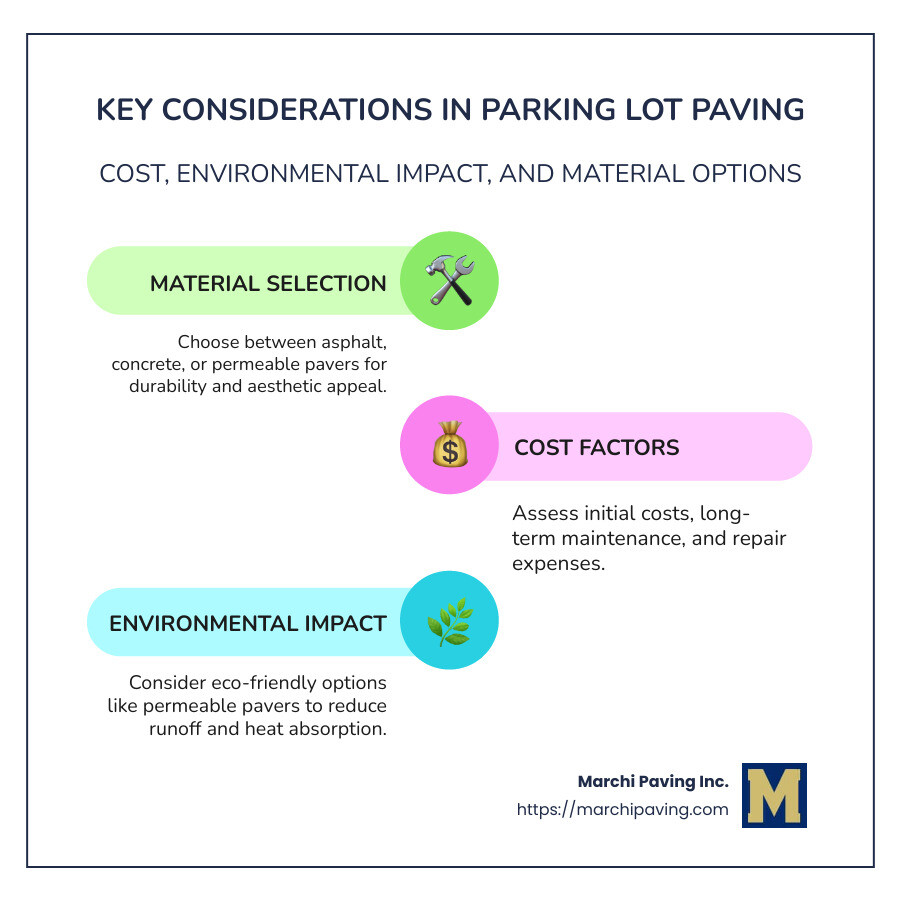
- Paving Considerations: Choose the right material (asphalt, concrete, or permeable pavers) to match your needs.
- Cost Factors: Consider initial costs, long-term maintenance, and potential repairs.
- Environmental Impact: Evaluate how materials affect the environment; permeable pavers are often more eco-friendly.
Managing a property, especially in busy areas like Middlesex County, MA, requires careful planning when it comes to parking spaces. Paving a parking lot significantly impacts not just aesthetics, but also operational efficiency and safety. The material chosen can affect everything from budget to environmental responsibility.
Traditional options like asphalt and concrete offer durability but come with ongoing maintenance costs. Over time, repairs like crack filling and pothole patching become necessary, adding to expenses. Moreover, the environmental impact of these materials is considerable; their production and installation can contribute to pollution and urban heat.
On the other hand, permeable pavers provide an eco-friendly alternative by allowing rainwater to seep through, reducing runoff and heat absorption. They’re also adaptable to different designs, which makes them a compelling choice for modern, sustainable construction projects.
It’s essential to weigh these considerations to craft a paving solution that not only meets immediate needs, but also aligns with long-term environmental and financial goals.
Common parking lot paving vocab:
– asphalt company
– local asphalt paving companies
– pavers company near me
Understanding Parking Lot Paving
When it comes to parking lot paving, choosing the right materials and preparation methods is crucial. Let’s explore the key options: asphalt, concrete, and permeable pavers, as well as the importance of proper site preparation.
Asphalt vs. Concrete
Asphalt and concrete are the two most common materials for parking lots. Each has its pros and cons.
- Asphalt is flexible, making it ideal for regions with temperature fluctuations. It’s generally cheaper to install and offers a smooth driving surface. However, it requires regular maintenance like sealcoating and crack repairs to extend its lifespan, which can be up to 30 years with proper care.
- Concrete, on the other hand, is known for its durability and strength. It’s less prone to temperature-related damage, but it’s more expensive upfront. Concrete can last longer than asphalt but may crack in freezing conditions. Regular sealing can help maintain its appearance and durability.
Both materials have environmental impacts due to the machinery and fuel used in their installation. However, advancements like warm and cold mix asphalt are helping reduce greenhouse gas emissions.
Permeable Pavers
Permeable pavers offer an eco-friendly alternative. They allow water to pass through, reducing runoff and helping replenish groundwater. This makes them especially beneficial in areas prone to flooding or with strict environmental regulations.
- Eco-friendly: They help maintain natural water cycles and reduce urban heat.
- Cost-effective: While initial costs might be higher, they save money in the long run by reducing the need for stormwater management systems.
- Aesthetic flexibility: With various designs and materials available, permeable pavers can improve the visual appeal of your parking lot.
Site Preparation
Proper site preparation is the foundation of a successful paving project. It involves:
- Clearing the Land: Removing debris and vegetation to ensure a clean slate.
- Grading: Leveling the area to promote proper drainage and prevent water pooling.
- Subgrade Improvement: Replacing unsuitable soils with high-quality subgrade materials to improve strength and drainage.
In regions like Massachusetts, where frost can be an issue, ensuring resistance to frost damage is critical. Using quality subgrade materials can prevent early pavement distress and extend the life of your parking lot.
By understanding these components, you can make informed decisions that balance cost, durability, and environmental impact for your parking lot paving project.
Next, we’ll walk through the entire paving process, from consultation to the final finishing touches, ensuring a smooth and efficient project execution.
The Parking Lot Paving Process
When it comes to parking lot paving, following a structured process ensures a durable and visually appealing result. Here’s a step-by-step guide to what you can expect:
Consultation
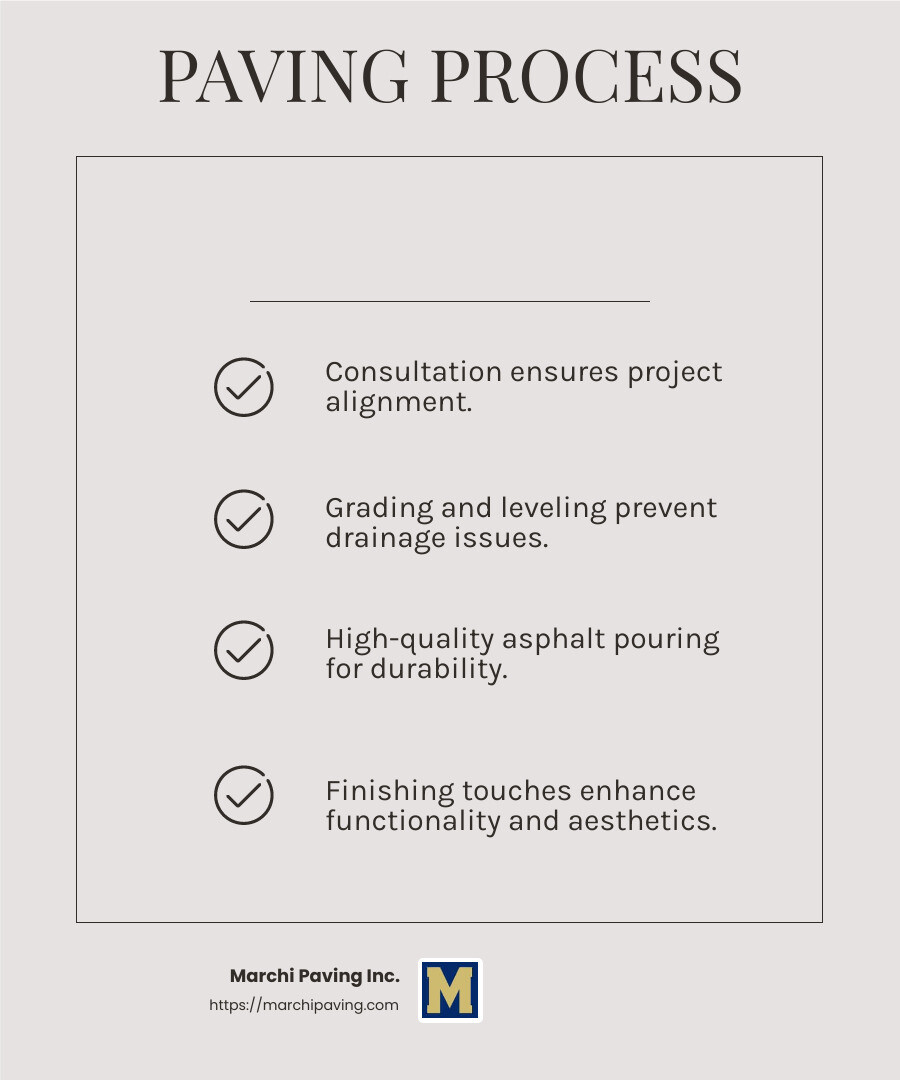
The journey begins with a consultation. A paving expert will visit your site to understand your specific needs and discuss logistics. This is the time to talk about your vision, any specific requirements, and potential challenges. A thorough consultation helps tailor the project to meet both your functional and aesthetic goals.
Grading and Leveling
Once the plan is set, the next crucial step is grading and leveling. This involves preparing the land to create a smooth, even surface. Proper grading is essential for effective drainage, preventing water from pooling on the surface. This step also involves removing any unsuitable soil and replacing it with high-quality subgrade materials to ensure stability and longevity.
Asphalt Pouring
The most anticipated part of the process is asphalt pouring. A team of skilled contractors will lay down a high-quality asphalt layer. This layer is typically a couple of inches thick and will cure over time into a sturdy yet flexible surface. The use of high-quality materials and precise techniques ensures the pavement can withstand the rigors of traffic and weather.
Finishing Touches
Finally, the project is wrapped up with finishing touches. This includes painting lines for parking spaces and adding any necessary markings. Additional features like concrete curbs, walkways, and speed bumps might also be installed. These details not only improve functionality but also contribute to the overall aesthetic of the parking lot.
By understanding each step of the parking lot paving process, you can ensure your project runs smoothly and results in a parking lot that’s both functional and attractive. Next, we’ll explore the benefits of using permeable pavers in your project.
Benefits of Permeable Pavers
When it comes to parking lot paving, permeable pavers offer a fantastic blend of eco-friendliness and cost-effectiveness. Let’s explore why these innovative materials are gaining popularity.
Eco-Friendly
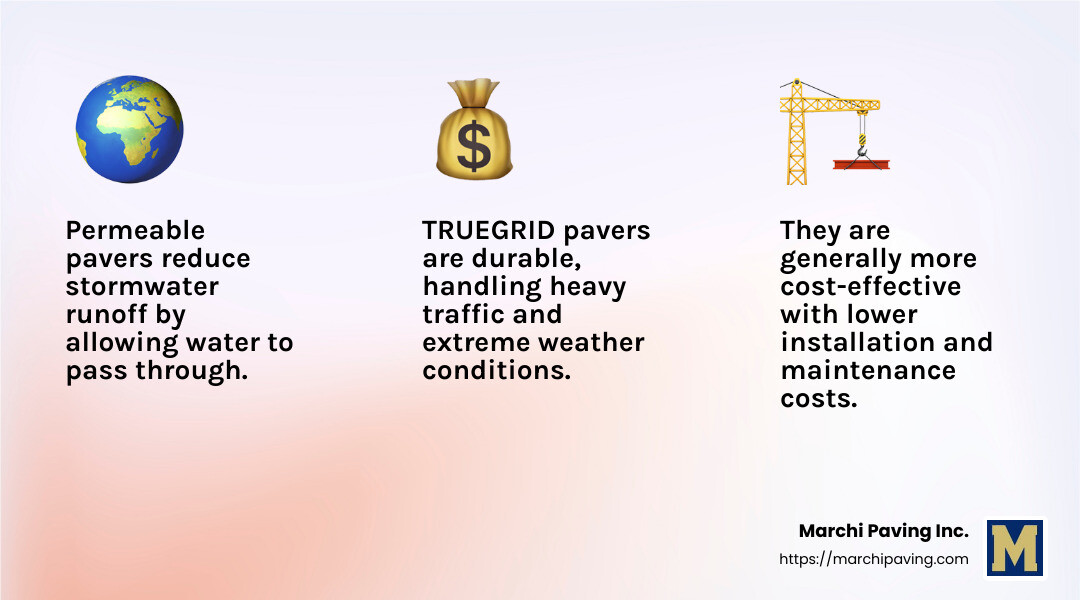
Permeable pavers are a sustainable choice that works in harmony with the environment. Unlike traditional concrete or asphalt, these pavers allow water to pass through, significantly reducing stormwater runoff. This helps prevent erosion and replenishes groundwater supplies, making your parking lot a mini drainage system.
Manufactured using sustainable methods, permeable pavers are a low-impact construction option. They help maintain natural water cycles and improve the water quality of nearby streams and rivers. By choosing permeable pavers, you’re not only creating a functional parking space but also supporting a healthier ecosystem.
Cost-Effective
Permeable pavers are not just good for the environment; they’re also kind to your wallet. They are generally cheaper and faster to install than traditional paving materials. Their lightweight yet strong design means they can be installed at over 1,000 square feet per man-hour, saving both time and labor costs.
Moreover, permeable pavers require less maintenance over time. They are durable and resistant to high heat, so unlike concrete and asphalt, they won’t break down as quickly. This longevity translates to lower long-term costs, as you won’t need to replace or repair them as often.
TRUEGRID: A Leader in Permeable Pavers
One standout in permeable pavers is TRUEGRID. These pavers are designed to handle anything you throw at them, from heavy traffic to extreme weather conditions. They outperform more expensive materials by lasting longer and requiring less maintenance.
TRUEGRID pavers are also incredibly versatile. Whether you’re paving a residential driveway or a large commercial parking lot, they offer a solution that combines strength, durability, and environmental benefits.
Incorporating permeable pavers like TRUEGRID into your parking lot paving project is a smart move for both your budget and the planet. Next, let’s look at how proper maintenance can extend the life of your parking lot.
Maintenance and Longevity
Once your parking lot paving project is complete, maintaining its condition is crucial for longevity. Let’s explore some key maintenance practices that ensure your parking lot stands the test of time.
Drainage Systems
Proper drainage is essential to prevent water damage. Water is known as the number one asphalt killer, and effective drainage systems help keep it at bay. By ensuring your parking lot has a well-designed slope, you can direct water away from the surface, preventing pooling and potential damage. Installing catch basins or trench drains can further aid in managing stormwater, reducing the risk of potholes and cracks.
Sealcoating
Sealcoating is like sunscreen for your parking lot. It protects the asphalt from harmful UV rays, water, and traffic wear. Applying a high-quality sealcoat every few years can significantly extend the life of your pavement. It acts as a barrier, preventing oxidation and maintaining a fresh, clean appearance. This simple step can save money in the long run by reducing the need for costly repairs.
Regular Maintenance
Routine maintenance is your best defense against wear and tear. Here are some essential tasks to keep your parking lot in top shape:
- Crack Sealing: Fill cracks as they appear to prevent them from expanding. This stops water from seeping into the base layer, which can lead to bigger problems.
- Pothole Repair: Address potholes promptly to avoid accidents and further damage. Patching these areas keeps the surface smooth and safe.
- Sweeping and Cleaning: Regularly remove debris, dirt, and oil to prevent surface degradation. A clean lot not only looks better but also lasts longer.
- Line Striping: Keep parking lines and markings clear and visible. This ensures safety and organization for both drivers and pedestrians.
By implementing these maintenance strategies, you can improve the durability of your parking lot, ensuring it serves your needs for years to come. Now, let’s move on to some frequently asked questions about parking lot paving.
Frequently Asked Questions about Parking Lot Paving
Can you expense paving a parking lot?
Yes, you can expense paving a parking lot, but how you do it depends on whether it’s considered an operational or capital expense.
- Operational Expenses: These are costs for maintaining the day-to-day functions of your business. If the paving is part of regular maintenance or repair work, it might be classified as an operational expense. This can potentially be deducted in the year it’s incurred.
- Capital Expense: If you’re installing a new parking lot or making significant improvements, it’s likely a capital expense. Capital expenses are investments in the long-term value of your property. These costs are usually depreciated over several years.
Consult with a financial advisor to determine the best approach for your specific situation.
What is the best surface for a parking lot?
Choosing the right surface for your parking lot depends on several factors, including budget, usage, and climate. Here’s a quick rundown of the most common options:
- Asphalt: Asphalt is popular for its affordability and quick installation. It provides a smooth surface and is suitable for most climates. With proper maintenance, an asphalt parking lot can last up to 30 years.
- Concrete: Known for its durability, concrete can handle heavy loads and requires less maintenance than asphalt. It’s a great option for areas with extreme weather conditions. However, it’s more expensive and takes longer to install.
- Gravel: Gravel is the most budget-friendly option and is easy to install. It’s ideal for temporary or low-traffic areas. However, it requires regular maintenance and isn’t suitable for all climates due to its tendency to shift and erode.
Each material has its pros and cons, so consider your specific needs and consult with a paving expert to make the best choice.
How long does paving a parking lot take?
The time it takes to pave a parking lot can vary based on several factors:
- Weather Conditions: Ideal weather is key for paving. Rain or extreme cold can delay the process, as asphalt needs dry conditions to cure properly.
- Site Characteristics: If the site is uneven or requires significant preparation, it can add time to the project. Removing old pavement or leveling the ground are common tasks that may need extra attention.
- Job Size: Naturally, a larger parking lot will take more time to complete. Smaller lots can sometimes be done in as little as 24 hours, while larger projects might take several days.
On average, with favorable conditions and a skilled team, paving can be completed within a few days. Always plan for potential delays, especially if weather conditions are unpredictable.
Conclusion
At Marchi Paving Inc., we understand that a well-paved parking lot is more than just a convenience—it’s a crucial part of your business’s first impression. With over 20 years of experience, we specialize in delivering high-quality asphalt paving solutions custom to meet the unique needs of businesses across Chelmsford, MA, and surrounding areas.
Our commitment to excellence means that from the initial consultation to the final touches, we handle every step of the paving process with precision and care. We use advanced equipment and in-house expertise to ensure that your parking lot not only looks great but also stands the test of time.
Whether you’re considering asphalt for its affordability and smooth finish or exploring eco-friendly options like permeable pavers, our team is here to guide you. We believe in providing solutions that are both cost-effective and environmentally conscious.
Regular maintenance is key to prolonging the life of your parking lot. Services like sealcoating, crack sealing, and proper drainage systems are essential to maintaining a safe and functional space. Our comprehensive maintenance plans are designed to keep your pavement in top condition, reducing the need for costly repairs down the line.
For a smoother, more durable parking lot that improves your property’s value and appeal, trust the experts at Marchi Paving Inc. Ready to start your project? Contact us today for a consultation and experience the Marchi Paving difference. Let’s pave the way to a better future together.

